
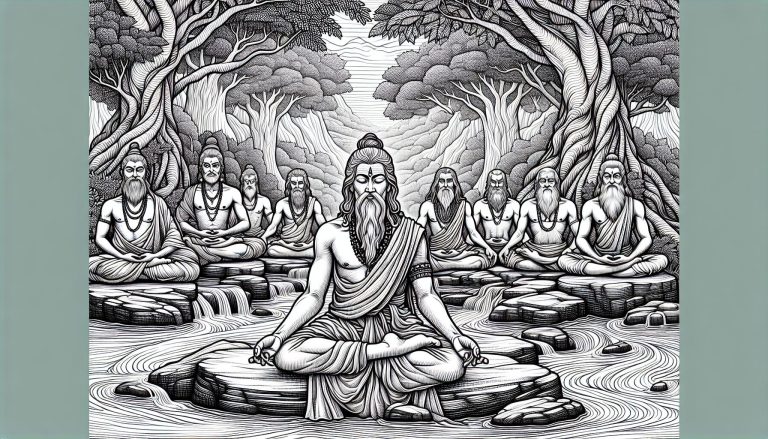
In a world constantly driven by change and uncertainty, the Upanishadic teachings offer a grounding sense of eternal truth. They guide us towards inner peace and understanding, encouraging us to look beyond the material and connect with the deeper aspects of our being. Join me as we unravel the layers of this ancient wisdom and discover how it can illuminate our modern lives.
Understanding Upanishadic Eternal Wisdom
Upanishadic eternal wisdom refers to the timeless teachings of the Upanishads, the foundation of Hindu philosophy. These ancient scriptures offer insights into reality, the self, and the universe.
- Eternal Self
The Upanishads teach that an eternal, unchanging self exists within us, representing our true nature. This self embodies pure awareness and is the source of peace and happiness. Recognizing this deeper aspect of ourselves leads to lasting fulfillment. - Brahman – The Supreme Truth and Atman – The Soul
Emphasizing the oneness of Brahman (ultimate reality) and Atman (individual self), the Upanishads convey that Brahman dwells within Atman. Realizing this unity is essential for achieving liberation. For instance, by meditating on this oneness, a person can transcend ego and experience profound spiritual freedom. - Transcendence of Time and Space
The Upanishads state that as pure consciousness, our true nature transcends time and space. Recognizing this transcendence liberates us from the cycle of birth and death. This realization is known as Moksha, or liberation, and is the ultimate spiritual goal.
Historical Context
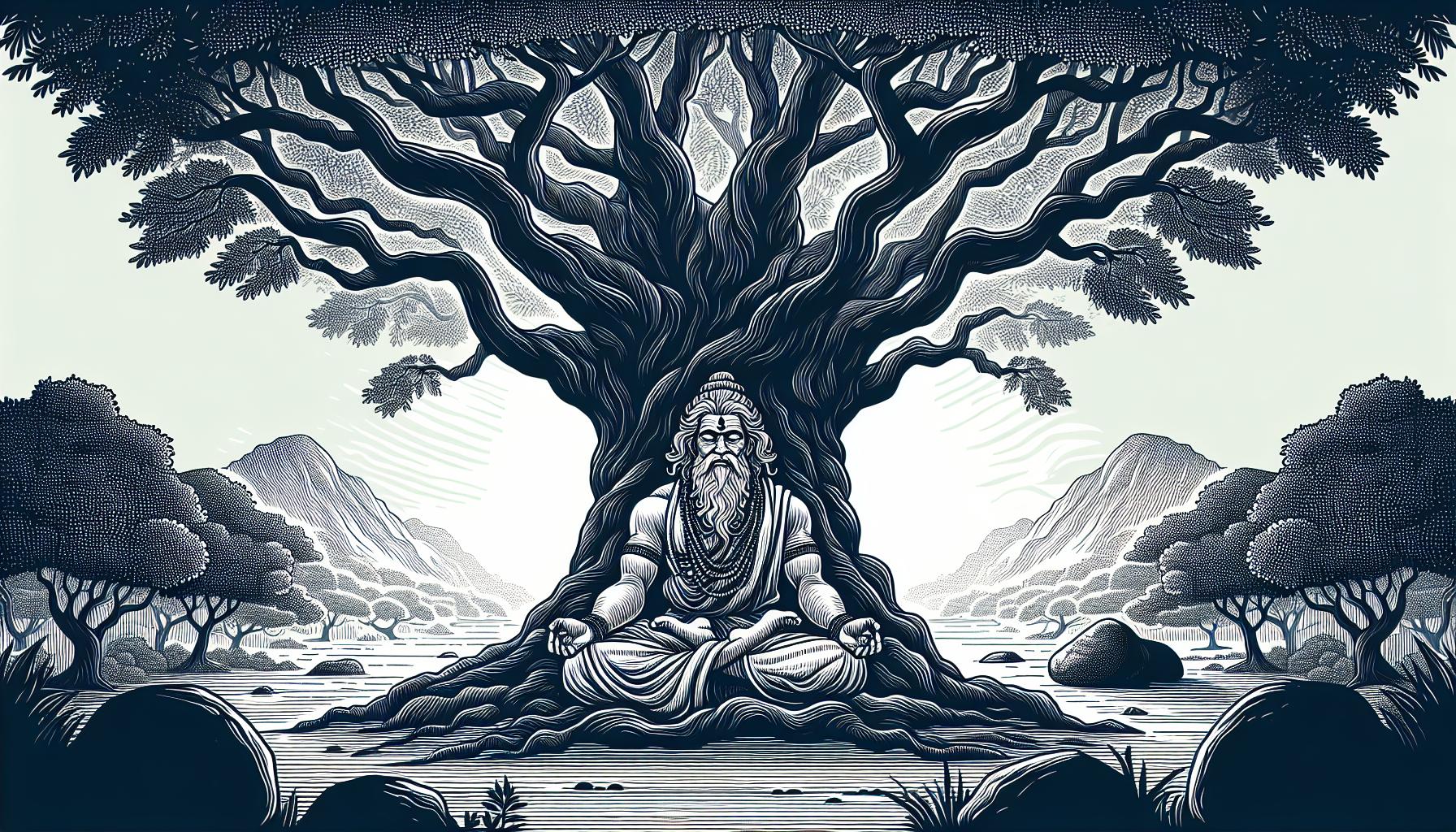
The Upanishads, late Vedic and post-Vedic Sanskrit texts, document the transition from archaic ritualism to new religious ideas and institutions. They mark the emergence of central religious concepts in Hinduism.
Origins of the Upanishads
Considered shruti (“what is heard”), the Upanishads were received by sages in deeply meditative states directly from God. The earliest extant Upanishads date back to the middle of the 1st millennium BCE. The first six, including the Brhadaranyaka and Kena, were composed between c. 800 and c. 500 BCE. Over 200 Upanishads exist, with 108 accessible to the public. Shankara chose 11 principal Upanishads for his commentaries, further cementing their importance.
Key Philosophers and Sages
The Upanishads owe much to the wisdom of ancient sages:
- Yajnavalkya: Known for his teachings in the Brhadaranyaka Upanishad, he focused on inner knowledge and the concept of the self (Atman).
- Uddalaka – Grandfather of Ashtavakra Aruni: Featured in the Chandogya Upanishad, he taught the existence of a single reality (Brahman).
- Shvetaketu: Uddalaka’s son appears in the Chandogya Upanishad; his dialogues emphasize the unity of Atman and Brahman.
- Shankara: An influential philosopher, his commentaries on the principal Upanishads define much of their interpretation today.
These sages contributed significantly to the body of knowledge encompassing meditation, philosophy, consciousness, and ontological understanding in Hinduism.
Core Teachings
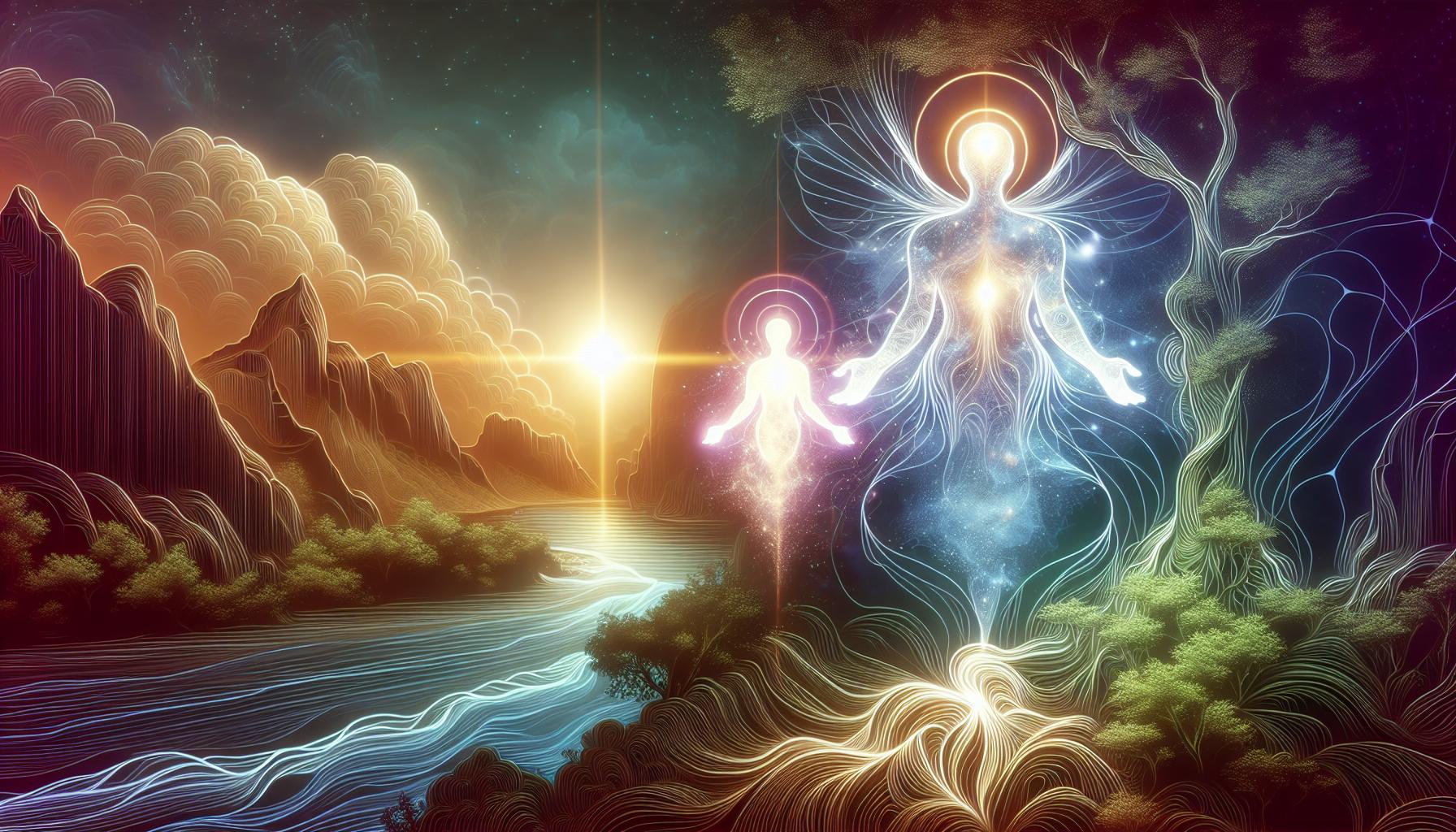
In the Upanishads, core teachings like Brahman, Atman, and Moksha form the heart of Hindu philosophy.
Brahman and Atman
Brahman: Brahman represents the ultimate reality. It’s the eternal essence behind all existence: shapeless, genderless, and bodiless. As it’s the true reality, it can only be experienced, not described. For instance, like how light illuminates objects, Brahman brings existence into form.
Atman: Atman signifies the individual self or soul, which is inseparably part of Brahman. It’s the eternal core that transmigrates after death or achieves release (Moksha). Often called the universal self, Atman is identical with Brahman, underscoring the interconnectedness of all beings.
The Concept of Moksha
Moksha: The ultimate goal in Hinduism is Moksha. It denotes liberation from the cycle of birth and death (Samsara). Achieving Moksha means one attains a state of eternal peace, freedom from earthly desires, and realizes the true essence of existence as unity with Brahman.
Relevance in Modern Times
Upanishadic wisdom, though ancient, offers profound insight into modern life. Its teachings align closely with contemporary theories and personal development concepts.
Application in Daily Life
The Upanishads investigate into consciousness and self-awareness, promoting self-reflection and mindfulness. Concepts like karma emphasize personal responsibility, making individuals aware of the consequences of their actions.
- Mindfulness Practices: Upanishadic meditative practices enhance focus and reduce stress, crucial in today’s rapid world.
- Ethical Living: Karma, detailed extensively in the Upanishads, underscores the importance of ethical conduct, influencing modern views on social responsibility.
Influence on Contemporary Thought
The philosophies in the Upanishads have significantly shaped modern psychological and philosophical theories.
- Integrated Information Theory (IIT): This modern theory of consciousness parallels Upanishadic ideas of interconnectedness and unity. IIT posits that consciousness emerges from integrated information within a system, echoing the Upanishadic view of a unified self.
- Personal Responsibility: The concept of karma reflects the importance of personal actions, resonating with modern ideas of accountability and societal influence.
These applications and influences underscore the timeless relevance of Upanishadic teachings.
Comparative Analysis
Examining Upanishadic wisdom alongside Western philosophy reveals fascinating parallels and contrasts. This section delves into these comparisons and explores the influence of Upanishadic thought on world religions.
Upanishadic Wisdom vs. Western Philosophy
Upanishadic wisdom emphasizes the pursuit of self-knowledge and universal truths. Western philosophy often focuses on rational inquiry and empirical evidence. While the Upanishads explore metaphysical concepts like Brahman (ultimate reality) and Atman (individual self), Western philosophers such as Plato and Descartes engage similar inquiries from different angles. For instance, Plato’s theory of Forms resonates with the Upanishadic idea of a higher truth beyond sensory perception. Similarly, Descartes’ famous “Cogito, ergo sum” (“I think, hence I am”) parallels the Upanishadic emphasis on self-awareness as a path to understanding reality.
Key distinctions lie in their approach: the Upanishads use meditative practices for direct experience of truth, whereas Western philosophy often employs logical reasoning. Upanishadic thought integrates spirituality with daily life, promoting ethical living through dharma and karma. Western philosophy separates metaphysical inquiries from practical ethics more distinctly. Even though these differences, both traditions seek to understand existence, consciousness, and the universe’s nature.
Influence on World Religions
Upanishadic wisdom significantly impacts various world religions. In Hinduism, the Upanishads form the philosophical basis, influencing core beliefs and practices. Buddhism, while emerging in reaction to Vedic rituals, incorporates Upanishadic concepts such as the nature of self and enlightenment. Jainism also shares the emphasis on self-realization and non-violence rooted in Upanishadic teachings.
In Western contexts, the Upanishadic influence appears in the works of transcendentalists like Ralph Waldo Emerson and Henry David Thoreau. These thinkers drew from Upanishadic ideas to challenge materialism and promote self-reliance and inner spirituality. Modern spiritual movements, like the New Age movement, also integrate Upanishadic themes, blending them with Western esoteric traditions to explore holistic and interconnected worldviews.
Conclusion
The timeless wisdom of the Upanishads continues to offer profound insights into the nature of reality and the self. These ancient teachings provide a pathway to spiritual liberation and emphasize the importance of unity with Brahman. As modern life becomes increasingly complex, the relevance of Upanishadic principles in promoting mindfulness and ethical living becomes even more apparent.
By bridging the gap between Eastern and Western philosophies, the Upanishads encourage a holistic understanding of existence and consciousness. Their influence on global spiritual movements and modern psychological theories underscores their enduring significance. Embracing Upanishadic wisdom can lead to a more integrated and fulfilling life, rooted in both spiritual depth and practical application.
Sources & further reading
These themes are explored in greater depth across the following authoritative resources:
- Internet Sacred Text Archive, Rig Veda (Griffith translation)
- Internet Sacred Text Archive, Upanishads
- Britannica, Veda
- Britannica, Upanishad
- Patrick Olivelle, The Early Upanishads (Oxford University Press, 1998)
External resources for further reading. Apam Napat is not affiliated with these publishers; citation does not imply endorsement.
Based on the classical texts of Hindu mythology, see our sources.