
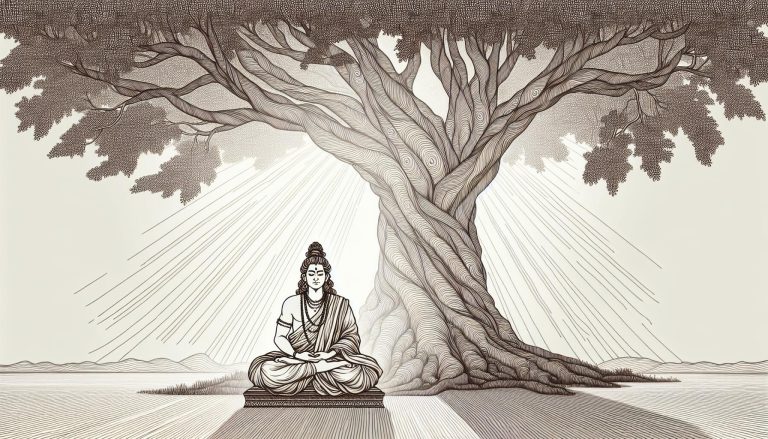
As I explore the teachings of the Upanishads, I find myself drawn to their timeless relevance. In a world filled with distractions and superficial pursuits, the quest for self-realization provides a path to inner peace and fulfillment. The Upanishads don’t just offer philosophical musings; they present a practical guide to understanding who we are at our core.
Understanding Upanishadic Self-Realization
Upanishadic self-realization centers on grasping the true essence of the self, or Atman – The Soul. This understanding transcends superficial layers of identity, such as profession, social roles, and physical appearance. Instead, it dives into the inner core, where one discovers a profound, unchanging state of being.
In the Upanishads, self-realization involves several key principles:
- Atman and Brahman – The Supreme Truth: The Upanishads articulate the concept that Atman (individual self) is identical to Brahman (universal consciousness). This realization dissolves the illusion of separateness and aligns personal identity with the cosmos.
- Maya: They highlight Maya, the illusion that veils true reality. By recognizing Maya’s influence, one can distinguish between the transient and the eternal, moving closer to authentic self-awareness.
- Meditation: Meditation and introspection are emphasized as essential practices. They help inner silence, where true knowledge of Atman emerges, untainted by external chaos.
- Non-attachment: The teachings advocate for non-attachment to material possessions and ego-driven desires. This detachment releases one from the cycle of samsara (birth and rebirth), leading to liberation or moksha.
For example, the Chandogya Upanishad tells the story of Svetaketu, who learns from his father that the essence of himself is the essence of the universe. Similarly, the Katha Upanishad narrates the tale of Nachiketa – The Boy Who Obtained the Secrets of Death, who achieves self-realization through dialogue with Yama, the god of death.
By engaging with these principles, individuals can navigate modern life’s distractions and superficialities, gradually aligning themselves with a deeper, more significant truth. Understanding Upanishadic self-realization isn’t just about philosophical knowledge; it’s about practical transformation and experiencing a deeper connection with the universe.
Historical Background of the Upanishads
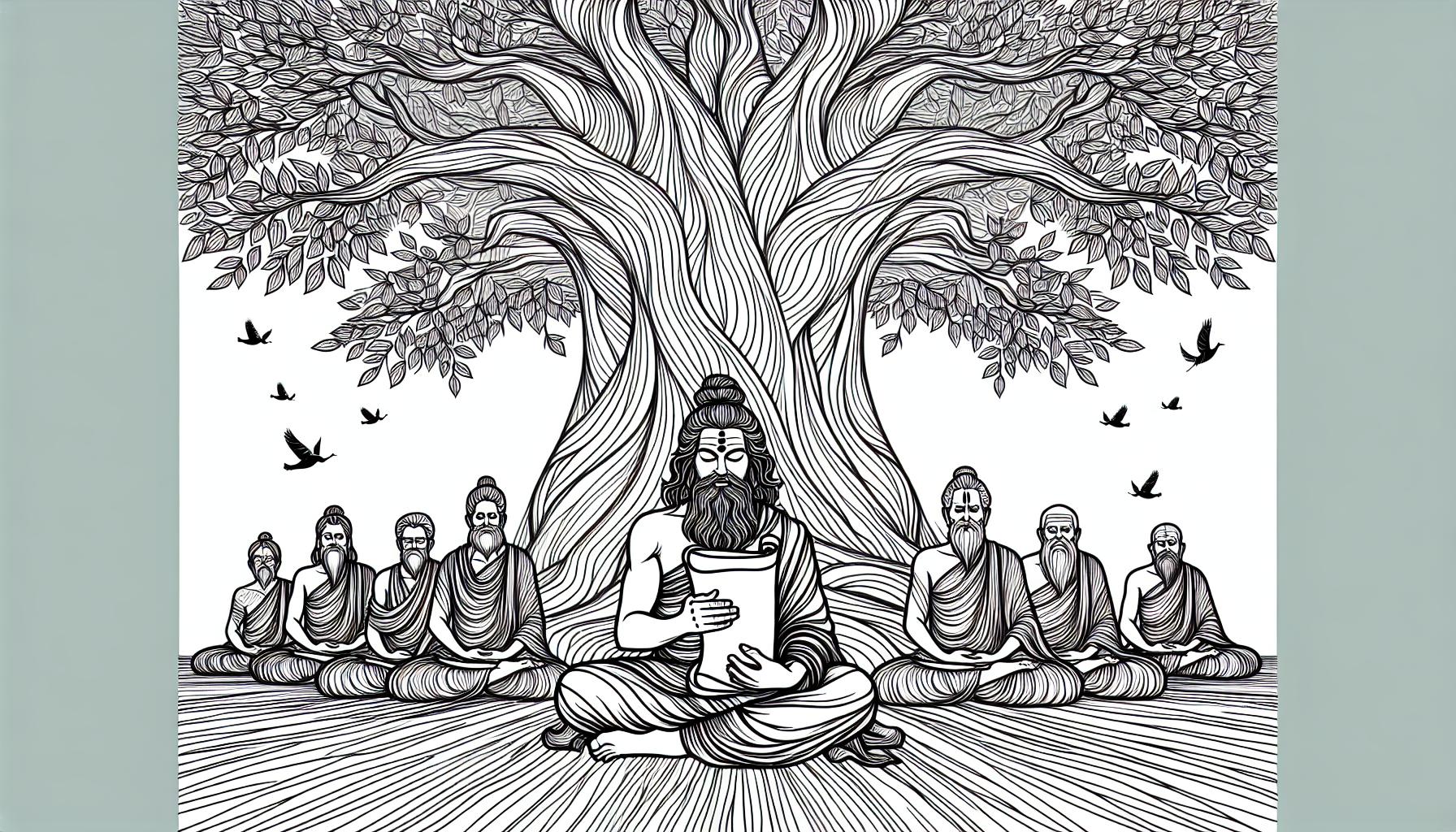
The Upanishads are central to Indian philosophy, significantly influencing Hindu thought and spirituality for centuries. These texts, composed in ancient India, offer profound insights into the self and the universe.
Origin and Development
Originating between 800 and 500 BCE, the Upanishads form the concluding part of the Vedas, referred to as Vedanta. Scholars believe the oldest Upanishads, like the Brihadaranyaka and Chandogya, emerged during this time. They were composed in Sanskrit and initially passed down orally before being transcribed. The compilation includes over 200 texts, but around 13 are considered principal, including the Isa, Kena, and Katha.
Key Philosophical Concepts
The Upanishads explore several profound philosophical concepts. Central to these is the idea of Brahman, the ultimate reality, and Atman, the inner self. They teach that Atman is identical to Brahman, emphasizing the unity of all existence. Another critical concept is Maya, which signifies the illusionary nature of the physical world. The texts advocate for the importance of meditation, self-discipline, and ethical living to transcend Maya and achieve self-realization. The interconnectedness of all beings and the cyclical nature of life, including concepts of karma and reincarnation, also feature prominently.
Core Themes of Upanishadic Self-Realization
Upanishadic self-realization weaves several core themes, each pivotal to understanding the depths of spiritual insight offered by these ancient texts. It involves an intricate exploration of self, reality, and illusion.
The Nature of the Self (Atman)
Atman refers to one’s inner self or soul. Upanishads assert that discovering Atman leads to understanding the true essence of being. Unlike transient physical forms, Atman remains eternal, constant, and indestructible. In the Brihadaranyaka Upanishad, the dialogue states, “I am Brahman,” emphasizing self-realization.
Brahman and Its Relationship to Atman
Brahman represents the ultimate reality and cosmic spirit. Upanishads explain that Atman is inherently connected to Brahman, suggesting unity rather than duality. Taittiriya Upanishad declares, “He who knows the Bliss of Brahman… knows the Bliss of Brahman,” signifying that realizing Atman equates to experiencing Brahman’s infinite peace.
The Illusion of Separateness (Maya)
Maya describes the illusionary nature of the physical world, creating a sense of separation from Brahman. Upanishads advocate seeing beyond Maya to perceive universal truth. In the Chandogya Upanishad, the metaphor of clay and pots illustrates Maya’s deceit, where forms differ, but the substance remains the same.
Practices Leading to Self-Realization
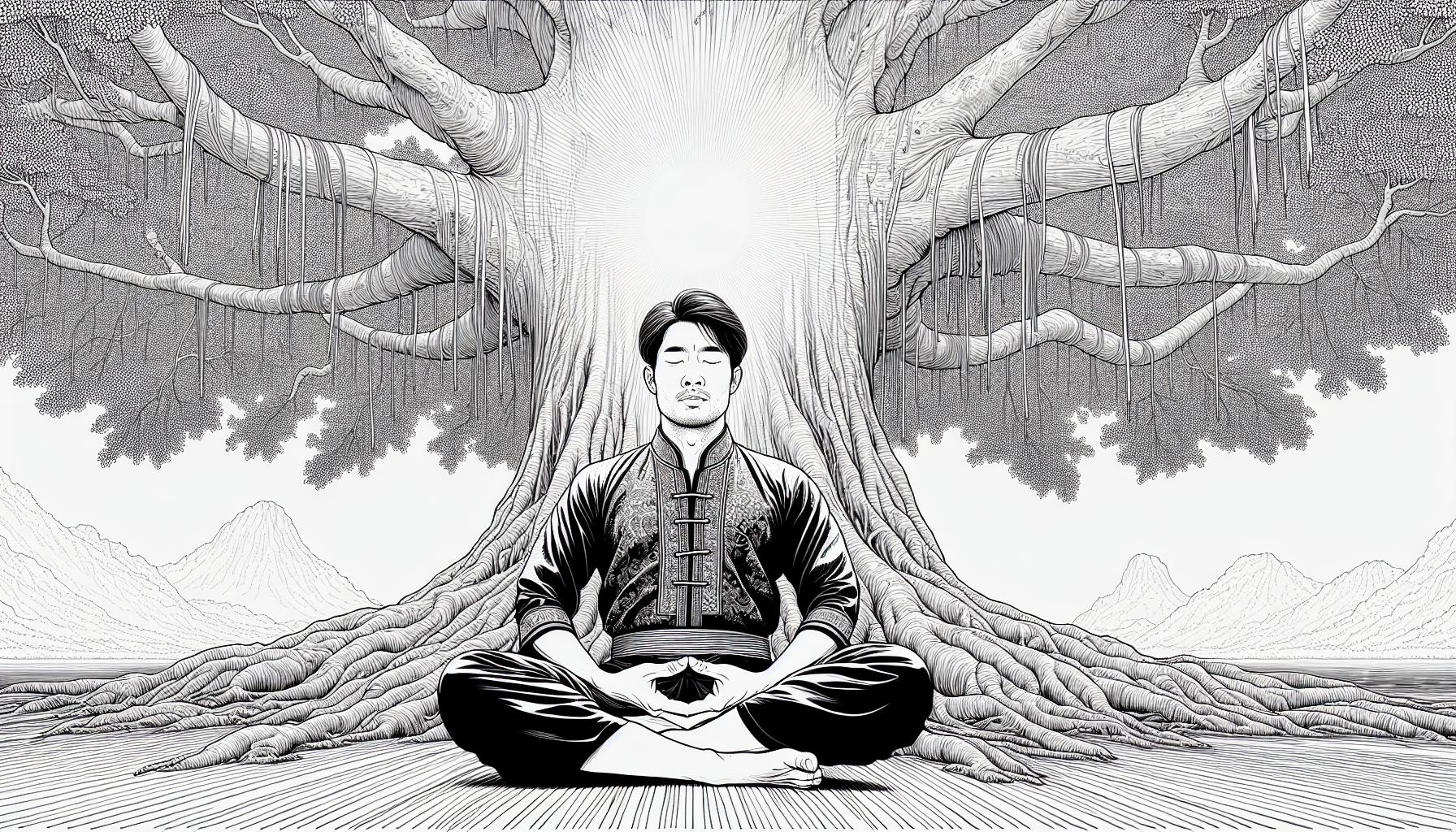
The Upanishads provide various practices to achieve self-realization. These methods focus on inner exploration and aligning actions with higher principles.
Meditation and Contemplation
Meditation and contemplation form core practices for self-realization. By quieting the mind and focusing inward, one can transcend superficial identities and connect with the deeper self, or Atman. The Upanishads recommend repeated mantra recitation, breath control (Pranayama), and disciplined mental focus. An example from the texts includes meditating on the sound “Om,” symbolizing the essence of the universe and connecting the individual with Brahman.
Ethical and Moral Living
Ethical and moral living, fundamental in the Upanishadic path, involves adhering to Dharma, or righteous duty. By practicing non-violence (Ahimsa), truthfulness (Satya), and purity (Shaucha), one aligns actions with universal laws. This alignment aids in overcoming desires and attachments, reducing the influence of Maya’s illusion. Stories of sages in the Upanishads, who achieved self-realization through a life of Dharma, exemplify this principle.
Influential Texts on Self-Realization
The Upanishads offer profound wisdom and paths to self-realization. Key texts in this domain shed light on the nature of self and provide guidance for spiritual growth.
Brihadaranyaka Upanishad
The Brihadaranyaka Upanishad delves into the nature of reality and self. It’s a comprehensive source of philosophical discourse. Central themes include the identification of Atman (self) with Brahman (ultimate reality) and the negation of dualities. For instance, Yajnavalkya’s dialogues emphasize self-realization through the understanding of Atman as the essence beyond the physical and mental states.
Chandogya Upanishad
The Chandogya Upanishad focuses on meditation and the unity of the universe. It contains the famous Mahavakya (great saying) “Tat Tvam Asi” meaning “You are That,” signifying the identity of self with the absolute. Realizing this unity, according to the text, leads to liberation from the cycle of rebirth. Sage Uddalaka – Grandfather of Ashtavakra’s teachings to his son Svetaketu illustrate this principle, stressing the importance of knowledge and inner realization.
Katha Upanishad
The Katha Upanishad addresses the dialogue between Nachiketa and Yama, the god of death. It centers on the journey towards eternal knowledge and self-realization. Yama teaches Nachiketa about the impermanence of material existence and the immortality of the soul (Atman). The text guides individuals to seek inner wisdom and prioritizes the eternal over the transient material world.
Modern Interpretations and Impact
Upanishadic teachings continue to influence modern spirituality and draw comparative analyses with other philosophies.
Influence on Contemporary Spirituality
Upanishadic concepts resonate strongly with contemporary spiritual movements. Many people today seek a deeper connection with the self and the universe. Practices like mindfulness, meditation, and yoga, rooted in Upanishadic wisdom, are integral to modern wellness routines. Thought leaders and spiritual guides often reference the Upanishads to illustrate the importance of inner tranquility and self-realization. For instance, spiritual author Eknath Easwaran has integrated Upanishadic philosophies into his approach to meditation and stress management.
Comparative Analysis with Other Philosophies
Comparative studies highlight similarities between Upanishadic and other global philosophies. For instance, parallels exist between Upanishadic teachings and Stoicism in their recognition of inner peace and the transient nature of external circumstances. Both stress detachment from material desires and focus on inner fulfillment. In Buddhism, a similar emphasis on meditation and the illusion of the self mirrors Upanishadic insights. Existentialist thinkers, like Jean-Paul Sartre, also explore concepts of self and consciousness that echo Upanishadic ideas, though they often arrive at different conclusions about the nature of existence and freedom.
Conclusion
Embracing the wisdom of the Upanishads can profoundly transform our understanding of self and existence. These ancient texts offer timeless insights that remain relevant in our quest for inner peace and fulfillment. By exploring the unity of Atman and Brahman and recognizing the illusion of Maya we can transcend superficial identities and discover a deeper state of being.
Incorporating Upanishadic principles into modern spiritual practices like meditation and mindfulness enriches our journey towards self-realization. As we navigate the complexities of contemporary life these teachings provide a foundation for inner tranquility and spiritual growth.
Sources & further reading
These themes are explored in greater depth across the following authoritative resources:
- Internet Sacred Text Archive, Rig Veda (Griffith translation)
- Internet Sacred Text Archive, Upanishads
- Britannica, Veda
- Britannica, Upanishad
- Patrick Olivelle, The Early Upanishads (Oxford University Press, 1998)
External resources for further reading. Apam Napat is not affiliated with these publishers; citation does not imply endorsement.
Based on the classical texts of Hindu mythology, see our sources.