

As I delve into Hanuman’s exploits, you’ll discover the essence of his character and the profound impact he has on Hindu culture. His tales aren’t just thrilling; they also offer timeless lessons in courage, devotion, and resilience. Join me on this journey through Hanuman’s extraordinary adventures and uncover the wisdom embedded in his legendary deeds.
Origin of Hanuman
Hanuman was born to Anjana, a half-monkey, and Vayu, the wind god. According to legend, Anjana prayed to Shiva – The Destroyer for a son. Shiva sent his divine power through Vayu into Anjana’s womb. This divine intervention made Hanuman a powerful being with extraordinary abilities.
Hanuman’s name comes from the word “hanu,” which means “disfigured jaw.” As a child, he tried to grab the sun, mistaking it for a fruit. Indra – The King of Heaven struck him with a thunderbolt, disfiguring his jaw and giving him his name. This incident marks the beginning of his legendary journey, filled with awe-inspiring feats and unwavering devotion.
Birth and Early Life
Hanuman, a revered figure in Hindu mythology, has a fascinating birth story and childhood marked by extraordinary feats. His origins and early exploits set the stage for his legendary adventures.
Birth Story
Hanuman’s birth involves divine intervention. His mother, Anjana, was a Vanara, a semi-divine being with extraordinary powers. She received a boon from the gods to have a son with exceptional abilities. Vayu, the wind god, gave her a bowl of rice pudding, which she ate, becoming pregnant. Hanuman was born on a Tuesday in October with his birth celebrated by the gods, highlighting his divine significance from the start.
Early Feats
Hanuman’s childhood brimmed with incredible feats. Known for his strength and agility, he could assume any form at will. He had unrestricted access to earth, space, and water. His mother, Anjana, could give birth immediately after conceiving or keep the child in her womb for extended periods, contributing to Hanuman’s unique abilities. Hanuman’s prowess in his youth laid the foundation for his future as a legendary hero in Hindu mythology.
Adventures in the Ramayana – Epic of Hinduism

Hanuman’s adventures in the Ramayana are legendary and display his exceptional abilities and devotion. His exploits play a crucial role in the story and significantly aid Lord Rama in his quest.
Meeting Lord Rama
I first met Lord Rama in the Kishkinda Kanda, the third book of the Ramayana. Alongside his brother Lakshmana, Rama was searching for his wife Sita, who the demon king Ravana – The Demon King had abducted. I offered my strength and agility to aid him in his quest, pledging my loyalty and support. This alliance marked the beginning of a series of remarkable adventures and exploits.
Journey to Lanka
I embarked on a daring journey to Lanka, the demon city, to find Sita. Along the way, I faced numerous obstacles and challenges. I encountered Sampadi, Jatayu – The Bird-Son of Kashyapa’s elder brother, who recounted Jatayu’s tragic demise and provided critical information about Sita’s location. Leveraging my incredible strength, I crossed the ocean and reached Lanka, showcasing my unwavering determination and resourcefulness.
Burning of Lanka
After reaching Lanka, I embarked on a meticulous search for Sita and eventually found her in the Ashoka Grove. In the process, I was captured by Ravana’s forces. To demonstrate my might and instill fear, I used my powers to set parts of the city ablaze, causing widespread panic and destruction. This act of defiance underscored my resolve and fortitude, further strengthening the alliance with Lord Rama and setting the stage for the eventual battle against Ravana.
Hanuman’s Role in the War
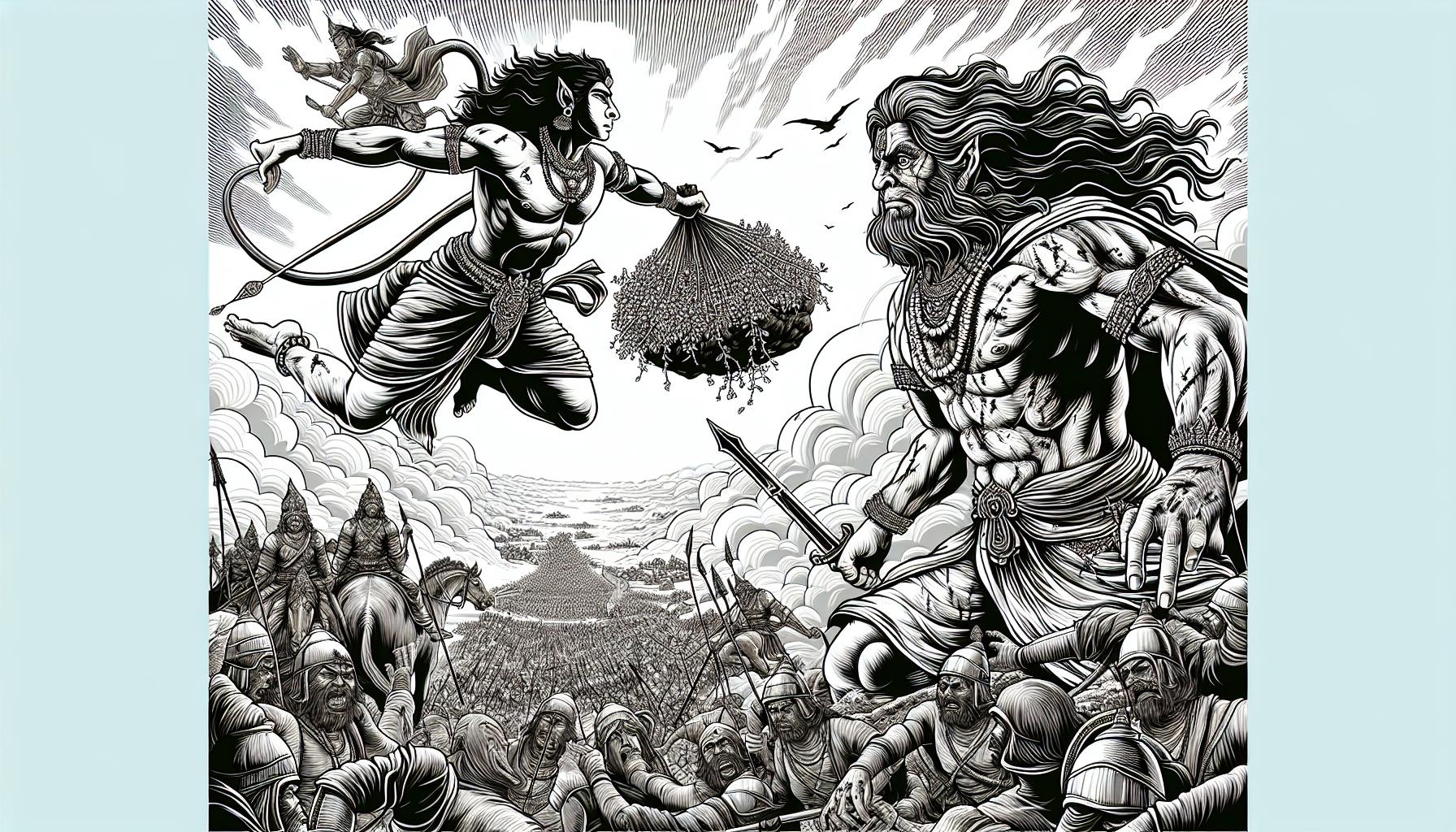
Hanuman’s strategic importance during the war against the demon king Ravana in the epic Ramayana cannot be overstated. His leadership and unparalleled strength were crucial in defeating the demons and rescuing key allies.
Rescuing Lakshmana
Hanuman demonstrated his remarkable abilities by rescuing Lakshmana, Rama’s brother, who was grievously injured in battle. To save Lakshmana, Hanuman flew to the Himalayas, located a mountain full of medicinal herbs, and carried it back to the battlefield. These herbs restored Lakshmana to health, allowing him to rejoin the fight against Ravana’s forces.
Defeating Demons
Hanuman’s courage and strength became evident during his daring journey to Lanka. Facing numerous demons and overcoming countless obstacles, Hanuman’s exploits included defeating formidable foes and setting Lanka ablaze. His actions in Lanka severely weakened Ravana’s defenses and morale, contributing significantly to the demon king’s ultimate defeat.
Symbolism and Legacy
Hanuman’s story is rich in symbolism and continues to leave a profound impact on Indian culture. His adventures highlight key virtues that resonate with many followers.
Devotion and Strength
Hanuman embodies utmost devotion and incredible strength. His unwavering loyalty to Lord Rama and his mission to find Sita showcase his selfless dedication. Notably, his strength is demonstrated when he crossed the ocean to reach Lanka and battled formidable demons. These exploits emphasize his courage, intelligence, and relentless spirit.
Cultural Impact
Hanuman’s legacy transcends religious boundaries, influencing various aspects of Indian culture. Temples dedicated to Hanuman can be found across India, serving as centers for worship and community gatherings. Festivals like Hanuman Jayanti celebrate his birth, with rituals and reenactments of his adventures. Many Indians also recite the Hanuman Chalisa, a 40-verse hymn in his honor, seeking his blessings for strength and protection. His image, often depicted carrying a mountain, symbolizes resilience and unwavering faith.
Conclusion
Hanuman’s adventures and exploits are more than just tales of heroism. They offer timeless lessons on devotion, strength, and courage that resonate deeply within Indian culture. His legacy, celebrated in temples and festivals, continues to inspire millions. By embodying loyalty and resilience, Hanuman remains a powerful symbol of unwavering faith and dedication. His story isn’t just a part of mythology; it’s a source of inspiration for countless followers who seek to emulate his virtues in their own lives.
Sources & further reading
These themes are explored in greater depth across the following authoritative resources:
- Encyclopaedia Britannica, Hindu Mythology
- Internet Sacred Text Archive, Hinduism
- Mythopedia, Hindu Mythology
- Harvard Pluralism Project, Hindu Tradition
- Wendy Doniger, The Hindus: An Alternative History (Penguin, 2009), ISBN 978-0143116691
External resources for further reading. Apam Napat is not affiliated with these publishers; citation does not imply endorsement.
Based on the classical texts of Hindu mythology, see our sources.