
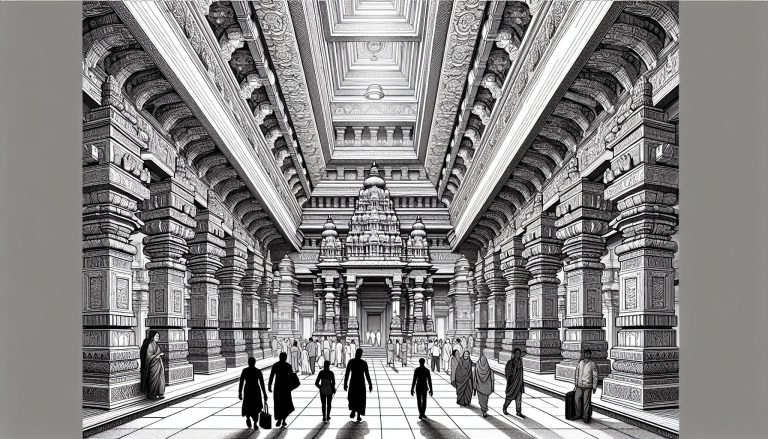
I’ve always been fascinated by how ancient architects seamlessly integrated acoustic principles into temple design. From the placement of pillars to the shape of domes, every element serves a purpose. These architectural marvels aren’t just visually stunning; they’re auditory masterpieces that amplify and purify sound, creating an atmosphere of serenity and devotion.
Historical Background
Acoustics in Hindu temples trace back to ancient India, where Vedic texts documented sound’s spiritual significance. Temples served as places of worship and centers for community gatherings, making sound an essential element in their design. Priests recited Vedic hymns, which needed to resonate throughout large temple halls.
Ancient architects, understanding sound’s role, incorporated acoustic principles into temple structures. They used materials like granite and marble, which reflect sound effectively. The strategic placement of pillars and the dome’s curvature amplified and purified sound. Temples such as Brihadeeswarar in Tamil Nadu illustrate this practice, showcasing intricate designs that enhance acoustics.
Inscriptions and architectural treatises, like the ancient text “Shilpa Shastra,” provide guidelines on temple construction, emphasizing acoustics. These texts highlight that certain geometric alignments and architectural proportions optimize sound quality. For example, rectangular and circular layouts with high ceilings improved sound resonance and distribution.
Throughout history, acoustic design in temples aimed to foster connection with the divine. Chanting, singing, and musical instruments like bells and drums played a crucial role in rituals. The design ensured these sounds spread uniformly, enveloping devotees in a serene auditory environment.
Temples exemplifying exceptional acoustics include the Kailasa Temple in Ellora, built using a single rock. The temple’s structure allows sound to travel seamlessly, creating an immersive auditory experience. The Sun Temple in Konark also features designs that enhance sound reverberation, further demonstrating the importance of acoustics in Hindu temples’ historical architecture.
Architectural Design
Architectural design played a crucial role in the acoustics of Hindu temples, meticulously crafted to create an enveloping auditory experience for worshippers.
Materials Used
Temple architects selected materials with specific acoustic properties. Granite and marble were commonly used because they reflect sound effectively. For example, in the Brihadeeswarar Temple, granite’s dense structure helped in sound reflection, creating an amplified environment for hymns. Intricately carved marble structures like in the Sun Temple of Konark not only added to the visual grandeur but also contributed to enhancing sound clarity. The choice of materials ensured that chants and musical renditions carried vibrantly through the temple halls.
Temple Layout
The layout of Hindu temples was strategically designed to optimize sound propagation. Inner sanctums were often built with domed or vaulted ceilings that acted as natural amplifiers. For instance, the elliptical dome in the Virupaksha Temple in Hampi creates a focused sound reflection. The pillared halls, seen in temples like the Meenakshi Temple in Madurai, were aligned to direct sound waves along the length of the hall. This alignment allowed the reverberations from chanting and instrumental music to resonate deeply, enveloping devotees in a serene auditory environment. Additionally, open courtyards in the temple complexes facilitated the dispersal of sound, creating a balanced acoustic experience both indoors and outdoors.
Acoustical Principles
Ancient Hindu temples exemplify advanced acoustical principles that enhance spiritual rituals. Architects designed structures to optimize sound propagation and resonance.
Sound Propagation
Sound propagation in Hindu temples wasn’t accidental. Ancient builders designed spaces to guide and amplify sound, enhancing the hymns and chants. Temple halls often had high ceilings and open spaces, ensuring sound waves traveled without obstructions. Granite and marble surfaces reflected sound more effectively, creating a rich auditory environment. As a result, every word spoken or sung reached the congregants clearly, fostering a communal worship experience.
Unique Design Features
Unique design features in Hindu temples contributed significantly to their acoustic properties. Domes and curved ceilings helped focus sound back onto the central area, while pillar placement played a crucial role in diffusing sound evenly. Temples like the Meenakshi Temple in Madurai exhibit strategic architectural elements that create auditory harmony. Geometric alignments and specific proportions defined in texts like the “Shilpa Shastra” ensured that architecture and acoustics coexisted seamlessly, providing an unparalleled spiritual ambiance.
Case Studies
Studying specific examples helps understand how acoustical principles were applied in Hindu temples. Here, I’ll explore renowned temples and compare their unique sound-enhancing features.
Famous Temples Known for Acoustics
Brihadeeswarar Temple, Tamil Nadu
The Brihadeeswarar Temple in Thanjavur is a prime example of ancient acoustical design. The massive granite structure harnesses sound reflection efficiently. Priests chanting inside the temple hear their hymns resonate clearly, thanks to the temple’s high ceilings and meticulously aligned pillars. The central dome magnifies sound, ensuring chants are heard distinctly throughout the temple.
Meenakshi Temple, Madurai
The Meenakshi Temple in Madurai showcases excellence in sound diffusion. Its intricately carved pillars and domes use precise geometric alignments to ensure even sound distribution. This acoustical design allows worshippers to hear prayers and chants from any point within the temple complex. The temple’s layout, including multiple interconnected courtyards, further enhances sound propagation.
Vittala Temple, Hampi
Known for its musical pillars, Vittala Temple in Hampi merges architecture with acoustics innovatively. When tapped, these granite pillars produce musical notes, demonstrating the ancient expertise in material resonance. The hall’s design amplifies these sounds, making it an auditory marvel. Each pillar is tuned to specific frequencies to create a harmonious soundscape.
Comparative Analysis
Examining and comparing these temples highlights their unique approaches to acoustics:
| Temple | Acoustical Feature | Material | Techniques Used |
|---|---|---|---|
| Brihadeeswarar | High ceiling, aligned pillars, central dome | Granite | Sound reflection, resonance enhancement |
| Meenakshi | Geometric alignments, interconnected courtyards | Granite, Marble | Sound diffusion, even sound distribution |
| Vittala | Musical pillars producing distinct notes | Granite | Material resonance, frequency tuning |
Each temple illustrates how ancient architects integrated acoustics into religious structures. The Brihadeeswarar Temple utilizes height and symmetry, the Meenakshi Temple excels in sound diffusion through its layout, and the Vittala Temple uniquely blends musical elements into its architecture. These examples underscore the importance of acoustical principles in enhancing the spiritual and communal experiences within Hindu temples.
Modern Research and Findings
Modern research confirms that the acoustics in Hindu temples are an essential component of the spiritual experience. Scientists and engineers use advanced technology to understand and replicate these ancient principles.
Technological Advancements
Recent technological advancements, such as acoustic simulation software and high-precision measurement tools, allow researchers to study temple acoustics with unprecedented accuracy. For example, laser scanning creates detailed 3D models of temple structures, enabling simulations of sound propagation. High-definition audio recording captures the unique sonic qualities of chants and temple bells, preserving traditional sounds digitally. Researchers apply these technologies to restore and preserve the acoustic integrity of ancient temples.
Scientific Studies
Scientific studies validate that specific design elements in Hindu temples enhance sound quality. Studies at the Indian Institute of Technology (IIT) Madras showed that the shape of temple domes, materials like granite, and architectural geometry significantly impact sound reflection and resonance. For instance, measurements taken inside the Brihadeeswarar Temple confirm that the particular curvature of the dome amplifies Vedic chants. Meanwhile, research on the Meenakshi Temple’s musical pillars shows that the careful alignment and material composition contribute to their ability to produce distinct musical notes. These studies illustrate the sophisticated understanding of acoustics that ancient architects possessed.
Conclusion
Exploring the acoustics in Hindu temples reveals a fascinating blend of spirituality and architectural genius. Ancient architects demonstrated an advanced understanding of sound propagation, using materials and design elements to enhance the spiritual ambiance. Modern technology continues to uncover and validate these sophisticated techniques, proving their lasting impact. The interplay between tradition and innovation in temple acoustics offers a rich area for further study and appreciation.
Sources & further reading
These themes are explored in greater depth across the following authoritative resources:
- Britannica, Hindu Temple Architecture
- Met Museum, Hinduism in the Arts
- Britannica, Iconography
- Stella Kramrisch, The Hindu Temple (Motilal Banarsidass, 1946)
- Heinrich Zimmer, Myths and Symbols in Indian Art and Civilization (Princeton University Press, 1946)
External resources for further reading. Apam Napat is not affiliated with these publishers; citation does not imply endorsement.
Frequently asked questions
How do acoustics work in Hindu temples?
What is the historical background of temple acoustics?
Which Hindu temple is famous for its acoustics?
What is the Shilpa Shastra?
What role do bells and drums play in temple acoustics?
Based on the classical texts of Hindu mythology, see our sources.