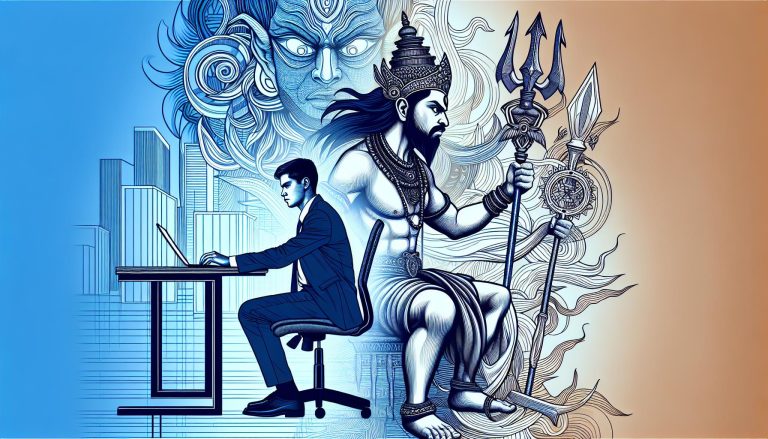
I’ve always been intrigued by how Asuras are portrayed across different cultures. Their stories often reveal profound insights into human nature, reflecting our inner conflicts and aspirations. By exploring the diverse personalities of Asuras, we can gain a deeper understanding of their roles in mythology and how they mirror our own struggles and triumphs.
Understanding Asura Personalities
Asura personalities vary widely in mythology, showcasing the complexity and depth of these entities. Asuras often embody contradictory qualities, being both destructive and creative, selfish yet selfless. These traits make them a fascinating subject of study and reflect the duality in human nature.
Dual Nature
Asuras in mythology often display a dual nature, embodying both positive and negative traits. They can be fierce warriors, protecting their kin and territory with unyielding strength. Examples include the Asura king Hiranyakashipu, known for his relentless battle against the gods, and the sage Vritra – Demon-son of Tvashta, who exemplifies both power and wisdom. Even though their ferocity, they sometimes show immense wisdom and kindness. These contrasts make Asuras relatable, as humans also harbor multiple facets within themselves.
Variations Across Cultures
Different cultures depict Asuras in unique ways, adding layers to their personalities. In Hindu mythology, Asuras are often seen in opposition to Devas (gods), representing chaos against order. In Buddhist texts, Asuras are more symbolic of constant struggle and dissatisfaction. Meanwhile, in Persian mythology, they are seen as deities with divine attributes. These varying portrayals demonstrate the adaptability of Asura personalities to different societal values and norms.
Motivations and Aspirations
Asuras often have complex motivations driven by desires for power, knowledge, or redemption. For example, Ravana – The Demon King, an iconic Asura from the Ramayana – Epic of Hinduism, seeks domination yet also desires intellectual supremacy, being a great scholar of his time. Another example is Mahabali, who aspires to just rule his kingdom, embodying both humility and strength. These motivations make understanding Asura personalities vital for comprehending their actions and roles in myths.
Historical Significance
Asura personalities have played a significant role in mythology and cultural narratives. They reflect historical beliefs and values intertwined with ancient lore.
Origins in Mythology
Asuras originate primarily in ancient Indian texts such as the Vedas, Ramayana, and Mahabharata – The Great Epic. In Hinduism, they are often portrayed as powerful beings in constant conflict with Devas. According to Vedic tradition, the Devas and Asuras emerged from the same divine entity, illustrating the duality of creation. Asuras like Vritra and Hiranyakashipu epitomize this enmity through their respective myths. Different texts offer varied depictions, cementing the Asuras’ place in mythological history.
Cultural Representations
The cultural representations of Asuras extend beyond Hinduism into Buddhism and Jainism. In Buddhist texts, Asuras symbolize struggle and perpetual conflict, often associated with envy and insatiable desire. Tibetan Buddhism presents them as demigods who disrupt cosmic balance. Jainism views Asuras as beings trapped in the cycle of rebirth due to their karmic debts. Regional folklore across South and Southeast Asia also incorporates Asura narratives, where they are sometimes seen as revered ancestors or local deities, showing the adaptation of their personalities in various cultural contexts.
Key Traits of Asura Personalities
Asura personalities exhibit a complex blend of traits that make them both formidable and deeply human-like in mythology. They demonstrate strengths and abilities counterbalanced by notable weaknesses.
Strengths and Abilities
Asuras possess immense strength and prowess in battle, often depicted as fierce warriors who can challenge even the gods. They exhibit exceptional intelligence and wisdom, as seen in characters like Ravana, who mastered various arts and sciences. Creative skills, like those of the architect Mayasura, enable them to construct magnificent structures. Their charisma and leadership skills often unite large groups behind a common cause, showing their ability to inspire and lead. High levels of determination drive them to pursue their goals relentlessly, overcoming numerous obstacles in their path.
Weaknesses and Challenges
Even though their strengths, Asuras often struggle with arrogance and ego, becoming blinded by their sense of superiority. They exhibit impulsiveness leading to reckless decisions and conflict. Inherent envy and jealousy fuel constant struggles against others, especially the Devas. Their insatiable desire for power frequently results in ethical lapses and moral compromises. Many face a tragic downfall due to hubris, as their inability to recognize their limitations eventually leads to their demise.
Asura Archetypes in Popular Culture
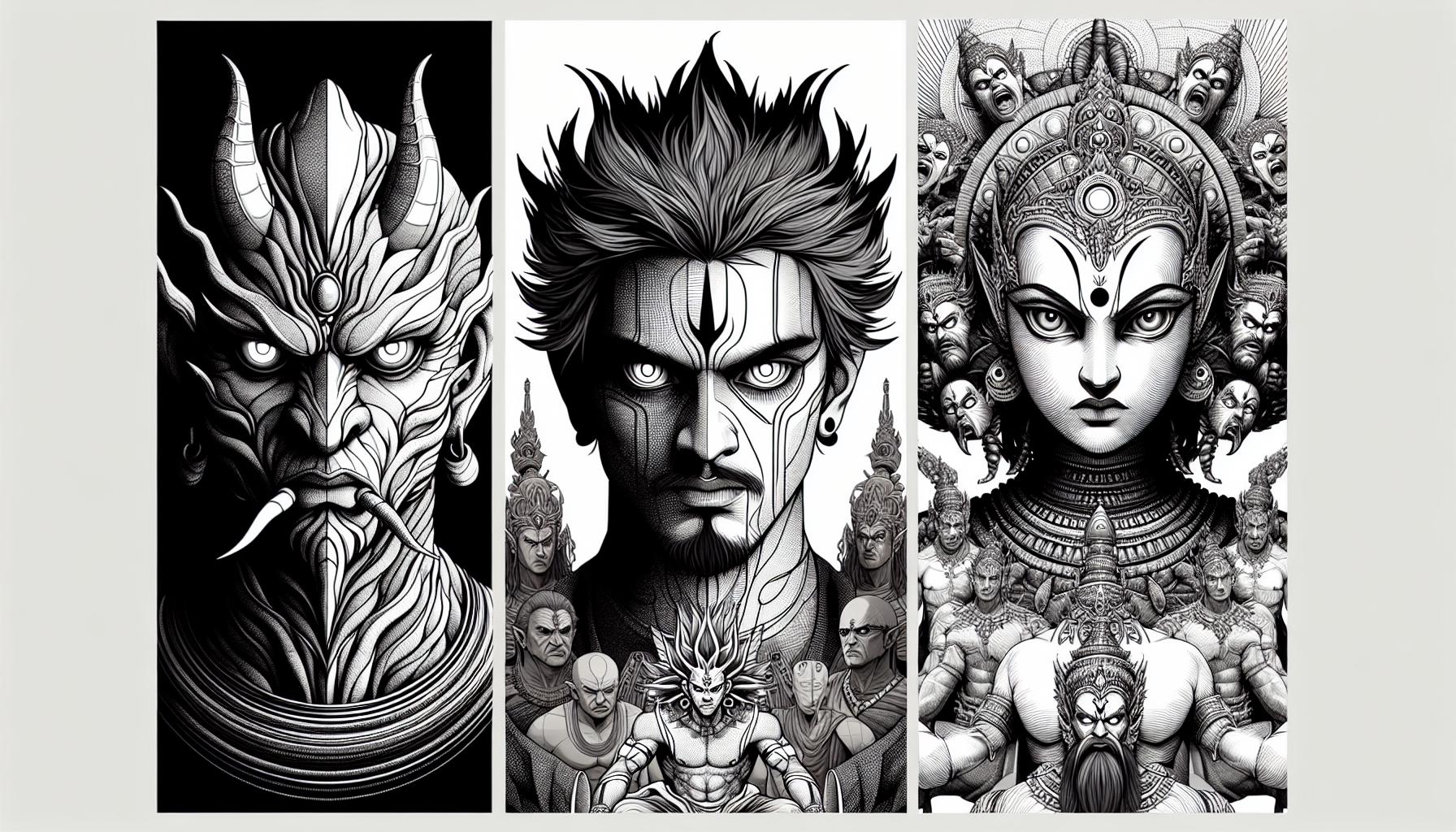
Asura archetypes permeate various forms of popular culture, from literature to films and TV shows. Their complex personalities make them compelling characters in diverse narratives.
Asura in Literature
Asuras enrich literature with their multifaceted nature. In Salman Rushdie’s The Satanic Verses (1988), the Asura-like character represents internal and external conflicts. Similarly, Amish Tripathi’s Shiva Trilogy (2010-2013) portrays Asura-inspired characters as both antagonists and tragic heroes, adding depth to the narrative.
Asura in Films and TV
Films and TV shows frequently depict Asura archetypes. In the Indian film Raavan (2010), the protagonist Ravana embodies Asura attributes, presenting a nuanced anti-hero. The anime Naruto (2002-2017) features Asura-like characters, such as Madara Uchiha, who encapsulates power and ambition.
Comparing Asura Personalities to Other Archetypes
Asura personalities encompass a range of traits that can be juxtaposed with other archetypes in mythology. Their duality, motivations, and narratives offer rich ground for comparison.
Deva Personalities
Devas represent divine beings in Hindu mythology, often seen as opposites of Asuras. While Asuras exhibit both destructive and creative tendencies, Devas epitomize order and harmony. Their actions embody righteousness and often align with cosmic laws.
- Righteousness: Devas act based on dharma (cosmic law).
- Harmony: They strive for balance and oppose chaos.
- Omnibenevolence: Their decisions aim for collective good.
For instance, Indra, king of the Devas, frequently intervenes to maintain order in the universe, contrasting sharply with Asuras like Ravana, whose ambitions lead to conflict.
Human Characteristics
Asura personalities also reflect complex human traits and inner conflicts, providing a mirror to our struggles and aspirations. Human traits filter through both Asura and Deva archetypes, indicating their universal relevance.
- Duality: Humans possess both the potential for good (Deva-like) and destructiveness (Asura-like).
- Motivations: Unlike single-dimensional beings, humans pursue complex goals like power, knowledge, and redemption, similar to Asuras.
- Inner Conflict: Just as Asuras struggle with envy or hubris, humans grapple with such inner battles.
Figures like Mahabali, who sought both power and generosity, embody this duality, reflecting a nuanced view of human nature. Understanding these aspects can deepen insights into human behavior and its mythological representations.
Psychological Perspectives
Modern Interpretations
Asura personalities in modern psychology reflect various human traits and inner conflicts. These personalities often symbolize the dualities present in every individual, embodying traits like ambition, anger, compassion, and wisdom. Carl Jung’s concept of the ‘shadow’ aligns with Asura archetypes, suggesting these figures represent the unconscious parts of the psyche. The Asura’s fierce and heroic nature can be seen as a struggle between one’s higher self and base desires. Modern psychological theories often use mythological personalities to explore human emotions and behaviors, shedding light on underlying motivations.
Real-life Correlations
People with Asura-like traits exhibit complexity in behavior, reflecting both destructive and creative tendencies. In real life, individuals displaying ambition and assertiveness might mirror Asura characteristics, driven by goals and facing internal struggles. Historical leaders or figures who have shown both ruthlessness and benevolence can be seen as embodying these traits. For instance, figures like Steve Jobs and Elon Musk, known for their relentless drive and innovation, exhibit parallels with the Asura’s drive for power and knowledge. These correlations suggest that Asura personalities provide valuable insights into understanding human nature and behavior in contemporary contexts.
Conclusion
Asura personalities continue to fascinate us with their dual nature embodying both creation and destruction. Their depiction in ancient texts and modern psychology offers a rich world for understanding human behavior. By examining figures like Steve Jobs and Elon Musk through this lens we gain deeper insights into the complexities of ambition and innovation. Asura personalities remind us that the line between chaos and order is often blurred reflecting the multifaceted nature of our own motivations and actions.
Sources & further reading
These themes are explored in greater depth across the following authoritative resources:
- Britannica, Asura
- Britannica, Naga
- Mythopedia, Hindu Mythology
- Internet Sacred Text Archive, Mahabharata
- Wendy Doniger, Hindu Myths (Penguin Classics, 1975)
External resources for further reading. Apam Napat is not affiliated with these publishers; citation does not imply endorsement.
Frequently asked questions
What is the dual nature of Asuras?
How are Asuras portrayed across cultures?
What motivates Ravana in Hindu mythology?
Who was Mahabali among the Asuras?
Where do Asura personalities originate in Indian texts?
Based on the classical texts of Hindu mythology, see our sources.