
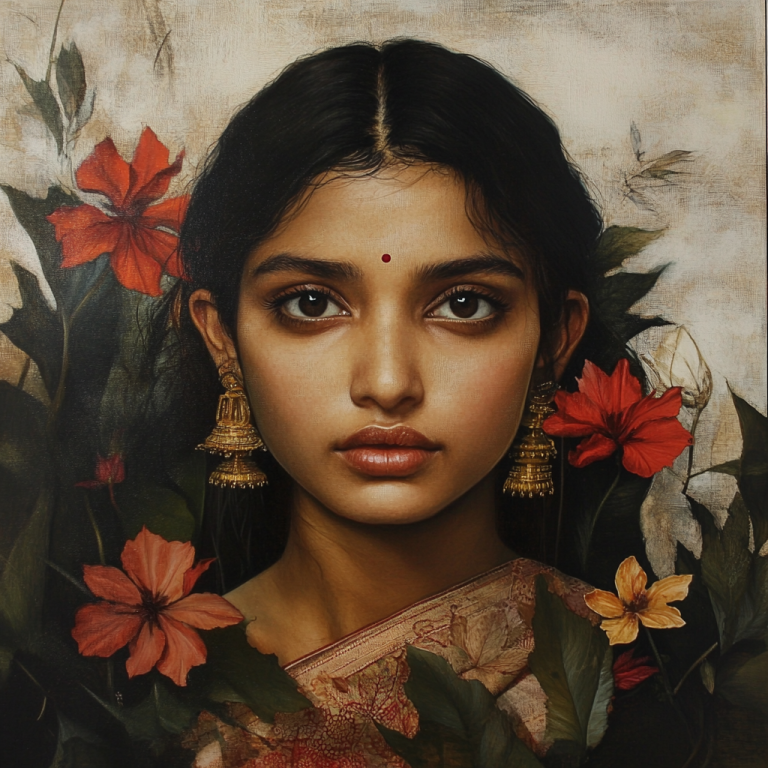
Usha – The Vedic Goddess of Dawn
Usha, the Vedic goddess of dawn, is a radiant and immortal deity celebrated in the Rig Veda for her beauty, grace, and the life-giving light she brings to the world. Her name literally translates to “dawn,” and she represents the transition from darkness to light, both literally and metaphorically. She is one of the few goddesses prominently mentioned in the Rig Veda, reflecting her significance in early Vedic mythology.
Origins and Parentage
Usha is described as the daughter of the sky (in Sanskrit, Dyau), and sometimes as the daughter of Prajapati – The Creators, the primordial creator. This lineage underscores her celestial origin and her role as the herald of a new day.
| Attribute | Description |
|---|---|
| Parentage | Daughter of the sky or Prajapati |
| Companions | The Ashwini twins, the physicians of the gods |
| Symbolism | Represents renewal, hope, and the cycle of time |
Usha’s Role in the Rig Veda
Usha is one of the most vividly described goddesses in the Rig Veda. She is portrayed as a youthful, resplendent maiden who drives away darkness with her light and awakens all living beings to a new day. Her arrival is likened to the gentle unveiling of a bride or the grace of a dancer.
- The Radiant Maiden:
Usha is described as clad in radiant garments, illuminating the world with her brilliance. Her appearance signifies the dispelling of ignorance and the arrival of knowledge and activity. - The Eternal Cycle:
Though Usha is born every day, she is also considered immortal. This paradox emphasizes the cyclical nature of time and the eternal renewal she represents.
Companionship with the Ashwini Twins
The Ashwini twins, the divine physicians of the gods, are her constant companions. They follow her in their glorious chariot, a motif symbolizing speed, vitality, and the transition of time. Their divine qualities are explored in more depth in this profile of the Ashwini Kumars, highlighting their role in healing and cosmic balance.
| Entity | Connection to Usha |
|---|---|
| Ashwini Twins | Her companions, representing swiftness and healing |
| Surya – The Sun (Sun) | Follows Usha, symbolizing the arrival of full daylight |
Usha in Vedic Hymns
Several hymns in the Rig Veda are dedicated to Usha, praising her as the harbinger of light and life. The hymns extol her as the divine force that awakens all living beings, kindles the fires, and brings order to the cosmos.
| Rig Veda Reference | Description |
|---|---|
| R.V. 1.48 | Describes Usha as the daughter of the sky, radiant and immortal, who awakens the world. |
| R.V. 7.75 | Praises her as the one who drives away the darkness and reveals the treasures of the day. |
| R.V. 10.172 | Portrays her as a youthful bride who reveals herself each day, bringing joy and activity to the gods and mortals. |
Symbolism and Themes
Usha embodies themes that transcend her physical manifestation as dawn. Her mythology conveys deeper spiritual and cosmic truths:
| Theme | Symbolism in Usha’s Mythology |
|---|---|
| Light Over Darkness | Usha represents the victory of light over darkness, a universal theme in Hindu mythology. |
| Renewal and Hope | Her arrival each day symbolizes renewal, the cycle of life, and hope for a better future. |
| Awakening | Usha awakens not only living beings but also the spiritual consciousness, inspiring activity and enlightenment. This awakening reflects a central idea in Vedic cosmology, similar to how Purusha, the cosmic being, embodies the source of creation and spiritual realization. |
| Youth and Beauty | As a radiant maiden, she represents the beauty of nature and the rejuvenation that dawn brings. |
Connections to Other Entities and Stories
| Entity | Connection to Usha |
|---|---|
| Surya (Sun God) | Usha heralds the arrival of Surya, paving the way for daylight and the cycle of time. |
| Prajapati (Creator) | As the daughter of Prajapati, Usha is part of the cosmic order established by the primordial force of creation, reinforcing her connection to the grand unfolding of the universe. |
| Ashwini Twins | Her constant companions, highlighting her association with movement, vitality, and divine guidance. |
| Ratri (Night) | Often seen as complementary to Usha, Ratri represents the night that gives way to Usha’s dawn. |
Cultural and Spiritual Legacy
Usha’s influence extends beyond the Vedic texts into later Hindu philosophy and culture. She symbolizes not only the literal dawn but also the metaphorical awakening of the soul. Her story reminds us of the eternal cycles of life, death, and renewal, and the hope that each new day brings.
Her hymns inspire reflection on the natural beauty and cosmic order, fostering a sense of gratitude for the divine forces that sustain life. Figures like Sumitra – Mother of Laxmana and Shatrughna, known for their quiet resilience and devotion, reflect Usha’s own essence of grace and spiritual strength within epic narratives.
Key Takeaways
- Divine Radiance: Usha’s brilliance signifies light, knowledge, and renewal, making her one of the most celebrated goddesses in the Vedic pantheon.
- Cosmic Role: As the goddess of dawn, she bridges the gap between night and day, darkness and light, ignorance and wisdom.
- Timeless Symbol: Her association with immortality and the daily cycle of dawn reflects the eternal truths of Hindu cosmology.
Through her hymns and stories, Usha continues to inspire devotion and wonder, shining as a timeless symbol of hope, vitality, and cosmic harmony.
Sources & further reading
These themes are explored in greater depth across the following authoritative resources:
- Internet Sacred Text Archive, Rig Veda (Griffith translation)
- Internet Sacred Text Archive, Upanishads
- Britannica, Veda
- Britannica, Upanishad
- Patrick Olivelle, The Early Upanishads (Oxford University Press, 1998)
External resources for further reading. Apam Napat is not affiliated with these publishers; citation does not imply endorsement.
Based on the classical texts of Hindu mythology, see our sources.