
Exploring the Gita’s teachings can feel like revealing a treasure trove of ancient wisdom. From its discourse on karma and dharma to its exploration of the self and the universe, the Gita offers valuable lessons that remain relevant today. Whether you’re seeking personal growth or spiritual enlightenment, the Gita’s ancient wisdom has something to offer everyone.
Historical Background of the Gita
The Bhagavad Gita, often referred to simply as the Gita, is an ancient Hindu scripture. Rooted in Indian culture, it provides profound insights into life, duty, and spirituality.
Origin and Authorship
Believed to have been written around the 5th to 2nd century BCE, the Gita is part of the Indian epic, the Mahabharata. Traditionally attributed to the sage Vyasa, this sacred text represents a synthesis of various philosophical ideas, including Vedanta, Sankhya, and Yoga. While modern scholars debate the exact date and authorship, the Gita’s timeless wisdom remains unrivaled in its spiritual and philosophical insights.
Context within the Mahabharata
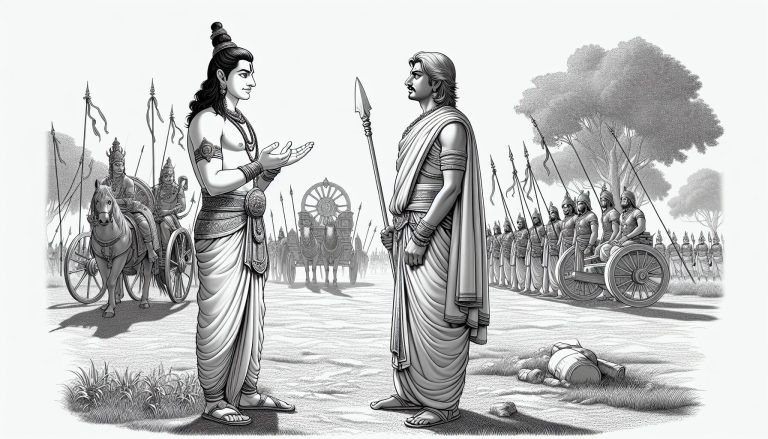
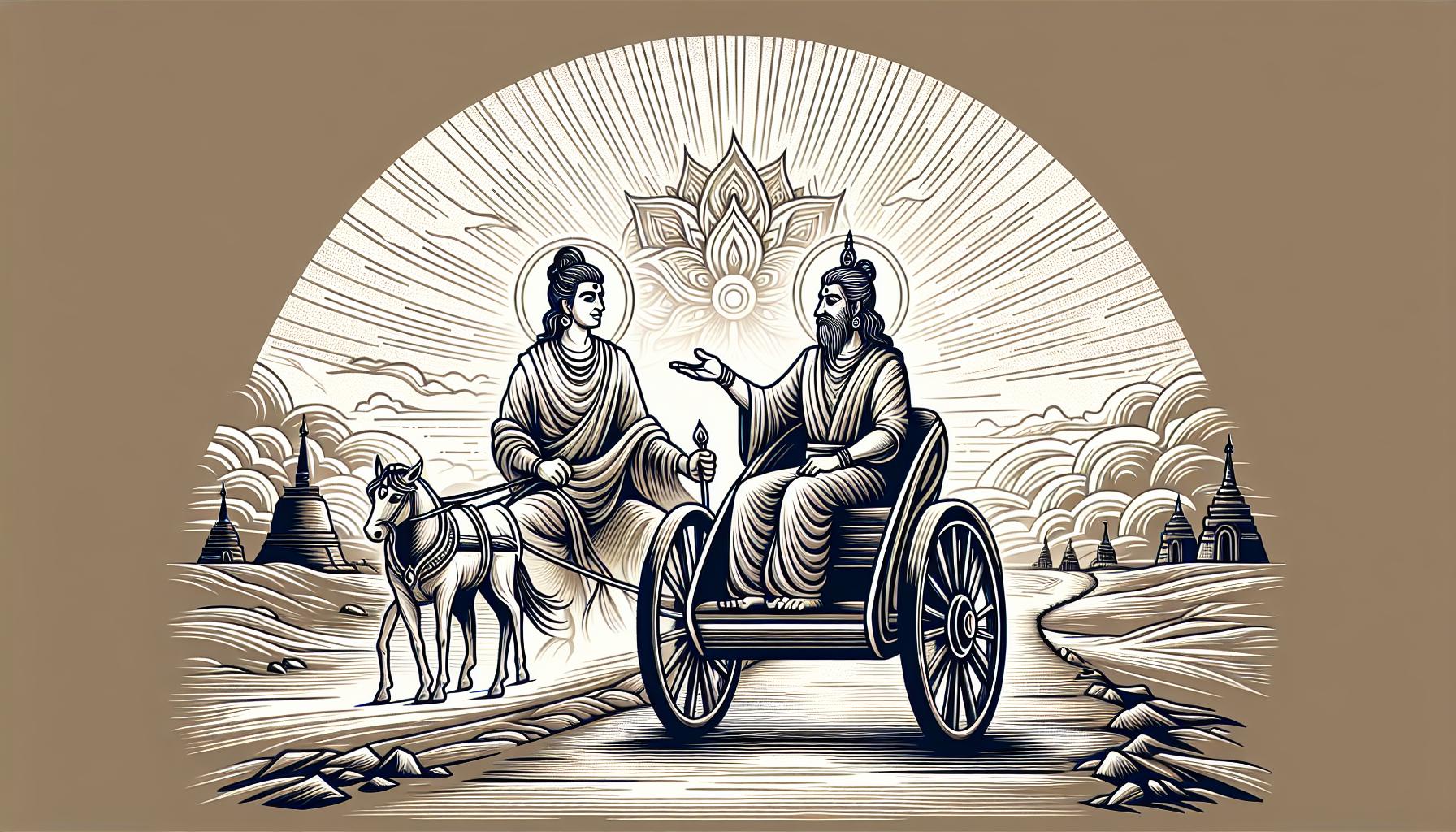
The Gita forms part of the Bhishma – The Grand Old Man of The Kurus Parva in the Mahabharata, encompassing chapters 23 to 40. Set on the battlefield of Kurukshetra, it captures the dialogue between prince Arjuna – The Peerless Archer and his charioteer, Lord Krishna – An Incarnation of Vishnu. As Arjuna faces a moral crisis, Krishna imparts guidance on duty, righteousness, and the nature of life. This discourse occurs just before the great battle, highlighting the importance of righteous action and spiritual wisdom. The Gita’s placement within this epic underscores its significance as a guide to moral and ethical dilemmas.
By understanding the historical background of the Gita, readers gain deeper appreciation for its teachings and their relevance in contemporary life.
Core Teachings of the Gita
The core teachings of the Gita focus on living a life aligned with duty, self-awareness, and spiritual growth. Key principles like Dharma and Karma, the nature of the self, and paths to liberation form the foundation of its wisdom.
Concepts of Dharma and Karma
Dharma signifies duty, righteousness, and moral order. In the Gita, Krishna urges Arjuna to fulfill his Kshatriya duty without attachment to outcomes. Karma, or the law of action and reaction, highlights that one’s actions influence their future. The Gita teaches to act selflessly, dedicating outcomes to a higher purpose, so achieving equanimity.
The Nature of the Self
The Gita emphasizes the eternal, unchangeable nature of the self (Atman – The Soul). Krishna explains that while the physical body perishes, the soul remains unaffected. This belief in an immortal self encourages detachment from material concerns and fosters a deeper understanding of one’s true essence beyond the physical form.
Paths to Liberation
The Gita outlines three main paths to liberation (Moksha): Karma Yoga (Path of Action), Bhakti Yoga (Path of Devotion), and Jnana Yoga (Path of Knowledge). Karma Yoga focuses on selfless service, Bhakti Yoga on devotion to the divine, and Jnana Yoga on attaining wisdom through self-inquiry. Following these paths leads to liberation from the cycle of birth and death.
Philosophical Insights from the Gita
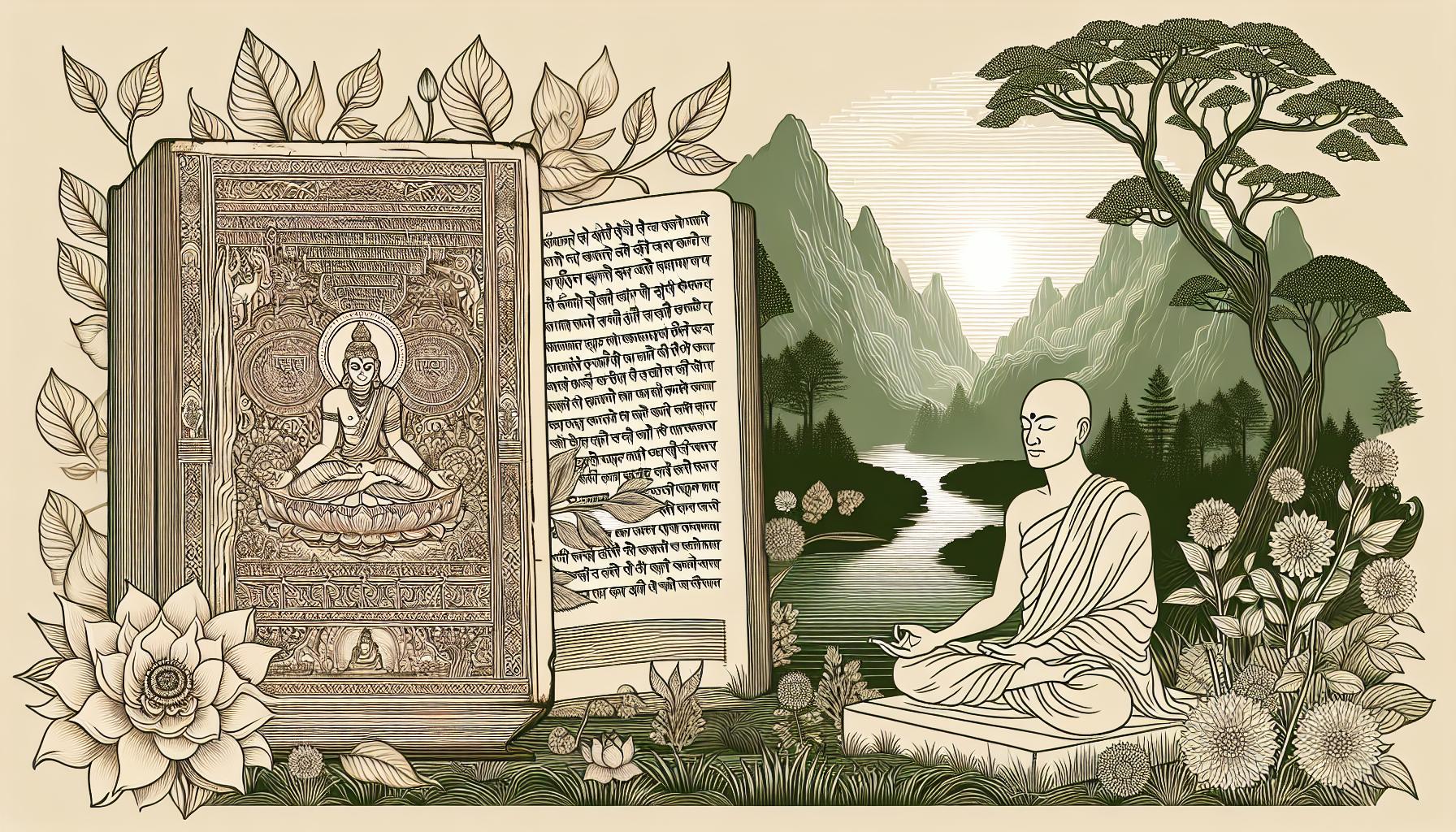
The Bhagavad Gita offers profound philosophical guidance that transcends time. Here, I’ll investigate into some core teachings and their significance.
Sankhya and Yoga
The second chapter of the Bhagavad Gita, titled “Sankhya Yoga,” provides a philosophical framework central to Hinduism. It emphasizes the eternal nature of the soul (atman) and the temporary nature of the body, encouraging performing duties with detachment. Sankhya Yoga forms the basis of rational understanding and details the nature of reality.
The Gita also elucidates various forms of yoga, integral to spiritual practice. Bhakti Yoga, known as the path of loving devotion, involves surrender and trust in the divine. It focuses on cultivating a personal relationship with a higher power. On the other hand, Jnana Yoga, the path of knowledge, aims for self-realization through direct knowledge of the Brahman – The Supreme Truth, the ultimate reality.
Concept of Detachment
The concept of detachment in the Gita is pivotal. It teaches that one’s right lies in performing their duties, not in the outcomes of their actions. This principle helps in maintaining equanimity and focuses on selfless service, fostering inner peace and balance.
Relevance of Gita’s Wisdom Today
The Bhagavad Gita offers timeless guidance for contemporary life, transcending cultural and religious boundaries. Its teachings provide profound insights that resonate with today’s challenges and opportunities.
Applications in Modern Life
Embracing One’s Duty (Dharma)
The Gita emphasizes the importance of understanding and fulfilling one’s duties in society. It underscores that doing one’s duty, or dharma, contributes to personal fulfillment and the greater good. Whether in professional roles or personal relationships, recognizing and embracing responsibilities enhances purpose and satisfaction in life.
Detachment and Equanimity
The Gita teaches the need for detachment from outcomes. Focusing on the process rather than the end results, it advocates for maintaining equanimity regardless of life’s ups and downs. This approach fosters resilience and inner peace, enabling individuals to navigate challenges calmly and effectively.
Overcoming Self-Doubt and Fear
The Gita guides individuals to tap into inner strength by recognizing their eternal soul. By understanding this profound connection, one can approach challenges with courage and conviction. This wisdom helps overcome self-doubt and fear, leading to a more confident and purposeful life.
Influence on Leaders and Thinkers
The timeless wisdom of the Gita has significantly influenced various leaders and thinkers. Mahatma Gandhi drew inspiration from the Gita, specifically its teachings on selfless action and non-attachment, to guide his philosophy of nonviolent resistance. Similarly, luminaries like Albert Einstein and Carl Jung admired its profound spiritual insights, recognizing its universal applicability.
Conclusion
The timeless wisdom of the Bhagavad Gita offers profound insights that remain relevant today. By embracing its teachings on duty, self-awareness, and spiritual growth, we can navigate life’s challenges with clarity and purpose. The Gita’s emphasis on living in alignment with our true selves and practicing detachment and equanimity provides a solid foundation for personal and spiritual development. It’s no wonder that influential leaders and thinkers have drawn inspiration from this ancient text. As we continue to explore and apply the Gita’s principles, we can cultivate a life of meaning and fulfillment.
Sources & further reading
These themes are explored in greater depth across the following authoritative resources:
- Internet Sacred Text Archive, Rig Veda (Griffith translation)
- Internet Sacred Text Archive, Upanishads
- Britannica, Veda
- Britannica, Upanishad
- Patrick Olivelle, The Early Upanishads (Oxford University Press, 1998)
External resources for further reading. Apam Napat is not affiliated with these publishers; citation does not imply endorsement.
Frequently asked questions
What is the Bhagavad Gita?
Who wrote the Bhagavad Gita?
Where in the Mahabharata is the Gita found?
What are the core teachings of the Bhagavad Gita?
Based on the classical texts of Hindu mythology, see our sources.