
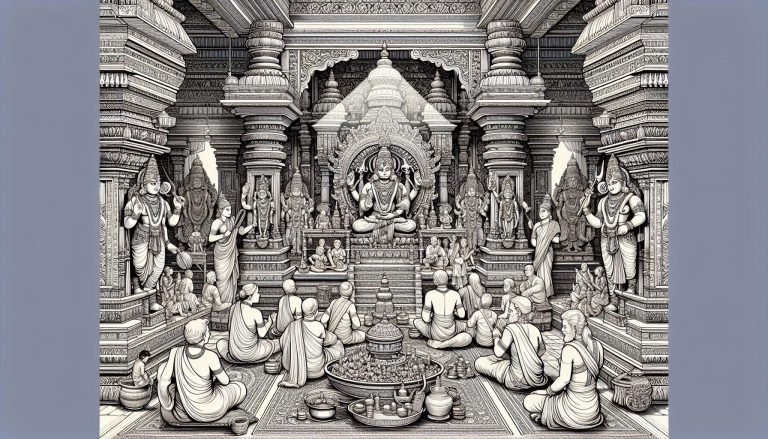
I’ve always found it fascinating how these deities, with their unique attributes and narratives, form a complex yet harmonious mosaic. They don’t just exist in temples or scriptures—they’re woven into the very fabric of daily life, influencing art, music, and even modern practices. Exploring these patterns offers a window into the rich, multifaceted world of Hindu belief and tradition.
Overview of Hindu Deities
Hindu deity patterns encompass a diverse and complex array of gods and goddesses integral to the Hindu faith. The key concepts revolve around Brahman – The Supreme Truth, the supreme reality behind everything in Hinduism. Understanding Brahman reveals the philosophical foundation that unites this diverse pantheon.
Key Concepts
- Brahman: Recognized as the supreme divine entity. Brahman represents the ultimate reality that underlies everything.
- Trimurti: Includes Brahma (creation), Vishnu (preservation), and Shiva (destruction). These three gods embody the primary functions of the cosmic process.
- Polytheistic and Monotheistic Elements: Hinduism is unique in being both polytheistic (numerous gods) and monotheistic (one divine reality, Brahman).
- Brahma: Known as the god of creation, Brahma is rarely worshipped in contemporary Hindu practices. He symbolizes creation and the beginning of the universe.
- Vishnu: As the preserver god, Vishnu maintains order and harmony in the cosmos. Devotees in Vaishnavism revere Vishnu deeply, celebrating his avatars like Rama and Krishna – An Incarnation of Vishnu.
- Shiva: Shiva, the destroyer god, represents transformation and renewal. Followers in Shaivism honor Shiva’s purifying and regenerative powers.
- Shakti: The supreme Goddess, Shakti, manifests in various forms such as Durga, Parvati – The Consort of Shiva, Sati, and Kali. She embodies power, protection, and motherhood.
These deities and their intricate relationships form the heart of Hindu worship and influence numerous cultural and spiritual practices.
Major Deity Groupings

In Hinduism, two primary groupings of deities encapsulate the cosmic functions of the universe. The Trimurti and the Tridevi embody creation, preservation, destruction, and power.
The Trimurti
The Trimurti represents the Trinity – Shiva, Vishnu and Brahma of supreme divinity. It comprises three male gods, each with a distinct role:
- Brahma: The creator, depicted with four heads symbolizing the four Vedas. Few temples are dedicated to him, as he lost worshippers after telling a lie.
- Vishnu: The preserver, shown as a royal figure with four arms holding a mace, disc, lotus, and conch. He is highly revered, often worshipped in his avatars like Rama and Krishna.
- Shiva: The destroyer, illustrated with four arms bearing a trident, deer, and fruit. He is a powerful deity associated with the linga and has Parvati as his consort.
The Tridevi
The Tridevi complements the Trimurti by representing three goddesses who are their respective consorts and embody the energies of creation, preservation, and destruction:
- Saraswati – The Goddess of Learning and Wisdom: The goddess of wisdom and learning, she is Brahma’s consort and often depicted with a veena, a book, and a swan.
- Lakshmi: The goddess of wealth and prosperity, the consort of Vishnu, shown with gold coins flowing from her hands, standing on a lotus.
- Parvati: The goddess of power and love, Shiva’s consort, depicted as a nurturing mother but also fierce forms like Durga and Kali. She symbolizes the dynamic energy (Shakti) needed for creation and destruction.
These male and female deities form the core of Hindu cosmic functions, influencing spiritual practices and daily life.
Popular Deities and Their Patterns
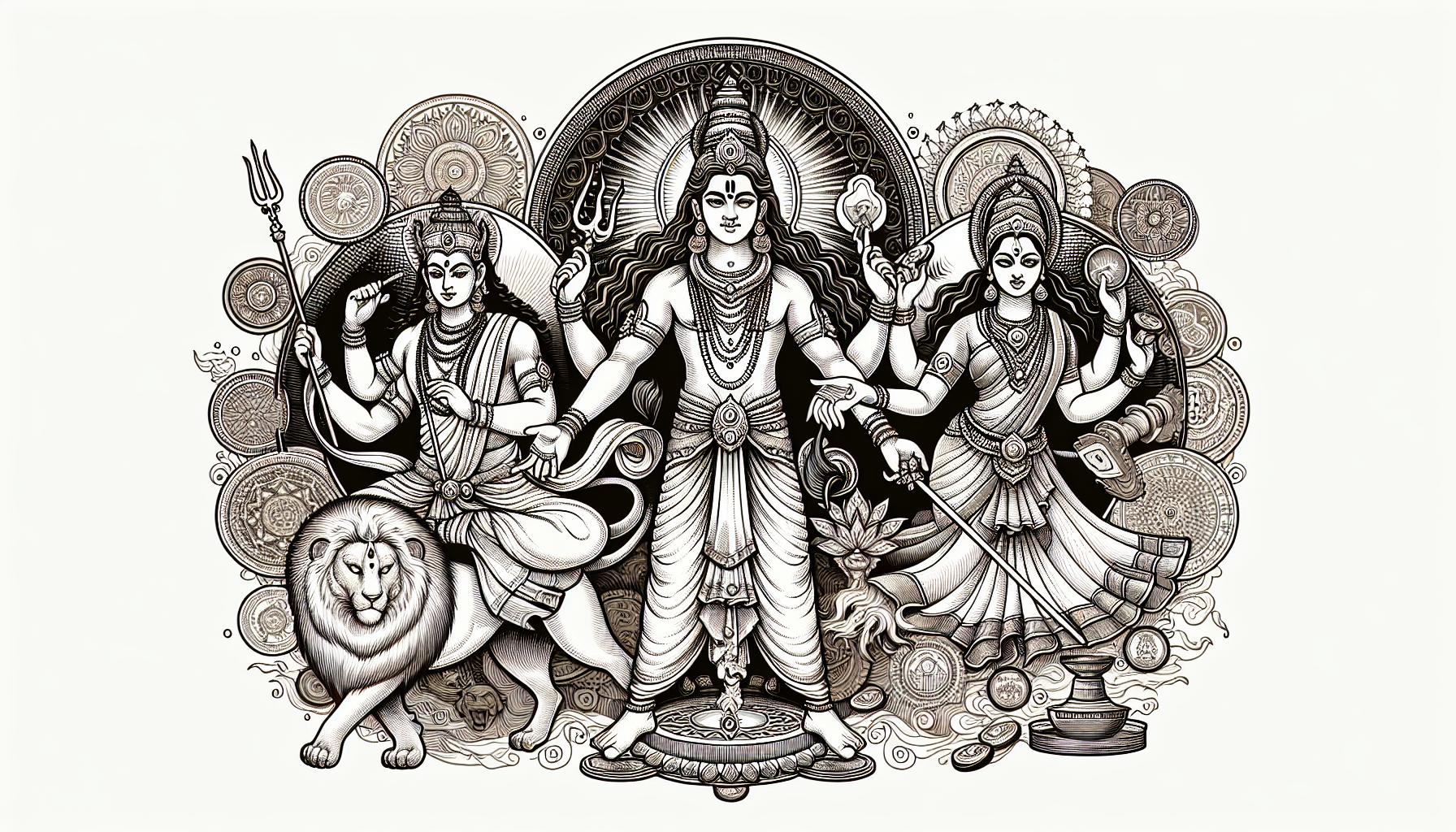
Hinduism features a rich world of deities, each embodying unique attributes, stories, and cultural significance. Let’s investigate into the patterns associated with Vishnu, Shiva, and Devi.
Vishnu and His Avatars
Vishnu, the god of preservation, often manifests in various avatars to restore balance and combat evil. Notable examples include:
- Rama: He is known for his virtuous nature and is the central figure in the epic Ramayana – Epic of Hinduism.
- Krishna: Worshipped as the supreme god by many Hindus, Krishna has roles ranging from cowherd and divine lover to child prankster and heroic warrior.
Vishnu’s avatars appear with distinct symbols, like Rama with his bow and arrow and Krishna with his flute.
Shiva and His Forms
Shiva, the god of destruction and transformation, assumes multiple forms, each with significant attributes:
- Nataraja: This form represents Shiva as the cosmic dancer, symbolizing creation and destruction.
- Ardhanarishvara: Depicts Shiva as half-man, half-woman, representing the unity of male and female principles.
Shiva’s forms are integral to Hindu rituals, depicting the cyclical nature of life and the universe.
Devi and Her Manifestations
Devi, the goddess embodying power and femininity, appears in various manifestations:
- Durga: Known as the warrior goddess, she combats evils and demonic forces to protect the universe.
- Lakshmi: As the goddess of wealth and prosperity, she is worshipped in homes and businesses to invoke good fortune.
Devi’s manifestations emphasize different aspects of divine femininity, from nurturing to fierce protection, shaping the spiritual practices of millions.
Regional and Local Deity Variations
In Hinduism, deity worship exhibits significant regional and local variations. These differences reflect the diverse cultural and historical contexts across India.
North Indian Deity Patterns
In North India, Shiva, Hanuman, and Ganesha are the most commonly worshipped deities. Shiva holds a particularly revered status, with numerous temples dedicated to him. North India also associates itself with the Bhagavad Gita, a central Hindu text believed to have been composed in this region. The concept of avatars, divine incarnations, prominently features in North Indian Hinduism. The Bhagavad Gita introduces the idea of avatars as periodic descents of the Supreme Being.
South Indian Deity Patterns
South Indian deity patterns differ significantly. The region is known for its strong tradition of Shaktism, focusing on the goddess as the primary deity. Temples dedicated to goddesses like Devi, Durga, and Lakshmi are prevalent. Shaktism emphasizes the divine feminine, highlighting its importance in daily life and spiritual practices.
Symbolism and Iconography
Hindu deity patterns often feature rich symbolism and intricate iconography. Symbols and icons act as mediums to convey deeper meanings and spiritual messages.
Common Symbols
Symbolism plays a pivotal role in Hindu deity art. Several symbols reappear, each with unique meanings:
- Om (Aum): Om signifies the universe’s creation and consists of three syllables (a, u, m). It represents the three worlds, the major trinity (Brahma, Vishnu, Shiva), and the three sacred Vedic scriptures.
- Swastika: Representing auspiciousness, the Swastika symbolizes divinity and is integral to Hindu ceremonies. Featuring four parts, it relates to the four Vedas and symbolizes peace and prosperity.
- Sri Yantra: This geometric figure is composed of nine interlocking triangles, epitomizing wealth and prosperity, and is associated with Lakshmi, the goddess of abundance.
Significance of Symbols
The symbols in Hindu iconography serve multi-faceted purposes, facilitating deeper understanding and spiritual enlightenment.
- Om (Aum): As the primal sound, Om is foundational to meditative practices. It’s considered the auditory embodiment of the cosmos, leading to mental clarity and tranquility if recited.
- Swastika: The Swastika’s four arms denote the four stages of life (ashramas) and the four aims of life (purusharthas). Its presence is meant to invoke auspiciousness and safeguard against negative forces.
- Sri Yantra: Utilized in Tantric rituals, the Sri Yantra is believed to harness cosmic energy. Its elaborate design aids in focusing the mind and invoking divine energy in spiritual practices.
By understanding these symbols, one gains deeper insights into Hindu belief systems and deities. The recurring themes in these symbols reinforce the interconnectedness of cosmic processes and spiritual goals within Hinduism.
Modern Interpretations and Practices
Hindu deity patterns are a fusion of ancient beliefs and modern practices, reflecting a wide spectrum of religious sentiments and cultural influences.
Contemporary Worship Patterns
Modern Hindu worship includes diverse beliefs ranging from polytheistic to atheistic. Many individuals maintain home-based practices. Data shows that 81% of Indian adults have an altar or shrine at home.
Daily prayers and visits to temples form core parts of worship routines. Home-based rituals often involve offerings, lighting lamps, and chanting mantras. Home altars may feature idols of deities like Ganesha, Lakshmi, and Shiva, serving as focal points for devotion.
The influence of Western culture has also molded contemporary Hindu practices. Yoga, once an exclusive spiritual exercise, has become globally practiced. Sects like Transcendental Meditation and the Hare Krishna movement have gained popularity outside India, adding to the diversity in modern belief systems.
Influence on Popular Culture
Hindu deities have permeated popular culture in various forms. Indian cinema frequently showcases mythological themes. Bollywood movies like “Baahubali” and series like “Ramayan” vividly depict stories of deities, attracting large audiences.
Fashion also mirrors religious symbols. Deity imagery appears on clothing, jewelry, and accessories. Also, festivals like Diwali and Holi have crossed borders, celebrated by many worldwide regardless of religious affiliation.
Global interest in Hindu spirituality has fostered an appreciation of its rich traditions. This widespread influence signifies the adaptability and enduring appeal of Hindu deity patterns in contemporary society.
Conclusion
Exploring the patterns of Hindu deities reveals a rich world of symbolism and cultural significance. These deities not only shape spiritual practices but also influence various aspects of daily life and modern culture. From ancient rituals to contemporary adaptations their presence remains strong and impactful. The seamless blend of tradition and modernity showcases the enduring relevance of these divine figures. Hindu deities continue to inspire and resonate deeply with millions around the world reflecting a timeless connection to the cosmic functions they represent.
Frequently asked questions
What is the Trimurti in Hinduism?
Who are the Tridevi goddesses?
What is Brahman in Hinduism?
What does the Om symbol represent in Hinduism?
Sources & further reading
These themes are explored in greater depth across the following authoritative resources:
- Britannica, Hindu Temple Architecture
- Met Museum, Hinduism in the Arts
- Britannica, Iconography
- Stella Kramrisch, The Hindu Temple (Motilal Banarsidass, 1946)
- Heinrich Zimmer, Myths and Symbols in Indian Art and Civilization (Princeton University Press, 1946)
External resources for further reading. Apam Napat is not affiliated with these publishers; citation does not imply endorsement.
Based on the classical texts of Hindu mythology, see our sources.