

As I investigate into the world of Hindu literature translations, I uncover not just the beauty of the original Sanskrit but also the challenges and nuances involved in bringing these works to a global audience. Each translation carries the weight of centuries-old traditions and the responsibility of preserving their essence while making them accessible to modern readers.
Significance Of Hindu Literature
Hindu literature encompasses a vast range of texts, including the Vedas, Upanishads, Mahabharata, Ramayana, and Puranas. These texts hold immense significance due to their philosophical insights and cultural narratives.
The Vedas are the foundational texts containing hymns, rituals, and spiritual knowledge. They provide the basis for many Hindu practices and beliefs. Rig Veda, the oldest among them, consists of 1,028 hymns dedicated to various deities.
Upanishads investigate into metaphysical concepts and explore the nature of reality and consciousness. They present profound philosophical discussions that have influenced various schools of thought. Key Upanishads include Isha, Kena, and Katha.
Mahabharata and Ramayana are epic narratives that offer moral and ethical lessons. The Mahabharata, with over 100,000 verses, details the Kurukshetra war and the Bhagavad Gita’s teachings. The Ramayana narrates the life of Prince Rama and his quest to rescue his wife, Sita.
Puranas provide mythological stories, cosmology, and genealogies of gods, sages, and kings. They serve as a link between ancient Vedic traditions and contemporary Hindu practice. Prominent Puranas include Vishnu Purana and Shiva Purana.
Together, these texts capture the essence of Hindu philosophy, ethics, and mythology, making their translations invaluable for scholars and practitioners seeking wisdom and cultural understanding.
Key Translated Works

The translation of Hindu literature has led to widespread access and understanding of ancient texts. Below are some key translated works that play a vital role in sharing Hindu philosophy and culture.
The Vedas
The Vedas are the oldest and most revered texts in Hindu literature. Rigveda, Samaveda, Yajurveda, and Atharvaveda comprise this collection. Each Veda consists of hymns, prayers, and rituals. Ralph T.H. Griffith, an authority on Sanskrit literature, translated the Rigveda, ensuring high accuracy and preserving its spiritual essence. His work remains a cornerstone for scholars and practitioners alike.
The Upanishads
The Upanishads investigate into metaphysical and philosophical concepts. They form the core of Vedantic philosophy. Among the numerous translators, Swami Prabhavananda and Frederick Manchester stand out for their translation of 12 principal Upanishads. This version offers a clear and insightful understanding, making complex ideas accessible. Notable texts like Katha, Isa, and Mundaka Upanishads provide profound teachings about the self and the universe.
The Mahabharata
The Mahabharata, an epic narrative, includes the Bhagavad Gita. C. Rajagopalachari’s abridged translation captures the essence of this grand epic. It’s appreciated for its readability while maintaining the narrative’s integrity. Prose versions by Kisari Mohan Ganguli and P. Lal offer comprehensive insights into the text, covering intricate details and ethical dilemmas faced by the characters.
The Ramayana
The Ramayana tells the story of Prince Rama. Valmiki’s original Sanskrit poem has seen numerous translations. C. Rajagopalachari, known for translating the Mahabharata, also offers a condensed yet vivid translation of this epic. Also, R.K. Narayan’s version is praised for its engaging storytelling and accessibility to modern readers. Both translations maintain the moral and cultural values depicted in the original text.
Translating these works is indispensable for preserving and disseminating Hindu culture, philosophy, and spirituality.
Prominent Translators
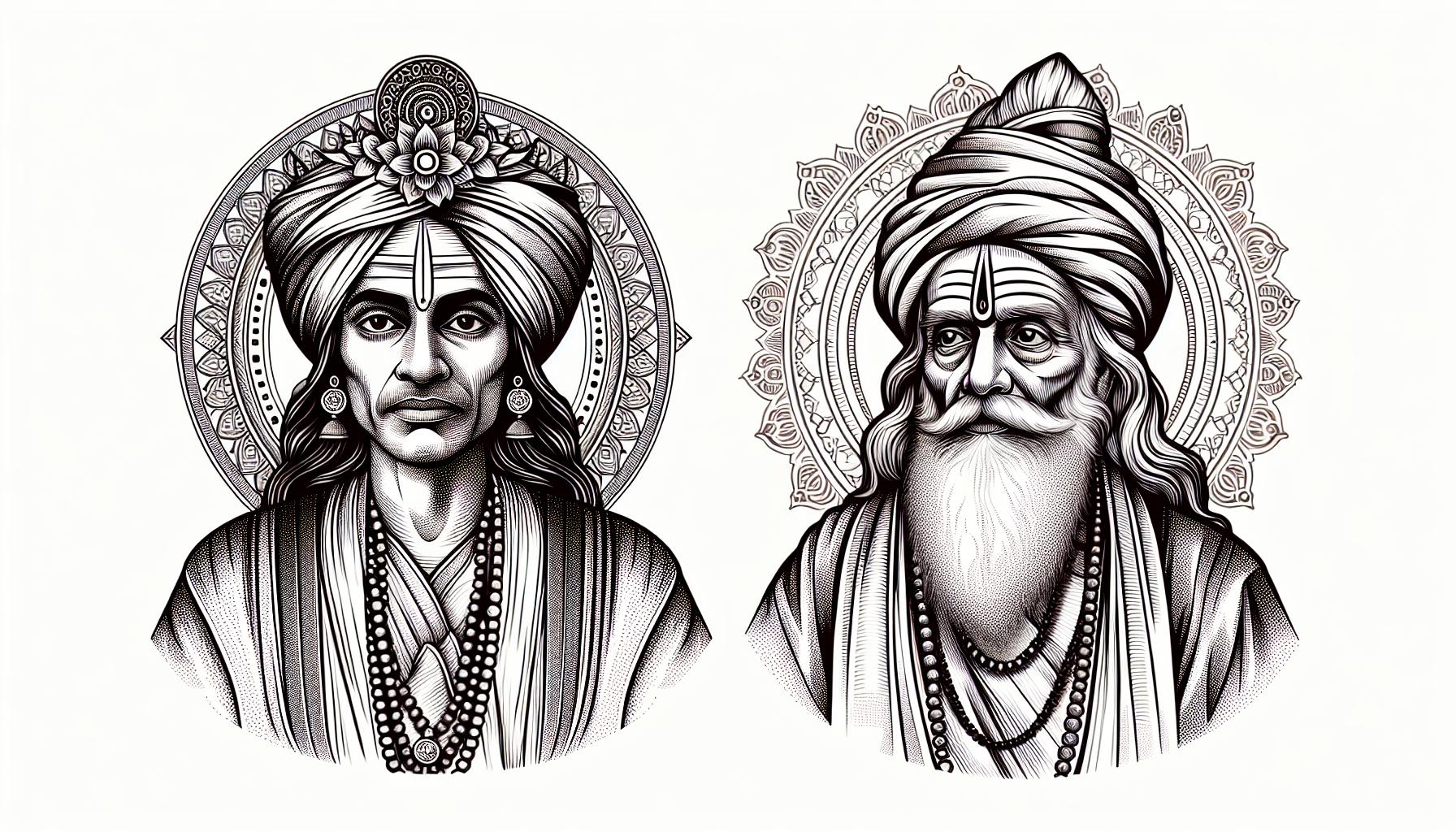
Translating Hindu literature requires profound knowledge and cultural sensitivity. Several prominent translators have made significant contributions.
Contributions Of Swami Vivekananda
Swami Vivekananda played a key role in translating Hindu texts. He emphasized the essence of Vedanta and Yoga in his works. His translations and interpretations of the Bhagavad Gita and Patanjali’s Yoga Sutras have provided deep insights into these texts. Vivekananda’s effort to simplify complex concepts has made them accessible to a broader audience. I find his ability to connect philosophical ideas with practical life especially impactful.
Works By A.C. Bhaktivedanta Swami Prabhupada
A.C. Bhaktivedanta Swami Prabhupada’s translations are among the most influential. He translated the Bhagavad Gita, Srimad Bhagavatam, and Chaitanya Charitamrita into English. Swami Prabhupada’s commentary on these texts offers a devotional perspective, connecting readers with the spiritual essence of Hinduism. His translation of the Bhagavad Gita, titled “Bhagavad-gita As It Is,” remains one of the most widely read versions globally.
Challenges Of Translation

Translating Hindu literature presents several challenges, notably in linguistic nuances, cultural context, and interpretational variations.
Linguistic Nuances
Hindu literature employs complex figures of speech. Metaphors and idioms, pervasive in texts like the Upanishads, deviate from literal meanings, complicating accurate translation. For example, specific idioms convey cultural subtleties not easily rendered in another language.
Poetic expressions add to the complexity. Literary works like the Vedas integrate wordplay and idiomatic nuances. Maintaining the poetic impact without losing meaning requires careful handling. Examples include verses that depend on specific phrasing for their philosophical depth.
Rhyme and rhythm present translation hurdles. Poetry in texts such as the Bhagavad Gita employs strict rhyme schemes and metrical patterns. Translating these elements while preserving aesthetic appeal challenges translators to balance form and content.
Cultural Context
Hindu literature is deeply embedded in cultural context. Rituals, social norms, and historical references in texts like the Mahabharata and Ramayana demand cultural sensitivity. Translating these elements accurately ensures the text retains its original significance.
Cultural references abound. For instance, caste dynamics, family structures, and ancient customs appear often in Hindu scriptures. Understanding the context behind these references aids in producing a faithful translation.
Interpretational Variations
Interpretational variations add layers of complexity. Texts like the Bhagavad Gita have multiple interpretations influenced by philosophical, theological, and historical perspectives. Translators must choose interpretations that reflect the text’s intent while considering diverse viewpoints.
Different schools of thought impact translation. Advaita Vedanta and Bhakti traditions, for instance, offer contrasting interpretations of the same text. Selecting an interpretation that harmonizes with the original meaning requires insight into these philosophical nuances.
Translating Hindu literature remains a nuanced task, requiring consideration of linguistic, cultural, and interpretational factors to preserve the original texts’ richness.
Impact On Global Understanding
Translating Hindu literature significantly broadens global perspectives. By making sacred texts like the Vedas, Upanishads, Mahabharata, and Ramayana accessible, these translations promote intercultural dialogue and mutual respect. When readers from diverse backgrounds engage with these texts, they gain insights into Hindu philosophy, spirituality, and cultural values.
Access to translated Hindu literature has fostered academic research. Scholars can examine themes such as dharma, karma, and moksha without language barriers. This enriched understanding contributes to comparative studies in philosophy, theology, and history, highlighting commonalities and distinctions among world traditions.
Educational systems integrate Hindu literature translations to create a more inclusive curriculum. Students explore ancient Indian wisdom, enhancing their global literacy. For example, studying the Bhagavad Gita’s ethical teachings can deepen an understanding of moral philosophy.
Hindu literature translations shape popular culture. Movies, novels, and art draw inspiration from these texts, influencing creative expressions worldwide. The Mahabharata and Ramayana narratives find adaptations in various media, contributing to their universal appeal.
Translations also support the Hindu diaspora in maintaining cultural connections. Second-generation immigrants access their heritage through these texts, preserving their identity and passing traditions to future generations.
Summarizing, translating Hindu literature impacts global understanding by promoting intercultural dialogue, enriching academic research, enhancing education, influencing popular culture, and supporting diaspora communities.
Conclusion
Translating Hindu literature offers a gateway to a deeper understanding of one of the world’s oldest cultures. It’s a powerful tool for fostering global dialogue and enriching academic pursuits. These translations not only enhance educational curricula but also resonate in popular culture, bridging gaps between diverse communities. For the Hindu diaspora, they serve as a vital link to their heritage, ensuring that traditions and values are passed down through generations. By embracing these translations, we contribute to a richer, more inclusive world.
Sources & further reading
These themes are explored in greater depth across the following authoritative resources:
- Stanford Encyclopedia of Philosophy, Hindu Philosophy
- Mythopedia, Hindu Mythology
- Britannica, Hindu Mythology
- Sheldon Pollock, The Language of the Gods in the World of Men (University of California Press, 2006)
- A. K. Ramanujan, The Collected Essays (Oxford University Press, 1999)
External resources for further reading. Apam Napat is not affiliated with these publishers; citation does not imply endorsement.
Frequently asked questions
What are the main texts of Hindu literature?
What are the Vedas?
What do the Upanishads explore?
How long is the Mahabharata?
What is the Ramayana about?
Based on the classical texts of Hindu mythology, see our sources.