
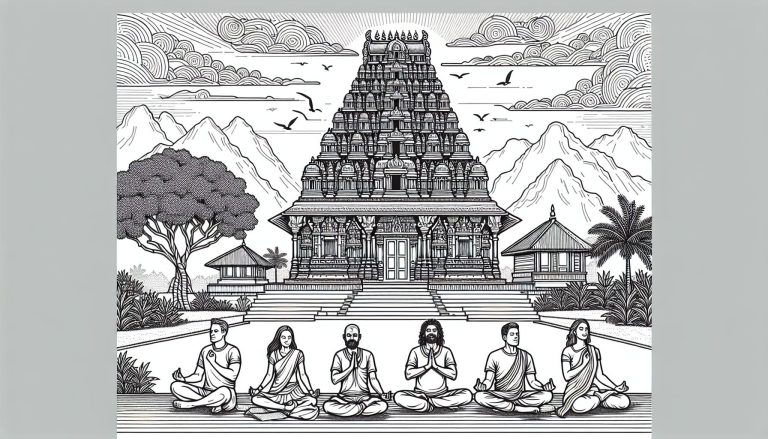
Understanding reincarnation in Hinduism means exploring the intricate dance of karma and dharma. These principles guide an individual’s actions and moral duties, eventually influencing their future lives. It’s a profound system that offers a unique perspective on life, death, and the eternal journey of the soul.
Understanding Hinduism
Hinduism, one of the oldest religions, emphasizes the eternal cycle of rebirth, known as samsara. Believers view life, death, and rebirth as a continuous loop, where the soul (Atman – The Soul) transmigrates based on karma – the accumulated deeds from past lives.
Reincarnation (Samsara)
The concept of samsara revolves around the cycle of life, death, and rebirth. I find it fascinating how this cycle is perceived as both a chance and a challenge, where the soul is reborn in a new body, influenced by previous actions.
Karma
Karma, a central tenet, dictates that actions in previous lives shape future existences. Good deeds result in better rebirths, while misdeeds can lead to lower forms of life. This principle underscores the importance of ethical living, as I strive to ensure my actions contribute positively to my future.
Atman
Atman, the eternal soul, transcends physical existence. It’s believed to carry one’s essence through multiple lifetimes, seeking liberation. Understanding Atman helps me connect with the deeper aspects of my being, beyond the transient physical body.
Moksha or Mukti
Moksha represents the ultimate liberation from the rebirth cycle. Achieving moksha means reuniting with Brahman – The Supreme Truth, the ultimate reality. This state of enlightenment frees the soul from the endless cycle, and it’s often the spiritual goal I aspire to in my journey.
Samsara
Samsara, the cycle of rebirth, continues until the soul attains liberation. It’s a key principle in understanding the flow of existence in Hinduism, offering insights into the perpetual journey of life and spiritual evolution. By comprehending samsara, I appreciate the continuous efforts needed to progress spiritually.
These elements form the crux of Hindu beliefs on reincarnation, shaping an intricate and profound understanding of life, death, and the eternal soul.
Core Tenets of Hindu Beliefs
Hinduism centers around profound concepts that reflect its rich spiritual heritage. Among these, reincarnation holds a pivotal place.
The Concept of Karma
Karma, a foundational belief in Hinduism, signifies that every action has consequences. If one lives ethically and performs good deeds, benefits accrue. Conversely, unethical actions yield negative consequences. Karma from previous lives determines a soul’s circumstances in the next incarnation. For instance, generosity might result in a prosperous future life, while harmful actions could lead to hardship. So, karma ensures moral accountability across lifetimes.
The Cycle of Samsara
Samsara represents the ongoing cycle of birth, death, and rebirth. This cycle is perpetual until the soul attains moksha, or liberation. Samsara, driven by karma and desires (e.g., attachment to material wealth), perpetuates the soul’s journey through diverse existences. Liberation from samsara occurs when the soul achieves a state free from worldly attachments and desires. This escape marks the soul’s reunion with Brahman, the ultimate spiritual reality in Hinduism.
Reincarnation in Hinduism
Reincarnation in Hinduism revolves around the belief that the soul is reborn in different forms after death. This section explores the core concepts of this belief.
Definition and Explanation
Reincarnation, or samsara, signifies the endless cycle of birth, death, and rebirth. The soul, or atman, moves through this cycle taking on new forms based on accumulated karma. Good karma results in favorable rebirths, while bad karma leads to less favorable ones. Hindu texts, such as the Bhagavad Gita, detail this doctrine, emphasizing the eternal journey of the atman toward ultimate liberation or moksha.
The Role of Past Lives
Past lives shape the nature of one’s current and future existences. Actions, thoughts, and words from previous lifetimes contribute to one’s karma, directly impacting future reincarnations. Positive actions lead to beneficial outcomes in the next life, while negative actions bring about challenges. By understanding and cultivating good karma, individuals can influence their samsara and work toward achieving moksha.
Scriptural References
Hindu scripture provides a rich foundation for understanding reincarnation beliefs. Primary sources include the Vedas, the Upanishads, and the Bhagavad Gita.
The Vedas and Upanishads
- The Vedas
- The Vedas are the oldest sacred texts of Hinduism, comprising four parts: Rigveda, Samaveda, Yajurveda, and Atharvaveda. They encompass rituals, narratives, liturgies, and hymns that form the basis of Hindu teachings and beliefs.
- While the Vedas mention eternal bliss, they don’t provide detailed explanations on moksha (liberation). Instead, they set the foundation for later texts to elaborate on concepts like reincarnation and liberation.
- The Upanishads
- The Upanishads are philosophical commentaries on the Vedas, written between 800 and 600 BCE. These texts provide a theoretical basis for Hindu cosmology and investigate into the nature of reality, the self, and the universe.
- They teach that liberation, or moksha, can be achieved through difficult and painful tasks. The Upanishads extensively discuss the soul (Atman) and its relation to the ultimate reality (Brahman), emphasizing karma and the cycle of rebirth.
- The Bhagavad Gita, a 700-verse part of the Mahabharata – The Great Epic, is a conversation between Prince Arjuna – The Peerless Archer and the god Krishna – An Incarnation of Vishnu, who serves as his charioteer. This text addresses key concepts of duty, righteousness, and the nature of the self.
- Krishna explains that the self (Atman) is eternal and imperishable. He states that just as a person discards old clothes for new ones, the soul discards worn-out bodies for new ones, reinforcing the idea of reincarnation.
- The Gita emphasizes that by practicing yoga and devotion (bhakti), individuals can transcend the cycle of rebirth and achieve moksha. The text offers a practical guide to living a life that aligns with dharma (duty) and progressing spiritually towards liberation.
Impact on Daily Life
Hinduism’s reincarnation beliefs shape various aspects of practitioners‘ lives daily, influencing both their spiritual practices and ethical behaviors.
Spiritual Practices
Reincarnation affects spiritual practices significantly. Hindus engage in rituals, prayers (pujas), and meditation with the aim of purifying the soul and reducing karmic debt. Performing daily rituals ensures that they build positive karma. Many follow yoga and meditation practices to attain self-realization and align the soul with Brahman. For instance, chanting mantras like the Gayatri Mantra helps in focusing the mind on spiritual growth. The Bhagavad Gita suggests bhakti yoga (devotion), karma yoga (selfless action), and jnana yoga (knowledge) as paths to deepen spiritual consciousness and break free from samsara.
Ethical Implications
Ethical behavior is closely tied to the concept of karma. Hindus adhere to dharma, or moral duties, believing that righteous actions contribute positively to karma. Actions embody principles of ahimsa (non-violence), satya (truth), asteya (non-stealing), and aparigraha (non-possessiveness), influencing interpersonal behaviors. A sense of duty towards family, community, and society underpins these ethical choices. For example, adhering to ahimsa leads individuals to avoid harm to living beings, explaining why many follow a vegetarian diet. The pursuit of ethical living aims to cleanse the soul, accumulate good karma, and progress towards moksha.
Comparative Perspectives
Differences with Buddhism
Hinduism and Buddhism share the concept of reincarnation but diverge in their specific beliefs and practices. In Hinduism, the soul (Atman) is eternal and goes through various lives based on karma. In contrast, Buddhism rejects the notion of an eternal soul. Instead, it focuses on the concept of Anatta (non-self), asserting that there is no permanent self or soul.
Buddhism emphasizes the cessation of suffering (Nirvana) through the Eightfold Path, where moral conduct, meditation, and wisdom are crucial. Hinduism seeks liberation (Moksha) by balancing karma and following one’s dharma. While both aim for a release from the cycle of rebirth, the pathways and underlying philosophies differ significantly.
Similarities to Jainism
Hinduism and Jainism both uphold reincarnation and karma as central tenets. In both faiths, the soul’s actions determine the conditions of its future lives. Jainism, much like Hinduism, believes in the liberation of the soul (Moksha) from the cycle of birth and death.
Both religions stress ethical living and non-violence (Ahimsa) as means to purify the soul. Rituals, meditation, and strict adherence to moral disciplines feature prominently in their spiritual practices. But, Jainism places a stronger emphasis on asceticism and renunciation, whereas Hinduism incorporates a broader spectrum of paths, including devotion (Bhakti) and knowledge (Jnana) alongside renunciation.
Popular Myths and Misconceptions
Misunderstandings about Hindu beliefs on reincarnation contribute to widespread myths. I’ll address these misconceptions to provide clarity.
Common Misunderstandings
Myth: Hinduism is Polytheistic
Reality: Though Hindus worship multiple deities, the core belief is in one supreme God. These deities are various manifestations of the one supreme divine entity. Hindus personalize their connection to the divine, which may involve different deities.
Myth: Hindus are Idol Worshippers
Reality: Hindus don’t worship idols themselves; they see idols as symbols of divine consciousness. Idols help devotees focus their minds on the divine, representing different aspects of the supreme God.
Clarifying the Beliefs
Belief: Karma Determines Reincarnation
The concept of karma directly influences the cycle of rebirth. Good or bad actions in past lives determine the soul’s next incarnation, moving it closer or further from moksha (liberation).
Belief: Moksha is the Ultimate Goal
Hindus aim to achieve moksha, which ends the cycle of reincarnation. Moksha signifies the soul’s liberation and unity with the supreme divine, breaking free from the cycle of karma-driven rebirths.
Conclusion
Understanding Hinduism’s reincarnation beliefs offers profound insights into how karma and dharma shape one’s spiritual journey. The teachings from sacred texts like the Vedas, Upanishads, and the Bhagavad Gita provide a framework for pursuing moksha. Daily practices such as meditation and yoga aim to purify the soul and reduce karmic debt, guiding individuals towards spiritual liberation.
Ethical principles like ahimsa and adherence to dharma influence behaviors and relationships, fostering a life aligned with accumulating good karma. Comparing Hinduism with other religions like Buddhism and Jainism reveals unique paths to liberation, emphasizing the diversity within spiritual practices.
Addressing common misconceptions clarifies that Hinduism’s belief system is centered on a single supreme God and uses idols as symbolic representations. Eventually, the pursuit of moksha remains the core objective, signifying freedom from the endless cycle of rebirth driven by karma.
Sources & further reading
These themes are explored in greater depth across the following authoritative resources:
- Britannica, Yoga in Hinduism
- Britannica, Puja
- Harvard Pluralism Project, Hindu Practice
- Internet Sacred Text Archive, Yoga Sutras of Patanjali
- Diana L. Eck, Banaras: City of Light (Princeton University Press, 1982)
External resources for further reading. Apam Napat is not affiliated with these publishers; citation does not imply endorsement.
Based on the classical texts of Hindu mythology, see our sources.