
In my journey, I’ve discovered that understanding karma can be a game-changer. It offers a roadmap for living a meaningful life, where every choice we make has significance. By embracing the principles of karma, we can navigate life’s challenges with a sense of purpose and clarity, knowing that our actions today shape our tomorrow.
Understanding Karma
Karma, an essential aspect of many Eastern philosophies, deeply influences our life’s purpose. It posits that our actions, thoughts, and intentions create consequences, shaping our destiny.
Definition and Origins
The term “karma” originates from the Sanskrit root word kri, meaning “to do” or “to make.” It’s derived from karman, which means “act” or “deed.” Karma encompasses both the action taken and the intention behind it. The concept dates back to around 1500 BCE, found in the Rig Veda, the oldest collection of Hindu philosophical texts. Karma suggests that every deed, whether physical or mental, leads to future consequences, affecting our current and subsequent lives.
Different Interpretations Across Cultures
Karma, though rooted in Hinduism, extends to Buddhism and Jainism with varying nuances. Hindus believe in karma as a force connecting actions to rebirth. Good actions lead to positive outcomes, while negative actions result in suffering. Buddhists view karma as the law of moral causation, with mindfulness and ethical behavior guiding one’s future existence. Jains emphasize strict non-violence, considering karma as a material substance that blemishes the soul, accumulated through intentional actions. Even though differences, these interpretations highlight karma’s role in shaping one’s life’s purpose by emphasizing the significance of actions and intentions.
The Role of Karma in Life’s Purpose
Karma, a central concept in Hinduism, Buddhism, and Jainism, profoundly impacts our life’s purpose. By understanding karma, we can see how our actions directly shape our future.
How Karma Influences Our Actions
Karma acts as a guiding principle for behavior. Positive actions, such as kindness and generosity, lead to beneficial outcomes. Negative actions, such as dishonesty and cruelty, result in adverse effects. By recognizing this, I can strive to act with good intentions, aiming for a positive karmic influence.
- Examples in Hinduism: Selfless service (seva) leads to spiritual advancement.
- Examples in Buddhism: Right actions in the Eightfold Path lead to enlightenment.
- Examples in Jainism: Non-violence (ahimsa) results in purification of the soul.
The Connection Between Karma and Destiny
Karma links directly to destiny, with every action influencing future outcomes. Good karma can lead to favorable circumstances in this life or the next. Conversely, bad karma can result in challenges or hardships. Understanding this, I can see how my present actions affect my future destiny, encouraging me to act thoughtfully.
- Hinduism: Good karma can lead to a better rebirth.
- Buddhism: Actions affect future lives until achieving Nirvana.
- Jainism: Clean karma determines the soul’s liberation or continued cycle of rebirth.
By grasping the role of karma, I can align my actions with my life’s purpose, aiming for positive results and a fulfilling destiny.
Philosophical Perspectives on Karma
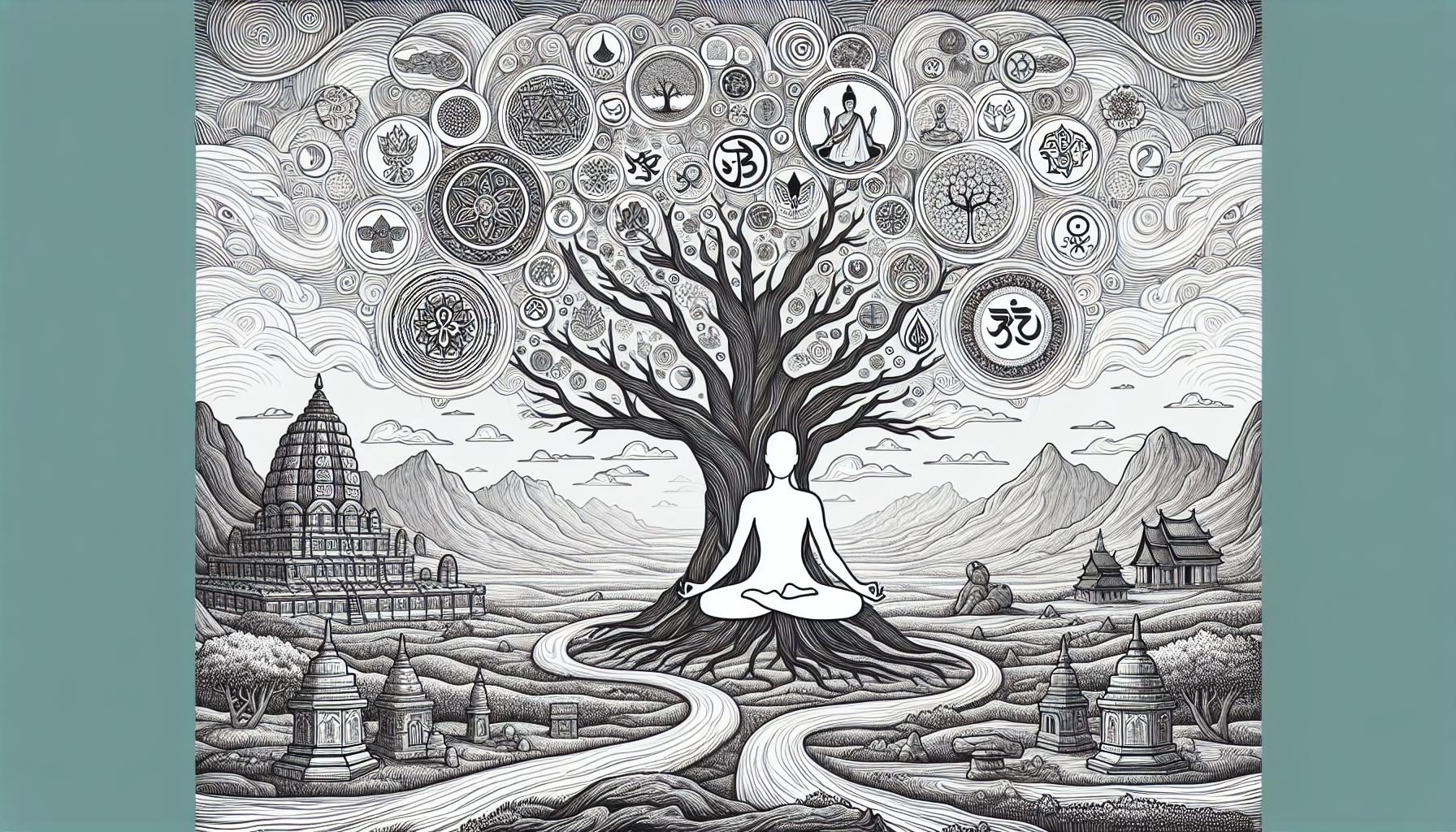
Karma, integral to understanding life’s purpose, remains pivotal in many philosophical traditions. Eastern and Western philosophies offer diverse interpretations of this concept.
Eastern Philosophies
Hinduism: In Hinduism, karma reflects the ethical dimension of rebirth. Good or bad actions dictate future modes of existence. This serves to motivate living a moral life. The Bhagavad Gita, a sacred Hindu text, emphasizes selfless action (karma yoga) as a path to spiritual liberation.
Buddhism: Karma in Buddhism ties closely to rebirth, with past actions influencing the present. It stresses moral actions and intentions. According to the Dhammapada, a collection of sayings of the Buddha, “All that we are is the result of what we have thought.” This underscores the importance of mindful intention in every action.
Jainism: Jainism views karma as a fine particulate substance clouding the soul. These particles accrue through actions, making the soul impure and heavy. To attain liberation, one must practice non-violence (ahimsa) to shed karma. Jain texts like the Tattvartha Sutra elaborate on the mechanisms of karma and its purification.
Taoism: In Taoism, karma encapsulates deeds and their motives. Every action’s intent is vital, with the Tao Te Ching stating, “The wise are not learned; the learned are not wise,” highlighting the significance of aligning actions with natural order and harmony.
Western Philosophical Views
Western philosophies seldom focus on karma as explicitly as Eastern traditions. But, they explore similar themes of moral causation and ethical conduct.
Ancient Greek philosopher Socrates discussed the importance of the soul’s purity through virtuous actions. Plato’s works reflect ideas on justice and ethical living.
In modern Western philosophy, Immanuel Kant emphasized duty and moral law, suggesting actions should stem from goodwill and ethical imperatives, not expected outcomes. Though not karma by name, this aligns with promoting positive actions for their inherent value.
Philosophical perspectives on karma converge on the importance of ethical behavior and moral intention, shaping individual destiny and life’s purpose across various cultures.
Personal Development Through Karma
Karma significantly impacts personal development by encouraging intentional actions. My choices and deeds directly shape not only my present but also my future experiences.
Building Positive Karma
Building positive karma involves performing good deeds. When I help others in need, I generate positive energy, which translates into good karma. Acts such as volunteering at local shelters, donating to charities, or simply being kind to strangers create positive imprints in my life. Also, practicing gratitude and mindfulness helps me stay aware of my actions, ensuring they align with ethical and moral principles.
Overcoming Negative Karma
Overcoming negative karma requires acknowledging past wrongdoings, then making amends. If I recognize I’ve caused harm, I seek ways to rectify my actions through sincere apologies and corrective deeds. Engaging in self-reflection helps me understand the root cause of my negative actions, allowing me to break destructive patterns. Meditation and mindfulness practices also aid in cleansing negative karma by promoting inner peace and compassion, which translates into positive changes in my behavior and interactions with others.
Real-Life Experiences and Stories
The connection between karma and life’s purpose can be profoundly observed through real-life stories. Here are some impactful experiences that highlight these themes.
Empath’s Journey and Past Life Regression
Someone shared their journey as an empath, diving into past life regression. This experience revealed connections between their past lives and their current life’s purpose. They discovered recurring patterns and lessons meant to guide their actions and decisions now. These insights brought clarity and a stronger sense of direction, cementing their understanding of personal growth and purpose.
Lessons from Failure
Another personal account stood out by emphasizing the significance of learning from failure. Rather than letting failures define them, this person chose to view each setback as a stepping stone. They extracted valuable lessons from each experience, using them to build resilience and a more profound sense of self. This approach enabled them to move forward with greater wisdom and purpose.
Inspirational Stories
Entrepreneurs, artists, and creatives all share unique stories about finding their purpose. One entrepreneur managed to turn a failing business into a thriving enterprise by realigning their goals with personal passions. An artist found their true calling by shifting from commercial work to expressive, meaningful art that resonated deeply with their audience. Each story underscores the importance of authenticity and alignment with one’s true self.
Lessons Learned
The stories shared offer several key lessons. First, embracing past experiences, whether positive or negative, contributes to personal growth and clarity of purpose. Second, recognizing and following one’s true passions often leads to fulfillment and success. Finally, resilience in the face of failure builds character and insight, which are crucial for exploring life’s journey with purpose. By integrating these lessons, individuals can better align with their intended path and contribute positively to their own lives and the lives of others.
Practical Steps to Align Karma with Life’s Purpose
Karma deeply influences life’s purpose, guiding actions and intentions toward positive outcomes. Practical steps can foster this alignment effectively.
Mindfulness and Intention
Practicing mindfulness nurtures a deeper connection with one’s intentions. By regularly engaging in mindful meditation, I can stay present, focusing on genuine intentions behind my actions. Journaling also helps; I reflect on my daily deeds and thoughts. Emotional awareness proves crucial; recognizing and managing emotions allows me to act with clarity. These practices collectively align my actions with a purposeful life.
Acts of Kindness and Service
Engaging in acts of kindness directly enhances positive karma. Volunteering at local shelters, participating in community clean-ups, or donating to charitable causes can have substantial impacts. Simple everyday gestures, like helping a neighbor or showing appreciation, create ripples of positivity. By serving others, I contribute to both personal growth and broader societal welfare, ensuring my actions resonate with my life’s purpose.
These steps help a harmonious balance between karma and life’s purpose, fostering personal and communal well-being.
Conclusion
Understanding and integrating karma into our lives can significantly enhance our journey towards finding and fulfilling our life’s purpose. By embracing practices like mindfulness, intention setting, and acts of kindness, we create a positive ripple effect that benefits not only ourselves but also those around us. It’s not just about personal growth; it’s about contributing to a more compassionate and balanced world. As we align our actions with our deeper values, we find a harmonious balance that fosters both personal and communal well-being.
Sources & further reading
These themes are explored in greater depth across the following authoritative resources:
- Britannica, Yoga in Hinduism
- Britannica, Puja
- Harvard Pluralism Project, Hindu Practice
- Internet Sacred Text Archive, Yoga Sutras of Patanjali
- Diana L. Eck, Banaras: City of Light (Princeton University Press, 1982)
External resources for further reading. Apam Napat is not affiliated with these publishers; citation does not imply endorsement.
Frequently asked questions
What does the word karma mean?
When did the concept of karma originate?
How does karma shape life's purpose?
Are physical and mental actions both karma?
Based on the classical texts of Hindu mythology, see our sources.