
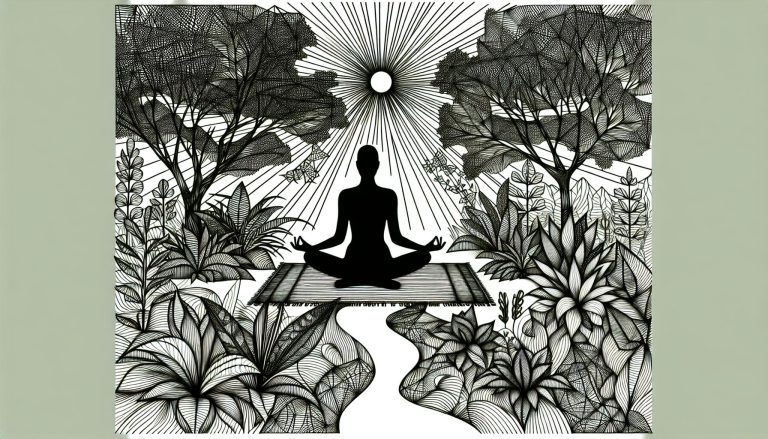
As we navigate through life, Maya influences our thoughts, emotions, and actions in ways we often overlook. By exploring Maya, we can uncover deeper truths about our existence and perhaps even find a path to greater self-awareness. Let’s jump into how this ancient idea continues to shape our modern lives.
Understanding Maya In Philosophy
Maya, a profound concept in Hindu philosophy, addresses the illusionary nature of our perceived world. This section delves into its historical roots and core principles.
Historical Background
Maya’s history is rich and varied. Its etymology is unclear, possibly stemming from the root “mā,” meaning “to measure” or “to think.” In Hindu philosophy, Maya signifies the illusion or appearance that hides the true essence of reality. It is often seen as a power that creates the world we experience, making it appear real when it’s actually illusory.
- Illusion and Appearance: Maya functions as the force crafting the illusion of the world, presenting it as real when it is not. This principle is fundamental to many Hindu philosophies, including Vedanta and Yoga.
- Cosmology and Human Experience: In Hinduism, Maya is perceived as the power generating the universe and shaping human experiences.
The Human Experience

Understanding how Maya influences the human experience requires exploring how our perceptions shape our reality. Sensory information and cognitive biases play crucial roles in constructing our views of the world and ourselves.
Sensory Perception And Reality
Our senses dictate much of our experience. They gather information which our brain processes, creating a subjective version of reality. But, sensory perception can be inaccurate. For example, optical illusions show that our eyes can be tricked into seeing things that aren’t there. Similarly, auditory and tactile senses can also be deceived, leading to a constructed reality that might differ from objective truth. Cognitive biases further skew our perceptions based on past experiences and cultural conditioning. These factors combine to form a reality that may not be entirely accurate.
The Illusion Of Separation
The concept of separation is central to Maya. It makes us feel distinct from others, nature, and any higher power. This perception of disconnection can result in feelings of loneliness, fear, and insecurity. For instance, thinking of oneself as isolated from the natural world can lead to environmental neglect or harm. On a more personal level, viewing oneself as separate from others fosters social alienation and conflict. Understanding this illusion helps in recognizing the interconnectedness of all things, potentially reducing these negative feelings and promoting a sense of unity.
Maya In Modern Psychology

Maya, an ancient concept rooted in illusion, finds resonance in modern psychology. This section explores how cognitive distortions and perception play roles in shaping mental health.
Cognitive Distortions
Cognitive distortions, described as biased ways of thinking about oneself and the world, reflect the illusory nature of Maya. Cognitive Behavioral Therapy (CBT) identifies several distortions, such as:
- Catastrophizing: Believing something far worse is about to happen without evidence.
- Overgeneralization: Making broad conclusions based on a single incident.
- Personalization: Assuming personal responsibility for external events.
These distortions cloud judgment, mirroring how Maya obscures reality. Recognizing and challenging these thought patterns promotes mental well-being.
The Role Of Perception In Mental Health
Perception, influenced by both internal and external factors, significantly impacts mental health. Sensory information combined with cognitive biases can create subjective realities. For example:
- Selective Attention: Focusing on specific stimuli while ignoring others might lead to distorted reality.
- Confirmation Bias: Favoring information that confirms pre-existing beliefs can perpetuate misconceptions.
These perceptual filters shape experiences, paralleling the way Maya influences reality. Understanding these processes can improve psychological interventions and enhance self-awareness.
Cultural Perspectives On Maya
The Maya people have a rich cultural heritage, deeply rooted in their history, traditions, and connection to the natural world. Their advanced knowledge in astronomy, mathematics, and architecture speaks volumes about their sophisticated understanding and worldview.
Eastern Philosophies And Maya
Eastern philosophies, particularly Hinduism and Buddhism, describe Maya as an illusion that shapes human perception and reality. In Hindu philosophy, Maya represents the cosmic illusion that creates the material world, masking the true nature of the self. Similarly, Buddhist teachings view Maya as the veil of ignorance that clouds the mind, obscuring the path to enlightenment.
Both philosophies emphasize overcoming Maya to achieve spiritual liberation. In Hinduism, this involves recognizing the illusionary nature of the physical world through self-realization. In Buddhism, it entails following the Eightfold Path to transcend illusions and attain true understanding.
Maya In Western Thought
In Western thought, the concept of Maya has been interpreted and integrated through various lenses, particularly in psychology and philosophy. Western psychology often equates Maya with cognitive distortions or illusions that impact mental health and perception. For instance, phenomena like selective attention and confirmation bias echo the illusory nature of Maya by distorting reality based on subjective experiences.
Philosophically, Western thinkers like Immanuel Kant have explored similar ideas, suggesting that human perception is inherently filtered through subjective frameworks. Kant’s notion of the “phenomenal world” parallels Maya by proposing that reality, as experienced, is a construct shaped by the mind’s interpretative processes.
Overall, the interpretation of Maya in Western contexts underscores the universal nature of human experiences shaped by perception and illusion, bridging cultural differences through shared conceptual understandings.
Practical Applications
Ancient and modern perspectives on Maya provide valuable insights for enhancing the human experience. Here’s how these ideas can be put into practice.
Mindfulness And Awareness
Mindfulness techniques are effective in combating illusions created by Maya. By focusing on the present moment, individuals can better observe their thoughts and emotions without judgment. Mindfulness meditation, for example, encourages direct awareness, reducing the impact of cognitive distortions like overgeneralization. This practice helps individuals recognize and detach from illusory perceptions, improving mental clarity and emotional stability.
Techniques To Perceive Beyond Maya
Various techniques exist to see beyond Maya’s illusions. Cognitive-behavioral strategies, for instance, help individuals identify and challenge distorted thinking patterns. Journaling can serve as a reflective tool, allowing individuals to document and analyze their thought processes. Practicing gratitude shifts focus from negative illusions to positive realities. These techniques empower individuals to break free from the constraints of illusory perceptions, fostering a more authentic understanding of their experiences.
Conclusion
Understanding Maya and its influence on our perceptions offers profound insights into the human experience. By recognizing the illusions that shape our reality we’re better equipped to navigate life’s complexities. Combining ancient wisdom with modern psychological practices provides a powerful toolkit for mental clarity and emotional stability. Techniques like mindfulness meditation and journaling enable us to challenge and transcend distorted thinking patterns. Embracing these strategies allows us to see beyond the illusions and fosters a more authentic connection with ourselves and the world around us.
Sources & further reading
These themes are explored in greater depth across the following authoritative resources:
- Stanford Encyclopedia of Philosophy, Hindu Philosophy
- Britannica, Dharma
- Britannica, Karma
- Internet Sacred Text Archive, Bhagavad Gita
- A. K. Ramanujan, Speaking of Siva (Penguin Classics, 1973)
External resources for further reading. Apam Napat is not affiliated with these publishers; citation does not imply endorsement.
Frequently asked questions
What does Maya mean in Hindu philosophy?
How does Maya shape human experience?
What role does Maya play in Vedanta and Yoga?
How can understanding Maya benefit daily life?
Based on the classical texts of Hindu mythology, see our sources.