
Understanding Maya
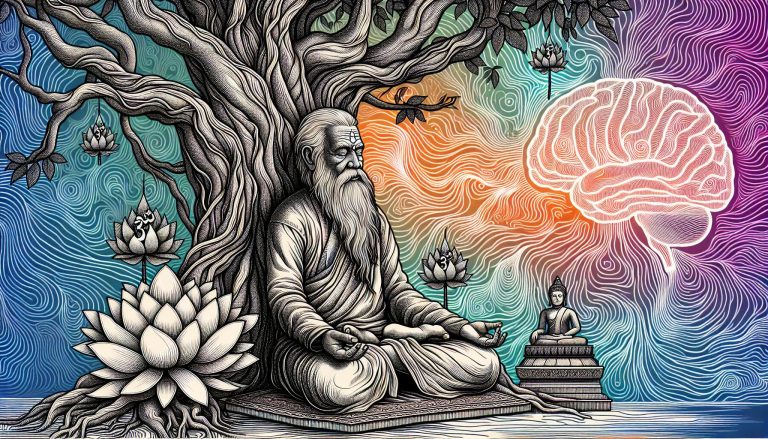
Maya, a foundational concept in Hindu and Buddhist philosophies, delves into the illusionary nature of perceived reality. It questions the authenticity of our experiences and signifies deeper, immutable truths.
Historical Context
Maya originates from ancient Indian scriptures, most notably the Vedas and Upanishads. The Vedas, dating back to 1500 BCE, mention maya in hymns describing cosmic creation. The Upanishads, philosophical texts from around 800-400 BCE, expand on maya. They explain it as the force causing the material world’s misperceptions, essentially binding humans to illusionary existence.
Sanskrit literature also references maya. In the Mahabharata – The Great Epic, a major Hindu epic from around 400 BCE-400 CE, characters encounter illusionary realms creating existential confusion. Buddhist teachings, notably the Pali Canon (5th century BCE), incorporate similar themes. Spiritual leaders like Gautama Buddha emphasized overcoming maya to attain enlightenment.
Philosophical Significance
Maya’s philosophical significance lies in its challenge to perceived reality. In Advaita Vedanta, a non-dualist school of Hindu philosophy, maya is central. It asserts that the empirical world, perceived through sensory experience, is not the ultimate truth. Instead, Brahman – The Supreme Truth, the formless, eternal reality, underlies all existence. Adi Shankaracharya, an 8th-century philosopher, championed this view, emphasizing the need for discernment to see beyond maya.
In Buddhism, maya contributes to the concept of samsara, the cycle of birth, death, and rebirth. The Buddha taught that realizing the nature of maya leads to nirvana, a state of liberation from illusion and suffering. Philosophers like Nagarjuna further explored this idea, suggesting that understanding the emptiness (shunyata) of phenomena reveals their true nature beyond maya.
Maya’s implications span ethics, metaphysics, and epistemology. It urges individuals to question sensory-based knowledge and seek truth through introspection and spiritual practice.
The Nature of Perception
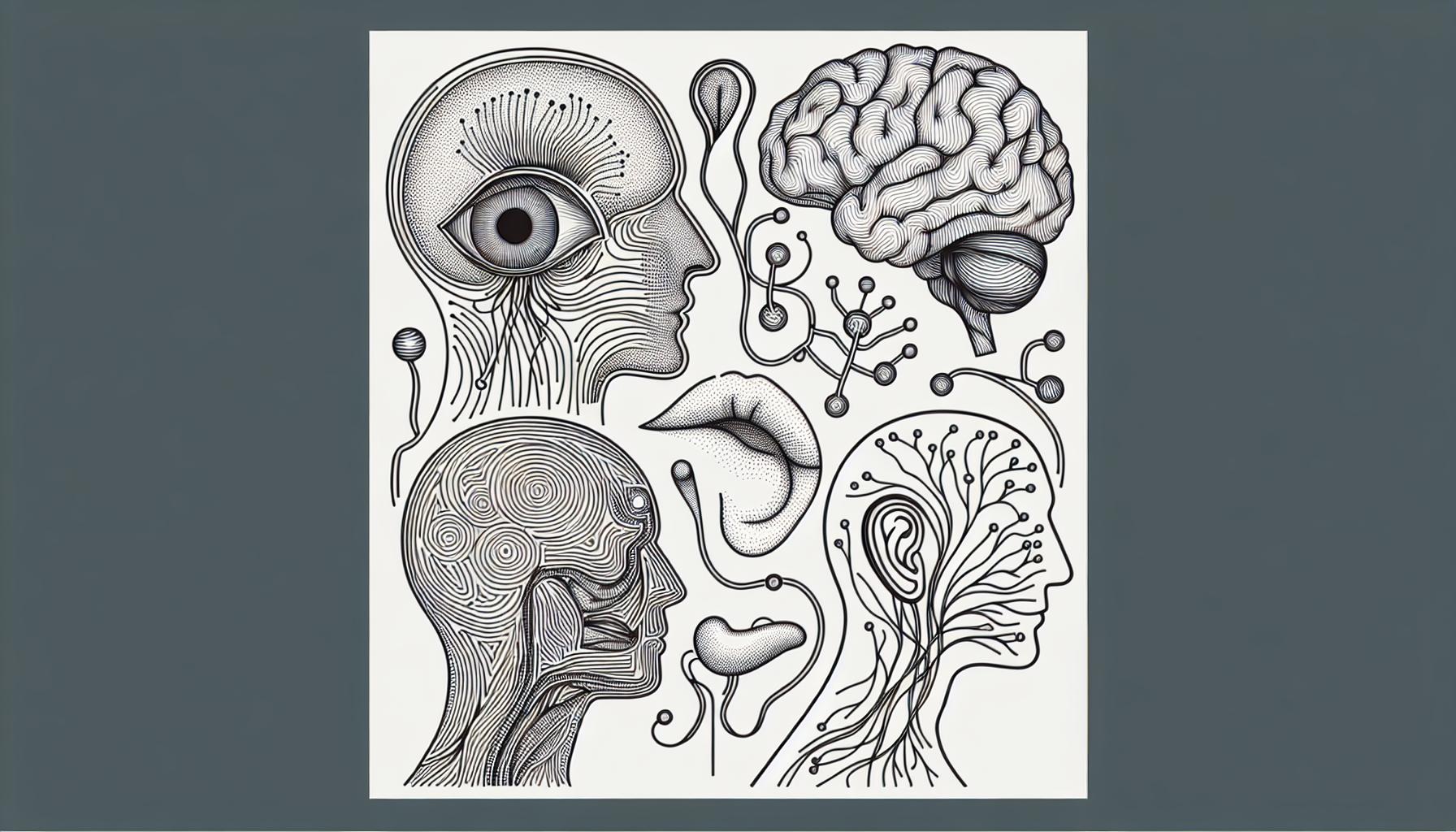
Perception involves interpreting sensory data and mental activities, influencing our understanding of reality. Here’s a closer look at how sensory input and cognitive processes shape our experience.
Sensory Input and Reality
Sensory input, the raw data from our five senses, forms the first step in perception. Eyes capture light waves, ears detect sound vibrations, skin picks up tactile sensations, taste buds register flavors, and noses sense smells. Each sensory organ converts stimuli into neural signals sent to the brain for processing.
For example, when light enters the eyes, it hits the retina, which transforms it into electrical impulses. These impulses travel via the optic nerve to the brain’s visual cortex, where they get interpreted as images. Similarly, sound waves travel through the ear canal, vibrating the eardrum and being translated into signals by the cochlea before reaching the auditory cortex for processing.
Cognitive Processes
Cognitive processes act on sensory inputs to give meaning to experiences. These processes include attention, perception, memory, and thinking. Attention selectively focuses on essential stimuli, filtering out irrelevant data. For instance, in a noisy room, you can concentrate on a friend’s voice while ignoring background chatter.
Perception involves organizing and interpreting sensory information. It covers recognizing patterns, identifying objects, and understanding spatial relationships. Memory stores past experiences and uses them to process current stimuli. When seeing a familiar face, your brain retrieves stored data to recognize the person.
Thinking involves higher-level functions like reasoning and problem-solving. It synthesizes sensory data and memory, creating a coherent understanding of reality. Conscious thoughts help make decisions, while subconscious processes influence perceptions and reactions subtly.
Together, sensory input and cognitive processes construct our version of reality, shaping how we perceive and interact with the world around us.
Maya in Different Philosophies

Maya manifests uniquely across various philosophical traditions. Here’s a closer look at how it’s understood in Vedanta and Buddhism.
Vedanta Perspective
In Vedanta, maya signifies the illusionary nature of the world. The term translates to “illusion” or “magic.” Advaita Vedanta, a non-dualistic school, posits that maya veils the true self (Atman – The Soul) and the ultimate reality (Brahman). It emphasizes that the physical world, perceived through the senses, distracts from understanding Brahman which is eternal and unchanging. In this philosophy, liberation (moksha) involves seeing through maya.
Buddhism’s View
Buddhism views maya as the deceptive appearance of the world. The teachings stress that phenomena are transient and interconnected, lacking inherent existence (anatta, or “no-self”). Maya is often linked to the concept of samsara, the cycle of birth and rebirth, characterized by suffering. By recognizing the ephemeral nature of reality through maya, individuals begin on the path to enlightenment (nirvana), freeing themselves from samsara.
Modern Interpretations
Modern science offers fresh perspectives on the ancient concept of maya, focusing on how perception shapes our experience of reality.
Psychological Insights
Psychology studies perception through various theories and experiments. The Gestalt principles, for example, explain how we interpret shapes, patterns, and objects as whole forms rather than separate parts. These principles reveal how our minds fill in gaps in sensory input, creating a coherent perception of the world. Cognitive psychology explores how mental processes—such as attention, memory, and problem-solving—contribute to our construction of reality. Psychologists have found that biases and heuristics play significant roles in shaping our perceptions, highlighting the subjective nature of our reality.
Neuroscientific Views
Neuroscience delves into the brain’s role in perception. Studies show that neural networks process sensory information and that various brain regions collaborate to construct our experience of the world. The visual cortex, for instance, interprets visual data, while the prefrontal cortex is involved in higher-order thinking and decision-making. Neuroscientists have discovered that perception isn’t a passive reception of data but an active construction by the brain, influenced by past experiences and expectations. Techniques like fMRI and EEG provide insights into how different stimuli activate specific brain areas, enhancing our understanding of perception and its illusory aspects akin to maya.
Practical Implications
Understanding maya and the nature of perception leads to tangible benefits in daily life. We can adopt various practices to navigate our perceptions more effectively.
Mindfulness and Awareness
Mindfulness helps recognize maya’s influence on perception. By practicing mindfulness, I become aware of how thoughts and emotions shape my reality. Techniques like meditation and breath awareness promote a deeper understanding of self and surroundings. For instance, focusing on my breath allows me to observe how fleeting thoughts can distort reality.
Altered States of Perception
Exploring altered states, such as lucid dreaming or psychedelic experiences, reveals the flexible nature of perception. These states provide insights into the malleability of reality. In lucid dreaming, I can consciously interact with dream elements, questioning the boundaries between dream and wakefulness. Similarly, controlled use of psychedelics under supervision has shown to broaden perception, revealing layers of experience ordinarily masked by everyday consciousness.
Conclusion
Understanding maya and the nature of perception offers profound insights into our daily experiences. By recognizing the illusory aspects of reality, we’re better equipped to navigate life’s challenges with a clearer, more grounded perspective. Practices like mindfulness and awareness can significantly enhance our ability to see through these illusions, fostering a deeper connection with our true selves.
Exploring the intersection of ancient wisdom and modern science enriches our comprehension of how we perceive the world. This knowledge empowers us to question our assumptions and embrace a more flexible, open-minded approach to reality. Eventually, this journey of understanding perception and maya can lead to greater self-awareness and a more fulfilling life.
Sources & further reading
These themes are explored in greater depth across the following authoritative resources:
- Stanford Encyclopedia of Philosophy, Hindu Philosophy
- Britannica, Dharma
- Britannica, Karma
- Internet Sacred Text Archive, Bhagavad Gita
- A. K. Ramanujan, Speaking of Siva (Penguin Classics, 1973)
External resources for further reading. Apam Napat is not affiliated with these publishers; citation does not imply endorsement.
Frequently asked questions
What is maya in Hindu and Buddhist philosophy?
Where is maya first mentioned?
When were the Upanishads composed?
Does maya appear in Buddhism?
Based on the classical texts of Hindu mythology, see our sources.