
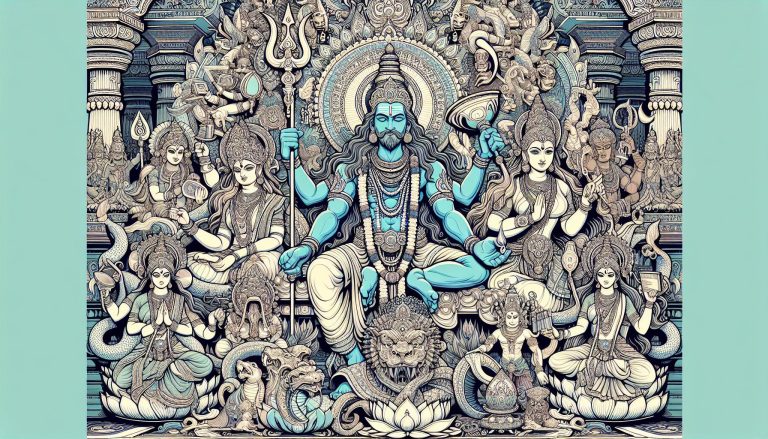
Each deity, from Vishnu and Shiva to Saraswati and Lakshmi, represents different aspects of life and cosmic principles. Their stories offer timeless wisdom and insight into human nature, making them relevant even in our modern lives. Join me as we explore the fascinating realm of Puranic deities and uncover the enduring significance of these divine beings.
Overview of Puranic Deities
The Puranic deities, central to Hindu mythology, represent a myriad of cosmic principles and human virtues. Major deities like Vishnu, Shiva, Saraswati, and Lakshmi shape the spiritual narrative, each embodying unique attributes.
Vishnu is known as the preserver of the universe, often depicted with blue skin and four arms. His ten avatars, including Rama and Krishna, play pivotal roles in epic stories like the Ramayana and the Mahabharata. Each avatar of Vishnu descends to restore cosmic order.
Shiva, the destroyer and transformer, embodies the cyclical nature of existence. His third eye symbolizes higher perception, and his dance, the Tandava, represents the cosmic cycles of creation and destruction. Devotees honor Shiva through rituals and temples across India.
Saraswati, the goddess of knowledge, music, and the arts, is depicted with a veena and a book. She bestows wisdom and learning, guiding students and scholars. Her festival, Vasant Panchami, marks the onset of spring and celebrates educational pursuits.
Lakshmi, the goddess of wealth and prosperity, represents material and spiritual abundance. Often shown with lotus flowers and gold coins, she is worshipped during Diwali, the festival of lights, to invite prosperity and success into homes.
These deities, with their rich symbolism, offer timeless lessons. Understanding their stories and attributes provides insight into the values and philosophies that have shaped Hindu culture.
Major Deities in Puranic Literature
In Puranic literature, major deities play pivotal roles in shaping the cosmic narrative. The triad of Vishnu, Shiva, and Brahma forms the foundation of many mythological stories and teachings.
Vishnu
Vishnu, the Preserver, sustains the universe and maintains cosmic order. He has ten primary avatars, including Rama and Krishna, each appearing during different ages to restore dharma. Vishnu’s primary attributes are his discus (Sudarshana Chakra) and conch (Panchajanya), symbolizing the mind and the five elements.
Shiva
Shiva, the Destroyer, embodies both creation and destruction, representing the cyclical nature of the universe. Known for his dance, the Tandava, Shiva transforms life through his divine rhythm. His symbols are the trident (Trishula) and the crescent moon, indicating his mastery over time and space.
Brahma
Brahma, the Creator, is responsible for the formation of the universe and all living beings. Depicted with four heads symbolizing the four Vedas, Brahma highlights the essence of creation and knowledge. Despite his crucial role, Brahma’s worship is less prevalent than that of Vishnu and Shiva.
Goddess Worship in the Puranas
Goddess worship holds a pivotal place in the Puranas. These divine figures embody various aspects of life and cosmic principles, playing essential roles in spiritual narratives and religious practices.
Durga
Durga, a fierce and protective goddess, symbolizes strength and motherhood. The Puranas depict her as the warrior goddess, vanquishing evil forces like Mahishasura – Buffalo Demon, a demon king. Devotees celebrate her major festival, Durga Puja, showing her supreme power and divinity. Statues and images of Durga display her ten arms, each holding a different weapon, signifying her ability to protect and preserve righteousness.
Lakshmi
Lakshmi embodies wealth, prosperity, and fortune. According to the Puranas, she emerged from the churning of the ocean of milk, symbolizing abundance and well-being. Hindus invoke her blessings during Diwali and other rituals, seeking health, prosperity, and good fortune. Representations of Lakshmi show her seated or standing on a lotus, holding lotus flowers, and showering coins, conveying her role as the giver of wealth and purity.
Saraswati
Saraswati represents wisdom, learning, and the arts. The Puranas describe her as the goddess of knowledge and music, often being depicted with a veena (a musical instrument) and scriptures. Worshippers revere her during Vasant Panchami, honoring her contributions to education and the arts. Images of Saraswati typically show her dressed in white, symbolizing purity and enlightenment, and accompanied by a swan, representing discernment and wisdom.
Incarnations and Avatars
In Hindu mythology, deities often manifest through avatars to accomplish divine tasks and uphold Dharma. These incarnations embody cosmic principles and human virtues.
Vishnu’s Avatars
Vishnu’s avatars play crucial roles in maintaining cosmic order. The Dashavatara, or ten principal avatars, are highly significant.
- Matsya: The Fish, saved the sacred Vedas from a deluge.
- Kurma: The Tortoise, supported Mount Mandara during the churning of the ocean.
- Varaha: The Boar, rescued Earth from the demon Hiranyaksha.
- Narasimha: The Man-Lion, eradicated the demon Hiranyakashipu.
- Vamana: The Dwarf, asserted cosmic order by curbing demon king Bali.
- Parashurama – Rama of the Axe: The Warrior with an axe, annihilated corrupt Kshatriyas.
- Rama: The Prince, vanquished demon king Ravana.
- Krishna: The Divine Statesman, played pivotal roles during the Mahabharata.
- Buddha: Enlightened One, reformed religious practices.
- Kalki: The Future Warrior, expected to end the current age of darkness.
Incarnations of Shiva
Shiva, the Destroyer, manifests in several forms to balance creation and destruction.
- Virabhadra: A fierce warrior form, born to avenge Daksha’s insult.
- Nataraja: The King of Dance, represents cosmic cycles of creation and dissolution through Tandava.
- Ardhanarishvara: The Androgynous Deity, symbolizes the unity of masculine and feminine energies.
- Bhikshatana: The Mendicant, embodies asceticism and the rejection of materialism.
- Kaal Bhairav: The Time Keeper, governs time and destruction.
These avatars and incarnations illustrate the diverse roles and cosmic functions of the Puranic deities, reinforcing core Hindu beliefs and traditions.
Mythological Stories and Legends
Mythological stories in Hindu texts reveal the enchanting and complex narratives involving Puranic deities. These tales are not only captivating but also impart moral and spiritual lessons.
Stories of Creation
Puranic texts offer intricate accounts of creation. In the Brahma Purana, Brahma emerges from a lotus springing from Vishnu’s navel to create the universe. This act signifies the continuity of life and cosmic order. Another account in the Shiva Purana describes Shiva’s dance, the Tandava, initiating the creation and destruction cycle, essential for cosmic balance.
Tales of Divine Intervention
Puranic legends are replete with instances where deities directly intervene in human affairs. In the Bhagavata Purana, Vishnu incarnates as Krishna to vanquish the tyrant Kamsa and restore dharma. Similarly, in the Devi Mahatmya, the goddess Durga battles and defeats Mahishasura, symbolizing the triumph of good over evil. These stories emphasize the protective and benevolent aspects of deities, reinforcing their roles in upholding cosmic order.
Cultural and Ritual Significance
Puranic deities hold considerable cultural and ritual significance in Hindu traditions. Communities across India observe various festivals dedicated to these deities, integrating them deeply into the social fabric. Each festival includes rituals, offerings, and community gatherings, reflecting the deity’s attributes and stories.
Key Festivals and Observances
Diwali and Lakshmi Puja
Diwali, the Festival of Lights, honors Goddess Lakshmi, the symbol of wealth. Families illuminate their homes, perform Lakshmi Puja, and seek her blessings for prosperity. Diwali also marks the return of Lord Rama, another Puranic deity, to Ayodhya after his victory over Ravana.
Navaratri and Durga Puja
Navaratri spans nine nights and celebrates Goddess Durga’s victory over the buffalo demon Mahishasura. Devotees observe fasting, perform aarti, and engage in nightly dances called Garba and Dandiya in different regions. Durga Puja, particularly grand in West Bengal, includes elaborate idols and community feasts.
Temples and Pilgrimages
Temples dedicated to Puranic deities serve as pilgrimage sites, drawing millions of devotees annually. Each temple has unique rituals and practices enhancing the communal spiritual experience.
Vishnu Temples
Vishnu temples, including Vaishno Devi and Tirupati, attract devotees seeking his blessings. Vishnu incarnations like Krishna and Rama have their temples, each celebrating various aspects of his divine missions.
Shiva Temples
Shiva temples like Kashi Vishwanath and Kedarnath are significant pilgrimage centers. Devotees engage in rituals like Abhishekam, offering milk, honey, and other items to the Shiva Lingam, embodying the deity’s essence.
Daily Worship and Offerings
Daily rituals in homes carry on the tradition of honoring Puranic deities. Families conduct pujas, offering flowers, food, and incense to household deities, maintaining a personal connection to cosmic principles. This practice fosters daily mindfulness and gratitude.
Symbolic Representations
Symbolism in rituals highlights Puranic deities’ virtues and narratives. For instance, lighting lamps during Diwali represents driving away darkness, invoking Lakshmi’s presence. Creating rangoli patterns signifies welcoming fortune and auspiciousness, rooted in Puranic traditions.
Cultural and ritual practices surrounding Puranic deities are thus integral to personal spirituality and community life, connecting individuals to larger cosmic rhythms through structured devotion and celebration.
Conclusion
Exploring Puranic deities opens up a profound understanding of Hindu mythology and its intricate tapestry of cosmic principles and human virtues. Through their stories and legends, we gain insights into the spiritual and moral fabric that guides millions. The rich cultural and ritual practices surrounding these deities highlight their enduring significance in daily life and celebrations. Engaging with these traditions allows us to connect deeply with the divine and the cosmos.
Sources & further reading
These themes are explored in greater depth across the following authoritative resources:
- Internet Sacred Text Archive, Mahabharata (Ganguli translation)
- Internet Sacred Text Archive, Ramayana of Valmiki
- Britannica, Mahabharata
- Britannica, Ramayana
- Bibek Debroy, The Mahabharata (10 vols., Penguin, 2010 to 2014)
External resources for further reading. Apam Napat is not affiliated with these publishers; citation does not imply endorsement.
Frequently asked questions
What are Puranic deities in Hindu mythology?
Which gods are considered Puranic deities?
Why are Puranic deities important?
What are the Puranas?
Based on the classical texts of Hindu mythology, see our sources.