
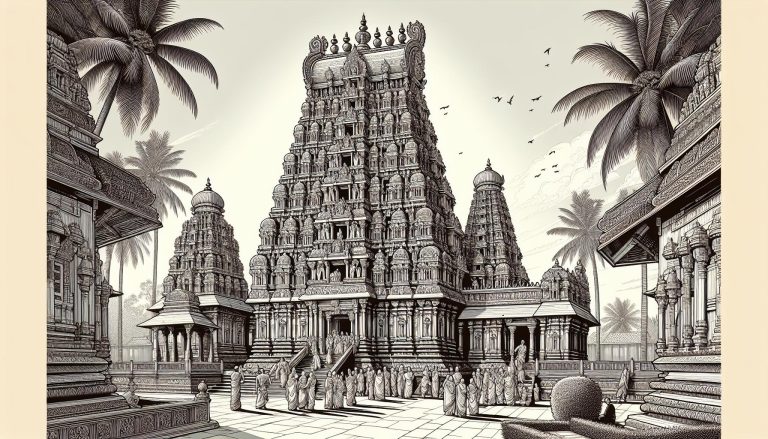
Exploring the symbolism behind these towers reveals a rich world of religious beliefs and cultural values. Whether it’s the intricate carvings that depict mythological tales or the towering heights that signify reaching towards the heavens, temple towers are more than just stone and mortar—they’re a bridge between the earthly and the divine.
Historical Origins of Temple Towers
Egyptian Temple Towers
Egyptian temple towers represented a piece of the divine area on earth. These elevated, enclosed sanctuaries equated with the sacred hill where the world was created in Egyptian myth and the burial chamber of a tomb where the god’s ba (spirit) inhabited its cult image. The traditional design symbolized sacred architecture, reflecting the temple’s role as the god’s home. The processional way stood for the path of the sun traveling across the sky, and the sanctuary symbolized the Duat where the sun set and was reborn at night.
Indian Temple Towers
Indian temple towers, particularly in Hindu architecture, symbolize the connection between the earthly and divine realms. These towers, known as shikharas, represent the mythological Mount Meru, the axis of the universe. They serve as a spiritual beacon guiding devotees towards the divine, exemplifying the intersection of human and celestial worlds.
Architectural Significance
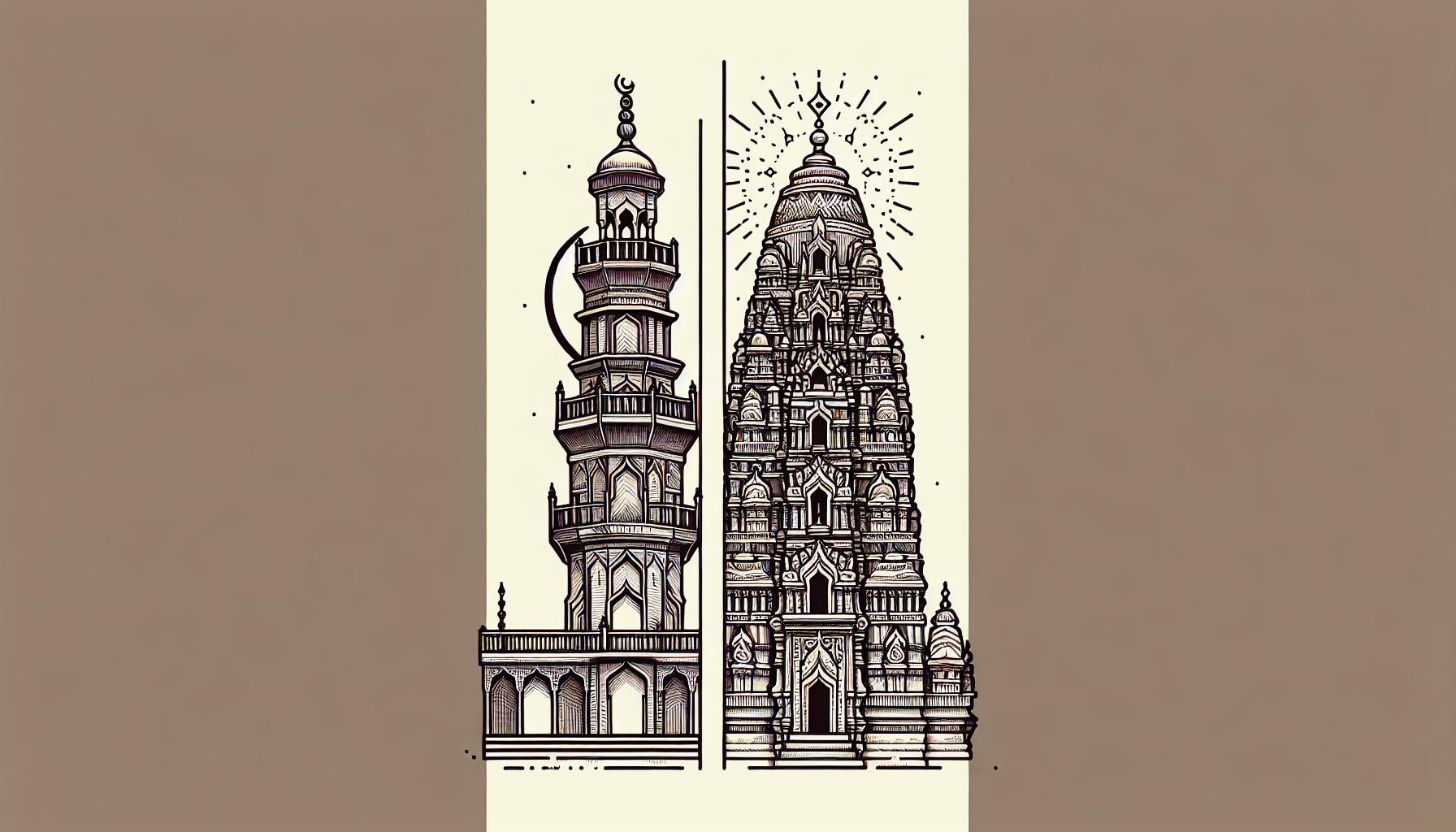
Temple towers, also known as minarets in Islamic architecture, serve as powerful symbols of connection between the earthly and divine realms. They are prominent features in mosques, where the muezzin calls the faithful to prayer, and serve as a visual symbol of Islam’s presence in a community.
Structural Design and Purpose
The structural design of temple towers varies significantly across cultures. Minarets in Islamic architecture often feature tall, slender forms, emphasizing verticality and enhancing the acoustic range for the call to prayer. These towers not only serve religious purposes but also act as navigational landmarks in cities.
In contrast, Hindu temple towers, known as shikharas, are designed to represent Mount Meru, the mythological mountain considered the axis of the world. These towers guide worshippers toward the divine by symbolically ascending to the heavens. The intricate carvings and iconography on shikharas often depict scenes from Hindu mythology, reinforcing their religious significance.
Evolution Over Time
Temple towers have evolved over centuries, reflecting changes in architectural styles and cultural influences. Early Islamic minarets, for example, were simpler and shorter, but over time they became increasingly elaborate and taller, showcasing advancements in construction techniques and artistic expression.
Similarly, Hindu temple towers have undergone significant transformations. Early examples were modest in height and decoration, but as temple craftsmanship evolved, shikharas became more ornate and grandiose. The Dravidian and Nagara styles of Indian temple architecture offer distinct variations, with Dravidian towers featuring pyramid-like structures and Nagara towers characterized by their curvilinear profiles.
Through these evolutions, temple towers have retained their core symbolic meanings while adapting to the aesthetic and functional demands of their respective eras.
Regional Differences
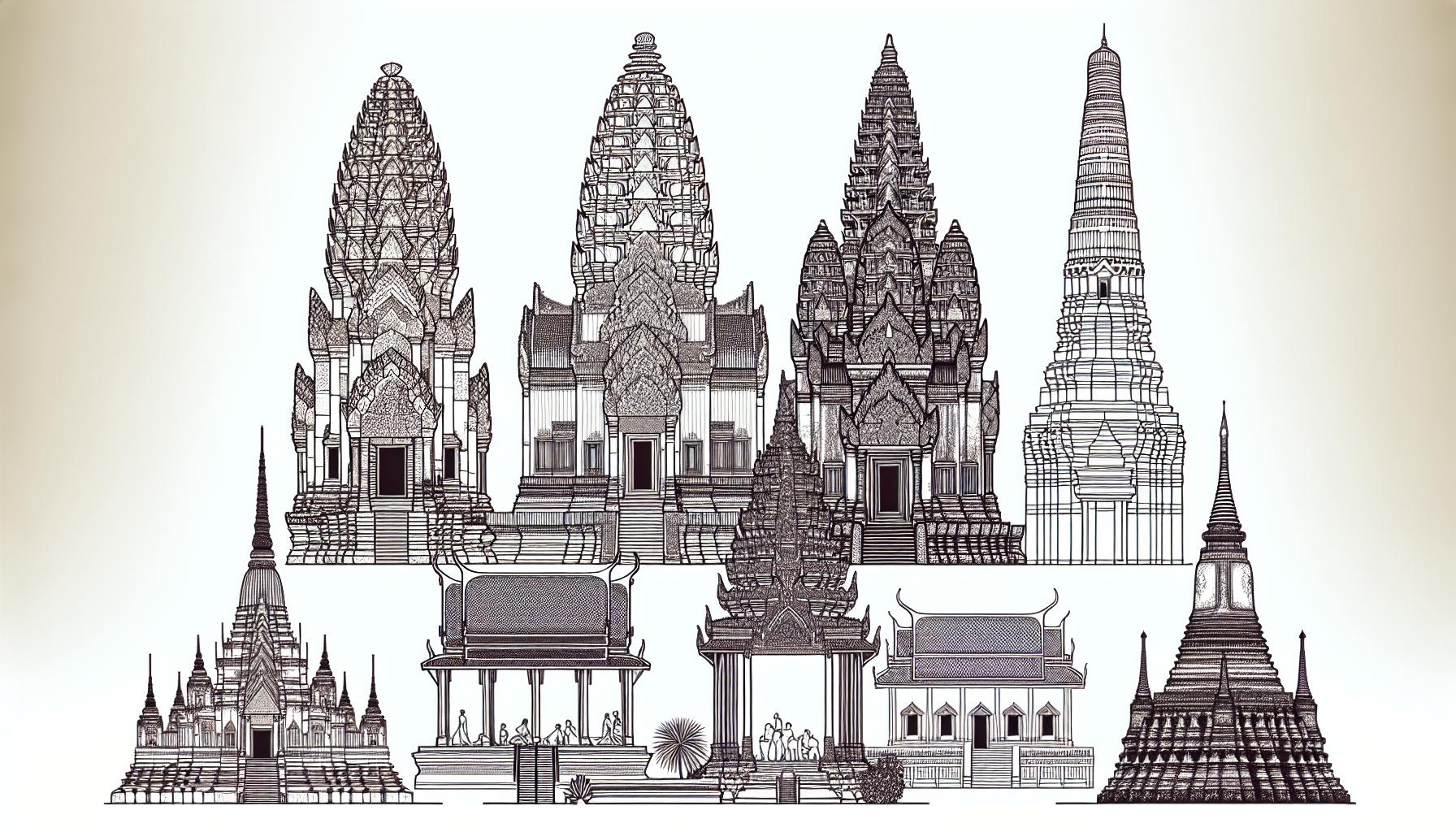
Temple towers vary significantly across different cultures, each carrying unique symbolic meanings and architectural features. I’ll investigate into the distinctions below.
Asian Temples
Asian temple towers often symbolize the connection between the earthly and divine realms.
- Angkor Wat (Cambodia): The five central towers symbolize Mount Meru’s peaks, the dwelling place of gods in Hindu mythology. These towers connect earthly and divine realms, indicating spiritual ascension.
- Hindu Temples (India): Towers, known as shikhara or vimana, represent the human-divine connection. Their height signifies the spiritual journey towards enlightenment, reflecting intricate designs inspired by Hindu mythology.
European Temples
In Europe, temple towers convey varied religious symbols depending on their cultural context.
- Christian Temples (Eastern Orthodox Church): Referred to as khram (Храм), these towers symbolize the house of God. They represent spiritual refuge and divine presence within a physical structure.
Middle Eastern Temples
Middle Eastern temple towers, especially in Islamic architecture, emphasize a vertical connection to the divine.
- Islamic Minarets: Minarets symbolize the spiritual connection between the earthly and divine, providing visual and acoustic calls to prayer. They serve as landmarks reflecting Islamic cultural aesthetics.
Symbolism in Different Cultures
Temple towers hold unique symbolic meanings across various cultures, reflecting their distinct religious, social, and cultural contexts.
Religious Significance
In ancient Egyptian temples, the tower-like ziggurats symbolize the connection between the divine and human realms. These structures represent the sacred hill where the world was created, with the sanctuary at the top symbolizing the divine area. Mesopotamian ziggurats, such as those in Babylon, honor specific deities and symbolize the power and influence of these gods. The Tower of Babel, mentioned in Genesis, is believed to be inspired by these Babylonian tower temples. Islamic minarets, often adjacent to mosques, serve as beacons calling Muslims to prayer and emphasize a vertical connection to the divine.
Social and Cultural Importance
Temple towers also serve significant social and cultural roles in various societies. In ancient Egypt and Mesopotamia, ziggurats and temples were centers of both religious practice and social governance, underscoring the integral nature of religion in daily life. Minarets in Islamic cultures, while primarily religious, also serve as landmarks and symbols of community identity. They reflect the cultural significance of communal worship and the role of religion in shaping social norms and cultural practices.
Temple towers, hence, carry deep symbolic meanings that transcend mere architectural aesthetics, embedding themselves into the fabric of religious, social, and cultural life.
Modern Interpretations
Temple towers continue to influence contemporary architectural designs and cultural preservation efforts. These modern interpretations reflect a blend of traditional symbolism and new values.
Contemporary Architecture
Modern architects incorporate elements of temple towers in contemporary buildings. These designs use verticality to convey power and ambition, reminiscent of ancient structures such as Gothic cathedrals and Chinese pagodas. Skyscrapers in metropolitan cities often feature spires or pinnacles designed to evoke spiritual or cultural significance, connecting past architectural marvels with modern urban landscapes.
Cultural Preservation Efforts
Efforts to preserve temple towers are crucial in maintaining cultural heritage. Nations invest in restoration projects to keep these structures intact, recognizing their historical and symbolic importance. Digital documentation and 3D modeling technologies help in accurately restoring and maintaining the architectural integrity of these towers, ensuring they remain a living part of cultural identity.
By integrating these ancient symbols into modern contexts, society sustains their relevance while honoring their historical roots.
Conclusion
Temple towers are more than just architectural marvels; they’re profound symbols bridging the earthly and the divine. Their enduring presence across cultures speaks volumes about their significance. As we continue to integrate these ancient symbols into modern designs we honor our past while shaping our future. Preservation efforts ensure that the rich heritage of temple towers remains vibrant and relevant. Through restoration and innovation we’re not just maintaining structures; we’re keeping alive the stories and values they represent.
Sources & further reading
These themes are explored in greater depth across the following authoritative resources:
- Britannica, Hindu Temple Architecture
- Met Museum, Hinduism in the Arts
- Britannica, Iconography
- Stella Kramrisch, The Hindu Temple (Motilal Banarsidass, 1946)
- Heinrich Zimmer, Myths and Symbols in Indian Art and Civilization (Princeton University Press, 1946)
External resources for further reading. Apam Napat is not affiliated with these publishers; citation does not imply endorsement.
Frequently asked questions
What do Hindu temple towers symbolize?
What was the symbolism of Egyptian temple towers?
What is the difference between Dravidian and Nagara temple towers?
What do Islamic minarets symbolize?
Based on the classical texts of Hindu mythology, see our sources.