

Exploring Upanishadic divine knowledge isn’t just an intellectual exercise; it’s a transformative journey. The insights offered in these sacred texts can guide us toward a deeper understanding of our true nature and the universe. Join me as we unravel the layers of wisdom embedded in the Upanishads and discover how they can illuminate our path to spiritual enlightenment.
Understanding Upanishadic Divine Knowledge
Upanishadic divine knowledge, found in ancient Indian scriptures, reveals profound insights about existence, the self, and ultimate reality. The Upanishads, vital texts in Hindu philosophy, emphasize Brahman – The Supreme Truth (the ultimate reality) and Atman – The Soul (the inner self). This section delves into the core concepts explained in these sacred texts.
Core Concepts in Upanishadic Teachings
Upanishadic teachings center on several core concepts:
- Brahman: The Upanishads define Brahman as the infinite, unchanging reality behind the universe. Brahman transcends time, space, and causation.
- Atman: Atman, or the inner self, is considered identical to Brahman. Recognizing this unity is essential for spiritual enlightenment.
- Maya: Maya represents the illusion of the material world. The Upanishads teach that realizing the illusory nature of Maya leads to true understanding.
- Moksha: Moksha, or liberation, is the ultimate goal. Achieving Moksha means freeing the self from the cycle of birth and rebirth (samsara).
Methods of Acquiring Upanishadic Knowledge
The Upanishads offer methods to acquire this divine knowledge:
- Shravana (Listening): Listening to teachings from a guru helps absorb Upanishadic wisdom.
- Manana (Reflection): Reflecting on the teachings deepens understanding and embeds the concepts in one’s mind.
- Nididhyasana (Meditation): Meditating on Brahman and Atman integrates the teachings into daily life.
The Role of Teachers (Gurus)
Gurus play a crucial role in imparting Upanishadic knowledge. They provide guidance and help learners navigate complex philosophical ideas. Through direct teaching and personal example, they help the understanding of divine truths.
Upanishadic Influence on Spiritual Practices
Upanishadic insights heavily influence various spiritual practices, including:
- Yoga: Yoga, in its various forms, incorporates Upanishadic principles to achieve spiritual growth.
- Meditation: Meditation practices focus on realizing the unity of Atman and Brahman.
- Vedanta: Vedanta philosophy, rooted in the Upanishads, explores the nature of reality and self-discovery.
By understanding Upanishadic divine knowledge, individuals begin on a transformative spiritual journey, gaining profound insights into existence, the self, and the universe.
Historical Context of Upanishadic Texts

The Upanishadic texts form an integral part of Vedic literature, profoundly influencing Indian philosophical and spiritual thought. These texts emerged during a transformational period in ancient India.
Origins and Development
The Upanishads originated around 800-300 BCE, evolving from the earlier Vedic traditions. During the later Vedic period, individuals began seeking deeper knowledge beyond ritual practices. This quest led to the composition of the Upanishads, which moved the focus from external rituals to internal spiritual search. The texts were orally transmitted before being documented, reflecting the wisdom of many generations.
Key Philosophers and Sages
Several key philosophers and sages shaped the Upanishadic wisdom. Yajnavalkya, an influential sage, discussed profound metaphysical concepts in the Brihadaranyaka Upanishad. Uddalaka – Grandfather of Ashtavakra Aruni, whose teachings appear in the Chandogya Upanishad, emphasized the unity of Atman with Brahman. Sage Shvetaketu, also featured in the Chandogya, contributed significantly to the understanding of self-realization. These thinkers, among others, played pivotal roles in developing Upanishadic thought.
Core Concepts of Upanishadic Wisdom

In this section, I’ll explore the core concepts underpinning Upanishadic wisdom. These concepts serve as the foundation for understanding the intricate teachings of the Upanishads.
Brahman: The Ultimate Reality
Brahman signifies the supreme, unchanging reality. Described as infinite consciousness, Brahman transcends all forms and phenomena. According to the Upanishads, everything emanates from Brahman and eventually returns to it. For example, in the Chandogya Upanishad (6.2.1), it states, “In the beginning, there was Existence alone, one only, without a second.” Brahman is the essence of the universe, embodying pure existence, knowledge, and bliss (Sat-Chit-Ananda).
Atman: The Inner Self
Atman represents the innermost essence or soul of an individual. It is eternal and unchanging, distinct from the physical body and mind. The Upanishads teach that Atman is identical with Brahman, highlighting the unity of the individual soul and the ultimate reality. For instance, the Aitareya Upanishad (3.1.3) proclaims, “This self (Atman) is Brahman.” Understanding this identity leads to self-realization and spiritual enlightenment.
Moksha: Liberation
Moksha denotes liberation from the cycle of birth, death, and rebirth (samsara). Achieving Moksha requires realizing the true nature of Atman and its unity with Brahman. The Upanishads emphasize jnana (knowledge) as the path to Moksha. For example, in the Katha Upanishad (2.3.8), it says, “When all desires that dwell in the heart cease, then the mortal becomes immortal and attains Brahman.” This liberation offers eternal peace and freedom from suffering.
Major Upanishads and Their Teachings
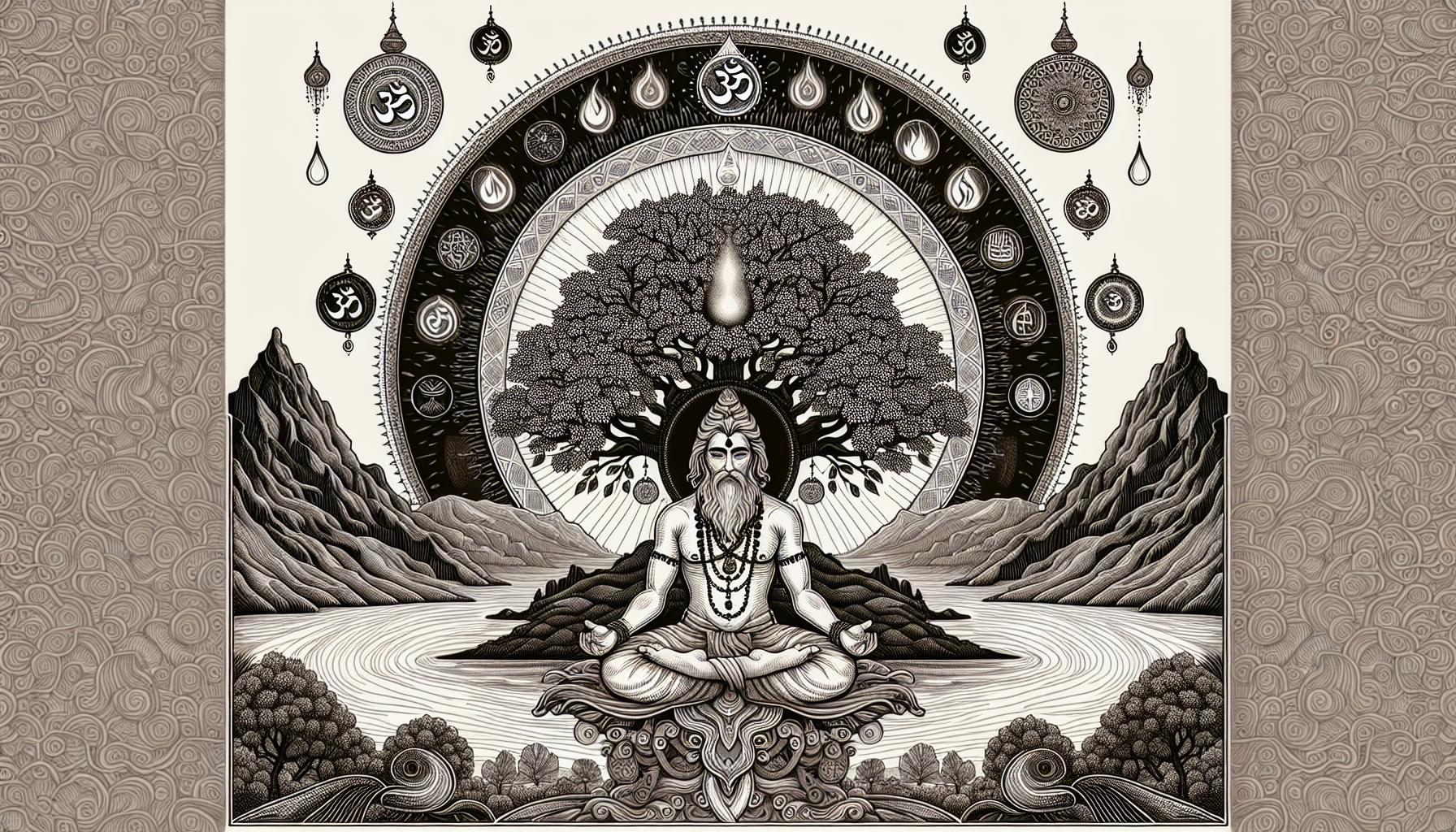
Upanishadic texts distill profound metaphysical and ethical teachings. Here, I’ll cover the key teachings of three major Upanishads: Isa, Katha, and Chandogya.
Isa Upanishad
Isa Upanishad emphasizes the unity of the self (Atman) with the divine (Brahman). It starts with the declaration, “Īśāvāsyam idam sarvam,” meaning “all this is pervaded by God.” This Upanishad teaches about Karma Yoga (selfless action) by stating that renunciation and enjoyment must coexist. There’s a focus on seeing oneself in all beings and all beings in oneself, promoting equality and detachment.
Katha Upanishad
Katha Upanishad features a dialogue between the young seeker Nachiketa – The Boy Who Obtained the Secrets of Death and the god of death, Yama. Nachiketa’s quest for understanding the nature of Atman and the path to liberation leads Yama to expound on the immortality of the soul and the nature of ultimate reality. The text introduces concepts like the imperishable nature of the soul and the distinction between the good (Shreyas) and the pleasant (Preyas). Yama teaches that choosing Shreyas over Preyas leads to spiritual growth and liberation.
Chandogya Upanishad
Chandogya Upanishad contains extensive discussions on metaphysics and spirituality. It explores the significance of Om, the primordial sound, positing that the whole universe originates from it. The Upanishad also presents the famous instruction, “Tat Tvam Asi” (That Thou Art), uttered by the sage Uddalaka Aruni to his son Shvetaketu. This conveys the idea that the individual soul (Atman) is identical to the ultimate reality (Brahman). Also, the Upanishad discusses meditative practices and ethical conduct as paths to spiritual understanding and liberation.
Impact on Indian Philosophy and Culture
Upanishadic wisdom has shaped Indian philosophy and culture by introducing profound ideas on existence, self, and ultimate reality.
Influence on Vedanta
Vedanta philosophy, rooted in Upanishadic teachings, explores the nature of reality and the self. Prominent schools of Vedanta, such as Advaita (non-dualism), Vishishtadvaita (qualified non-dualism), and Dvaita (dualism), trace their origins to Upanishadic concepts. Each school interprets the relationship between Atman (self) and Brahman (universal consciousness) differently. Advaita emphasizes the unity of Atman and Brahman, positing that realizing this unity leads to liberation (Moksha). Vishishtadvaita presents a qualified unity where the self remains distinct yet connected to the divine. In contrast, Dvaita maintains a clear distinction between individual souls and the Supreme Being.
Reflections in Modern Spiritual Practices
Modern spiritual practices in India reflect Upanishadic teachings. Yoga, meditation, and mindfulness practices draw from Upanishadic ideas on self-realization and spiritual growth. Yoga, specifically, incorporates concepts like Atman and Brahman to foster a holistic union of body, mind, and spirit. Vedantic meditation encourages seekers to traverse beyond physical existence and investigate deep into the nature of the self. Spiritual movements like the Ramakrishna Mission and the teachings of Swami Vivekananda propagate Upanishadic wisdom to promote ethical living and spiritual understanding. Also, the Upanishads’ influence extends to popular retreats and wellness programs that emphasize self-discovery and inner peace.
Comparative Analysis with Other Spiritual Texts
Similarities with Western Mysticism
Upanishadic teachings share parallels with Western mysticism. Both traditions emphasize direct experience of the divine. In the Upanishads, this is seen through concepts like Brahman and Atman. Western mystics seek union with God through inner experiences. Both stress meditation and contemplation as paths to higher knowledge. Plotinus, for instance, discusses the One in a manner resembling Upanishadic Brahman.
Differences from Other Indian Literatures
Upanishads diverge significantly from other Indian texts like the Vedas and Puranas. While Vedas focus on rituals and hymns, Upanishads explore philosophical inquiries. Puranas narrate myths and legends, contrasting with the Upanishadic emphasis on metaphysics and self-realization. Besides, while the Bhagavad Gita integrates both devotion and action, the Upanishads prioritize wisdom through meditation and self-inquiry.
Conclusion
Exploring the Upanishads has provided me with a deeper understanding of the profound wisdom embedded in these ancient texts. Their teachings on Brahman, Atman, and the nature of reality continue to influence spiritual practices and philosophies today.
The Upanishads’ emphasis on inner spiritual exploration over external rituals offers timeless guidance for anyone seeking self-realization and ultimate truth. Their impact on Indian philosophy and culture is undeniable, shaping various schools of thought and modern practices like yoga and meditation.
By comparing Upanishadic teachings with other spiritual traditions, I’ve gained a richer perspective on the universal quest for divine knowledge. The Upanishads remain a cornerstone of spiritual wisdom, inviting us to begin on a journey of self-discovery and enlightenment.
Sources & further reading
These themes are explored in greater depth across the following authoritative resources:
- Internet Sacred Text Archive, Rig Veda (Griffith translation)
- Internet Sacred Text Archive, Upanishads
- Britannica, Veda
- Britannica, Upanishad
- Patrick Olivelle, The Early Upanishads (Oxford University Press, 1998)
External resources for further reading. Apam Napat is not affiliated with these publishers; citation does not imply endorsement.
Based on the classical texts of Hindu mythology, see our sources.