
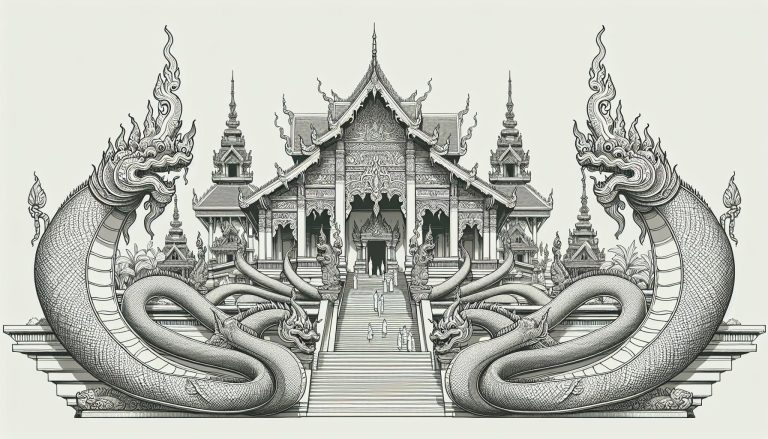
What intrigues me most is the dual nature of these serpents. They’re both feared and worshipped, embodying the mysteries of the natural world and the supernatural. By diving into the rich world of Naga legends, we can uncover how these serpents have shaped cultural beliefs, influenced art, and even impacted daily life in regions where their stories are told.
Origins Of Naga Serpent Legends
The origins of Naga serpent legends trace back to Hindu, Buddhist, and Jain mythology. In Sanskrit, the term “Naga” means “snake” or “serpent,” depicting half-human, half-snake beings.
Hindu Mythology
In Hindu mythology, Nagas are semidivine beings with the ability to assume either human or serpentine form. They are linked to waters, like rivers, lakes, and seas, and serve as guardians of treasure. Notable Nagas include Shesha, Vasuki – The King of Serpents, and Takshaka – The King of Serpents. Female Nagas, known as Naginis or Nagis, are strikingly beautiful serpent princesses. They are associated with the dynasties of Manipur and the Pallavas in India.
Buddhist and Jain Traditions
In Buddhism, Nagas are often door guardians or minor deities. The Naga king Muchalinda sheltered the Buddha from rain during his meditation. In Jainism, the Tirthankara Parshvanatha is depicted with a canopy of Naga hoods above his head.
Cultural Significance Across Asia
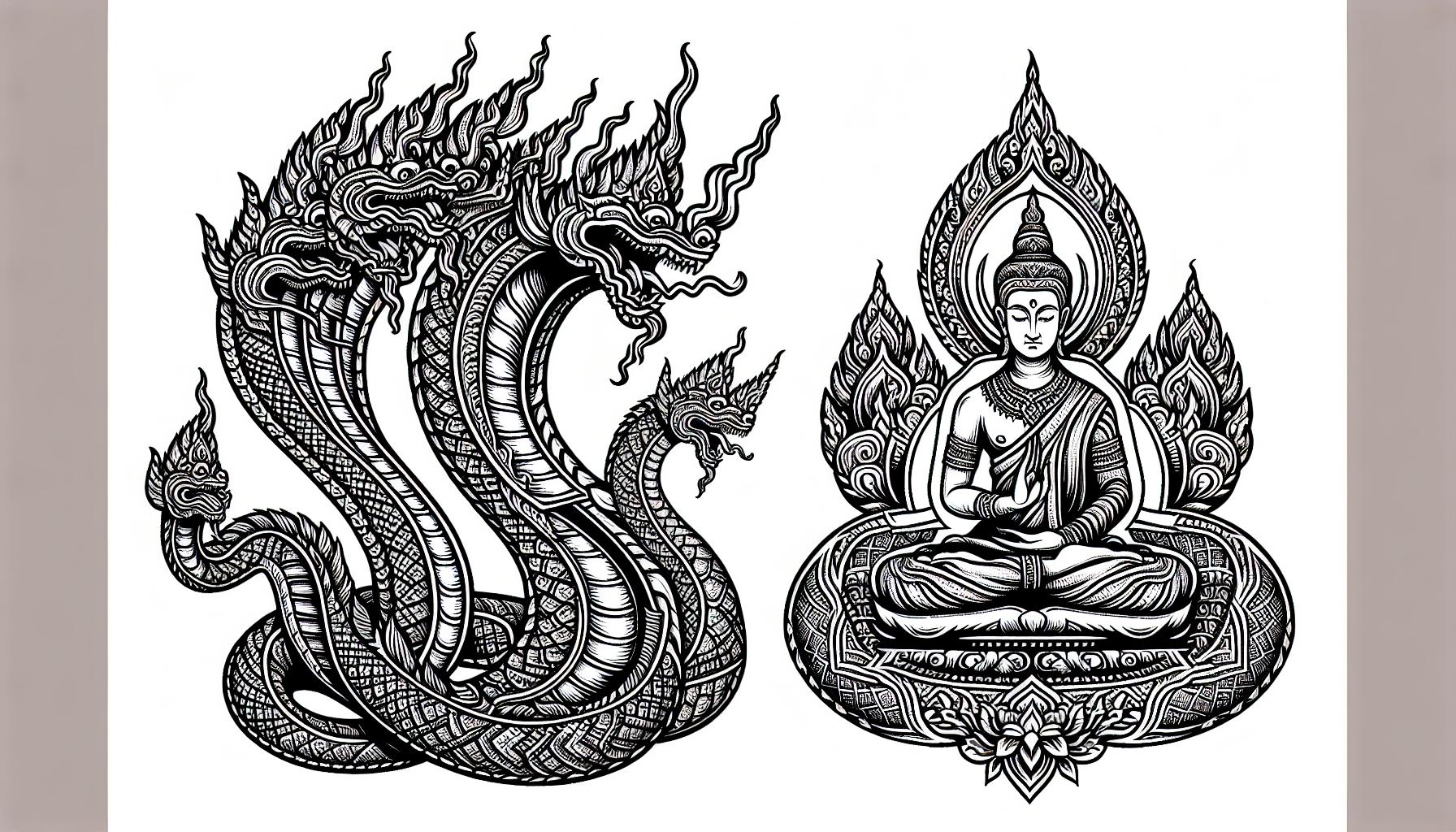
The Naga, a mythical serpent-like entity, holds profound cultural and religious meaning across Asia. This section explores Naga’s roles in Hindu mythology, Buddhist traditions, and Southeast Asian folklore.
Naga in Hindu Mythology
In Hinduism, Nagas are semidivine beings, part human and part cobra. They symbolize strength, beauty, and potential danger. Capable of assuming both human and serpentine forms, Nagas are linked to water, treasure, and the underworld. Prominent Naga figures include Shesha, Vasuki, and Takshaka. The Hindu festival Naga-panchami celebrates the birth of serpents, highlighting their revered status.
Naga in Buddhist Traditions
In Buddhism, Nagas often serve as door guardians or minor deities. Their most notable representation is the Naga king Muchalinda, who sheltered the Buddha during meditation. This act emphasizes Nagas’ protective role within Buddhist traditions, symbolizing spiritual guardianship and wisdom.
Naga in Southeast Asian Folklore
Southeast Asian folklore features Nagas as guardians of treasure and protectors of water bodies. In cultures such as Cambodian, Laotian, and Thai, Nagas appear in temple architecture, myths, and rituals. Their presence underscores the integration of Naga legends into daily life and cultural practices, reflecting their enduring significance across the region.
Notable Naga Legends And Stories
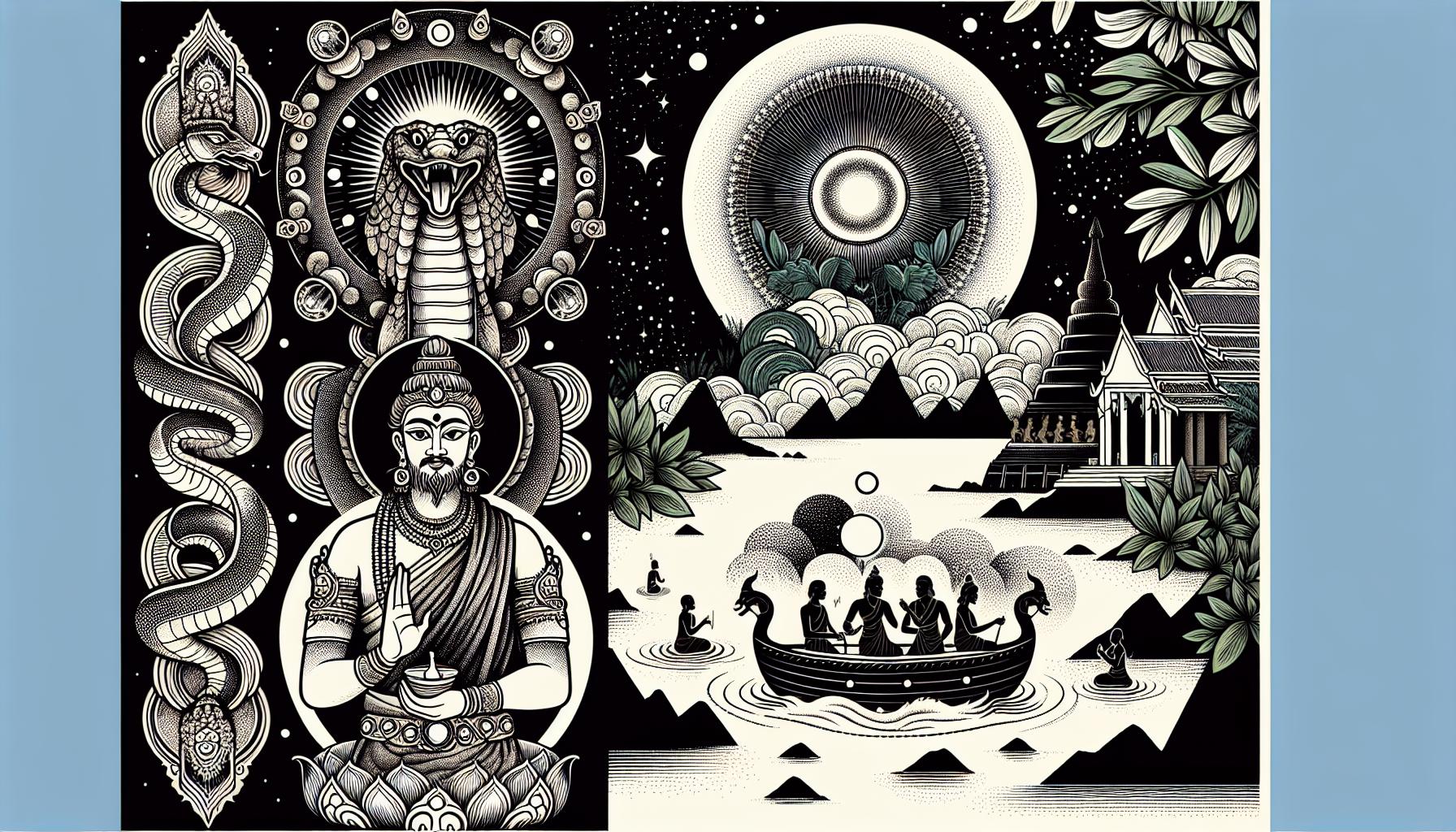
Naga serpents feature prominently in Hindu mythology, embodying unique tales of power and mystery. Here are two notable legends that reveal their significance.
The Legend Of Vasuki
Vasuki, the king of serpents, holds a central place in Hindu mythology. He possesses a gem called Nagamani on his head and often coils around the neck of Shiva, who uses him as an ornament. Vasuki, a son of sage Kashyapa – Father of the Devas and Asuras and Kadru – The mother of the Nagas, has siblings like Shesha and Manasa.
Vasuki’s role is pivotal in the legend of Samudra Manthana. In this story, Vasuki serves as the churning rope to extract amrita from the Ocean of Milk. The Mahabharata – The Great Epic narrates that Vasuki, cursed by Kadru, eventually sought sanctuary with the devas and participated in this churning to extract the nectar of immortality.
The Story Of Manasa Devi
Manasa Devi, the serpent goddess, is Vasuki’s sister and a significant figure in Hindu beliefs. Known for her power to cure diseases and snake bites, Manasa Devi is venerated in several regions. Her legend highlights her divine abilities and her importance in providing protection and healing to her devotees.
Artistic And Symbolic Representations
Naga serpent legends are deeply rooted in Hinduism, Buddhism, and Jainism, with significant artistic and symbolic representations.
Iconography In Temples And Art
Nagas appear frequently in temple architecture and art, depicted in three main forms. They can be entirely human with snakes on their heads or necks, common serpents, or half-human, half-snake beings. In Hinduism, they are guardians of waters and treasure, often linked to rivers, lakes, and seas. For example, the Naga king Shesha supports the world on his thousand hoods. In Buddhism, Nagas act as door guardians or minor deities, such as Muchalinda, the Naga king who sheltered the Buddha from rain. This iconography symbolizes their protective and transformative roles.
Naga Motifs In Traditional Attire And Jewelry
Naga motifs also appear in traditional attire and jewelry, symbolizing protection and renewal. In regions like Cambodia, Laos, and Thailand, Naga designs adorn fabrics, ceremonial dresses, and decorations. These patterns often include intricate snake scales and coiled serpents, embodying the Naga’s guardian role. Jewelry pieces featuring Nagas, like necklaces and bracelets, serve as amulets, believed to impart the Naga’s transformative and protective powers to the wearer.
Naga In Modern Media
Nagas draw continued fascination in modern media, appearing in various films, literature, and spiritual practices to capture their mystical allure.
Depictions In Films And Literature
Nagas frequently appear in films and literature, often depicted as powerful beings. Bollywood has a rich history of featuring female nagas in movies like Nagin (1954, 1976), Nagina (1986), Nigahen (1989), Jaani Dushman: Ek Anokhi Kahani (2002), and Hisss (2010). These films showcase nagas in a blend of romance, drama, and supernatural genres.
The 1998 film Jungle Boy portrays the Naga as a benevolent cobra deity that grants language skills to those with pure hearts. The Telugu film Devi (1999) presents a Nagini who falls in love with a human, highlighting their complex relationships with humans.
Cartoons like The Secret Saturdays introduce younger audiences to Naga antagonists, while Thai soap operas such as Poot Mae Nam Khong (2008), Manisawat (2013), and Nakee (2016) explore Phaya Naga legends.
Hollywood also embraces Naga mythology. The 2021 film Raya and the Last Dragon features dragons influenced by Phaya Naga. Batman: Soul of the Dragon (2021) includes a serpent god named Nāga, reflecting the global reach of these legends.
Influence On Contemporary Spiritual Practices
Nagas significantly impact contemporary spiritual practices. In Hindu rituals, people often worship Nagas as protectors and symbols of fertility. Festivals like Nag Panchami celebrate Nagas, offering milk and prayers to images of serpents.
Buddhism also incorporates Naga beliefs, where they protect sacred texts. In Southeast Asia, particularly Thailand and Laos, Naga statues and imagery adorn temples, representing guardianship and divine wisdom.
In modern spirituality, some practitioners work with Naga energy through meditation and rituals, aiming to harness their transformative power. This continued reverence in spiritual practices underscores the Naga’s enduring significance across cultures.
Conclusion
The Naga serpent legends continue to weave a rich world of cultural significance and mystical allure. Their dual nature as both protectors and feared entities speaks to their complex roles in mythology and modern spirituality. From temple architecture to contemporary media, Nagas remain a powerful symbol of transformation and protection.
Their presence in modern films, literature, and spiritual practices showcases their enduring relevance. Whether depicted in art or revered in rituals, Nagas captivate our imaginations and inspire a sense of awe. The fascination with these mythical beings is a testament to their timeless appeal and profound impact across cultures.
Sources & further reading
These themes are explored in greater depth across the following authoritative resources:
- Britannica, Asura
- Britannica, Naga
- Mythopedia, Hindu Mythology
- Internet Sacred Text Archive, Mahabharata
- Wendy Doniger, Hindu Myths (Penguin Classics, 1975)
External resources for further reading. Apam Napat is not affiliated with these publishers; citation does not imply endorsement.
Frequently asked questions
What does Naga mean in Sanskrit?
Who are the most famous Nagas in Hindu mythology?
Who are Naginis?
What is the role of Nagas in Buddhism?
How do Nagas appear in Jainism?
Based on the classical texts of Hindu mythology, see our sources.