
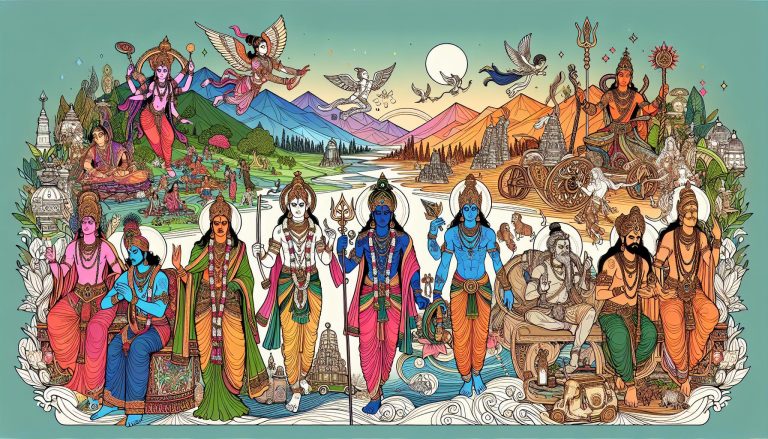
I’ve always found Vishnu’s avatars to be particularly intriguing because they offer deep insights into the values and lessons that are timeless and universal. From the heroic deeds of Rama to the playful yet profound actions of Krishna, each appearance of Vishnu serves as a reminder of the eternal battle between good and evil, and the divine promise to restore balance whenever chaos threatens to prevail.
The Significance Of Vishnu’s Appearances
Vishnu’s avatars hold immense significance in Hindu mythology. These avatars appear during critical moments to restore cosmic harmony and protect the world from malevolent forces. Each avatar embodies specific attributes and symbols that reflect the values and challenges of their respective eras.
The Dashavatara, Vishnu’s ten primary avatars, offers profound lessons and insights. For instance, in his Matsya (fish) avatar, Vishnu saved the sacred Vedas from a great deluge, symbolizing the preservation of knowledge and wisdom. The Kurma (tortoise) avatar facilitated the churning of the ocean, which led to the emergence of amrita (nectar of immortality), illustrating the importance of perseverance and cooperation.
In the Varaha (boar) form, Vishnu rescued the Earth from the demon Hiranyaksha, signifying the reclaiming of righteousness. As Narasimha (man-lion), he destroyed the tyrant Hiranyakashipu, emphasizing the triumph of devotion over tyranny. Vamana (dwarf) showcased ingenuity by subduing the demon king Bali with his cleverness, reinforcing humility and strategic thinking.
Parashurama – Rama of the Axe (Rama with the Ax) eradicated warrior class corruptions, demonstrating the necessity to uphold justice. The hero Rama, in the Ramayana – Epic of Hinduism, exemplified ideal human qualities, such as duty and honor. Krishna, with his multifaceted roles in the Mahabharata – The Great Epic, imparted divine wisdom and joy, highlighting the complexities of life and moral dilemmas.
Gautama Buddha’s inclusion among the avatars underlines a spiritual awakening and compassion for all beings. Finally, Kalki, the future avatar, is expected to herald a new era, embodying hope and renewal.
These appearances not only illustrate Vishnu’s role as a preserver but also offer moral and ethical guidance. Through his avatars, Vishnu shows that divine intervention aligns with the values required to maintain balance and overcome adversity.
The Ten Avatars (Dashavatara)
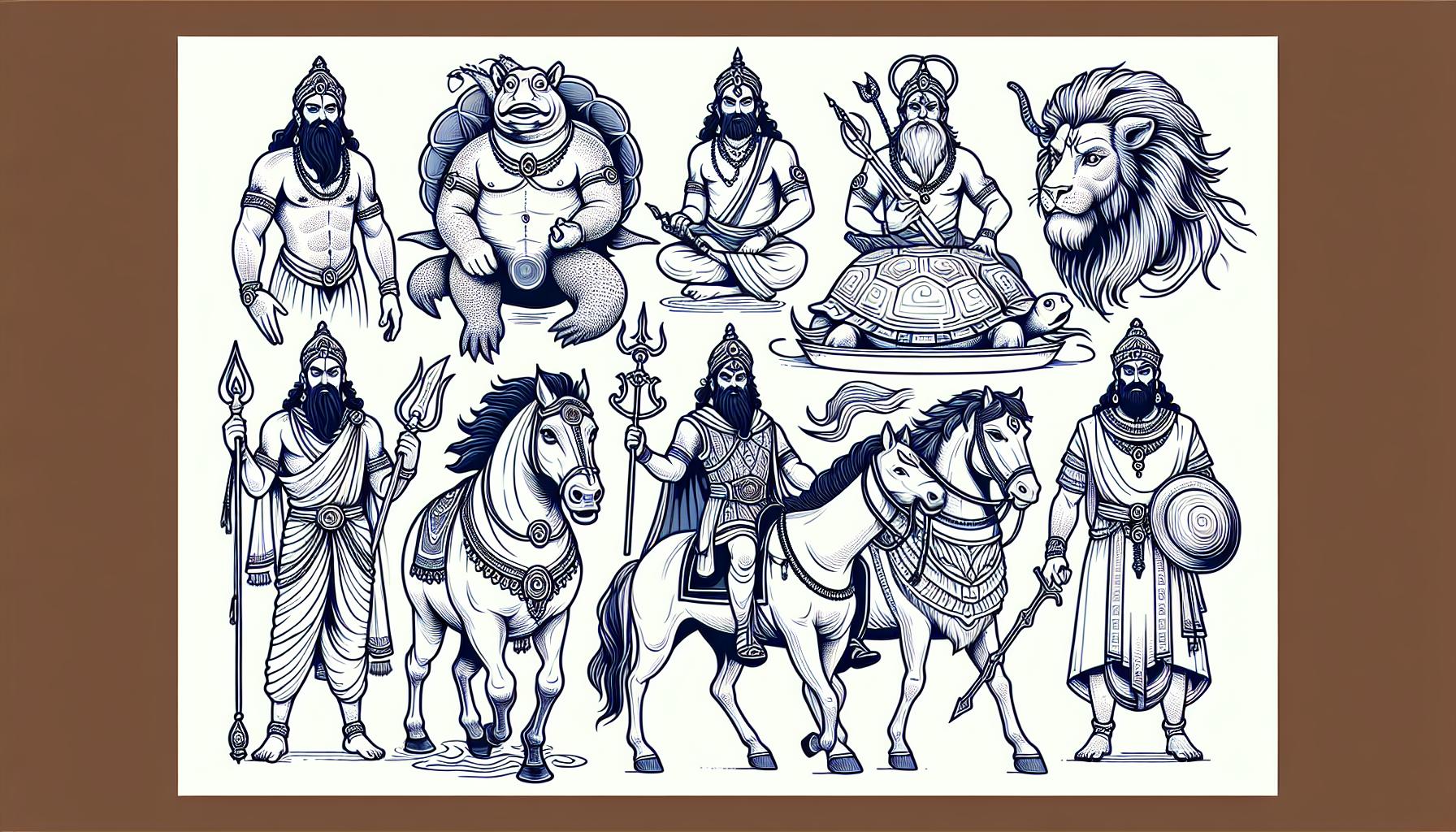
The Dashavatara, the Ten Avatars of Vishnu, demonstrate cosmic interventions aimed at restoring balance and defeating malevolent forces.
Matsya (The Fish)
In the Matsya avatar, Vishnu transformed into a fish to avert a catastrophic deluge. He warned King Vaivasvata Manu of the impending flood, guiding the king to gather all living creatures onto a boat, ensuring their survival.
Kurma (The Tortoise)
As Kurma, Vishnu appeared as a tortoise to support the churning of the Ocean of Milk. He carried the massive Mount Mandara on his back, aiding gods and demons in their quest to obtain the nectar of immortality.
Varaha (The Boar)
In his Varaha avatar, Vishnu took the form of a giant boar to rescue the Earth from the demon Hiranyaksha. He dived to the ocean’s depths, battled the demon, and lifted the Earth back to its rightful place.
Narasimha (The Man-Lion)
Narasimha, the half-man, half-lion avatar, emerged to defeat the tyrant demon king Hiranyakashipu. By adhering to the demon’s near-invulnerable defense clauses, Vishnu’s fierce manifestation ensured divine justice.
Vamana (The Dwarf)
The Vamana avatar saw Vishnu as a dwarf Brahmin. He approached the demon king Bali and requested three paces of land. Vamana then grew to cosmic size, covering the entire universe in two steps, thus reclaiming heavenly and earthly realms.
Parashurama (The Warrior Priest)
Vishnu incarnated as Parashurama, the warrior priest, to rid the world of corrupt Kshatriya warriors. Wielding an axe given by Shiva, Parashurama’s relentless combat spanned multiple generations, restoring dharma and justice.
Rama (The Prince)
As Rama, Vishnu exemplified the ideals of dharma, kingly duty, and virtue. His epic journey in the Ramayana chronicles his quest to rescue his wife Sita from the demon king Ravana, showcasing themes of loyalty, courage, and morality.
Krishna (The Mentor)
In the Krishna avatar, Vishnu played a pivotal role during the Mahabharata era. Serving as Arjuna’s charioteer and mentor, Krishna imparted spiritual wisdom and guidance, culminating in the teachings of the Bhagavad Gita.
Buddha (The Enlightened)
In the form of Buddha, Vishnu embraced the path of non-violence and renunciation. This avatar inspired societal reforms and spiritual awakening, emphasizing compassion and the pursuit of enlightenment.
Kalki (The Future Warrior)
The future avatar Kalki is prophesied to appear at the end of the current age of Kali Yuga. Mounted on a white horse and wielding a sword, Kalki is expected to vanquish adharma (unrighteousness) and usher in a new era of truth and virtue.
Symbolism Behind Each Avatar
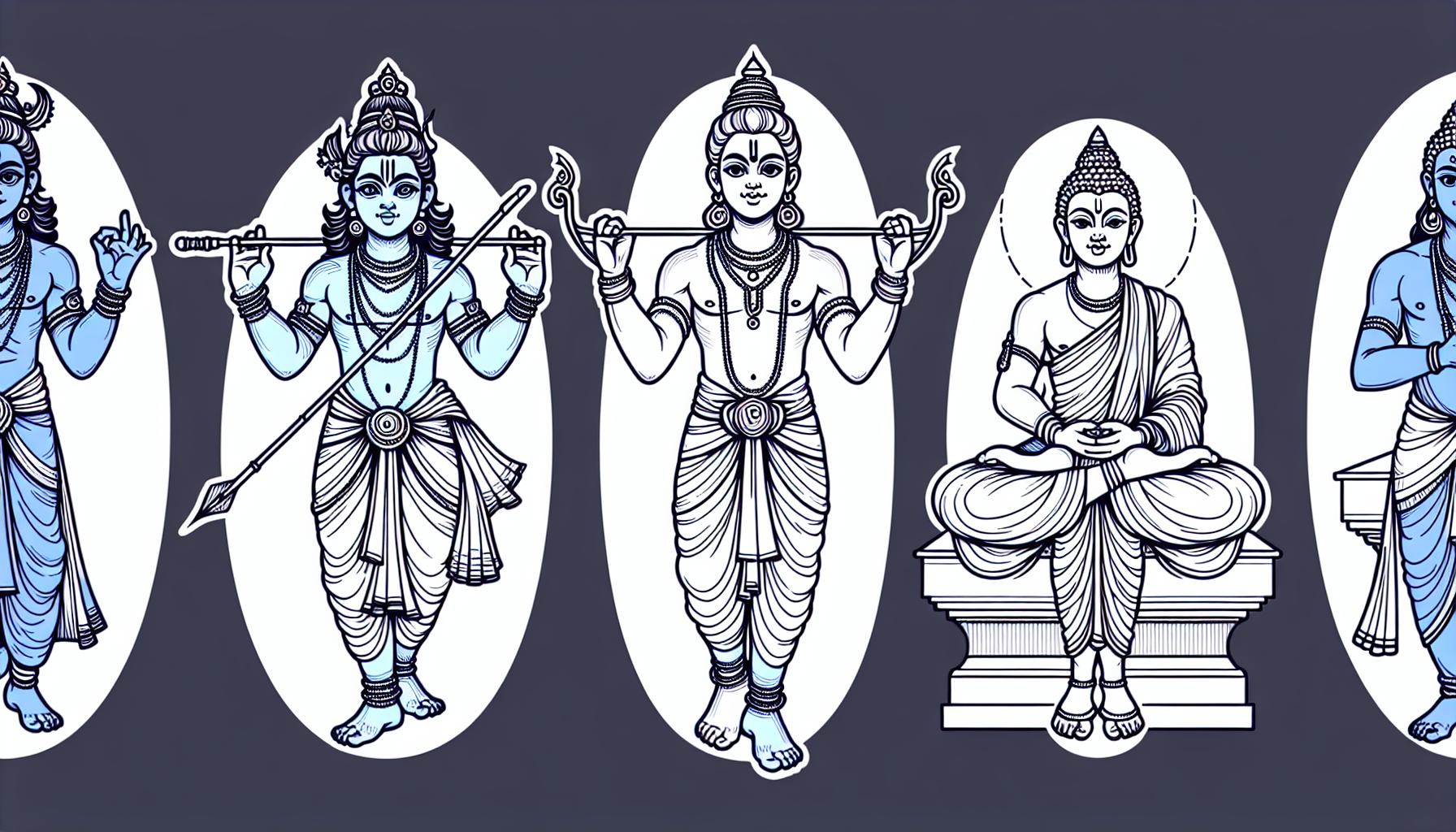
Vishnu’s avatars each hold unique symbolism, reflecting different values, lessons, and challenges.
Krishna
Krishna, one of Vishnu’s most famous avatars, symbolizes wisdom, intellect, and joy. Often depicted as blue-skinned, he’s shown in various forms, from a playful child to a wise adult. His playful nature as a child emphasizes innocence and the joy of life, while his wisdom as an adult highlights deep spiritual and intellectual growth.
Rama
Rama, another major avatar, embodies physical strength and courage. He symbolizes the triumph of good over evil, as seen in his legendary defeat of demon king Ravana. Depicted as a heroic figure, Rama represents righteous actions and adherence to dharma (moral duty), essential themes in Hindu mythology.
Buddha
As an incarnation of Vishnu, Buddha represents wisdom and enlightenment. Known for founding Buddhism, his avatar symbolizes inner peace, non-violence, and the intellectual pursuit of truth. Buddha’s serene demeanor underscores the importance of wisdom and understanding in overcoming life’s challenges.
Artistic Representations
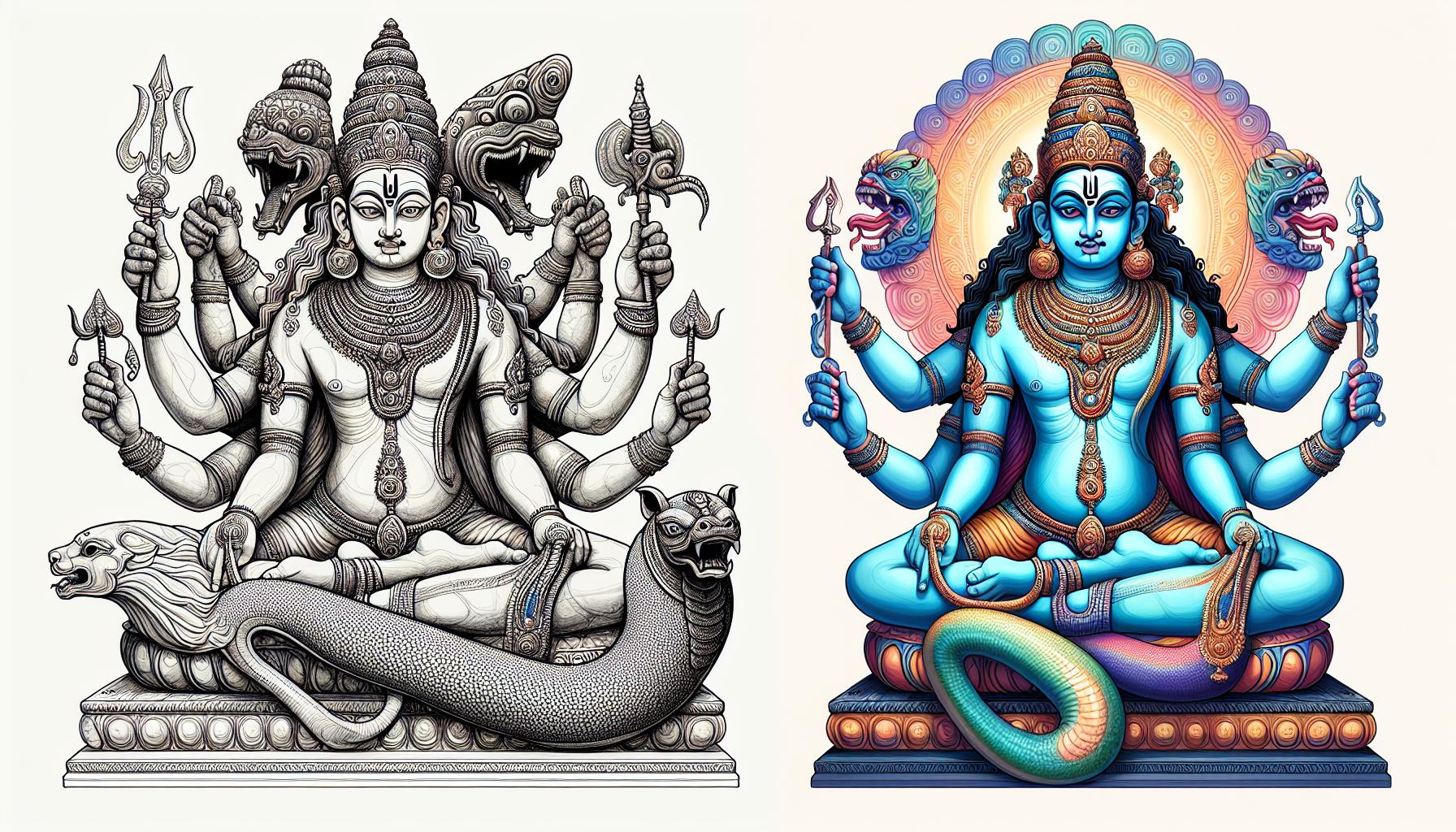
Depictions of Vishnu vary across time periods and artistic mediums but consistently emphasize his divine attributes and symbols. Let’s explore how Vishnu’s appearances evolve in different eras.
Ancient Sculptures
Ancient sculptures vividly portray Vishnu’s divine persona. Central India’s 10th-century sandstone sculpture shows Vishnu as Varaha, his boar-headed avatar. In temple images, Vishnu often reclines on the coils of the serpent Shesha, symbolizing cosmic balance during periods of dissolution and re-manifestation. Standing depictions show Vishnu in royal garments, holding symbols like the conch, discus, club, and lotus, representing his protective and preservative roles.
Modern Interpretations
Modern portrayals of Vishnu maintain traditional elements while incorporating contemporary styles. Artists often depict Vishnu with sky-blue skin, symbolizing his boundless power akin to the ocean or sky. Four arms, each holding an emblem like a conch or lotus, highlight his ability to transcend both material and spiritual realms. These elements remain consistent in paintings, digital art, and other modern media, ensuring Vishnu’s symbolic integrity endures.
Thus, Vishnu’s artistic representations convey his enduring significance and the timeless values he embodies.
Cultural Impact
Vishnu’s numerous appearances have profoundly impacted Hindu culture. His avatars are central to various forms of artistic and literary expression.
Influence On Literature
In literature, Vishnu’s avatars inspire countless stories and myths. For example, the legend of Varaha, Vishnu’s boar avatar, connects with an ancient creation myth. Prajapati – The Creators (Brahma) assumes a boar’s form to rescue the earth from primeval waters, which resonates deeply with cosmic themes. Additionally, epics like the Mahabharata and Ramayana feature Krishna and Rama, highlighting values like wisdom, joy, strength, and courage. These avatars illustrate diverse virtues and serve as moral guides, enriching Hindu literary heritage.
Influence On Festivals
Vishnu’s avatars also play crucial roles in Hindu festivals. Janmashtami, celebrating Krishna’s birth, involves elaborate rituals, devotional songs, and dramatic reenactments of his life. Similarly, Rama Navami commemorates Rama’s birth with prayers, fasting, and stories from the Ramayana. Festivals like these honor Vishnu’s avatars, reinforcing religious devotion and community unity. They provide a platform for cultural transmission, ensuring that Vishnu’s narratives and teachings endure through generations.
Conclusion
Vishnu’s avatars offer profound insights into Hindu mythology, each one embodying unique virtues and teachings. These divine appearances not only highlight the timeless struggle between good and evil but also enrich Hindu culture through art, literature, and festivals. The narratives surrounding Vishnu’s avatars continue to inspire and guide individuals, reinforcing moral values and cultural heritage. By understanding Vishnu’s diverse manifestations, we gain a deeper appreciation of the spiritual and cultural tapestry that shapes Hinduism.
Sources & further reading
These themes are explored in greater depth across the following authoritative resources:
- Encyclopaedia Britannica, Hindu Mythology
- Internet Sacred Text Archive, Hinduism
- Mythopedia, Hindu Mythology
- Harvard Pluralism Project, Hindu Tradition
- Wendy Doniger, The Hindus: An Alternative History (Penguin, 2009), ISBN 978-0143116691
External resources for further reading. Apam Napat is not affiliated with these publishers; citation does not imply endorsement.
Based on the classical texts of Hindu mythology, see our sources.