
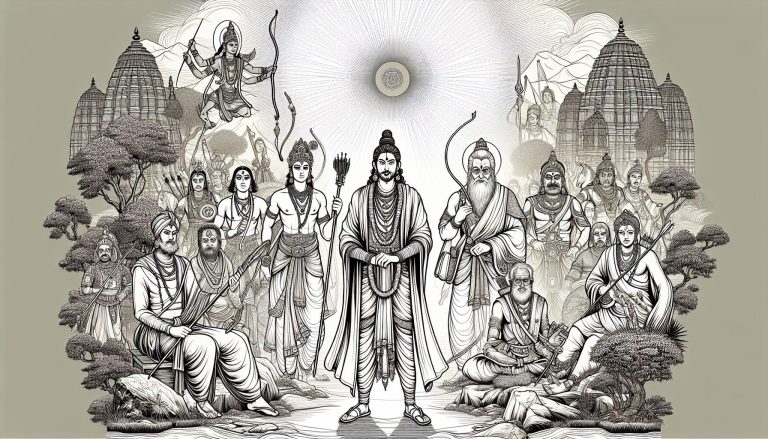
As I delve into the Mahabharata’s rich narrative, I can’t help but marvel at how these characters represent universal archetypes. They mirror our own strengths, weaknesses, and conflicts, making the epic not just a story from ancient India but a mirror to our own lives. Let’s explore how these timeless figures continue to captivate and teach us about the human condition.
Overview Of The Mahabharata
The Mahabharata, an ancient Indian epic, spans over 100,000 verses. It weaves together history, mythology, and philosophy. Vyasa is traditionally credited as the author. He plays a crucial role as both a character and narrator.
This epic centers on the Kurukshetra War. It chronicles the conflict between the Kauravas and the Pandavas. These warring factions are cousins entangled in a savage power struggle. The Mahabharata explores themes of duty, righteousness, and justice.
Characters such as Bhishma – The Grand Old Man of The Kurus, Arjuna, and Draupadi are central to the narrative. Bhishma symbolizes duty and sacrifice. Arjuna exemplifies heroism and moral dilemma. Draupadi represents strength and resilience.
Divine figures also play significant roles. Krishna’s guidance to Arjuna, known as the Bhagavad Gita, is a cornerstone. It addresses complex themes like destiny and free will. Other deities like Indra and Shiva also influence events and decisions.
The Mahabharata remains significant due to its multi-faceted narrative. It’s not just a tale of conflict but a guide on living wisely and understanding human nature.
Central Characters
The Mahabharata features a rich array of central characters, each serving unique roles and embodying distinct archetypes.
Pandavas
The Pandavas, the protagonists of the Mahabharata, include five brothers: Yudhishthira, Bhima, Arjuna, Nakula, and Sahadeva – The Fifth Pandava. Their mother, Kunti, bore them through boons granted by various gods.
- Yudhishthira – He represents dharma (righteousness). Known for his integrity and commitment to truth, Yudhishthira’s moral dilemmas often drive the narrative’s ethical debates.
- Bhima – Known for immense strength, Bhima embodies brute force and loyalty. His confrontations are crucial in many battles, showcasing his valor and protective nature.
- Arjuna – As a master archer, Arjuna symbolizes prowess in warfare and dedication. He is the recipient of Krishna’s teachings in the Bhagavad Gita, a cornerstone of the epic’s philosophical discourse.
- Nakula – Skilled in horse-riding and swordsmanship, Nakula signifies beauty and modesty. His role, though less emphasized, provides a balance to the varied strengths of his brothers.
- Sahadeva – Recognized for wisdom and knowledge, Sahadeva is the quintessential thinker. His strategic insights contribute significantly during the war.
Kauravas
The Kauravas comprise 100 brothers led by Duryodhana, who are the antagonists in the Mahabharata. Their actions drive much of the conflict with the Pandavas.
- Duryodhana – The eldest Kaurava, Duryodhana’s ambition and envy ignite the feud. He represents unchecked ambition and moral blindness, often leading his brothers into conflict and strife.
- Dushasana – Duryodhana’s closest ally, Dushasana epitomizes loyalty to a fault. His actions, especially during the disrobing of Draupadi, mark some of the epic’s most pivotal and emotional moments.
- Shakuni – As the deceitful uncle of the Kauravas, Shakuni embodies cunning and manipulation. His schemes and intrigues repeatedly escalate tensions, pushing the narrative towards inevitable war.
- Karna – Though often grouped with the Kauravas, Karna stands apart due to his complex identity. Born to Kunti before her marriage, he represents tragic heroism, loyalty, and the fate of those caught in the crossfire of destiny.
Krishna
Krishna, an avatar of Vishnu, serves as a divine guide and charioteer for Arjuna.
- Divine Counselor – Krishna’s role as Arjuna’s charioteer and guide during the war exemplifies his divine wisdom. His counsel in the Bhagavad Gita provides profound spiritual insights on duty and righteousness.
- Mediator – Before the war, Krishna’s efforts to broker peace reveal his diplomatic acumen and benevolence, striving to prevent the tragic conflict.
- Ally – His unwavering support for the Pandavas underscores themes of divine justice and the triumph of good over evil. Krishna’s presence ensures that dharma prevails in the end.
Key Archetypes
The Mahabharata uses powerful archetypes to enhance its complex narrative. These key figures symbolize universal human experiences.
The Hero
Arjuna embodies the Hero archetype. Arjuna faces numerous challenges, striving to uphold dharma (righteousness) amid personal and moral dilemmas. He excels as a warrior, showcasing skill, bravery, and a quest for justice. Arjuna’s journey includes mentorship from Krishna, self-doubt, and eventual realization of his true purpose.
The Mentor
Krishna serves as the Mentor archetype. Krishna advises and guides Arjuna, especially during the Bhagavad Gita discourse. As a divine avatar, Krishna offers profound wisdom on duty, righteousness, and the nature of life. His mentorship transcends simple guidance, providing spiritual and philosophical insights crucial to Arjuna’s success.
The Trickster
Shakuni represents the Trickster archetype. Shakuni manipulates events to favor the Kauravas, using cunning plans and deceit. His strategies create pivotal turning points in the story, often leading to chaos and conflict. Shakuni’s actions, though driven by personal vendetta, reveal the complex interplay of fate and human agency.
Female Archetypes
The Mahabharata features compelling female archetypes that profoundly impact the story’s progression. These characters showcase strength, resilience, and wisdom, making them integral to the epic.
Draupadi
Draupadi, the wife of the Pandavas, embodies the archetype of the Suffering Heroine. Born from fire, she possesses extraordinary beauty and grace. Her unwavering devotion to her husbands and her courage define her character. When humiliated in the Kaurava court, Draupadi’s patience and strength become evident, sparking significant events in the narrative. Her role highlights themes of loyalty, justice, and the complex dynamics of dharma.
Kunti
Kunti, mother of the Pandavas, represents the archetype of the Wise Matriarch. Renowned for her wisdom and piety, Kunti’s decisions shape the destiny of her sons. She navigates the challenges of palace politics and rivalry with strategic foresight. When she reveals Karna’s true identity to him, her actions underscore the tension between duty and maternal love. Kunti’s character illustrates the sacrifices and moral dilemmas inherent in motherhood.
Gandhari
Gandhari, queen of Hastinapura and mother of the Kauravas, epitomizes the archetype of the Blind Seer. Despite her physical blindness, she possesses profound insight into moral and ethical issues. Her decision to blindfold herself in solidarity with her husband, Dhritarashtra, reveals her fierce loyalty and commitment. Gandhari’s deep sorrow over the fate of her sons and her eventual curse on Krishna reflect the theme of fate versus free will. Her character showcases the tragic consequences of familial loyalty and the pursuit of power.
These female archetypes contribute to the depth and rich tapestry of the Mahabharata’s narrative, highlighting the significant roles women played in this ancient epic.
Villains And Anti-Heroes
The Mahabharata’s complex narrative showcases various villains and anti-heroes, whose actions significantly impact the epic’s progression.
Duryodhana
Duryodhana, the eldest Kaurava, embodies ambition and envy. His primary motivations center around his claim to the throne and his deep-seated rivalry with the Pandavas. Often seen as the personification of unchecked ambition, Duryodhana’s actions drive much of the conflict in the Mahabharata. His refusal to share power and his schemes against the Pandavas, including the infamous dice game, highlight his cunning and relentless pursuit of dominance. Despite his flaws, Duryodhana’s loyalty to his friends, particularly Karna, showcases his complexity as a character.
Karna
Karna, an anti-hero, straddles the line between heroism and villainy. Born to Kunti before her marriage, Karna is abandoned and later raised by a charioteer. His quest for respect drives him, leading to his undying loyalty to Duryodhana. Despite his noble qualities—bravery, generosity, and archery prowess—Karna’s life is marked by tragedy and internal conflict. His unwavering commitment to Duryodhana, even knowing the latter’s unjust path, highlights his tragic hero archetype. Karna’s story delves into themes of identity, loyalty, and destiny, becoming one of the most poignant narratives in the epic.
Lesser-Known Characters
The Mahabharata features many lesser-known characters who significantly impact the narrative. Exploring these characters reveals the depth and richness of the epic.
Ekalavya
Ekalavya, a prince of the Nishada tribe, exemplifies unwavering dedication and skill. Denied formal training by Drona due to his low caste, Ekalavya created a statue of Drona and practiced archery before it. His devotion led him to become an extraordinarily skilled archer. When Drona learned about Ekalavya’s prowess, he demanded Ekalavya’s thumb as guru dakshina (teacher’s fee) to ensure his favorite disciple Arjuna remained the greatest archer. Ekalavya’s sacrifice highlights the themes of dedication, discrimination, and the cost of ambition within the epic.
Shikhandi
Shikhandi, pivotal in Bhishma’s downfall, embodies themes of gender fluidity and redemption. Born as Shikhandini to King Drupada, she was a reincarnation of Princess Amba who sought revenge against Bhishma. Determined to fulfill this destiny, Shikhandini underwent ascetic penance and was transformed into a male warrior, Shikhandi. During the Kurukshetra War, Bhishma, bound by a vow not to fight a woman, laid down his arms when confronted by Shikhandi, allowing Arjuna to defeat him. Shikhandi’s story intertwines themes of fate, transformation, and the complexities of gender in the Mahabharata narrative.
Conclusion
The Mahabharata’s characters and archetypes offer a timeless exploration of human nature and moral dilemmas. Each character, from the noble Pandavas to the complex Kauravas, embodies universal themes that resonate deeply with us. The divine presence of Krishna and the impactful roles of female figures like Draupadi and Kunti add layers of spiritual and philosophical depth.
This epic isn’t just a story; it’s a profound guide on life, duty, and destiny. Its rich tapestry of characters and their journeys continues to inspire and teach us about resilience, righteousness, and the complexities of human emotions and relationships.
Frequently asked questions
Who are the main characters of the Mahabharata?
Who was Ekalavya in the Mahabharata?
Who was Shikhandi in the Mahabharata?
What does Karna's character represent in the Mahabharata?
Sources & further reading
These themes are explored in greater depth across the following authoritative resources:
- Internet Sacred Text Archive, Mahabharata (Ganguli translation)
- Internet Sacred Text Archive, Ramayana of Valmiki
- Britannica, Mahabharata
- Britannica, Ramayana
- Bibek Debroy, The Mahabharata (10 vols., Penguin, 2010 to 2014)
External resources for further reading. Apam Napat is not affiliated with these publishers; citation does not imply endorsement.
Based on the classical texts of Hindu mythology, see our sources.