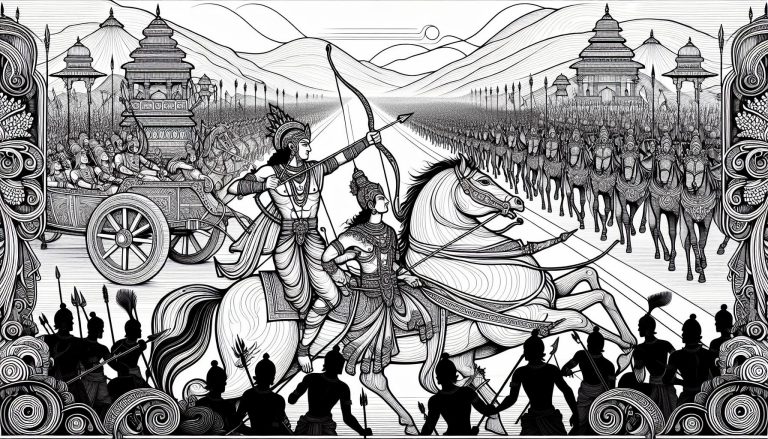
Exploring the Mahabharata’s historical backdrop helps us understand the complexities of ancient kingdoms, their governance, and the intricate web of relationships among different clans. It’s fascinating to see how the epic intertwines historical facts with narrative artistry, creating a rich tapestry that offers insights into the values and conflicts of the time.
Overview of the Mahabharata
The Mahabharata, an epic of ancient India, holds a central place in Indian literature and folklore. Spanning over 100,000 shlokas, it’s one of the longest epic poems globally. The narrative focuses on the Kurukshetra War between the Kauravas and Pandavas.
1. Structure and Composition:
The text comprises 18 parvas (books or sections). Each parva addresses different aspects of life, morality, and human emotions. Some notable parvas include the Adi Parva (the beginning), Bhishma Parva (account of Bhishma’s leadership and wisdom), and Stri Parva (the lament of women after the war).
2. Characters and Themes:
Key figures like Krishna, Arjuna, Bhishma, and Draupadi drive the narrative. Themes of dharma (duty/righteousness), karma (action), and moksha (liberation) are central. For example, Krishna’s guidance to Arjuna in the Bhagavad Gita emphasizes personal duty over individual desires.
3. Historical and Cultural Influence:
Beyond its narrative, the Mahabharata reflects societal norms of ancient India. It unravels caste dynamics (varna system), gender roles, and political intrigue. The epic also sheds light on early Vedic traditions and rituals, establishing a link to historical events and practices.
Historical Background of the Mahabharata
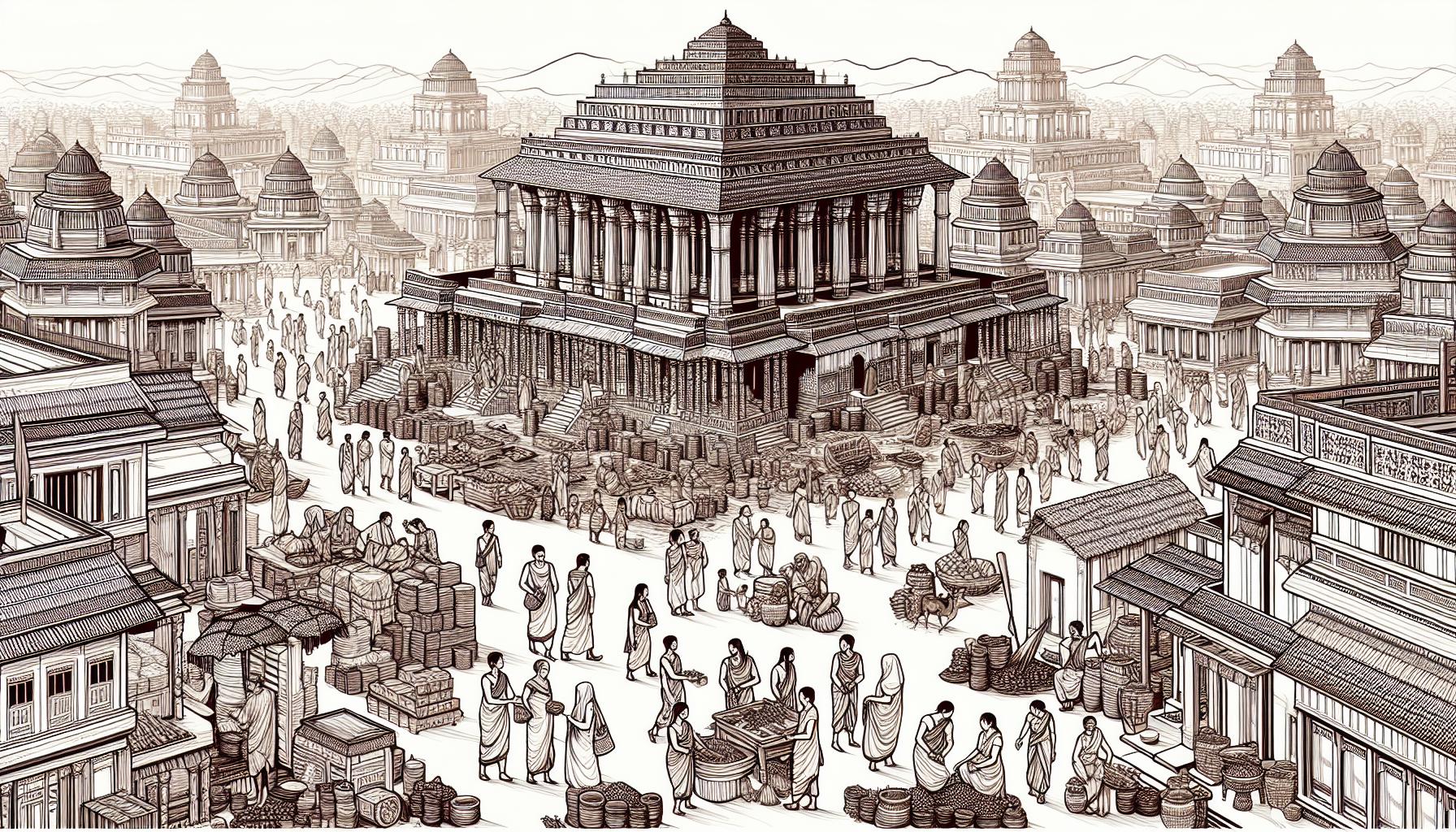
The Mahabharata’s historical context provides a rich tapestry of ancient Indian civilization and its geopolitical landscape. Understanding these elements improves comprehension of the epic’s significance.
Ancient Indian Civilization
Ancient Indian civilization during the Mahabharata era featured structured societies with well-defined norms. Agriculture, trade, and craftsmanship formed the economic backbone. Cities like Hastinapura and Indraprastha reflected urban sophistication, with advanced architectural and engineering practices. Education and scholarly pursuits were highly valued, with institutions like the Gurukul system disseminating knowledge in various fields, including martial arts, philosophy, and sciences.
Geopolitical Landscape
The geopolitical landscape during the Mahabharata era was marked by a multitude of kingdoms and tribal settlements. Each kingdom had its ruling dynasty, with relations often characterized by alliances or conflicts. The Kuru dynasty, central to the Mahabharata, controlled significant territories and influenced other regions. Principalities like Panchala, Matsya, and Magadha played crucial roles in the epic, reflecting a complex network of political and military engagements.
Understanding ancient Indian civilization and its geopolitical landscape offers insights into the Mahabharata’s narrative complexities and cultural depth.
Sources and Evidences
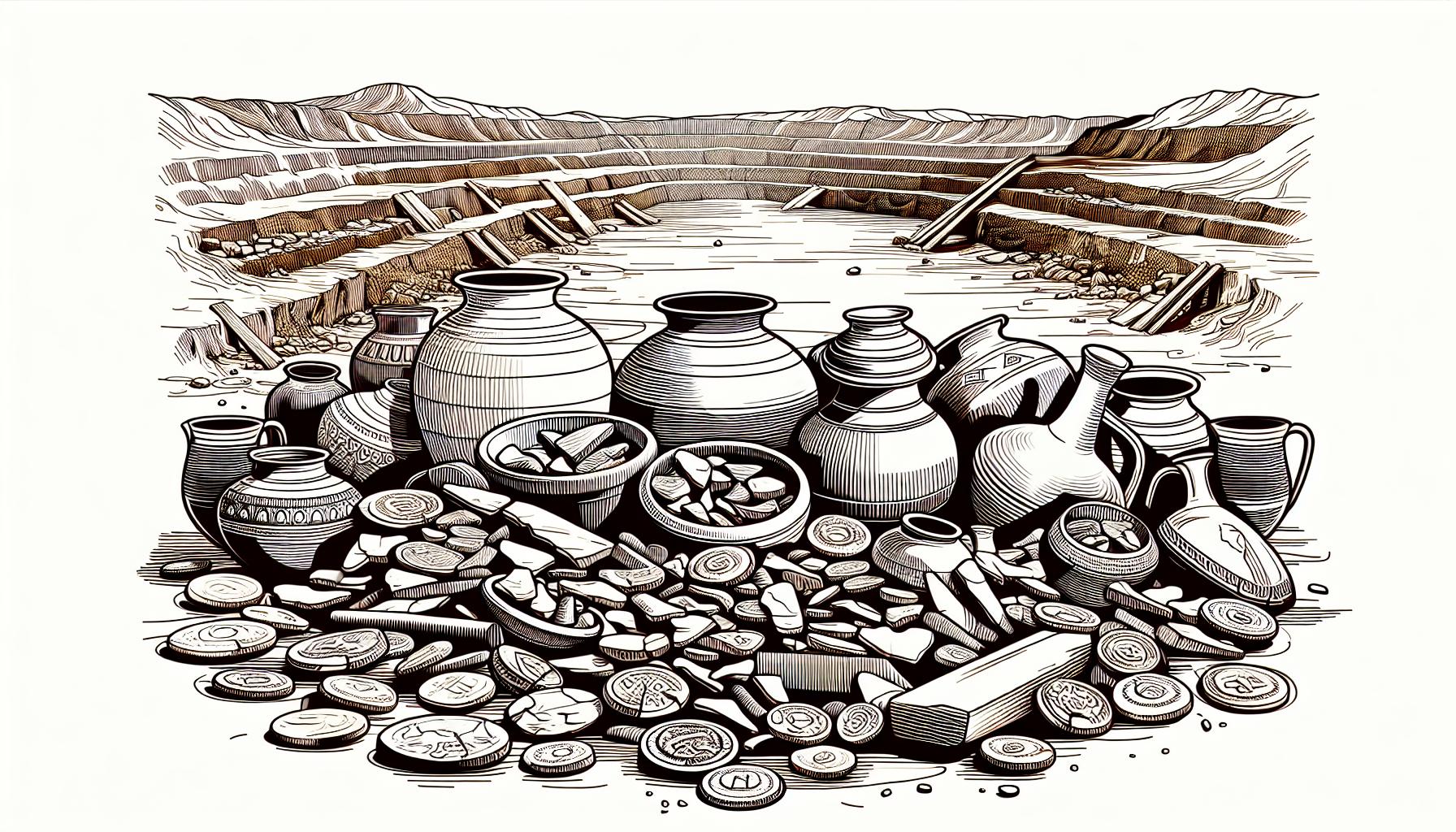
To understand the Mahabharata’s historical context, I explore a range of literary sources and archaeological evidences.
Literary Sources
Various ancient texts provide insights into the Mahabharata’s historical backdrop. The primary source is the Mahabharata itself, attributed to Vyasa, which spans 100,000 ślokas or verses. This text offers a detailed account of the Kurukshetra War and its participants. Other significant texts include the Puranas such as the Vishnu Purana and the Bhagavata Purana, which reference events and characters from the Mahabharata, adding contextual depth.
Epic Poems like Ramayana – Epic of Hinduism written by Valmiki also offer comparative insights. These texts provide contextual richness by illustrating similar societal norms, values, and governance systems. Scholars often cross-reference these sources to corroborate the events described in the Mahabharata.
Archaeological Evidences
Archaeological findings provide tangible connections to the Mahabharata’s historical setting. Excavations at sites like Hastinapura, Indraprastha, and Kurukshetra unveil artifacts pointing towards settlements dating back to the Mahabharata’s proposed timeline. These artifacts include pottery, coins, and remnants of structures that align with descriptions in the text.
Experts use radio-carbon dating to date findings and geomorphological analysis to study climatic conditions, offering insights into the environmental context of the era. Findings at the Sarasvati River bed suggest the river once flowed robustly, corroborating ancient descriptions of the region.
Combining literary sources and archaeological evidence helps reconstruct a clearer picture of the Mahabharata’s historical context, bridging narrative elements with historical realities.
Key Historical Figures

The Mahabharata features several key figures pivotal to its narrative and historical context. Let’s explore the main characters who drive the plot and reflect the complex ethics of ancient Indian society.
The Pandavas and Kauravas
The Pandavas and Kauravas are central to the Mahabharata’s storyline, each group descending from one of two brothers, Pandu and Dhritarashtra.
Pandu
Pandu, the earthly father of the Pandavas, excels in warfare and archery. His tragic fate sets the stage for the epic’s unfolding events. Despite being a prince, Pandu’s life is filled with challenges, not least of which is his role in precipitating the family feud.
Dhritarashtra
Dhritarashtra, the blind king and father of the Kauravas, symbolizes unfulfilled potential. His blindness prevents him from taking the throne, putting his sons in direct conflict with their cousins. His complex character adds depth to the narrative, portraying the struggles within royal duties and familial loyalty.
Other Prominent Characters
These figures are instrumental to the Mahabharata, shaping its themes and conflicts.
Vyasa
Vyasa, the author and narrator of the Mahabharata, is a sage credited with compiling and authoring this vast epic. His role extends beyond narration, as he is also the father of Pandu and Dhritarashtra, influencing the lineage’s destiny.
Krishna
Krishna is a central divine figure and the charioteer for Arjuna during the Kurukshetra War. His teachings in the Bhagavad Gita, part of the Mahabharata, offer profound philosophical and ethical insights, elevating the epic from a mere story to a timeless spiritual guide.
These key historical figures, woven into the fabric of the Mahabharata, provide rich insights into ancient Indian society, ethics, and the timeless struggle between duty and desire.
Cultural and Societal Impact
The Mahabharata has deeply influenced Indian culture and societal norms, reflecting and shaping Hindu beliefs and traditions.
Influence on Indian Culture
The Mahabharata is a cornerstone of Indian culture. It’s a significant source of Hindu philosophy, morality, and religion. The concepts of dharma (moral duty), karma (actions and their consequences), and moksha (liberation) are deeply woven into the narrative. These themes guide ethical behavior and spiritual values in Hindu society. Temples, festivals, and rituals often draw inspiration from the Mahabharata, integrating its stories and lessons into daily life. Notable examples include the depiction of the Bhagavad Gita, a sacred text within the Mahabharata, which forms the basis of many Hindu teachings and practices.
Comparisons with Other Historical Epics
The Mahabharata stands alongside other great epics like Homer’s Iliad and Odyssey. While the Iliad explores themes of heroism and conflict in ancient Greek culture, the Mahabharata delves into the complexities of dharma and righteousness. The Odyssey focuses on adventure and personal struggle, similar to the Mahabharata’s journeys and trials faced by its characters. Despite these comparisons, the Mahabharata’s unique context, depth of philosophical discourse, and integration of divine elements significantly differentiate it from Western epics.
Controversies and Debates
The Mahabharata’s historical context involves considerable debate among scholars. Two primary areas of controversy are its chronology and the intertwining of myth and history.
Chronology Disputes
Scholars debate the dating of the Mahabharata War, with estimates ranging from the late 4th to mid-2nd millennium BCE. Archaeoastronomy methods have been used to narrow down dates, but consensus remains elusive. The composition period of the Mahabharata also sparks discussion. While the bulk of the text likely compiled between the 3rd century BCE and the 3rd century CE, some parts adhere to an older oral tradition. The earliest preserved components are not much older than 400 BCE.
Myth vs. History
Distinguishing myth from history in the Mahabharata presents another challenge. The epic blends divine elements with historical events, complicating efforts to discern factual occurrences. While characters like Krishna and Arjuna reflect historical figures and Vedic traditions, their stories often include supernatural aspects. This intersection of myth and reality renders the Mahabharata a unique text that defies simple historical classification.
Conclusion
The Mahabharata’s rich narrative offers a fascinating glimpse into ancient Indian civilization and its values. Its blend of historical events and mythological elements creates a unique tapestry that’s both complex and enlightening. The epic’s influence on Indian culture and philosophy is profound, shaping beliefs and traditions that endure today. Despite ongoing debates about its chronology and historical accuracy, the Mahabharata remains an unparalleled source of wisdom and cultural heritage. Its timeless themes continue to resonate, offering insights into human nature and the eternal struggle between good and evil.
Sources & further reading
These themes are explored in greater depth across the following authoritative resources:
- Internet Sacred Text Archive, Mahabharata (Ganguli translation)
- Internet Sacred Text Archive, Ramayana of Valmiki
- Britannica, Mahabharata
- Britannica, Ramayana
- Bibek Debroy, The Mahabharata (10 vols., Penguin, 2010 to 2014)
External resources for further reading. Apam Napat is not affiliated with these publishers; citation does not imply endorsement.
Based on the classical texts of Hindu mythology, see our sources.