
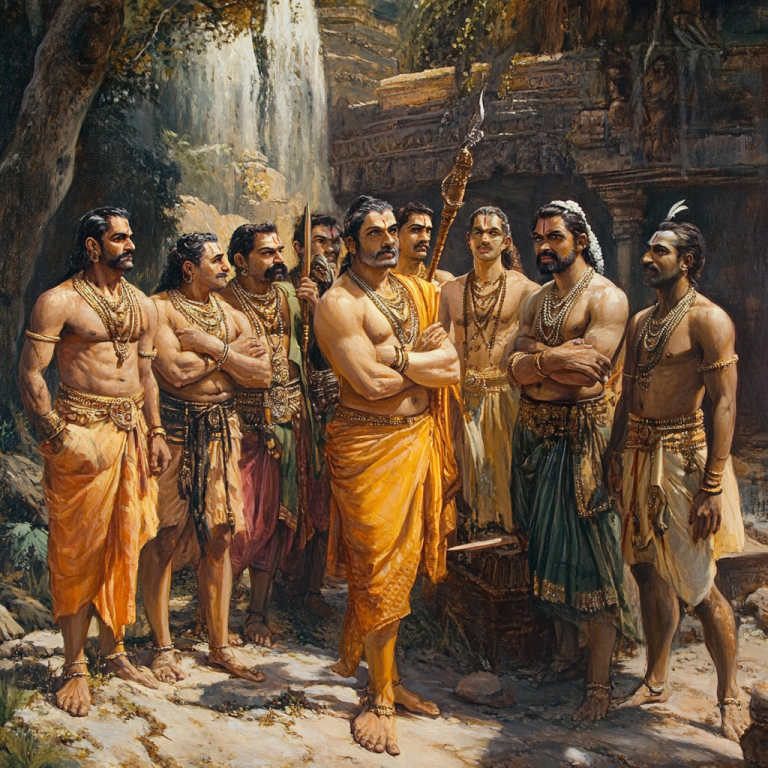
The Pandavas – Heroes of the Mahabharata – The Great Epic
The Pandavas are the five sons of Pandu, a king of the Kuru dynasty, and are central to the epic of the Mahabharata. Their lives are interwoven with divine interventions, familial conflicts, and moral dilemmas, making them timeless figures in Hindu mythology. Each of the Pandavas has a unique origin, divine parentage, and distinct qualities that contributed to their roles as leaders and warriors in the Kurukshetra War.
Parentage and Divine Origins
Pandu, though the legal father of the Pandavas, was incapable of fathering children due to a curse placed upon him by a sage. This curse was a result of Pandu accidentally killing a sage and his wife while they were in the guise of deer. To ensure the continuation of the Kuru lineage, Pandu’s wives, Kunti and Madri, invoked divine boons to conceive children through celestial deities.
| Pandava | Mother | Divine Father | Attributes and Legacy |
|---|---|---|---|
| Yudhishthira | Kunti | Yama (God of Dharma) | Known for his righteousness and adherence to dharma. |
| Bheema | Kunti | Vayu (God of Wind) | Renowned for his immense strength and bravery in battle. |
| Arjuna | Kunti | Indra (King of the Devas) | Celebrated as the greatest archer and a disciple of Drona and Krishna’s closest companion. |
| Nakula | Madri | Ashwini Twins (Divine Physicians) | Distinguished for his unmatched beauty and mastery over horse breeding and care. |
| Sahadeva | Madri | Ashwini Twins (Divine Physicians) | Revered for his wisdom, knowledge of astrology, and loyalty. |
Marriages of the Pandavas
The Pandavas shared a unique marital relationship with Draupadi, the princess of Panchala. The details of Draupadi’s swayamvara and the divine implications of this union are recounted in this Mahabharata episode. Draupadi was born from a sacrificial fire and was destined to bring about the destruction of the Kauravas, the cousins and rivals of the Pandavas. During the swayamvara (self-choice ceremony), Arjuna won Draupadi’s hand by stringing a mighty bow and hitting the target. However, due to a misunderstanding, all five Pandavas ended up marrying her.
In addition to Draupadi, some of the Pandavas had other significant marriages:
| Pandava | Other Wives | Children from Other Wives |
|---|---|---|
| Arjuna | Subhadra (Krishna’s sister) | Abhimanyu – The Brave Young Warrior, who played a heroic role in the Kurukshetra War. |
| Arjuna | Ulupi (a Naga princess) | Iravan, who sacrificed his life in the war to ensure the Pandavas’ victory. |
| Arjuna | Chitrangada – Princess of Manipur (princess of Manipur) | Babruvahana – Son of Arjuna, who later defeated Arjuna in battle. |
| Bheema | Hidimbi (a Rakshasa woman) | Ghatotkacha, a Rakshasa warrior who played a crucial role in the Kurukshetra War. |
The Upa-Pandavas: Sons of Draupadi
Through Draupadi, each Pandava fathered a son, collectively known as the Upa-Pandavas. These sons played minor roles during the Kurukshetra War but met a tragic end at the hands of Ashwatthama – Son of Drona, who killed them in their sleep as an act of vengeance after the war.
| Pandava Father | Son with Draupadi | Attributes and Legacy |
|---|---|---|
| Yudhishthira | Prativindhya | Known for his adherence to dharma, much like his father. |
| Bheema | Sutasoma | Renowned for his strength, inherited from Bheema. |
| Arjuna | Shrutakarma | A skilled warrior, though overshadowed by his father’s legacy. |
| Nakula | Shatanika | Known for his grace and expertise in military strategy. |
| Sahadeva | Shrutasena | Respected for his wisdom and loyalty. |
Pandavas and the Kurukshetra War
The Pandavas were forced into conflict with their cousins, the Kauravas, over their rightful claim to the throne of Hastinapura. The enmity between the two families culminated in the Kurukshetra War, which is the central event of the Mahabharata. This historic battle, rich in divine intervention and moral lessons, is explored in depth in the full account of the Pandava-Kaurava conflict. Each Pandava played a critical role in the war:
- Yudhishthira: Led the Pandavas as their eldest brother and guided them with his wisdom and adherence to dharma.
- Bheema: Killed all 100 Kauravas, including Duryodhana, fulfilling his vow of vengeance for the humiliation of Draupadi.
- Arjuna: Played a pivotal role as the greatest warrior, slaying Karna and countless others.
- Nakula and Sahadeva: Fought valiantly, protecting key Pandava positions and offering counsel throughout the war.
Connections to Other Entities and Stories
| Entity/Character | Role and Story | Connection to the Pandavas |
|---|---|---|
| Krishna | Avatar of Vishnu, who served as Arjuna’s charioteer and guide during the war. | Cousin, mentor, and spiritual guide to the Pandavas, delivering the Bhagavad Gita to Arjuna. |
| Draupadi | Wife of all five Pandavas, humiliated by the Kauravas in the dice game. | Her humiliation was a key cause of the Kurukshetra War. |
| Karna | Eldest son of Kunti, but aligned with the Kauravas. | Half-brother of the Pandavas, killed by Arjuna in battle. |
| Dhritarashtra | Blind king of Hastinapura, father of the Kauravas. | Uncle of the Pandavas, who failed to prevent the conflict between his sons and the Pandavas. |
| Drona | Teacher of the Pandavas and Kauravas. | Taught the Pandavas the art of warfare but later sided with the Kauravas in the war. |
Themes and Symbolism
The story of the Pandavas is rich with themes that reflect the complexities of human life, morality, and cosmic justice:
| Theme | Symbolism |
|---|---|
| Dharma vs. Adharma | The Pandavas represent the struggle to uphold dharma (righteousness) in the face of adversity. |
| Divine Intervention | Their divine parentage underscores the idea that cosmic forces guide the course of human destiny. This divine lineage is central to many Mahabharata origin stories that explore the epic’s earliest chapters and characters. |
| Family Conflict | The feud between the Pandavas and Kauravas reflects the destructive power of greed and envy within families. |
| Unity in Diversity | Despite their differences, the Pandavas remain united, showcasing the strength of familial bonds. |
Legacy of the Pandavas
The Pandavas’ journey, from their birth to their eventual ascension to heaven, embodies the eternal quest for righteousness and justice. Their story continues to inspire generations, offering profound lessons on duty, loyalty, and the balance between moral ideals and human imperfections. A reflective perspective on their legacy and the philosophical insights it offers can be found in later Mahabharata discourse.
Through their divine parentage, heroic deeds, and complex relationships, the Pandavas remain enduring symbols of the triumph of dharma over adharma in Hindu mythology. Their legacy is celebrated in countless retellings, festivals, and rituals, keeping their story alive in the collective consciousness of Indian culture.
Frequently asked questions
Who are the five Pandavas?
Why couldn't Pandu father children himself?
Who were the other wives of the Pandavas besides Draupadi?
What role did Krishna play for the Pandavas?
Sources & further reading
These themes are explored in greater depth across the following authoritative resources:
- Britannica, Asura
- Britannica, Naga
- Mythopedia, Hindu Mythology
- Internet Sacred Text Archive, Mahabharata
- Wendy Doniger, Hindu Myths (Penguin Classics, 1975)
External resources for further reading. Apam Napat is not affiliated with these publishers; citation does not imply endorsement.
Based on the classical texts of Hindu mythology, see our sources.