
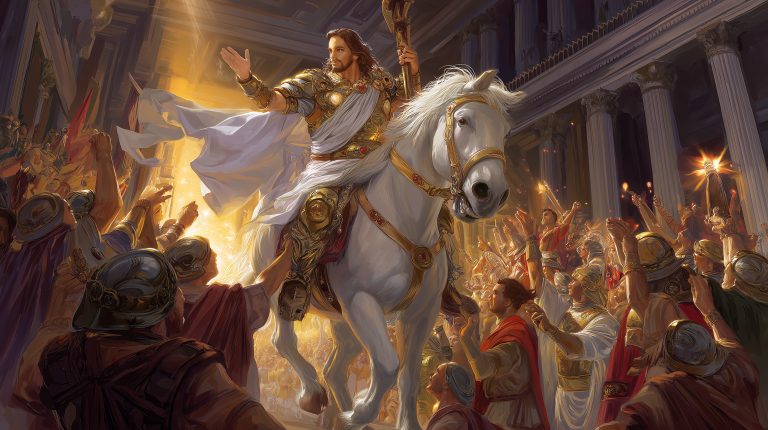
Bhishma – The Grandfather of the Mahabharata – The Great Epic
The name Bhishma means “one who has taken a terrible oath (and fulfills it).” An incarnation of the eldest Vasu, Dhyou, Bhishma was born as Devavrata, the son of King Shantanu of the Kuru dynasty and the Goddess Ganga. His life is a testament to unshakable duty, sacrifice, and adherence to dharma, even amidst personal suffering. Bhishma’s story is one of the most profound narratives in the Mahabharata, connecting him to several key figures and events in Hindu mythology. For a deeper exploration of his life and role in the epic, see Bhishma’s full profile.
Names and Their Significance
| Name | Meaning and Context |
|---|---|
| Bhishma | Fearsome – refers to the terrible vow of celibacy he took to ensure his father’s happiness. |
| Devavrata | Original name given at birth, reflecting his divine origins as the son of Ganga. |
| Gangeya | Son of Ganga – highlights his divine heritage and connection to the river goddess. |
Birth and Education
Bhishma was born to Ganga and Shantanu, the king of Hastinapura. Ganga, fulfilling a curse on the Vasus, gave birth to eight sons, who were incarnations of these celestial beings. Seven of these children were drowned by Ganga as part of the curse’s resolution. The eighth, Devavrata, was spared when Shantanu intervened.
As a child of divine lineage, Devavrata was destined for greatness. His education was entrusted to the best teachers of the time:
- Brihaspati – The Guru of the Devas: The preceptor of the Devas, from whom Bhishma learned the scriptures and dharma.
- Parashurama – Rama of the Axe: The warrior-sage, who taught Bhishma the art of war and made him one of the greatest warriors of his era.
The Terrible Vow and the Boon of Ichcha Mrityu
When King Shantanu fell in love with Satyavati – Grandmother of Pandu and Dhritharashtra, the daughter of a fisherman, her father demanded that her children inherit the throne. To ensure his father’s happiness, Devavrata renounced his claim to the throne and took a vow of lifelong celibacy. Learn more about the spiritual and historical background of Bhishma’s vow and Ichcha Mrityu.
As a reward for his sacrifice, Shantanu granted him the boon of Ichcha Mrityu, meaning that Bhishma could choose the time of his death. This divine gift made him nearly invincible and a pivotal figure in the Mahabharata.
The Incident with Amba
Bhishma’s adherence to duty led to a pivotal event involving Amba, the princess of Kashi. Bhishma abducted Amba and her sisters, Ambika and Ambalika – The Mother of Pandu, to secure brides for his half-brother Vichitraveerya, the heir to the throne. However, Amba revealed that she was already in love with Shalya, the king of Madra. Bhishma released her, but Shalya rejected her due to the abduction.
Amba, humiliated and seeking revenge, asked Bhishma to marry her, but he refused due to his vow of celibacy. Desperate, she sought help from Parashurama, Bhishma’s teacher. A great battle ensued between the two warriors, but neither emerged victorious. Amba’s hatred for Bhishma consumed her, and she undertook severe penance, eventually receiving a boon to be reborn as the cause of Bhishma’s death.
In her next birth, Amba was born as Shikandi, the transgender child of Drupada, king of Panchala. Shikandi played a crucial role in Bhishma’s downfall during the Kurukshetra War. Explore the tragic tale of Shikandi’s transformation and destiny.
Role in the Kurukshetra War
When the war between the Pandavas and Kauravas was declared, Bhishma was bound by his duty to the throne of Hastinapura. Although he personally favored the Pandavas, his allegiance lay with Dhritarashtra, the blind king, and his son Duryodhana, who led the Kauravas.
Bhishma was unanimously chosen as the Generalissimo of the Kaurava forces, except by Karna, who mistrusted Bhishma’s loyalty to the Kaurava cause. Karna abstained from participating in the war until Bhishma’s fall.
The Fall of Bhishma
On the tenth day of the war, Bhishma’s invincibility became a major obstacle for the Pandavas. Acting on Krishna’s counsel, Arjuna used Shikandi as a shield during battle. Bhishma, honoring his vow not to fight a woman or someone born a woman, refused to retaliate against Shikandi. Taking advantage of this, Arjuna pierced Bhishma with countless arrows, causing him to fall from his chariot onto a bed of arrows. The battle came to a halt as both sides mourned the fall of the great warrior.
Ichcha Mrityu and Final Teachings
Even in his near-fatal state, Bhishma did not die, as he awaited the Uttarayana, the auspicious time when the sun begins its northward journey. From his bed of arrows, Bhishma observed the war’s destruction and witnessed the fall of the Kaurava forces.
After the war, Bhishma imparted his wisdom on statecraft, dharma, and governance to Yudhishthira, the eldest Pandava and the new king of Hastinapura. For a narrative account of these teachings, visit Stories from the Mahabharata. These teachings, known as the Bhishma Parva and Shanti Parva in the Mahabharata, remain timeless lessons on leadership and morality.
Once the Uttarayana arrived, Bhishma relinquished his life and ascended to the heavens, achieving a place among the immortals.
Connections to Other Entities and Stories
| Entity/Character | Role and Story | Connection to Bhishma |
|---|---|---|
| Ganga | Mother of Bhishma, goddess of the sacred river. | Guided his early life and then returned to her divine form. |
| Shantanu | Father of Bhishma and king of Hastinapura. | Bhishma’s vow ensured Shantanu’s marriage to Satyavati. |
| Satyavati | Shantanu’s second wife, mother of Vichitraveerya. | Her children’s legacy shaped Bhishma’s later life. |
| Parashurama | Bhishma’s guru in warfare. | Engaged in a legendary battle with Bhishma over Amba’s grievance. |
| Shikandi (Amba) | Reborn to kill Bhishma, fulfilling her vow of revenge. | Played a key role in Bhishma’s death during the Kurukshetra War. |
| Yudhishthira | Eldest Pandava, guided by Bhishma on governance after the war. | Received Bhishma’s teachings on dharma and statecraft. |
Themes and Symbolism
| Theme | Symbolism |
|---|---|
| Duty vs. Desire | Bhishma’s loyalty to Hastinapura despite his personal preferences highlights the conflict between duty and emotion. |
| Sacrifice | His vow of celibacy and renunciation of the throne symbolize ultimate sacrifice for the greater good. |
| Wisdom and Leadership | His guidance to Yudhishthira reflects the importance of righteous governance. |
| Karma and Justice | Amba’s rebirth as Shikandi underscores the inevitability of karma and cosmic justice. |
Legacy of Bhishma
Bhishma’s life is a profound exploration of dharma, sacrifice, and the complexities of human relationships. His unwavering commitment to his vows and duty serves as an enduring example of integrity and selflessness. Despite the tragedy and conflict in his life, Bhishma’s wisdom and teachings continue to inspire, making him one of the most revered figures in Hindu mythology.
Sources & further reading
These themes are explored in greater depth across the following authoritative resources:
- Stanford Encyclopedia of Philosophy, Hindu Philosophy
- Britannica, Dharma
- Britannica, Karma
- Internet Sacred Text Archive, Bhagavad Gita
- A. K. Ramanujan, Speaking of Siva (Penguin Classics, 1973)
External resources for further reading. Apam Napat is not affiliated with these publishers; citation does not imply endorsement.
Based on the classical texts of Hindu mythology, see our sources.