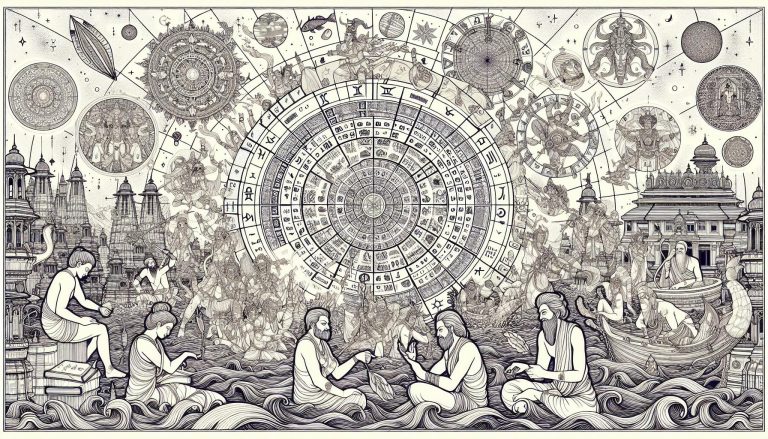
Astrology in Hindu mythology isn’t just about predicting the future; it’s about understanding one’s place in the cosmos. The birth chart, or Janam Kundali, serves as a cosmic blueprint, guiding individuals through life’s challenges and opportunities. By exploring these ancient practices, we can uncover timeless wisdom that resonates even in our modern world.
Historical Background of Hindu Mythology Astrology
Hindu mythology and astrology have their roots in the ancient Vedic period, dating back to the 2nd millennium BCE. The Vedas, the oldest Hindu scriptures, contain references to astronomical observations and astrological concepts. The Vedanga Jyotisha, a Vedic text, is one of the earliest known works on astronomy and astrology.
Greek astrology was transmitted to India in the 2nd and 3rd centuries CE, significantly influencing the development of Hindu astrology. This transmission is evident in the works of Indian astrologers like Varāhamihira, who wrote the Brihat Samhita, a comprehensive treatise on astrology.
Key Concepts in Hindu Mythology Astrology
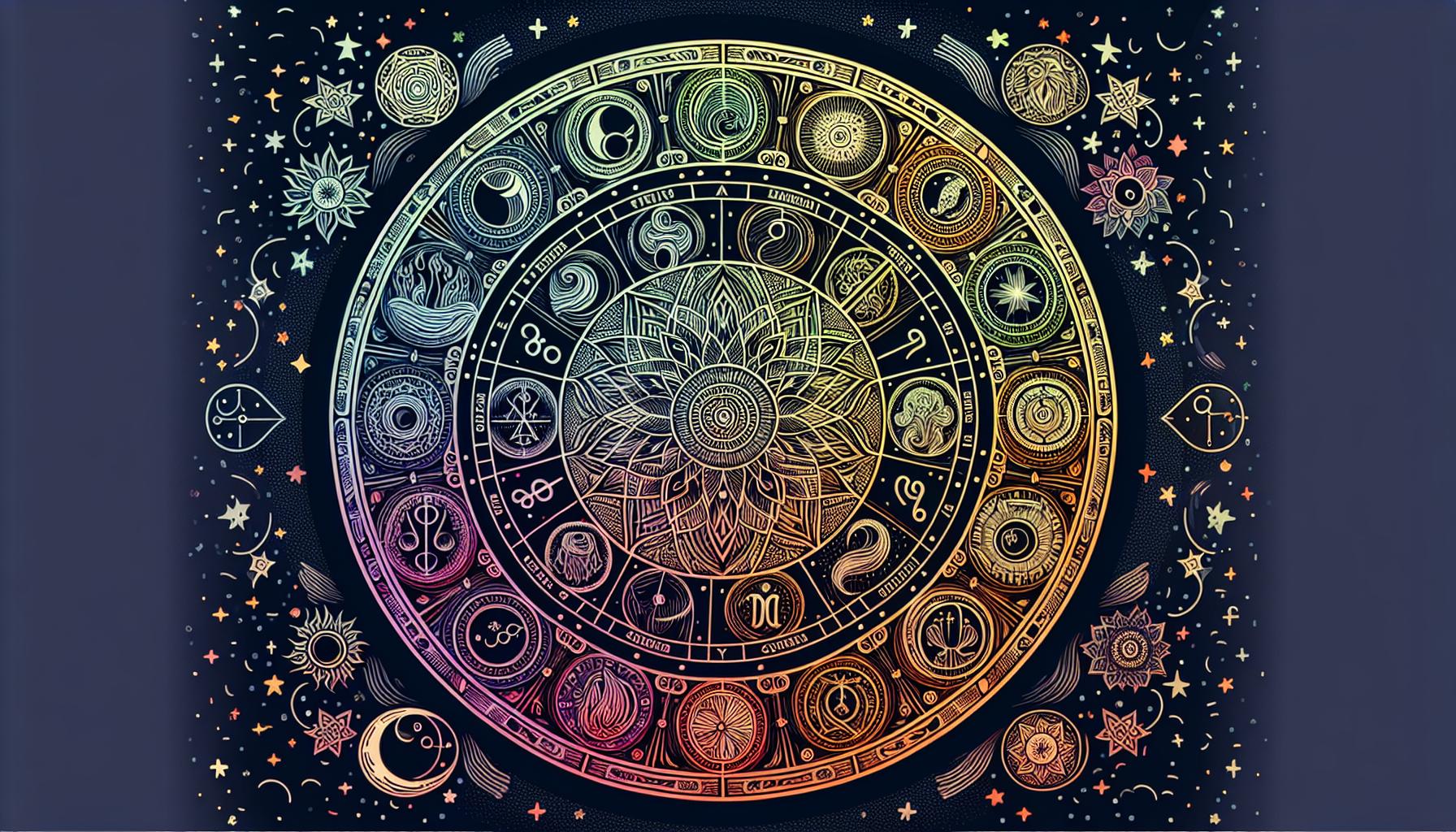
Hindu mythology astrology, rooted in ancient Vedic knowledge, encompasses various key concepts that provide insight into an individual’s life. These concepts include the Zodiac Signs (Rashis), the Planets (Grahas), and Nakshatras (Lunar Mansions).
The Zodiac Signs (Rashis)
In Hindu astrology, the zodiac is divided into twelve signs, known as Rashis. Each Rashi has specific traits and characteristics, influencing personality and life events.
- Mesha (Aries): Represents courage and initiative.
- Vrishabha (Taurus): Denotes stability and reliability.
- Mithuna (Gemini): Embodies curiosity and adaptability.
- Karka (Cancer): Reflects emotional depth and nurturing.
- Simha (Leo): Signifies leadership and confidence.
- Kanya (Virgo): Indicates precision and analytical skills.
- Tula (Libra): Represents balance and harmony.
- Vrishchika (Scorpio): Symbolizes intensity and transformation.
- Dhanu (Sagittarius): Reflects adventure and wisdom.
- Makara (Capricorn): Denotes discipline and ambition.
- Kumbha (Aquarius): Embodies innovation and humanitarianism.
- Meena (Pisces): Signifies compassion and imagination.
The Planets (Grahas)
Hindu astrology recognizes nine planets, known as Grahas, which play a pivotal role in shaping one’s destiny.
- Surya (Sun): Represents the soul, vitality, and authority.
- Chandra – The Moon (Moon): Governs the mind, emotions, and instincts.
- Mangala (Mars): Denotes energy, courage, and aggression.
- Budha (Mercury): Symbolizes intellect, communication, and trade.
- Brihaspati – The Guru of the Devas (Jupiter): Reflects wisdom, growth, and spirituality.
- Shukra (Venus): Signifies love, beauty, and material comforts.
- Shani (Saturn): Represents discipline, responsibility, and challenges.
- Rahu (North Node of the Moon): Indicates ambition, obsession, and change.
- Ketu (South Node of the Moon): Denotes detachment, spirituality, and release.
Nakshatras (Lunar Mansions)
Plus to the Rashis and Grahas, Hindu astrology also uses Nakshatras, 27 lunar mansions that represent specific attributes and govern daily activities depending on their positions.
- Ashwini: Symbolizes healing and swiftness.
- Bharani: Denotes creativity and discipline.
- Krittika: Represents willpower and transformative energy.
- Rohini – The Favorite Wife of Chandra: Reflects fertility and beauty.
- Mrigashira: Signifies searching and exploration.
- Ardra: Embodies transformation and change.
- Punarvasu: Denotes renewal and optimism.
- Pushya: Represents nurturing and prosperity.
- Ashlesha: Symbolizes introspection and wisdom.
- Magha: Reflects heritage and leadership.
- Purva Phalguni: Denotes pleasure and prosperity.
- Uttara Phalguni: Indicates service and commitment.
- Hasta: Signifies skill and resourcefulness.
- Chitra: Embodies brilliance and imagination.
- Swati: Reflects independence and adaptability.
- Vishakha: Symbolizes ambition and achievement.
- Anuradha: Denotes friendship and balance.
- Jyeshtha: Represents seniority and responsibility.
- Mula: Embodies roots and searching.
- Purva Ashadha: Signifies victory and invincibility.
- Uttara Ashadha: Denotes perseverance and leadership.
- Shravana: Reflects learning and listening.
- Dhanishta: Represents resourcefulness and music.
- Shatabhisha: Embodies healing and mysticism.
- Purva Bhadrapada: Denotes transformation and spirituality.
- Uttara Bhadrapada: Symbolizes wisdom and detachment.
- Revati: Signifies prosperity and nurturing.
These key concepts form the foundation of Hindu mythology astrology, offering deep insights into an individual’s characteristics, behaviors, and life path based on celestial influences.
Prominent Mythological Stories and Their Astrological Significance
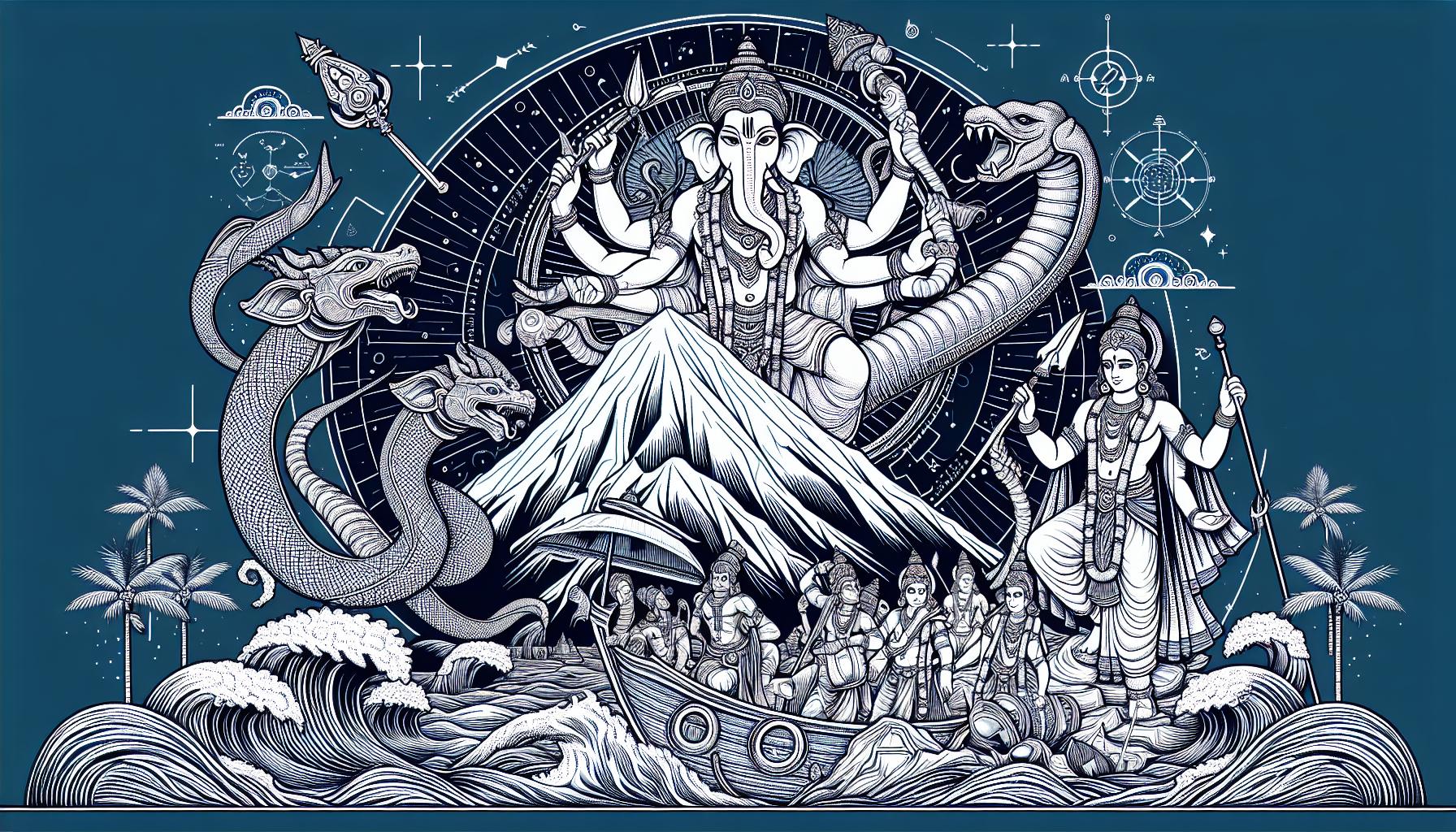
Prominent mythological stories in Hindu mythology carry rich astrological meanings. These narratives not only depict gods and demons but also provide insights into celestial influences.
The Churning of the Ocean
The Churning of the Ocean, known as Samudra Manthan, is a major story in Hindu mythology. This tale narrates the struggle between gods and demons to obtain Amrita, the nectar of immortality. The churning process required Mount Mandara as the churning stick and Vasuki, the serpent, as the rope. This event is closely linked to the astrological concept of Kumbh Mela. Celebrated every 12 years at the confluence of the Ganges and Yamuna rivers, Kumbh Mela is believed to be an auspicious time when the celestial nectar of immortality is accessible to humans. Symbolically, it represents spiritual enlightenment and self-realization, drawing millions of pilgrims seeking divine blessings.
The Birth of Lord Ganesha
The birth of Lord Ganesha is another significant mythological story. According to legend, Goddess Parvati – The Consort of Shiva created Ganesha from the dirt of her body. She set him as a guardian while she bathed, but Lord Shiva, unaware of Ganesha’s origin, beheaded him in rage. Parvati’s grief led Shiva to replace the head with an elephant’s, making Ganesha the elephant-headed god. Astrologically, Ganesha represents wisdom and the removal of obstacles. His birth story signifies the transformational power of divine intervention, illustrating how cosmic influences can alter destinies.
The Story of Lord Rama and His Horoscope
The story of Lord Rama, embodying virtue and righteousness, is closely tied to his horoscope. Born during the Treta Yuga to King Dasharatha and Queen Kausalya – Mother of Rama, Lord Rama’s birth chart is revered in Hindu astrology. According to his horoscope, the alignment of planets during his birth signifies an exceptional ruler endowed with stellar qualities. His life, from his banishment to defeating the demon king Ravana – The Demon King, reflects the profound effects of celestial configurations. The horoscope of Lord Rama serves as an archetype in Vedic astrology, demonstrating how planetary positions influence life events and character.
Applications of Hindu Mythology Astrology in Daily Life
Hindu mythology astrology, or Vedic astrology, influences many aspects of daily life. It guides personal decisions, timings for important events, and even remedies for life issues.
Personal Horoscopes and Life Predictions
Astrologers in Hindu mythology astrology create birth charts, known as Kundalis, to understand individual destinies. These charts help predict various life aspects, including personal traits, career paths, relationships, and spiritual growth. For instance, the planetary positions at birth can indicate someone’s inherent strengths and challenges. Also, analyzing the movements of planets and stars allows astrologers to forecast future events, such as marriage prospects and career success.
Muhurta (Auspicious Timing)
Muhurta is essential in determining favorable times. It helps select auspicious moments for various activities, including weddings, business ventures, and spiritual practices. By choosing the right muhurta, one can ensure better outcomes and harmony. For example, before beginning a significant business project, consulting an astrologer for the best time can lead to more prolific results and avoid potential setbacks.
Remedies and Rituals
Hindu mythology astrology also suggests remedies and rituals. These are designed to mitigate the adverse effects of planetary positions. Remedies may include wearing specific gemstones, performing certain pujas (rituals), or chanting particular mantras. For example, to counteract the malefic effects of Saturn (Shani), one might perform the Shani Sade Sati puja. These practices aim to balance planetary influences, fostering a more favorable life journey.
Modern Interpretations and Influence
Hindu astrology, also known as Jyotisha, continues to play a crucial role in contemporary Hindu life. It influences day-to-day decisions, life events, and cultural rituals.
Popularity in Contemporary Culture
Astrology remains a prominent belief system today. Media often features astrological content, from newspaper horoscopes to social media posts, maintaining its relevance. I see astrology in various formats, like daily horoscopes shared on Instagram and detailed astrological predictions on YouTube channels. This widespread presence helps astrology stay ingrained in modern culture.
Comparisons to Western Astrology
Hindu astrology and Western astrology have key differences. Hindu astrology uses the sidereal zodiac, focusing on the actual positions of constellations. Western astrology relies on the tropical zodiac, based on the sun’s position at the vernal equinox. Hindu astrology includes unique elements like Nakshatras (lunar mansions) and Dasha systems (planetary periods), offering a distinct perspective on life events. Both systems, though different, aim to provide insights and guide individuals in their lives.
Conclusion
Hindu mythology and astrology offer a rich world of wisdom that continues to influence lives today. From the ancient Vedic texts to modern-day practices, the intricate connections between celestial bodies and human experiences remain deeply rooted in culture and tradition. Whether it’s creating a Kundali or finding the perfect Muhurta, these practices provide valuable insights and guidance. The unique elements like Nakshatras and Dasha systems set Hindu astrology apart, offering a comprehensive approach to understanding one’s destiny. As we navigate our lives, the timeless principles of Hindu astrology serve as a beacon, illuminating our path with ancient wisdom.
Sources & further reading
These themes are explored in greater depth across the following authoritative resources:
- Stanford Encyclopedia of Philosophy, Hindu Philosophy
- Mythopedia, Hindu Mythology
- Britannica, Hindu Mythology
- Sheldon Pollock, The Language of the Gods in the World of Men (University of California Press, 2006)
- A. K. Ramanujan, The Collected Essays (Oxford University Press, 1999)
External resources for further reading. Apam Napat is not affiliated with these publishers; citation does not imply endorsement.
Frequently asked questions
What is the origin of Hindu astrology?
What is the Vedanga Jyotisha?
How did Greek astrology influence Hindu astrology?
What is a Janam Kundali?
Who was Varahamihira?
Based on the classical texts of Hindu mythology, see our sources.