
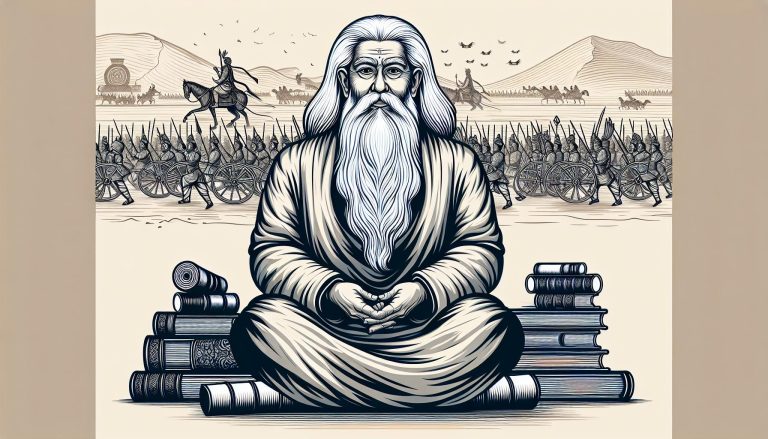
From his vow of celibacy to his role as the guardian of the Kuru dynasty, Bhishma’s actions were guided by principles that often transcended personal desires. His counsel to the Pandavas and Kauravas during the epic’s pivotal moments reflects a depth of understanding and foresight that few can match. Let’s dive into the invaluable lessons we can glean from Bhishma’s life and how they can be applied in our modern world.
Bhishma’s Grandfatherly Wisdom in the Mahabharata
Bhishma, a central figure in the Mahabharata, showcases profound wisdom through his interactions. His wisdom, especially evident in his guidance to his grandson Yudhishthir, covers various aspects of life.
Teachings on Humility
Bhishma often emphasized the importance of humility. In “Ancient Wisdom to Elevate Your Mind” by Shubha Vilas, Bhishma shares a story about a salamali tree. The tree’s humility and recognition of its limitations allowed it to thrive, providing shelter to many. The message is clear: humility fosters growth and helps avoid the pitfalls of arrogance.
Relationship Guidance
Bhishma also provided valuable lessons on relationships. Advising Yudhishthir, he stressed the importance of mutual respect and understanding. For leaders and common folk alike, treating others with respect forms the foundation of strong, enduring relationships.
Leadership and Morality
As a leader, Bhishma’s teachings on leadership and morality were exemplary. He believed that a true leader should embody morality and righteousness. His counsel to the Pandavas underscored that ethical leadership is crucial for stability and harmony in any realm.
Bhishma’s wisdom offers timeless lessons that resonate even today. His teachings on humility, relationships, and leadership serve as guiding principles for modern lives.
The Origin of Bhishma’s Wisdom
Bhishma’s grandfatherly wisdom has deep roots in his early life and the influential vows he took. His journey from Devavrata to Bhishma shaped his character and principles.
Early Life and Education
Born as Devavrata, he was the son of King Shantanu – Father of Bhishma and the river goddess Ganga. Ganga, cursed to drown her children, spared only her eighth son. She revealed her true identity after King Shantanu confronted her, detailing the curse on the Vasus who were reborn as her children. Raised by Ganga, Devavrata received an exceptional education. His upbringing endowed him with profound knowledge and deep moral values, laying the foundation for his later wisdom.
Vows and Sacrifices
The vows Bhishma took defined his life and wisdom. When his father Shantanu fell for Satyavati – Grandmother of Pandu and Dhritharashtra, Devavrata renounced his throne rights to secure his father’s happiness. His promise of celibacy and lifelong service earned him the name Bhishma. These vows demonstrated his unwavering commitment and self-sacrifice.
Key Teachings of Bhishma
Bhishma’s grandfatherly wisdom, rooted in his profound experiences and deep understanding of dharma, has left an indelible mark on the Mahabharata and its teachings.
Bhishma on Duty and Dharma
Bhishma emphasizes that wherever Krishna exists, dharma prevails, and where dharma prevails, eternal victory follows. He believes that adhering to dharma leads to true success and fulfillment. Bhishma also teaches that one’s karma and personal effort are interdependent; one’s effort can amplify the effects of karma.
Principles of Leadership
Leadership, as per Bhishma, involves balancing firmness and compassion. A ruler must be as hard as steel and as soft as butter, depending on the situation. Bhishma advocates that adaptability and understanding situational demands are crucial for effective leadership. His teachings highlight that a leader must possess clarity, decisiveness, and the ability to inspire trust.
Insights on Life and Mortality
Bhishma’s views on life stress the importance of heartfelt connections. He notes that love and trust form the bedrock of enduring relationships. Once these bonds break, they’re difficult to repair. Bhishma also reflects on mortality, teaching that wisdom lies in recognizing life’s transient nature while embracing dharma and personal growth.
Bhishma in the Kurukshetra War
Bhishma, also known as Devavrata, held a prominent role in the Kurukshetra War. Commanding the Kaurava forces, he faced numerous challenges due to his complex loyalties.
Role as the Commander
As the supreme commander of the Kaurava forces, Bhishma led with unparalleled strategies and valor. For ten days, his presence was a formidable force on the battlefield. Despite his reluctance, his vow to protect Hastinapur dictated his actions. Bhishma’s leadership style combined tactical brilliance and ethical considerations, never engaging in deceitful warfare. His decisions often reflected his internal struggle between duty to the throne and love for the Pandavas, showcasing his adherence to Dharma.
Conversations with Yudhishthira
Bhishma’s interactions with Yudhishthira, the eldest Pandava, offer deep insights. Despite the war, he maintained a high regard for Yudhishthira’s commitment to Dharma. Their conversations during Bhishma’s fall provide valuable lessons on ethics, statecraft, and the responsibilities of a ruler. Bhishma advised Yudhishthira on governance, justice, and righteousness, blending his strategic acumen with grandfatherly wisdom. These dialogues underline Bhishma’s dual role as a warrior and a sage, emphasizing his lifelong dedication to righteous living.
Relevance of Bhishma’s Wisdom Today
Bhishma’s wisdom resonates today, given the growing need for ethical leadership and decision-making rooted in integrity and resilience.
Modern-Day Leadership Lessons
Bhishma’s leadership teaches self-control, discipline, and responsibility. His ability to remain neutral and detached in crisis situations provides a valuable lesson for modern leaders. For instance, today’s leaders can benefit from Bhishma’s approach of making unbiased decisions by focusing on facts rather than emotions.
Ethical Decision-Making
Adhering to a strong moral code and upholding dharma were central to Bhishma’s actions. Modern leadership demands ethical decision-making, transparency, and maintaining trust. Leaders can look to Bhishma’s steadfast commitment to righteousness as a guide for navigating complex moral dilemmas and reinforcing credibility within their organizations. For example, his dialogue with Yudhishthira illustrates how ethical considerations can guide governance and decision-making processes.
Conclusion
Bhishma’s grandfatherly wisdom remains a beacon of ethical leadership and integrity. His life and teachings offer timeless lessons on duty, resilience, and moral decision-making. By embodying these principles, modern leaders can navigate the complexities of today’s world with clarity and purpose. Bhishma’s emphasis on dharma and unbiased governance is a reminder that true leadership is rooted in ethical conduct and unwavering commitment to righteousness.
Sources & further reading
These themes are explored in greater depth across the following authoritative resources:
- Internet Sacred Text Archive, Mahabharata (Ganguli translation)
- Internet Sacred Text Archive, Ramayana of Valmiki
- Britannica, Mahabharata
- Britannica, Ramayana
- Bibek Debroy, The Mahabharata (10 vols., Penguin, 2010 to 2014)
External resources for further reading. Apam Napat is not affiliated with these publishers; citation does not imply endorsement.
Based on the classical texts of Hindu mythology, see our sources.