
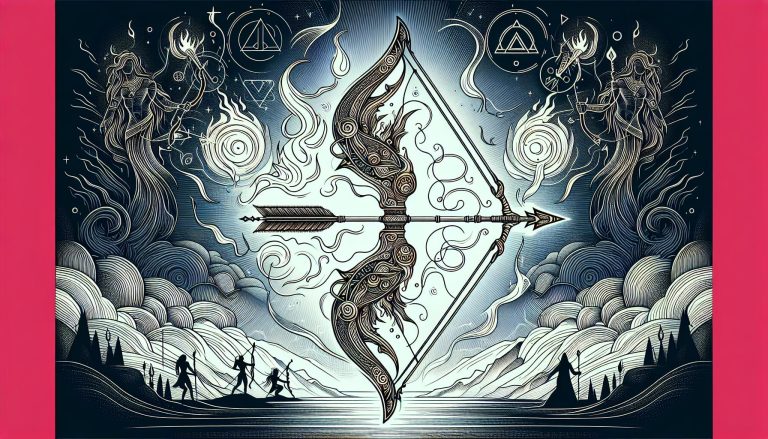
When I first delved into the Mahabharata, the sheer variety and potency of these celestial weapons captivated me. Each weapon, from the fearsome Brahmastra to the indomitable Pashupatastra, carried its own unique lore and significance. Exploring these mythical armaments offers a glimpse into the ancient world’s imagination and the timeless struggle between good and evil.
Overview of Celestial Weapons in Mahabharata
Celestial weapons, known as “Astras,” dominate many battles in the Mahabharata. They symbolize divine power and are granted by various gods to favored warriors. Warriors like Arjuna – The Peerless Archer and Karna wield these mighty armaments with unique incantations that unleash their power.
Brahmastra
Brahmastra, the most powerful, is granted by Lord Brahma. It emits intense flames capable of annihilating massive armies and entire regions. Arjuna and Ashwatthama – Son of Drona use Brahmastra in crucial moments of the epic.
Pashupatastra
Pashupatastra, bestowed by Lord Shiva, holds unparalleled destructive power. This weapon destroys the target regardless of size, shape, or nature. Arjuna receives Pashupatastra during his quest for divine armaments.
Varunastra and Agneyastra
Varunastra, associated with water, summons torrential rains and floods. Agneyastra, linked to fire, engulfs enemies in flames. Arjuna uses Varunastra to counter Agneyastra during his battles, showcasing their tactical applications.
Narayanastra
Narayanastra, attributed to Lord Vishnu, unleashes a barrage of fiery missiles. Its power increases with resistance. Ashwatthama invokes Narayanastra in the Kurukshetra war, demanding strategic wisdom to neutralize it.
Vajra
Vajra, wielded by Indra, the king of gods, delivers thunderous strikes. It symbolizes indomitable force and resilience. Indra grants Vajra to his son Arjuna, providing an edge in combat scenarios.
These celestial weapons play pivotal roles in the Mahabharata, driving the narrative and epitomizing the struggle between good and evil. The dynamic interactions between these powerful instruments and their wielders not only enhance the epic’s dramatic intensity but also reflect the ancient world’s ingenuity in conceptualizing ultimate power.
Prominent Celestial Weapons and Their Bearers
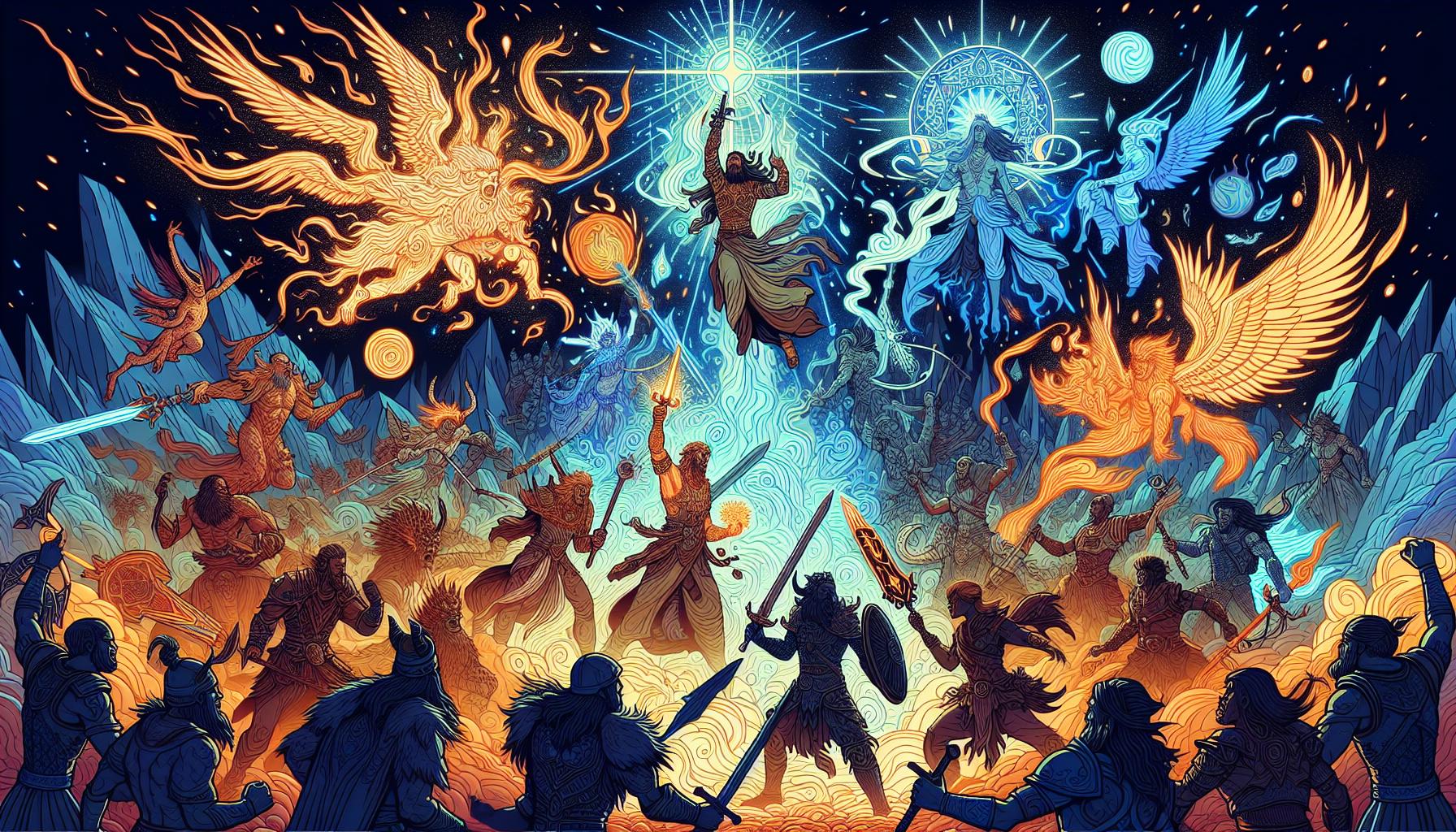
In the Mahabharata, several celestial weapons, or Astras, stand out for their immense power and divine origins. Here are the most prominent ones and the warriors famed for wielding them.
Brahmastra
Brahmastra stands as one of the most powerful weapons in the Mahabharata. Granted by Brahma, it could annihilate entire armies and cause severe environmental damage. Arjuna and Karna were notable bearers. When invoked, this weapon never missed its mark and left behind utter destruction.
Pashupatastra
Pashupatastra was granted by Shiva and known for its devastating capabilities. Arjuna was the primary bearer. This weapon could be launched by mind, eyes, words, or a bow and could destroy all creation when misused. Invoking Pashupatastra required ultimate divine favor and extreme caution.
Narayanastra
Narayanastra was another formidable weapon, gifted by Vishnu. Ashwatthama wielded it during the Kurukshetra war. It unleashed a rain of arrows and fiery missiles that could subdue entire battalions. Its fury increased if resistance was shown, making it an uncontrollable force against defiance.
Agneyastra
Agneyastra, the fire weapon, was given by Agni, the fire god. Drona and Arjuna wielded this weapon. It released flame-engulfed projectiles capable of incinerating everything in its path. The potency of Agneyastra lay in its unquenchable fire that could only be extinguished by specific counter weapons.
Varunastra
Varunastra was the water weapon, granted by Varuna, the god of oceans. Arjuna utilized this weapon to counter Agneyastra. It could unleash torrents of water to drown opponents or quell other fire-based Astras. The weapon’s strength was in its ability to overwhelm large areas with the force of the ocean.
These celestial weapons not only exemplified the divine favor granted to their bearers but also underscored the responsibilities that came with wielding such immense power.
The Role of Celestial Weapons in Key Battles
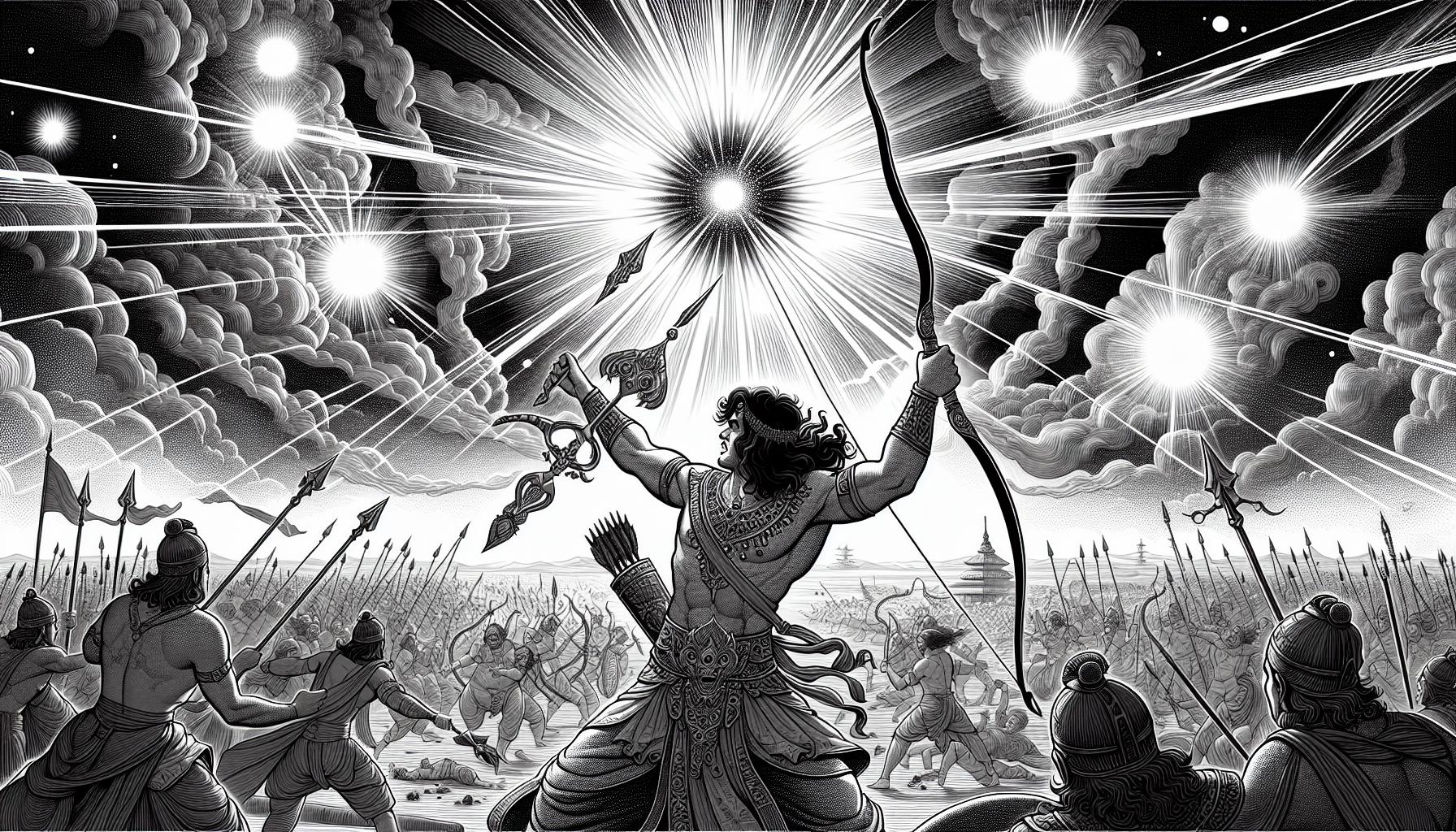
Celestial weapons played crucial roles in the Mahabharata’s most pivotal battles. These divine armaments influenced the outcomes and showcased the warriors’ skills and destinies.
Kurukshetra War
The Kurukshetra War featured prominent celestial weapons. Arjuna’s use of the Pashupatastra decimated vast enemy ranks in seconds. Karna’s possession of Shakti, a weapon granted by Indra, showcased his divine favor. Bhishma – The Grand Old Man of The Kurus’s mastery of celestial armaments like Prashwapastra controlled the battlefield’s tempo. These weapons highlighted the gods’ influence on mortal affairs, enhancing the war’s epic scale.
Duel of Arjuna and Karna
The duel between Arjuna and Karna stands as one of the Mahabharata’s most memorable encounters. Arjuna, favored by Lord Krishna – An Incarnation of Vishnu, wielded the Anjalikastra effectively. Karna countered with his trusty Vasavi Shakti. This clash featured divine intervention, with Indra reclaiming Karna’s Shakti. Arjuna’s eventual victory underscored destiny’s role and the potency of divine armaments.
Abhimanyu – The Brave Young Warrior’s Last Stand
Abhimanyu’s last stand remains a testament to heroism and celestial weaponry’s impact. Trapped in the Chakravyuha formation, he utilized his father’s gifts, including the Brahmashira. Despite his valiant efforts, the combined might of enemy celestial weapons overwhelmed him. His demise illustrated both the strengths and limitations of celestial armaments in the face of strategic warfare.
Celestial weapons not only demonstrated the gods’ favor but also highlighted the warriors’ valor and skill.
Symbolism and Significance of Celestial Weapons
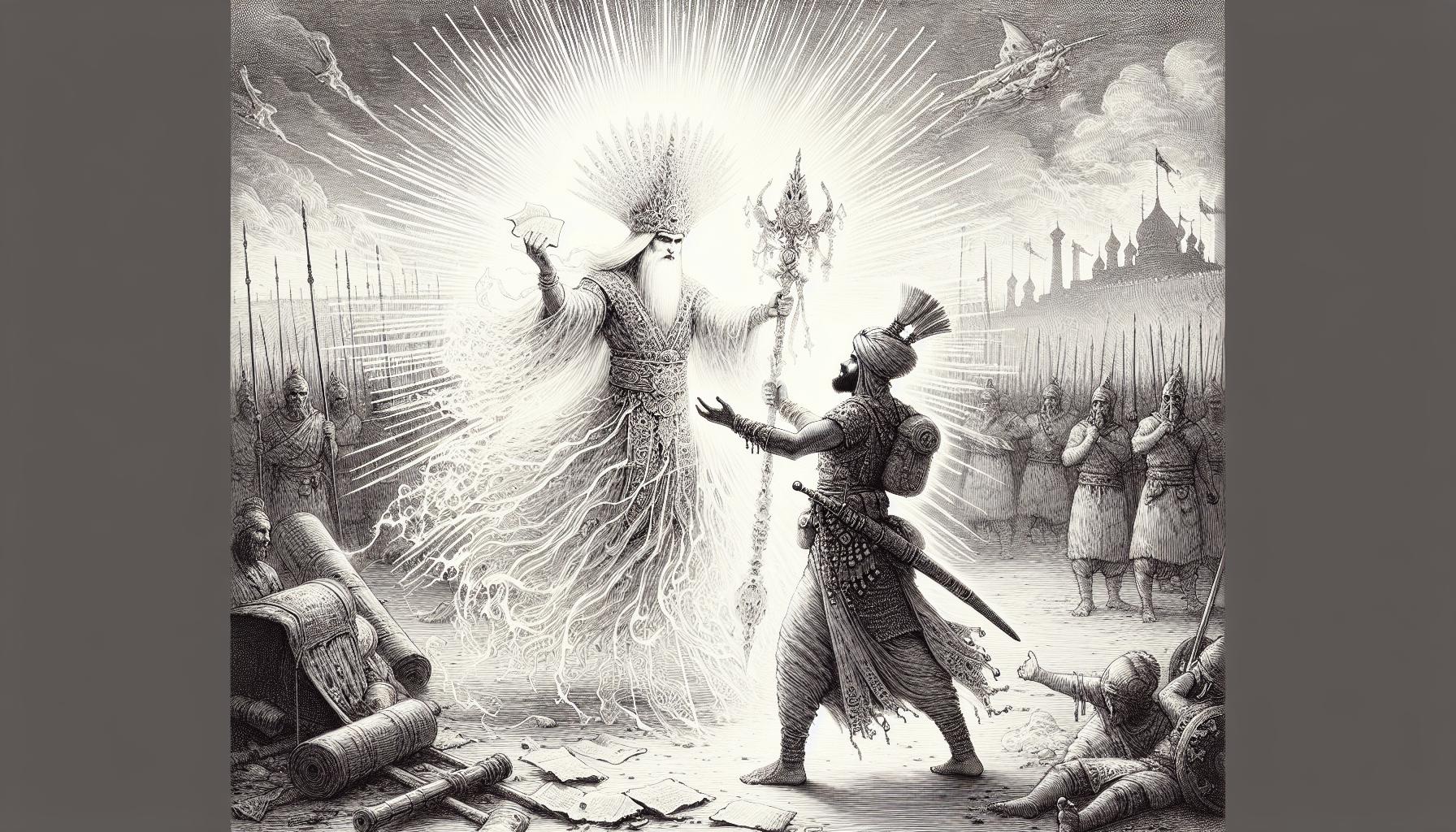
Celestial weapons in the Mahabharata hold deep symbolic and significant meanings. These divine armaments transcend mere physical power, representing various aspects of morality, fate, and divine will.
Divine Intervention
Celestial weapons often signify divine intervention. Deities grant these powerful tools to their chosen warriors, marking them as favorites. For example, Arjuna’s possession of the Pashupatastra from Lord Shiva symbolizes divine favor and support. These weapons’ use demonstrates the direct influence of gods in mortal affairs, underlining the epic’s spiritual dimension. When celestial weapons come into play, they reveal higher forces guiding the conflict’s outcome, reinforcing the notion of a preordained fate.
The Moral Implications
The deployment of celestial weapons brings moral challenges. Characters face ethical dilemmas when wielding these powerful tools. For instance, the Brahmastra’s immense destructiveness necessitates careful consideration of its impact. Using such a weapon indiscriminately poses significant moral concerns. Through these dilemmas, the Mahabharata explores themes of justice, responsibility, and the consequences of unchecked power. The narrative emphasizes that great power must be wielded with great wisdom, reflecting universal ethical principles.
Conclusion
The celestial weapons in the Mahabharata are more than just tools of war; they embody the intricate balance between divine power and human morality. Their presence in the epic serves as a reminder of the profound responsibilities that come with great power. As I reflect on these Astras, I’m struck by the timeless lessons they offer about justice, fate, and the ethical dilemmas we all face. The Mahabharata’s portrayal of these divine armaments continues to resonate, reminding us that wisdom and righteousness should always guide our actions, especially when wielding extraordinary power.
Sources & further reading
These themes are explored in greater depth across the following authoritative resources:
- Internet Sacred Text Archive, Mahabharata (Ganguli translation)
- Internet Sacred Text Archive, Ramayana of Valmiki
- Britannica, Mahabharata
- Britannica, Ramayana
- Bibek Debroy, The Mahabharata (10 vols., Penguin, 2010 to 2014)
External resources for further reading. Apam Napat is not affiliated with these publishers; citation does not imply endorsement.
Based on the classical texts of Hindu mythology, see our sources.