
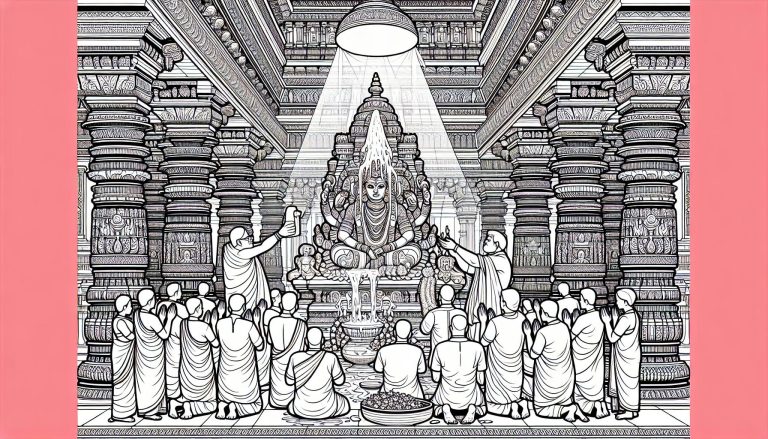
These rituals, steeped in centuries-old traditions, offer a unique glimpse into the rich tapestry of cultural and spiritual practices. Whether it’s the intricate ceremonies or the simple act of lighting a candle, each ritual holds a special significance. They serve as a bridge between the mundane and the sacred, inviting us to pause, reflect, and find solace in the spiritual.
Historical Background
Devotional rituals in temples have ancient roots, tracing back to early civilizations. In India, these rituals are detailed in sacred texts like the Vedas and Upanishads, dating from around 1500 to 500 BCE. Temples built during the Gupta period (4th to 6th centuries CE) reflected these traditions, solidifying the foundation for modern practices.
In ancient Greece, temples dedicated to gods like Zeus and Athena included rituals that involved sacrifices and offerings. The Parthenon, built in 447 BCE, served as a focal point for such activities, demonstrating the essential role of rituals in daily worship.
Chinese temples, dating back to the Zhou Dynasty (1046-256 BCE), performed rituals that honored ancestors and deities. The Temple of Heaven, constructed in the 15th century, exemplifies these practices, where emperors conducted ceremonies to ensure harmony and prosperity.
Understanding the historical context of these rituals reveals the deep cultural significance they hold. Through centuries, devotional rituals in temples have maintained their essence, connecting individuals to a larger spiritual tradition across diverse cultures.
Types Of Devotional Rituals
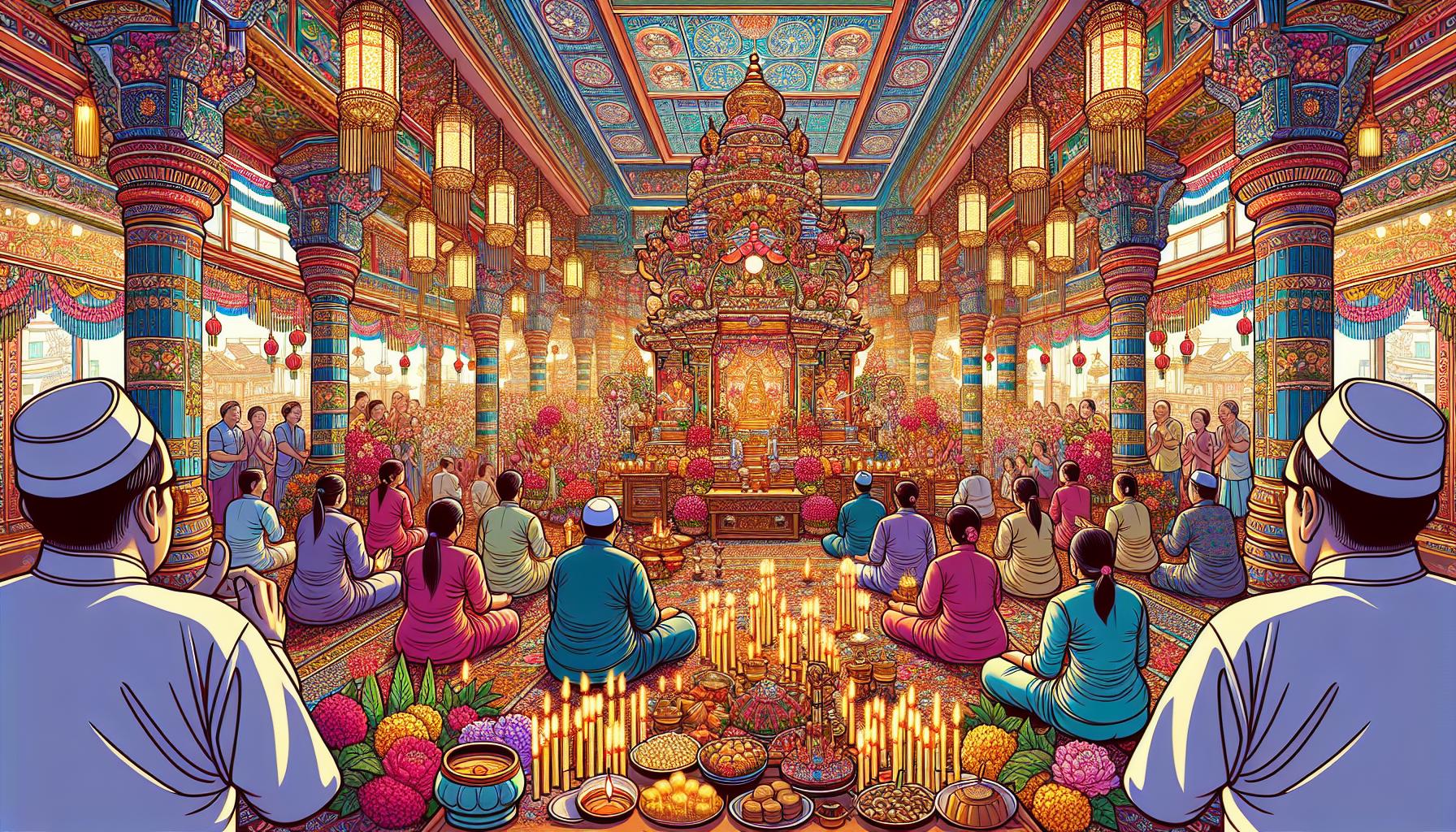
Devotional rituals in temples form a core part of Hinduism, creating a deep bond between devotees and their deities.
Daily Rituals
Daily rituals, or Puja, involve offerings like light, flowers, water, or food to the deity. These rituals happen at homes and temples, providing regular moments of spiritual connection. Every morning, devotees might light a lamp, place fresh flowers on the altar, or offer food to their god, enhancing their daily spiritual practice.
Special Occasion Rituals
Special occasions, including festivals and significant life events, feature more elaborate rituals. During events like Diwali or weddings, Puja becomes a community affair with detailed ceremonies and group participation. These rituals, filled with vibrant decorations, music, and prayers, elevate spiritual experiences and foster community bonds.
Significance Of Devotional Rituals
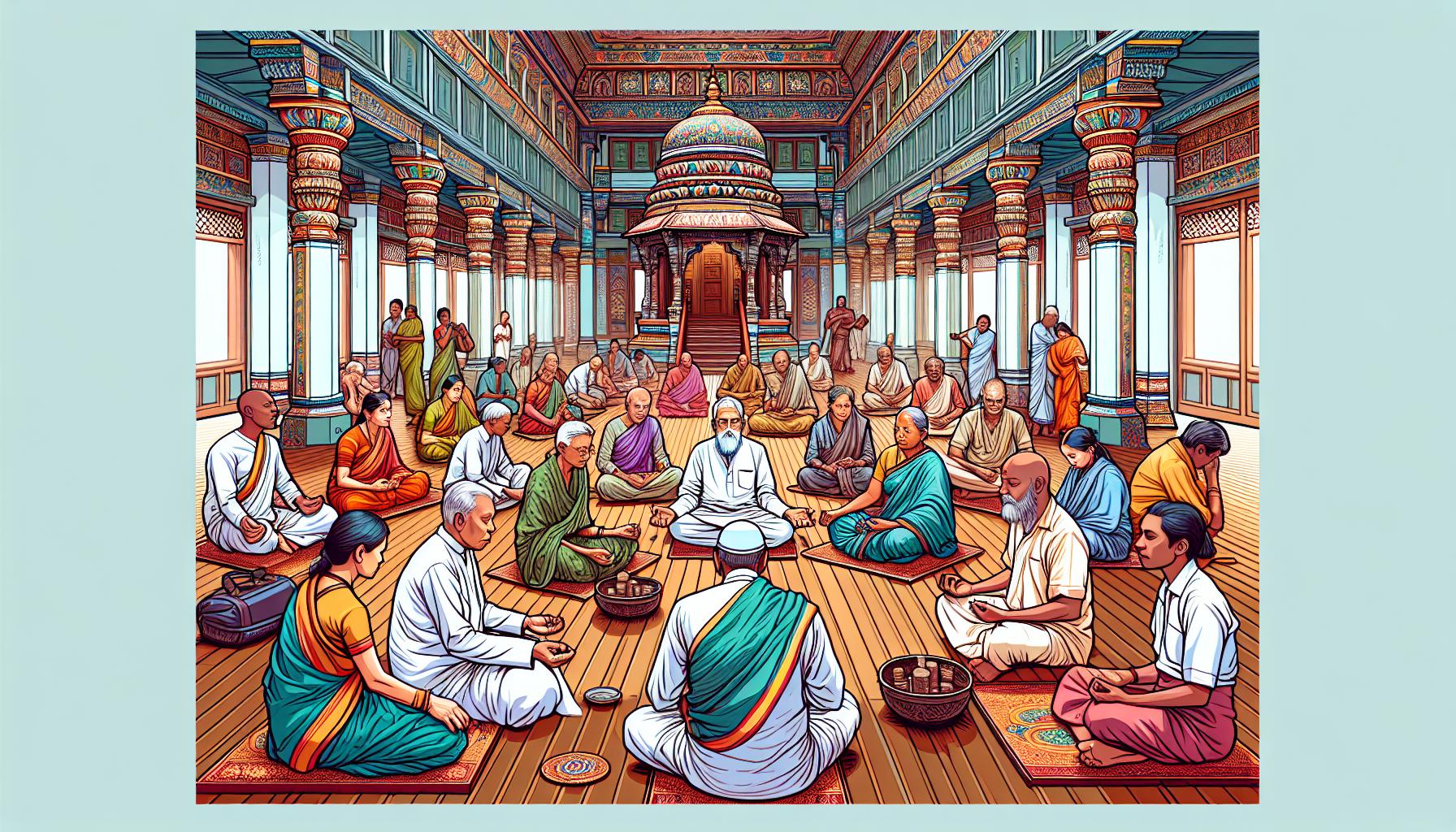
Devotional rituals in temples foster spiritual growth and deepen connections with the divine. These ceremonies, rich in tradition, play crucial roles in various religious practices.
Spiritual Benefits
Devotional rituals provide numerous spiritual benefits:
- Enhanced Focus – Practices like meditation and chanting bring a heightened state of concentration, aiding in self-reflection.
- Inner Peace – Acts of worship and prayer promote tranquility by directing focus toward the divine.
- Spiritual Upliftment – Rituals such as aarati create an environment of joy and reverence, elevating the spirit.
- Communal Harmony – Participating in rituals fosters a sense of community among devotees, strengthening bonds.
Cultural Importance
Devotional rituals also hold significant cultural value:
- Preservation of Traditions – These practices, passed down through generations, maintain cultural heritage.
- Expression of Identity – Rituals serve as a medium for expressing religious and cultural identity.
- Community Building – Festivals and special ceremonies bring communities together, reinforcing social cohesion.
- Cultural Education – Participation teaches younger generations about their heritage and traditions.
Rituals like daily Puja or festival rituals during Diwali enrich both personal spiritual lives and the cultural fabric of society, ensuring continuity and communal harmony.
Regional Variations
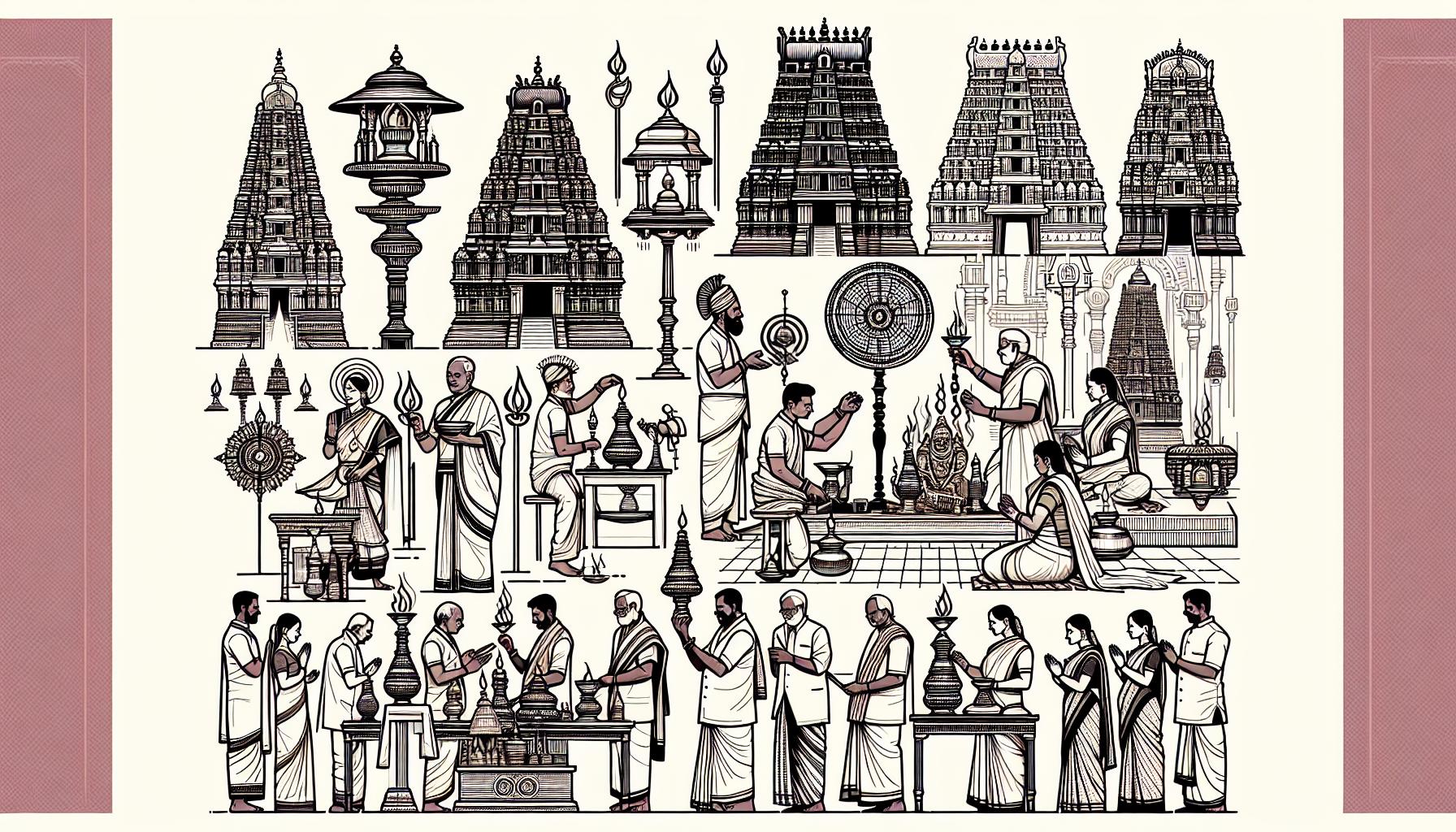
Devotional rituals in temples vary significantly across different regions. These variations highlight the unique cultural and historical contexts of each area.
North Indian Temples
North Indian temples often focus on the worship of deities like Vishnu – The Protector, Shiva – The Destroyer, and Durga. Rituals frequently involve elaborate aartis, bhajans, and jatras. Temples in this region typically use brass and silver utensils for rituals. Festivities like Diwali, Holi, and Navratri play essential roles in temple activities. Devotees often perform morning and evening prayers with ringing bells and chanting mantras. The style of temples reflects Nagara architecture, characterized by elevated platforms and intricate carvings.
South Indian Temples
South Indian temples are renowned for their distinct Dravidian architecture, featuring massive gopurams and detailed sculptures. Devotional rituals here often emphasize abhishekam, an act of pouring libations over deities like Murugan, Vishnu, and Shiva. Temples frequently host festivals like Pongal, Tamil New Year, and Karthigai Deepam. Priests use large, ornate brass lamps during puja ceremonies, and devotees typically follow rigorous dress codes. Carnatic music and traditional dance forms like Bharatanatyam often accompany rituals, enhancing the spiritual ambience.
Challenges And Preservation
Maintaining traditional devotional rituals in temples faces significant challenges. Urbanization and modernization often lead to a decline in traditional practices. Increased migration to cities results in fewer people participating in these rituals, diminishing cultural continuity.
Temples sometimes struggle with financial constraints. The cost to maintain temple premises and conduct rituals can be high. Donations from devotees are crucial, but economic downturns affect contributions, impacting the ability to sustain regular activities.
In some regions, there’s a shortage of trained priests. Fewer individuals pursue this vocation due to better opportunities in other fields. This shortage compromises the quality and frequency of rituals.
Preservation efforts, however, can counter these challenges. Community involvement plays a vital role. Regular events and festivals increase engagement, encouraging younger generations to participate and learn.
Emphasizing documentation is crucial. Recording rituals, chants, and practices in digital formats ensures their longevity. Educational programs in schools and temples also foster awareness.
Government and non-profit organizations contribute by funding restoration projects and supporting heritage conservation. Policies aimed at protecting religious sites and practices help sustain these traditions amidst evolving societal landscapes.
Using technology enhances preservation further. Live-streaming rituals allows wider participation, especially for those who can’t physically attend. Social media raises awareness, promoting cultural heritage to broader audiences.
Conclusion
Devotional rituals in temples are more than just religious practices; they’re a cornerstone of our cultural and spiritual heritage. They bring communities together and offer a sense of continuity and belonging. Despite the challenges posed by modern life, it’s heartening to see the collective efforts aimed at preserving these traditions. By embracing both traditional methods and modern technology, we can ensure these rituals remain vibrant and accessible for future generations. Let’s continue to support and participate in these sacred practices, keeping the essence of our spiritual and cultural identity alive.
Sources & further reading
These themes are explored in greater depth across the following authoritative resources:
- Britannica, Hindu Temple Architecture
- Met Museum, Hinduism in the Arts
- Britannica, Iconography
- Stella Kramrisch, The Hindu Temple (Motilal Banarsidass, 1946)
- Heinrich Zimmer, Myths and Symbols in Indian Art and Civilization (Princeton University Press, 1946)
External resources for further reading. Apam Napat is not affiliated with these publishers; citation does not imply endorsement.
Based on the classical texts of Hindu mythology, see our sources.