
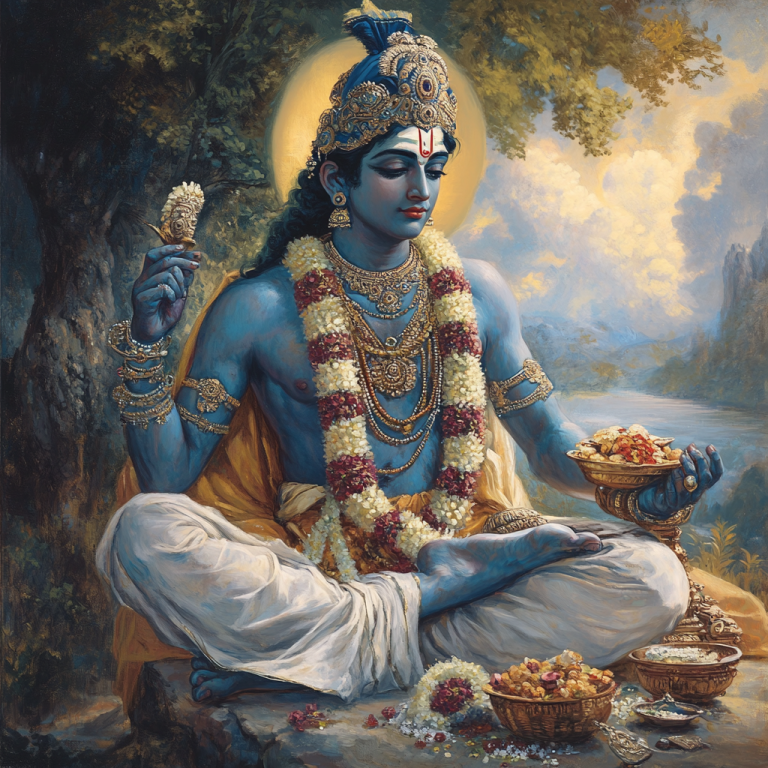
In Vedic tradition, Brahmanas are regarded as priests, teachers, and scholars responsible for preserving sacred knowledge and performing essential religious duties. Their close association with the “face” of Purusha not only signifies wisdom and understanding but also their role as speakers of divine knowledge and carriers of the sacred word. As the priests and teachers, they were seen as intermediaries between the human and the divine realms, offering prayers, conducting sacrifices, and studying the Vedas to maintain cosmic order, or Dharma. Figures like Astika – Brahmana who saved the Serpents, a sage born of Brahmin lineage, exemplify this intermediary role, bridging divine intention with human devotion. Figures like Astika – Brahmana who saved the Serpents, a sage born of Brahmin lineage, exemplify this intermediary role, bridging divine intention with human devotion.
In the ancient texts, Brahmanas were entrusted with specific rituals and sacrifices, such as the Ashwamedha – The Horse Sacrifice (horse sacrifice) and Rajasuya (royal consecration), which were conducted to uphold the prosperity of kings and kingdoms. The Brahmanas were also considered custodians of spiritual knowledge, including the various branches of the Vedas, Vedangas, Upanishads, and other sacred scriptures. The purity, discipline, and knowledge of the Brahmanas were emphasized, as they were responsible for leading humanity toward a righteous life and for interpreting the principles of Dharma (cosmic law and moral order).
In addition to their ritualistic roles, Brahmanas were also instrumental in teaching and preserving the scriptures, passing down sacred knowledge from one generation to the next. Figures such as Vyasa, the legendary sage and compiler of the Mahabharata – The Great Epic, and Vashishtha, the family priest of the Ikshvaku dynasty, exemplify the Brahmana role in nurturing wisdom and guiding society. Other notable Brahmanas, like Vishwamitra – The King Who Became a Great Sage and Agastya, as well as sages like Maarkandeya, who is revered for his timeless wisdom and deep penance that embody the spiritual depth of Brahmanical tradition.
Brahmanas were revered but also bound by rigorous standards of conduct. They were expected to live lives of humility, simplicity, and abstinence, focusing their energy on spiritual practices rather than material pursuits. This way of life was believed to sustain their inner purity and intellectual prowess, which they then shared with the world in their capacity as spiritual guides. This priestly ideal was often balanced against the warrior code of the Kshatriyas, who upheld Dharma through protection and governance.
Sources & further reading
These themes are explored in greater depth across the following authoritative resources:
- Internet Sacred Text Archive, Rig Veda (Griffith translation)
- Internet Sacred Text Archive, Upanishads
- Britannica, Veda
- Britannica, Upanishad
- Patrick Olivelle, The Early Upanishads (Oxford University Press, 1998)
External resources for further reading. Apam Napat is not affiliated with these publishers; citation does not imply endorsement.
Based on the classical texts of Hindu mythology, see our sources.