
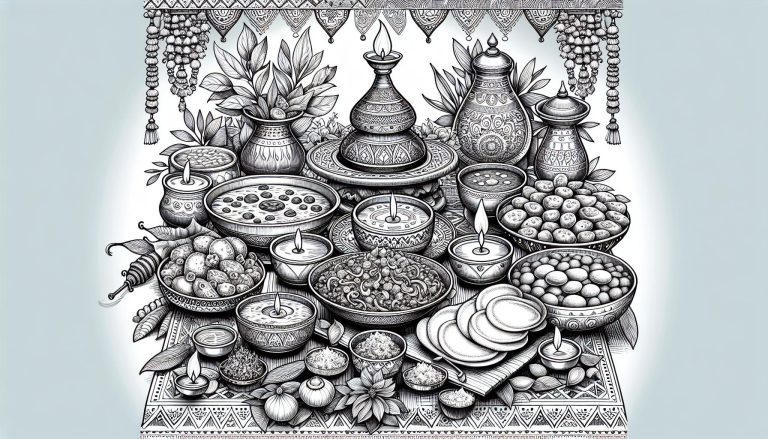
From the heavenly ambrosia known as “amrita” to the humble yet sacred “prasadam” offered in temples, the cuisine inspired by Hindu mythology is both diverse and enchanting. Each dish tells a story, offering a glimpse into the ancient rituals and cultural practices that continue to influence modern Indian cuisine. Join me as we explore the flavors and significance of these mythical foods, and uncover how they connect us to a timeless heritage.
Overview Of Hindu Mythology Cuisine
Hindu mythology cuisine is profoundly embedded in both cultural and spiritual realms. The link between food and religion in Hinduism dates back to ancient scriptures, making culinary practices not just rituals but lifelines of tradition. The Vedic period, as documented in sacred texts like the Rigveda, introduces essential staples such as barley, rice, and milk products.
Historical Background
The Vedas, specifically the Rigveda, describe various foods integral to both rituals and daily sustenance. Barley, rice, and milk products are frequently mentioned as vital components. These staples not only provided nourishment but also held spiritual significance, being used in many religious ceremonies.
Mythological Significance
In Hindu mythology, food takes on divine dimensions. Goddess Annapurna, revered as the deity of food and nourishment, symbolizes sustenance for all beings. The myth of Lord Shiva – The Destroyer and Goddess Parvati – The Consort of Shiva further underscores the critical nature of food and its integral role in maintaining the balance of life and nature.
Historical Significance
Hindu mythology cuisine boasts a long, storied history that finds its roots during the Vedic period (1500 BCE – 500 BCE). Food wasn’t just for sustenance; it was a sacred offering to the gods and a key element of religious rituals.
Ancient Texts And Epics
The Vedas, the oldest Hindu scriptures, offer abundant references to various food items and cooking techniques. In the Rigveda, ghee (clarified butter) appears frequently in rituals, signifying purity and divinity. Meanwhile, the Yajurveda describes intricate methods for preparing rice and barley dishes, underscoring their importance.
Epic texts like the Mahabharata – The Great Epic and the Ramayana – Epic of Hinduism also shape Hindu mythology cuisine. In the Mahabharata, cooking scenes detail feasts that included items like honey, vegetables, and puffed rice. The Ramayana mentions fruits and roots collected during Lord Rama’s exile, demonstrating the integration of foraged food in ancient diets.
Cultural Influences
The influence of these historical texts extends deep into cultural practices. The use of ghee, for instance, has remained a culinary staple across India. Rice and barley continue to hold ceremonial value in modern Hindu rituals, mirroring ancient practices.
Sacred foods like prasadam, often distributed during religious ceremonies, highlight the cultural continuity from ancient times to today. Each regional variation in India offers a unique take influenced by local interpretations of these ancient texts. Whether it’s the elaborate feasts described in the Mahabharata or the simple, foraged fare of the Ramayana, Hindu mythology cuisine serves as a bridge between the past and the present.
Key Ingredients And Their Symbolisms
Hindu mythology cuisine relies on numerous key ingredients, each carrying unique symbolisms that play essential roles in both culinary and religious practices.
Grains
Grains form the cornerstone of Hindu cuisine, symbolizing nourishment and prosperity.
- Barley: Known as Yava in Sanskrit, barley appears in the Rigveda and was a key grain in ancient India. It’s still used in various Hindu ceremonies today, representing abundance and resilience.
- Rice: Essential in western and southern India, rice has historical roots stretching back over eight millennia. It symbolizes fertility and purity, often found in wedding rituals and religious offerings.
- Pearl Millet: Cultivated in the Indian subcontinent since 6200 BCE, pearl millet is a staple in many regions. It represents sustenance and endurance, making it a critical food source in arid areas.
Spices
Spices not only enhance flavor but also carry religious and medicinal significance.
- Turmeric: Known as Haldi or Holud, turmeric is a ubiquitous spice noted for its anti-inflammatory and antioxidant properties. It symbolizes purity and prosperity, used in many Hindu ceremonies such as weddings where brides apply a turmeric mask for a natural glow.
Herbs
Herbs in Hindu cuisine offer both culinary delights and medicinal benefits, deeply embedded in spiritual practices.
- Tulsi (Holy Basil): Considered sacred, tulsi is a key herb in Ayurveda and Hindu rituals. It symbolizes purity and protection, believed to have numerous healing properties.
- Coriander (Cilantro): Widely used in Indian cooking, coriander is known for its digestive benefits. It symbolizes love and health, frequently appearing in offerings and temple food.
Key ingredients in Hindu mythology cuisine reveal a deep interconnection between food, spirituality, and tradition. Each element carries symbolisms that enrich both daily life and religious practices.
Traditional Hindu Mythological Dishes
Hindu mythology cuisine comprises a variety of sacred foods, each with unique spiritual significance. These dishes are divided into key categories like Prasadam and Bhog, essential for worship and devotion.
Prasadam
Prasadam, or Prasad, is a central pillar of Hindu worship. It’s vegetarian food prepared specifically for devotees after thanksgiving rituals to a god. This food offering undergoes a sacred ritual where it is offered to the deity first, then shared among worshippers. Prasadam purifies the body, mind, and spirit. Common examples of Prasadam include sweets like laddus, modaks, and payasam, as well as savory items like pongal and tamarind rice.
Bhog
Bhog refers to the elaborate food offerings made to deities, especially in temples. These offerings often constitute a grand feast. The “56 Bhog Thali” is a quintessential example, famously associated with Lord Krishna – An Incarnation of Vishnu. The Thali features 56 varied dishes, including rice, lentils, vegetable curries, snacks, sweets, condiments, and dairy products like butter and yogurt. This extensive spread symbolizes abundance and the depth of devotion.
Regional Variations
The influence of Hindu mythology on Indian cuisine can be seen in the distinct regional variations. Northern and Southern India showcase unique culinary traditions influenced by their cultural and mythological heritage.
Northern India
Northern Indian cuisine reflects a strong Mughal influence, characterized by rich and creamy dishes. Dairy products like milk, paneer, ghee, and yogurt are commonly used. Dishes like Dal Makhani and Saag Paneer are staples. The use of tandoors is prevalent, giving Tandoori Chicken and Naan bread their distinctive flavor.
Southern India
Southern Indian cuisine, especially in Andhra Pradesh, relies heavily on spices and tamarind. Rice serves as the staple food, often paired with lentil dishes like pappu and pulusu. Vegetables such as bottle-gourd and eggplant are frequently added to dal preparations. Pickles play a crucial role, with popular varieties including mango-based pickles like avakaya and maagaya.
Influence On Modern Cuisine
Hindu mythology has left an enduring impact on contemporary Indian cuisine. In early Vedic civilizations, Agni, the god of fire, played a pivotal role in culinary practices, making ghee integral to many dishes. Ghee, used in rituals to appease gods, remains a staple in modern cooking due to its rich flavor and cultural significance.
Vegetarianism, deeply rooted in the principles of ahimsa, has shaped dietary habits across India. The rise of Buddhism and Jainism in ancient times promoted compassion for all living beings, resulting in widespread vegetarian practices. Today, vegetarian dishes like paneer tikka, aloo gobi, and various lentil-based curries are mainstays in Indian cuisine.
Regional variations exhibit the cultural diversity and mythological connections in Indian food. Northern and Southern Indian cuisines, though distinct, both showcase this legacy. Northern dishes like chole bhature and rajma chawal highlight the influence of dairy and grains, while Southern dishes like dosa and sambar emphasize rice and spices.
In modern kitchens, these traditions manifest in daily cooking and festive feasts. During festivals like Diwali and Holi, foods with mythological significance, such as sweets made from milk and ghee or savory snacks, are prepared and shared to honor gods and celebrate communal bonds.
Conclusion
Hindu mythology cuisine is a fascinating world woven from ancient traditions and sacred texts. Its influence extends beyond mere sustenance to embody spiritual and cultural values. From ghee and rice in rituals to the rich diversity of regional dishes, the legacy of these culinary practices is profound. Modern Indian cuisine, with its emphasis on vegetarianism and symbolic ingredients, continues to honor these age-old traditions. Whether it’s a daily meal or a festive feast, the essence of Hindu mythology is ever-present in the flavors and practices of Indian cooking.
Sources & further reading
These themes are explored in greater depth across the following authoritative resources:
- Stanford Encyclopedia of Philosophy, Hindu Philosophy
- Mythopedia, Hindu Mythology
- Britannica, Hindu Mythology
- Sheldon Pollock, The Language of the Gods in the World of Men (University of California Press, 2006)
- A. K. Ramanujan, The Collected Essays (Oxford University Press, 1999)
External resources for further reading. Apam Napat is not affiliated with these publishers; citation does not imply endorsement.
Based on the classical texts of Hindu mythology, see our sources.