

In a world often marred by conflict, the concept of ahimsa offers a powerful alternative. It not only promotes peace but also empowers individuals to stand against oppression with dignity and compassion. As we investigate into the intersection of ahimsa and social movements, we’ll explore how this timeless principle continues to shape and influence activism today.
Understanding Ahimsa
Ahimsa, meaning nonviolence, is central to various Indian religions and philosophies. It plays a critical role in shaping social movements.
Historical Roots
Ahimsa, derived from the Sanskrit words “a” (non) and “himsa” (injury), emphasizes nonviolence towards all living beings. This ancient concept has roots in Jainism, Hinduism, and Buddhism. Jainism considers ahimsa as the highest ethical standard, requiring avoidance of any harm to living souls. In Hinduism, ahimsa is a vital virtue, highlighted in texts like the Bhagavad Gita. Buddhism, influenced by Emperor Ashoka, incorporates ahimsa in teachings, advocating respect for all forms of life.
Philosophical Foundations
Ahimsa aligns closely with satya (truth), translating often as “non-harm” or “non-violence.” The principle goes beyond physical nonviolence, extending to mental and emotional realms, fostering compassion and empathy. It urges individuals to act truthfully while remaining nonviolent, creating a firm foundation for ethical behavior. Leaders like Gandhi and King translated this philosophy into direct action, proving ahimsa’s powerful impact in social justice movements.
Ahimsa in Social Movements
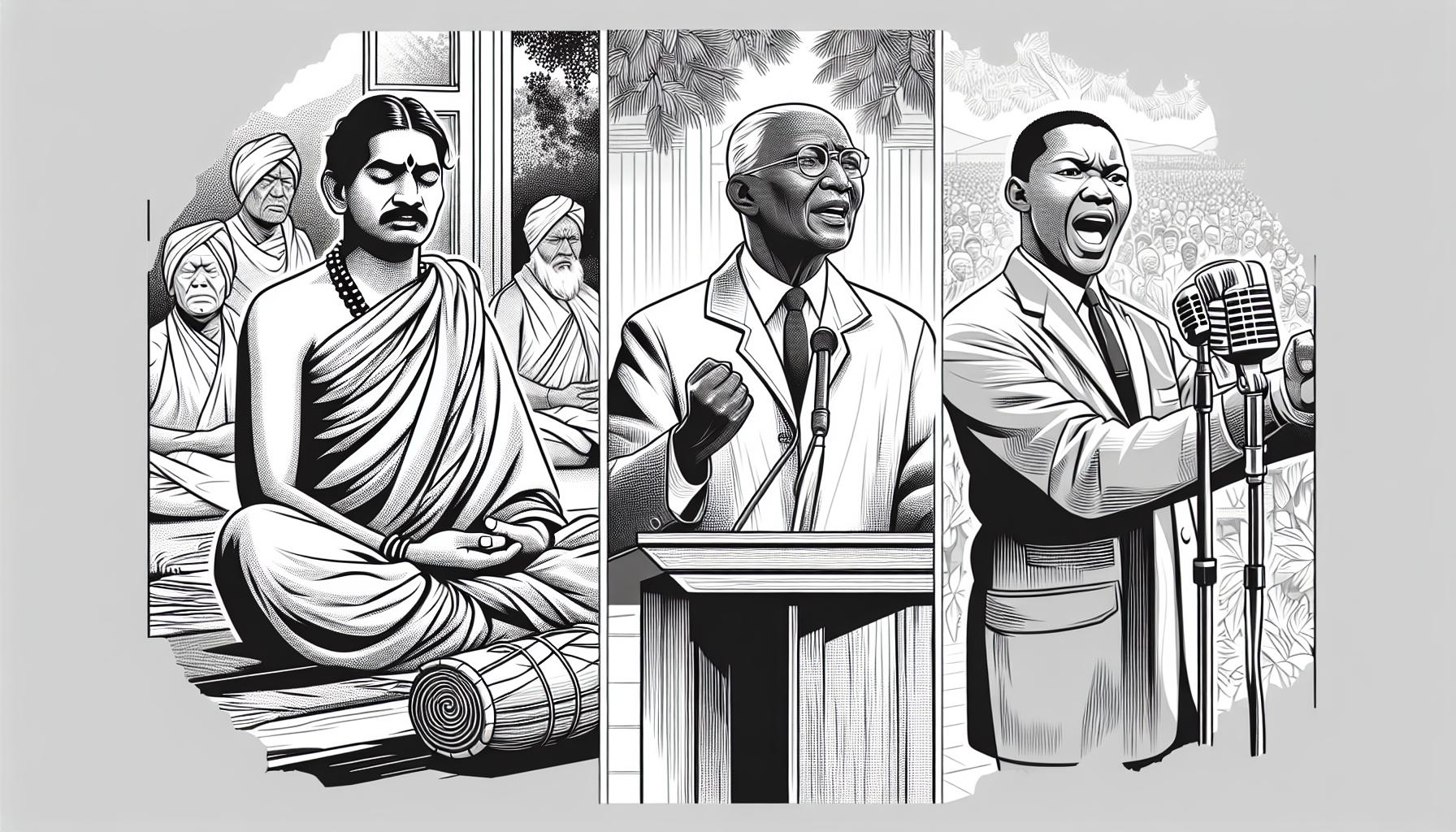
Ahimsa, the principle of non-violence, has shaped various social movements globally. Key leaders including Mahatma Gandhi, Martin Luther King Jr., and Nelson Mandela embraced ahimsa to challenge oppression and achieve justice.
Gandhi and Indian Independence
Mahatma Gandhi’s philosophy of ahimsa played a crucial role in India’s struggle for independence from British colonial rule. Gandhi’s concept of ahimsa included physical, mental, and emotional non-violence, emphasizing the avoidance of evil thoughts, harsh words, and dishonesty. He saw ahimsa as a creative energy force that could foster significant social change through non-violent resistance. His Satyagraha movement, which involved mass civil disobedience, boycotts, and non-cooperation, exemplified this approach.
Martin Luther King Jr. and Civil Rights
Martin Luther King Jr. adopted ahimsa as a core principle in the American civil rights movement. Drawing inspiration from Gandhi’s success, King emphasized non-violent resistance to combat racial segregation and injustice. King’s philosophy included peaceful protests, sit-ins, and marches. One notable example is the 1963 March on Washington, which demonstrated the power of non-violent action in seeking legislative change. King’s commitment to ahimsa helped garner widespread support and led to significant legal advancements, such as the Civil Rights Act of 1964.
Nelson Mandela and Apartheid
Nelson Mandela incorporated ahimsa in the struggle against apartheid in South Africa. Although initially advocating armed resistance, Mandela later embraced non-violent methods to achieve racial equality. Influenced by Gandhi’s teachings, Mandela pursued negotiation, reconciliation, and civil disobedience. The 1990 release of Mandela from prison marked a shift towards peaceful resolution, eventually contributing to the end of apartheid and the establishment of democratic governance. Mandela’s commitment to non-violence emphasized the importance of dialogue and forgiveness in achieving lasting peace.
Modern Applications of Ahimsa
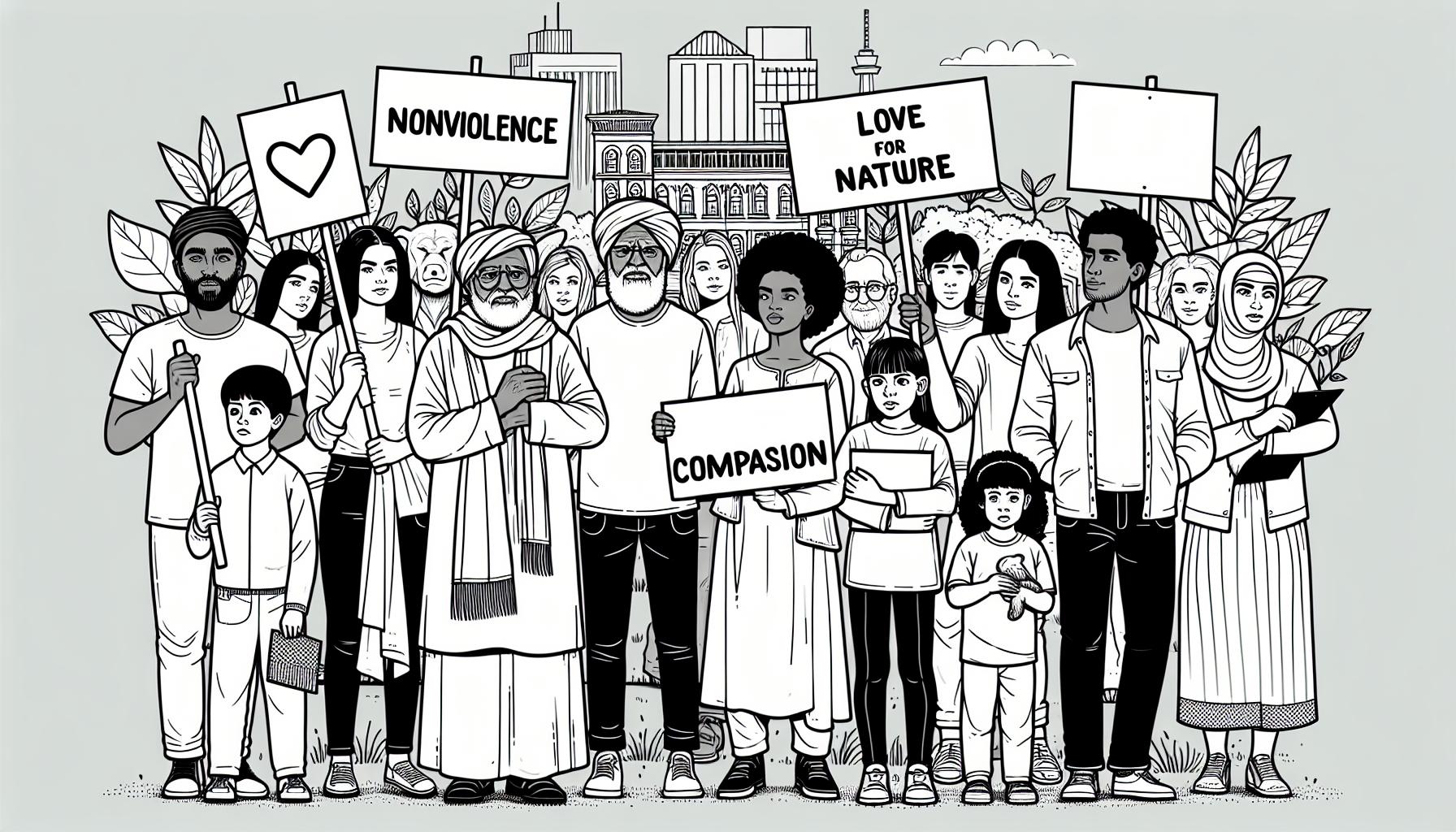
Ahimsa, rooted in ancient Indian philosophy, continues to shape contemporary social movements. Its influence spans environmental and animal rights activism.
Environmental Movements
Environmental movements derive significant inspiration from Mahatma Gandhi’s philosophy of ahimsa. Gandhi emphasized nonviolence towards all living beings, viewing it as both a moral principle and a practical tool for change. Modern environmental activists adopt Gandhi’s nonviolent resistance methods, such as civil disobedience and peaceful protests, to highlight environmental issues and advocate for policy reforms. This approach not only raises awareness but also encourages sustainable living, minimizing harm to the environment.
Animal Rights Activism
Ahimsa’s core principle of nonviolence towards living beings heavily influences animal rights activism. Activists incorporate ahimsa by advocating for humane treatment of animals, opposing practices like factory farming and animal testing. They use peaceful protests, educational campaigns, and legal actions to promote animal welfare and push for legislative changes. By aligning with ahimsa, the movement fosters a compassionate and ethical approach to human-animal interactions, aiming to reduce and eventually eliminate animal suffering.
- “Gandhi’s Influence on Environmental Movements,” Environmental History Journal, 2022
- “Animal Rights and Ahimsa: Ethical Implications,” Animal Welfare Forum, 2021
Challenges and Criticisms
Ahimsa’s integration into social movements has faced significant hurdles and scrutiny. Below are details addressing these issues from different perspectives.
Simplistic Transmission Model
Scholars argue that the propagation of non-violence within social movements is more intricate than initially believed. The simplistic transmission model doesn’t account for diverse socio-political contexts and the multifaceted nature of social resistance.
Moral Idealism
Some critics claim Gandhi’s non-violent philosophy embodies excessive idealism. They argue it overlooks the complexities and pragmatic demands of real-world politics, rendering it less effective in certain contentious situations.
Cultural and Historical Context
Ahimsa’s deep roots in Hindu and Buddhist traditions present challenges when applied in varied cultural and historical milieus. Misunderstandings can arise if the concept isn’t adapted to fit different societal structures and values.
Practical Limitations
Implementing ahimsa faces practical hurdles. In conflict zones, strict adherence to non-violence may be impractical or unfeasible due to immediate threats to life and security. For example, activists in violent regions may struggle to advocate effectively against armed opposition.
Moral Dilemmas
The application of non-violence frequently involves moral complexities. Activists encounter ethical quandaries where the ideal of ahimsa must be balanced against pressing humanitarian concerns. Determining when to remain non-violent in the face of severe oppression or immediate harm poses significant challenges, often requiring nuanced and situational decisions.
Conclusion
Ahimsa’s profound influence on social movements showcases its enduring power in advocating for justice and equality. While it’s rooted in ancient traditions its principles have transcended time and geography inspiring leaders and activists globally. The adaptability of ahimsa to modern issues like environmental and animal rights highlights its relevance. But the challenges and criticisms it faces remind us that applying non-violence in diverse and complex contexts isn’t always straightforward. Balancing ahimsa with practical realities requires thoughtful consideration and adaptability. As we continue to strive for social change ahimsa remains a guiding light urging us towards a more compassionate and just world.
Sources & further reading
These themes are explored in greater depth across the following authoritative resources:
- Stanford Encyclopedia of Philosophy, Hindu Philosophy
- Britannica, Dharma
- Britannica, Karma
- Internet Sacred Text Archive, Bhagavad Gita
- A. K. Ramanujan, Speaking of Siva (Penguin Classics, 1973)
External resources for further reading. Apam Napat is not affiliated with these publishers; citation does not imply endorsement.
Frequently asked questions
How has ahimsa influenced social movements?
How did Gandhi use ahimsa for Indian independence?
How did Martin Luther King Jr. apply ahimsa?
How does ahimsa influence modern movements?
Based on the classical texts of Hindu mythology, see our sources.