
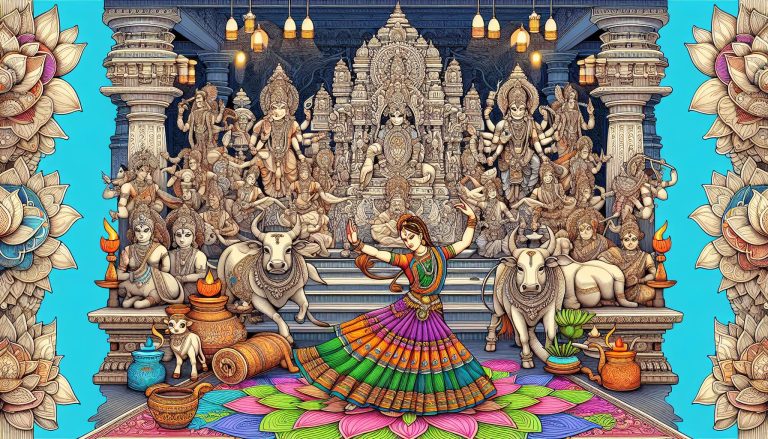
As I investigate into these legends, I uncover layers of symbolism that resonate with universal themes of love, duty, and the eternal struggle between good and evil. Understanding these symbols not only enriches our knowledge of Hindu culture but also provides timeless wisdom that can be applied to our own lives. Let’s explore the intriguing area of Hindu legend symbolism and discover the hidden messages that have captivated hearts and minds for centuries.
Understanding Hindu Legend Symbolism
Hindu legends, rich in symbolism, reveal deeper meanings within their narratives. Characters and their stories embody spiritual principles and philosophical ideas rooted in Hinduism.
Symbolism in Deities
Hanuman stands for unparalleled devotion and strength. In the Ramayana – Epic of Hinduism, Hanuman’s unwavering commitment to Lord Rama highlights the power of faith. Shiva, as both the creator and destroyer, symbolizes the cyclical nature of the universe. His dance, the Tandava, represents creation, preservation, and destruction.
Symbolic Objects and Animals
Certain objects and animals in Hindu legends carry significant meanings:
- Lotus Flower: Symbolizes purity and spiritual enlightenment, often depicted with deities like Lakshmi and Brahma.
- Cow: Represents prosperity and non-violence, venerated in many Hindu rituals.
- Conch Shell: Used in ceremonies, symbolizes the music of the cosmos and the sacred sound ‘Om’.
Mythological Narratives
Stories like the Mahabharata – The Great Epic and Ramayana contain layers of allegorical content. For instance, Arjuna – The Peerless Archer in the Bhagavad Gita battles inner doubts and symbolizes the human quest for self-realization. Ravana in the Ramayana, with his ten heads, embodies the complexity of human ego and desires.
Symbolic Colors
Colors in Hindu legends convey specific attributes:
- Red: Represents power and passion, seen in the clothing of deities like Durga.
- Blue: Associated with divine qualities and the infinite, as depicted in the avatars of Vishnu.
Cosmic Elements
Hindu cosmology deeply influences legend symbolism:
- Mount Meru: Central to the universe, represents the axis of existence and a connection between heaven and Earth.
- Five Elements: Earth, water, fire, air, and ether are foundational to both physical and spiritual realms.
Understanding the symbolism in Hindu legends unveils a profound layer of meaning, enriching our interpretation and connection to these timeless stories.
Key Symbols in Hindu Legends
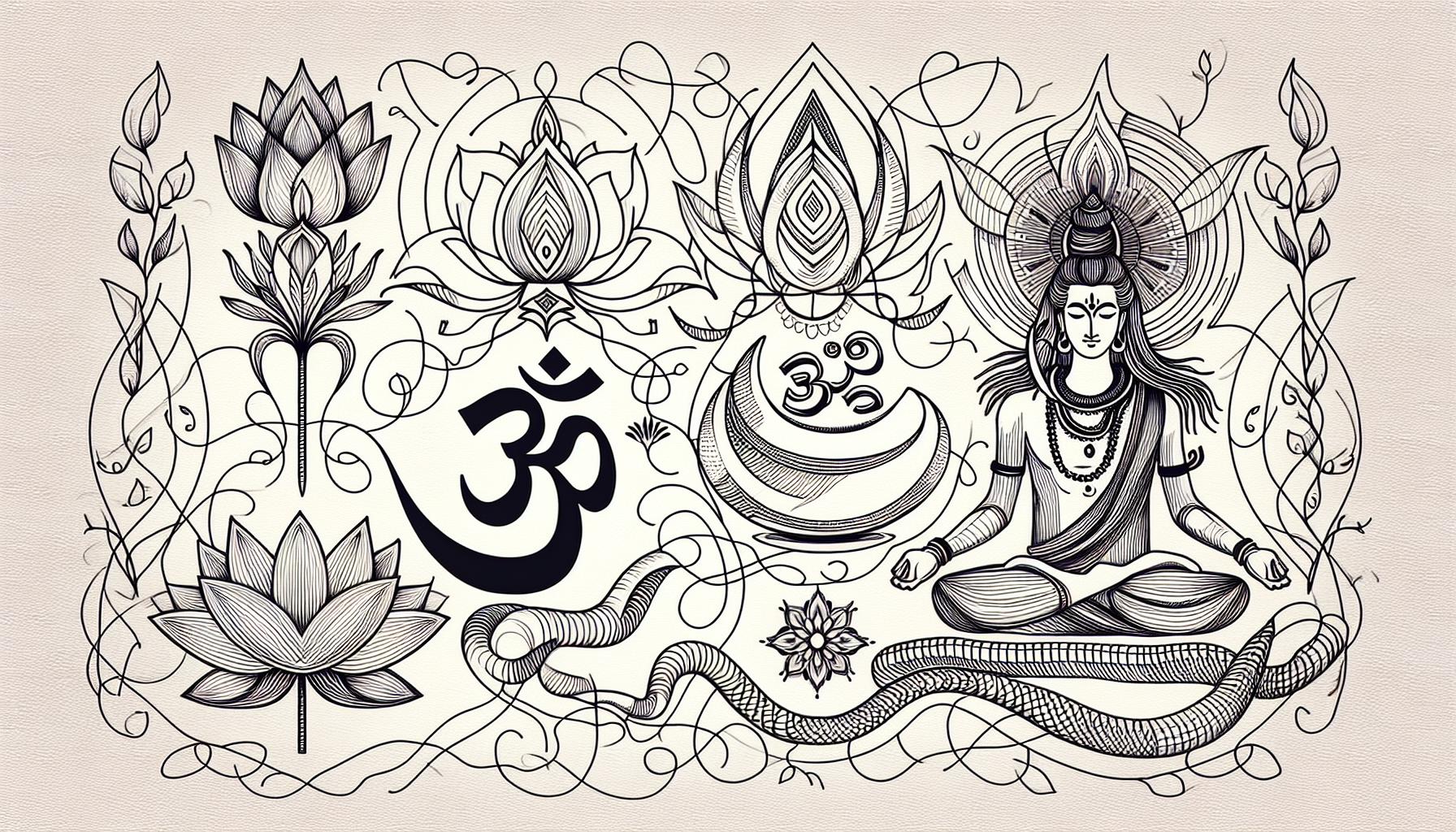
Hindu legends are rich with symbolism, each symbol carrying profound meanings and spiritual significance. Central to understanding these legends are key symbols that convey various philosophical and spiritual messages.
Om
Om, considered the most sacred sound in Hinduism, represents the essence of the universe. This syllable appears at the beginning of mantras and scriptures, signifying the sound of creation. Om encapsulates the Trinity – Shiva, Vishnu and Brahma of Brahma (the creator), Vishnu (the preserver), and Shiva (the destroyer). Chanting Om aids in meditation, aligning the mind with universal consciousness.
The Lotus Flower
The lotus flower symbolizes purity and spiritual awakening. It blooms beautifully in muddy waters, representing the rise above life’s challenges. In Hindu mythology, the god Brahma is often depicted seated on a lotus, emerging from the navel of Vishnu. This symbolizes creation and the unfolding of the universe. The lotus also signifies detachment, as it remains unstained by the mud, just as one should strive to remain untouched by material desires.
The Trident (Trishula)
The Trident, or Trishula, is one of Shiva’s primary symbols. This three-pronged weapon represents Shiva’s powers of creation, sustenance, and destruction. The Trishula symbolizes the three aspects of consciousness: waking, dreaming, and deep sleep. Depicted in Shiva’s hand, it signifies his control over universal cycles. The Trishula is also seen as a tool to obliterate evil and ignorance.
The Snake (Naga)
The snake, or naga, carries diverse symbolism in Hindu legends. These serpents often represent fertility, protection, and eternal life. The snake is closely associated with Shiva and Vishnu, with Naga depicted around Shiva’s neck and Vishnu lying on the serpent Adishesha. The snake signifies the kundalini energy in the human body, coiled at the base of the spine, which, when awakened, leads to spiritual enlightenment.
Deities and Their Symbolism
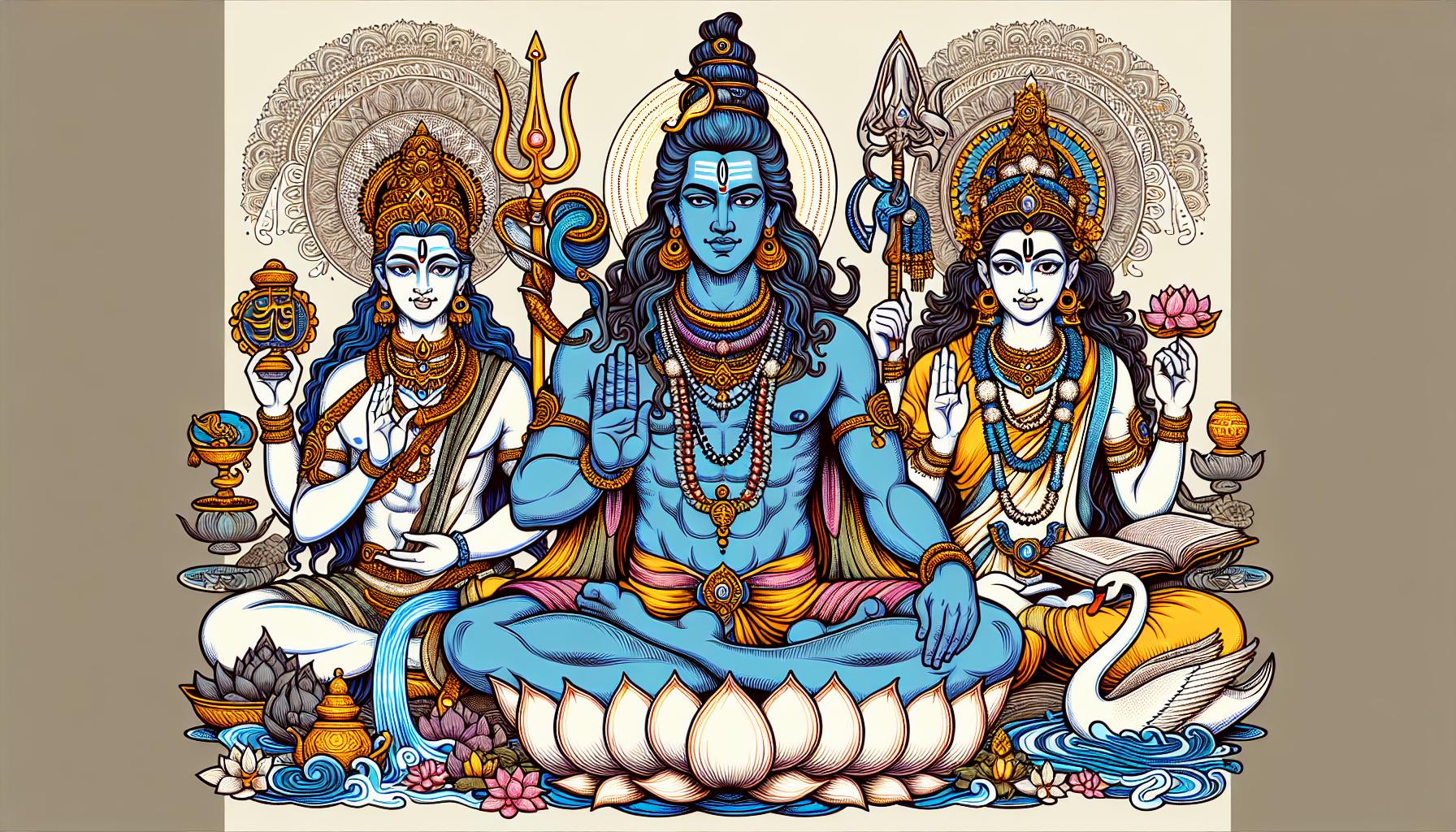
Hindu mythology is rich with deities whose attributes and symbols convey deep spiritual meanings. Each deity embodies a unique set of qualities and principles.
Vishnu
Vishnu, the preserver and protector of the universe, often holds a conch, discus, mace, and lotus. The conch (Shankha) symbolizes the sound of creation, while the discus (Chakra) represents the mind and divine energy. His mace (Gada) signifies strength and authority, and the lotus conveys purity and spiritual elevation. Vishnu’s blue skin denotes his all-encompassing, infinite nature.
Shiva
Shiva, the destroyer and transformer, carries profound symbolism. His third eye represents wisdom and insight. The Trident (Trishula) he wields symbolizes creation, maintenance, and destruction. The serpent around his neck shows control over primal forces and symbolizes eternity. The river Ganga flowing from his hair signifies purity, and his drum (Damaru) represents the cosmic sound of creation.
Lakshmi
Lakshmi, the goddess of wealth and prosperity, signifies abundance and purity. She is often depicted standing or sitting on a lotus, highlighting spiritual enlightenment and detachment. Her four hands represent the four aims of human life: Dharma (righteousness), Artha (prosperity), Kama (desires), and Moksha (liberation). Gold coins flowing from her hand symbolize material and spiritual wealth.
Saraswati – The Goddess of Learning and Wisdom
Saraswati, the goddess of knowledge, music, and arts, carries symbols of wisdom and learning. She holds a book (Veda) symbolizing knowledge, a mala (rosary) representing meditation, and a musical instrument (Veena) signifying creative arts. Seated on a swan, she embodies purity and discrimination, while the white color conveys her association with knowledge and purity.
These deities and their symbols deepen our understanding of the spiritual truths they represent.
Symbolism in Sacred Texts
Hindu sacred texts use symbolism to convey deeper spiritual and philosophical meanings. Symbols embedded in these texts enhance our understanding of their profound messages.
The Vedas
The Vedas, ancient Hindu scriptures, form the foundation of Hindu ritualistic and spiritual practices. They contain hymns, chants, and rituals. In the Vedas, symbolism plays a crucial role in describing deities and cosmic principles. For instance, Agni representing fire signifies purification and divine communication. Surya, the sun god, symbolizes life and clarity. The Vedas employ these symbols to illustrate the connection between the universe and human consciousness.
The Ramayana
The Ramayana, one of Hinduism’s great epics, is rich with symbolic elements. Characters, events, and objects reflect deeper philosophical truths. For example, Rama symbolizes righteousness and virtue. Sita represents purity and devotion. Hanuman’s loyalty and strength signify the power of unwavering faith. The bridge to Lanka, built by Rama’s army, symbolizes overcoming personal and spiritual obstacles. The Ramayana uses these symbolic narratives to teach moral values and the importance of dharma (duty).
The Mahabharata
The Mahabharata, another significant epic, uses symbolism extensively. Characters like Krishna – An Incarnation of Vishnu, Arjuna, and Draupadi embody different aspects of life and morality. Krishna represents divine wisdom and guidance. Arjuna stands for the human struggle with duty and morality. Draupadi symbolizes resilience and honor. The Bhagavad Gita, a part of the Mahabharata, uses symbols such as the charioteer (Krishna) and the battlefield to discuss the inner conflicts and duties of life. This epic’s symbolism conveys messages of karma (action), dharma (duty), and moksha (liberation).
Cultural Impact of Hindu Symbolism
Hindu symbolism profoundly influences Indian culture, visible in art, architecture, literature, and rituals. Temples throughout India showcase intricate carvings and sculptures of gods and goddesses, each piece representing significant symbols and stories from Hindu mythology. The design of a temple often includes elements like the mandala, symbolizing spiritual ascent, and the kalasha, representing abundance and wisdom.
Festivals also reflect Hindu symbolism. For example, during Diwali, the festival of lights, people decorate their homes with lamps (diyas) symbolizing the victory of light over darkness and knowledge over ignorance. Similarly, Raksha Bandhan features the rakhi, a decorative thread signifying the bond and protection between siblings, illustrating the cultural importance of familial ties and duty.
Literature contains abundant symbolic references, enriching the cultural fabric. In classical works like the Ramayana and the Mahabharata, characters and events convey ethical and philosophical teachings. Modern Indian literature also incorporates ancient symbols, bridging past and present cultural narratives.
Traditional dance and music forms integrate symbolism, enhancing performance depth. Bharatanatyam and Kathak use gestures (mudras) to express complex stories and emotions, drawing from mythological themes. Instruments like the sitar and tabla often accompany these dances, with their rhythmic patterns reflecting cosmic cycles symbolized in Hindu tradition.
The cultural impact extends to daily life through practices and beliefs. Symbols like the swastika, representing auspiciousness, often adorn homes and businesses to invite positive energy. The reverence for the cow, symbolic of life and sustenance, underscores the respect for living beings and nature in Hindu culture.
Overall, Hindu symbolism not only permeates religious practices but also significantly shapes cultural identity, artistic expression, and societal values in India.
Conclusion
Hindu legend symbolism offers profound insights into the spiritual and philosophical fabric of Hinduism. By understanding these symbols we can appreciate the deeper meanings they convey in sacred texts and cultural practices. From the intricate designs of temples to the vibrant celebrations of festivals Hindu symbolism is a testament to the rich cultural heritage of India. It not only enriches religious experiences but also plays a pivotal role in shaping artistic and societal values. Embracing these symbols allows us to connect more deeply with the timeless traditions and wisdom that have been passed down through generations.
Sources & further reading
These themes are explored in greater depth across the following authoritative resources:
- Stanford Encyclopedia of Philosophy, Hindu Philosophy
- Mythopedia, Hindu Mythology
- Britannica, Hindu Mythology
- Sheldon Pollock, The Language of the Gods in the World of Men (University of California Press, 2006)
- A. K. Ramanujan, The Collected Essays (Oxford University Press, 1999)
External resources for further reading. Apam Napat is not affiliated with these publishers; citation does not imply endorsement.
Based on the classical texts of Hindu mythology, see our sources.