

In the yoga philosophy, ahimsa serves as a foundation for personal growth and spiritual development. By embracing non-violence, I found myself cultivating a deeper sense of empathy and understanding, not just towards others but also towards myself. This holistic approach transforms how we interact with the world, fostering a more harmonious and balanced existence.
Understanding Ahimsa
Ahimsa, a pillar of yoga philosophy, advocates nonviolence and non-harming towards all living beings. This principle encourages compassion in every thought, word, and action.
Definition and Origin
Ahimsa originates from the Vedic texts around 1900 BCE. Derived from the Sanskrit words “hiṃs,” meaning to strike, and “a-hiṃsā,” meaning non-harming, it signifies a commitment to peace and compassion. Mahavira, Jainism’s twenty-fourth tirthankara, and Thiruvalluvar, a Tamil poet, significantly shaped this principle around the 5th century CE, emphasizing the importance of moral vegetarianism and nonviolence.
Importance in Eastern Philosophies
Ahimsa holds a central position in various Eastern philosophies:
- Jainism: It is a cardinal virtue and the first of the Pancha Mahavrata, guiding practitioners to avoid harming any living being.
- Buddhism: It promotes nonviolence to achieve enlightenment, encouraging followers to live with compassion and kindness.
- Hinduism: Ahimsa is a moral directive in Hindu ethics, advocating respect for all life forms as a path to spiritual growth.
- Sikhism: It reinforces the principle of living truthfully and righteously without harming others, aligning with the core teachings of the faith.
Core Principles of Yoga Philosophy

Understanding the core principles of yoga philosophy is essential for a holistic practice. These principles guide practitioners toward physical, mental, and spiritual growth.
The Eight Limbs of Yoga
The Eight Limbs of Yoga, outlined by Patanjali in the Yoga Sutras, serve as a comprehensive framework for the practice. They include:
- Yamas: Ethical guidelines for interaction with others. The first yama is ahimsa, which emphasizes non-violence and compassion.
- Niyamas: Personal observances that encourage self-discipline and spiritual development.
- Asanas: Physical postures designed to prepare the body for meditation.
- Pranayama: Breath control techniques that enhance energy flow and mental clarity.
- Pratyahara: Withdrawal of the senses, helping practitioners turn inward for deeper focus.
- Dharana: Concentration, building the ability to focus the mind on a single point.
- Dhyana: Meditation, the practice of uninterrupted flow of concentration.
- Samadhi: A state of profound connection and enlightenment.
Ethical Guidelines in Yoga
The ethical guidelines in yoga, primarily encapsulated in the yamas and niyamas, direct practitioners to live a morally sound life.
- Yamas: There are five yamas, which serve as moral imperatives.
- Ahimsa: Non-violence and compassion in thoughts, words, and actions.
- Satya: Truthfulness, encouraging honesty and integrity.
- Asteya: Non-stealing, respecting others’ belongings and energies.
- Brahmacharya: Continence, often interpreted as moderation or self-control.
- Aparigraha: Non-covetousness, fostering a sense of contentment and non-attachment.
- Niyamas: These five personal observances guide internal growth.
- Saucha: Purity, both physical and mental.
- Santosha: Contentment, finding happiness in the present moment.
- Tapas: Discipline, fostering willpower through austerity.
- Svadhyaya: Self-study, exploring sacred texts and self-reflection.
- Ishvara Pranidhana: Surrender to a higher power, cultivating a sense of devotion.
These principles from the Eight Limbs and the ethical guidelines provide a structured path for those seeking a deeper connection through yoga.
Ahimsa Within the Context of Yoga
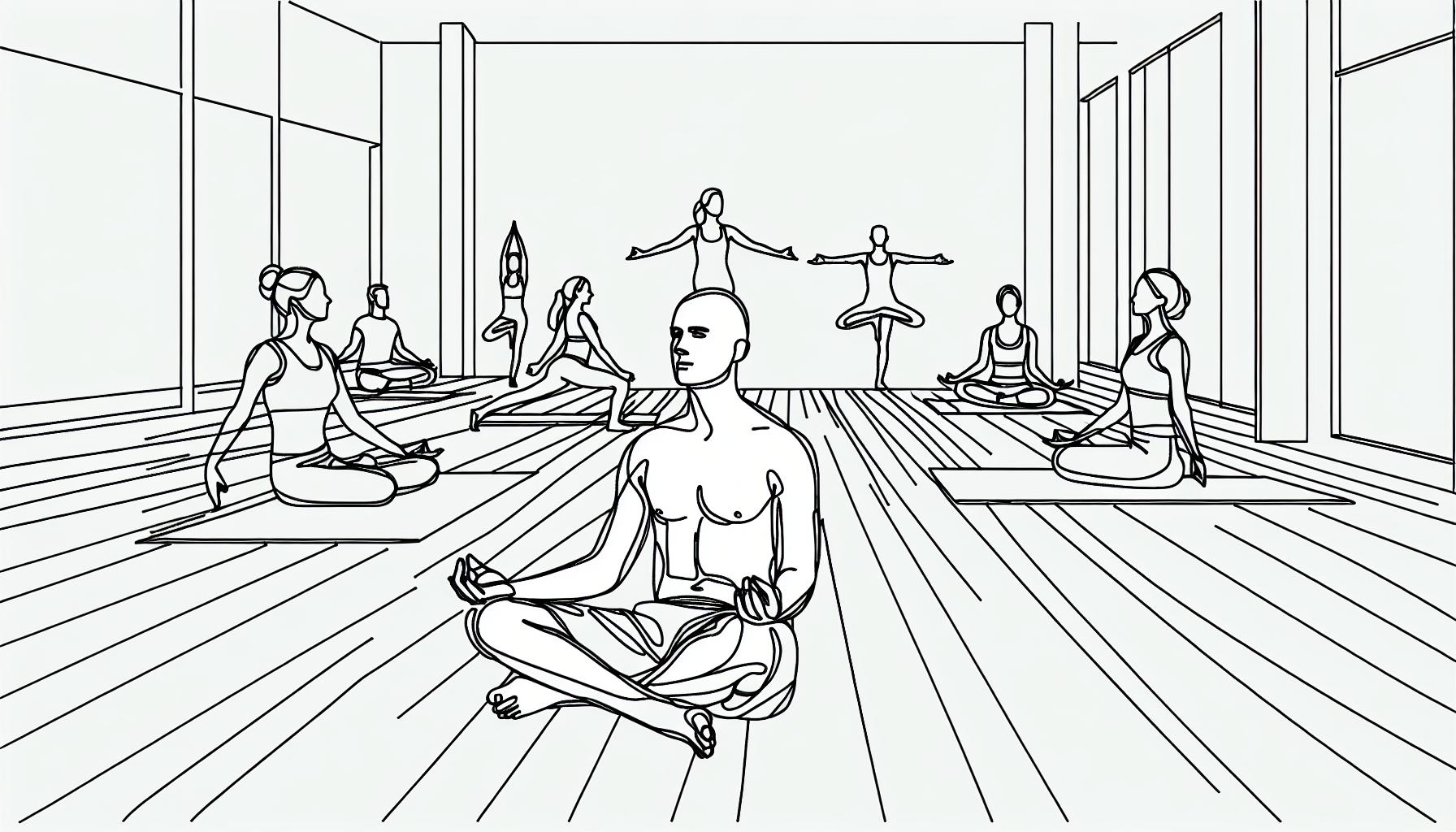
Ahimsa, or non-violence, sits at the heart of yoga philosophy. It forms the cornerstone for living a peaceful and compassionate life.
Ahimsa as the First Yama
Ahimsa is the first and most crucial yama outlined in Patanjali’s Yoga Sutras. It encourages gentleness, compassion, and understanding toward oneself and others. This foundational principle goes beyond physical non-violence to encompass mental and emotional harm. Living by ahimsa fosters a harmonious and serene existence.
- Self-Reflection and Awareness: Practicing ahimsa means recognizing one’s emotions without assigning blame. This increases self-awareness and helps understand how one’s actions impact others and oneself.
- Non-Violent Communication: Ahimsa promotes gentle and compassionate communication. It involves avoiding hurtful words and actions, ensuring interactions are rooted in kindness and understanding.
Benefits of Integrating Ahimsa in Yoga Practice
Integrating ahimsa into yoga practice offers numerous benefits that span physical, mental, and spiritual well-being. This holistic approach fosters a harmonious lifestyle.
Physical and Mental Well-being
Practicing ahimsa in yoga significantly enhances physical and mental well-being. Injury prevention stands out since respecting my body limits and avoiding overexertion keeps injuries at bay. Maintaining healthy nutrition also aligns with ahimsa; consuming nourishing foods supports my body’s health instead of causing harm with unhealthy choices.
Ahimsa promotes self-awareness and mindfulness, which help manage negative thoughts and emotions. Recognizing and transforming these thoughts leads to a balanced mental state. For instance, by practicing non-violence mentally, I cultivate a compassionate perspective towards myself and others, reducing stress and promoting emotional well-being.
Enhancing Spiritual Growth
On a spiritual level, ahimsa deepens my yoga practice by fostering a connection with my inner self. This connection encourages introspection, helping me understand my actions and their impacts. Also, ahimsa nurtures a sense of peace and compassion, which enhances my spiritual growth and aligns my actions with higher ethical values.
Challenges and Misconceptions
Practicing ahimsa in yoga isn’t always straightforward. One must navigate several misconceptions and challenges to understand and integrate it fully into their life.
Common Misunderstandings
Misunderstanding ahimsa as relating solely to physical violence overlooks its broader implications. Ahimsa also involves non-violence in thought, speech, and action. For instance, avoiding harmful thoughts about oneself or others aligns with this principle.
Another common misconception associates ahimsa strictly with vegetarianism or veganism. Although reducing harm to animals is a component, ahimsa emphasizes balance and environmentally friendly choices. It doesn’t strictly require adopting a vegetarian or vegan lifestyle.
Overcoming Obstacles
Practicing ahimsa calls for self-control, self-awareness, and keen observation of one’s surroundings. In instances where self-control falters, imbalance and harm may emerge, deviating from the principle of non-violence.
Fear and insecurity often lead to violence or himsa. Addressing these feelings promotes unity and oneness, core aspects of ahimsa. By cultivating a sense of inner peace, one can better embody non-violence in their actions and interactions.
Conclusion
Embracing ahimsa within yoga philosophy is a transformative journey that extends beyond mere physical practice. It calls for a deep commitment to non-violence in thoughts, words, and actions, fostering a harmonious existence. By integrating ahimsa into my daily life and yoga practice, I’ve found greater self-awareness, emotional balance, and a profound sense of peace. The challenges are real but surmountable with dedication and mindfulness. As I continue to navigate this path, the practice of ahimsa remains a cornerstone for cultivating compassion and unity both within myself and in my interactions with others.
Sources & further reading
These themes are explored in greater depth across the following authoritative resources:
- Stanford Encyclopedia of Philosophy, Hindu Philosophy
- Britannica, Dharma
- Britannica, Karma
- Internet Sacred Text Archive, Bhagavad Gita
- A. K. Ramanujan, Speaking of Siva (Penguin Classics, 1973)
External resources for further reading. Apam Napat is not affiliated with these publishers; citation does not imply endorsement.
Based on the classical texts of Hindu mythology, see our sources.