
Parashurama: The Axe-Wielding Incarnation of Vishnu
In the distant past, the Kshatriyas, the ruling warrior class, became intoxicated with power and strayed from their dharma (duty). Instead of protecting their subjects and ruling justly, they imposed unjust taxes and oppressed the people. Their arrogance grew unchecked, and their tyranny became unbearable. The common people prayed fervently to Lord Vishnu for deliverance, while Mother Earth herself sought Vishnu’s intervention.
Lord Vishnu, moved by their prayers, decided to incarnate as Parashurama, the sixth avatar of Vishnu, to rid the world of this oppression. This story parallels Vishnu’s Vamana avatar, where he humbled the mighty king Bali, and the Narasimha avatar, where he destroyed the tyrannical Hiranyakashipu.
The Birth of Parashurama
| Parents | Role | Connections |
|---|---|---|
| Jamadagni – Father of ParashuRama | Sage, descendant of Bhrigu, known for his asceticism and yogic powers. | Jamadagni mirrors Vasishta, another sage who clashed with Vishwamitra – The King Who Became a Great Sage over Kamadhenu. |
| Renuka | Renowned for her chastity and devotion; mother of Parashurama and a symbol of ideal womanhood in Vedic traditions. | Similar to Anasuya, another exemplary chaste woman, wife of Sage Atri. |
Vishnu incarnated as the youngest son of Jamadagni and Renuka. Named Rama, he later became known as Parashurama (Rama of the Axe) after obtaining a divine axe from Lord Shiva through penance. Parashurama, unaware of his divine purpose, grew up like a typical Brahmana boy, studying the Vedas and practicing austerities.
The Trial of Renuka’s Chastity
| Event | Outcome | Mythological Parallels |
|---|---|---|
| Renuka loses chastity in thought | Renuka momentarily loses her chastity upon seeing a handsome Gandharva. The clay pot she used to fetch water dissolves. | Similar themes of testing chastity appear in stories like Sita’s fire trial in the Ramayana. |
| Jamadagni’s wrath | Jamadagni orders his sons to kill Renuka, but only Parashurama obeys. | Mirrors the Abraham-Isaac narrative in Abrahamic texts, emphasizing obedience to divine or patriarchal command. |
Jamadagni’s test of his sons reveals Parashurama’s unwavering obedience. Upon fulfilling his father’s harsh command, Parashurama selflessly requests the restoration of his mother and brothers, showcasing his compassion and dharmic values.
The Theft of Kamadhenu
| Entity | Role | Connections |
|---|---|---|
| Kamadhenu | The divine cow, capable of granting unlimited food and resources. | Kamadhenu parallels Surabhi, the mother of all cows and a symbol of abundance. |
| Kartaveerya Arjuna | A tyrannical Kshatriya king who coveted Kamadhenu and killed Jamadagni. | Similar greed is seen in Vishwamitra, who tried to seize Kamadhenu’s daughter, Nandini, from Vasishta. |
King Kartaveerya Arjuna, intoxicated by his power, attempted to seize Kamadhenu, the divine cow owned by Jamadagni. When Jamadagni protested, the king killed him, committing the heinous sin of Brahma-Hathya (killing a Brahmana). This act set the stage for Parashurama’s divine mission.
Parashurama’s Vow and Campaign
Upon discovering his father’s murder, Parashurama vowed to rid the world of the oppressive Kshatriyas. His campaign mirrors the Narasimha avatar, where Vishnu destroyed Hiranyakashipu to restore balance, and continues the divine cycle of Vishnu’s incarnations acting against cosmic imbalance.
| Event | Details |
|---|---|
| Vow of vengeance | Parashurama swore to rid the earth of Kshatriyas and cleanse it of their tyranny. |
| Slaying Kartaveerya | Parashurama killed Kartaveerya Arjuna and his army, avenging Jamadagni’s death. |
| 21 Earthly Conquests | Parashurama circled the earth twenty-one times, exterminating Kshatriyas wherever he found them. |
Parashurama’s conquest ultimately paved the way for a new ruling class of Kshatriyas, descended from those who had escaped his wrath by disguising themselves or hiding in forests. This transition underscores the cyclical nature of destruction and renewal in Hindu mythology.
The Encounter with Rama
| Character | Role in the Encounter | Significance |
|---|---|---|
| Rama | Vishnu’s seventh avatar, symbolizing dharma and virtue. | The encounter marks the transfer of Vishnu’s divine essence from Parashurama to Rama, signaling the next phase of dharma. |
| Dasharatha | Father of Rama, pleads for his son’s life. | Reflects the parental devotion seen in King Janaka during Sita’s trials. |
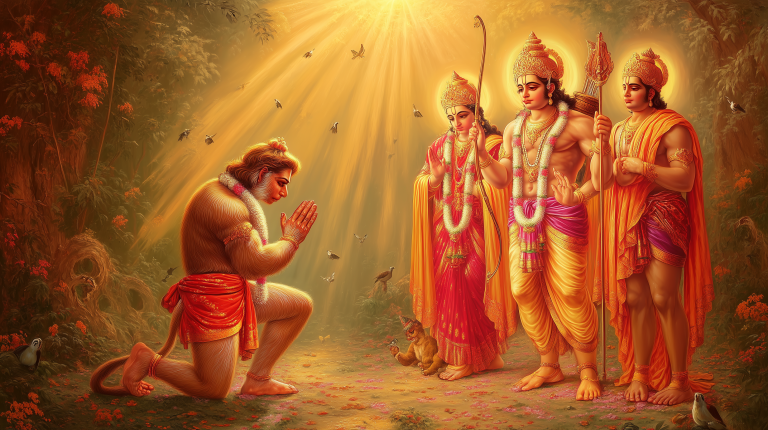
As Rama returned from Sita’s swayamvara, Parashurama challenged him to string Shiva’s bow. When Rama effortlessly did so, Parashurama realized his mission as an avatar was complete. Acknowledging Rama as the next incarnation of Vishnu, he transferred his divine energy to him and retreated.
Later Life and Role in the Mahabharata – The Great Epic
Parashurama’s influence extended beyond his campaign against the Kshatriyas. He appeared in pivotal moments of the Mahabharata, shaping the fates of key characters.
| Event | Details | Connections |
|---|---|---|
| Mentorship of Bhishma | Parashurama trained Bhishma in warfare, including celestial weapons. | Similar to Vishwamitra, who imparted divine weapons to Rama in the Ramayana. |
| Duel with Bhishma | Parashurama fought Bhishma on behalf of Amba-a pivotal moment covered in stories from the Mahabharata involving Parashurama’s battles and dilemmas-but was ultimately unable to defeat him. | Reflects the tension between guru and disciple, paralleling Karna’s deceit and eventual curse. |
| Training Karna | Parashurama cursed Karna for lying about his lineage, dooming him to forget his divine weapons when needed. | This curse led to Karna’s downfall during the Kurukshetra war, emphasizing the importance of truth in dharma. |
The Legacy of Parashurama
| Aspect | Details |
|---|---|
| Role in Hindu Mythology | Parashurama exemplifies dharma through destruction, acting as a force to reset cosmic balance. |
| Symbol of Justice | His campaign against tyranny mirrors Vishnu’s role as the preserver of dharma. |
| Cultural Impact | Parashurama remains a revered figure, with temples dedicated to him, particularly in Kerala and Konkan. |
Connections to Other Myths
- Kamadhenu’s Recurring Role:
The theft of Kamadhenu echoes similar conflicts between Vishwamitra and Vasishta, underscoring the divine cow’s symbolic value as a provider of abundance and spiritual merit. - Avatars and Cyclical Time:
Parashurama’s incarnation highlights the Hindu concept of cyclical time (Kalpa), where divine forces intervene to restore balance. His life story fits seamlessly into the greater framework of Vishnu’s incarnations, where divine descent addresses cosmic imbalance again and again across the yugas. - Teacher of the Epics:
As a mentor to both Bhishma and Karna, Parashurama’s influence directly shaped the Kurukshetra war, connecting him to Vishnu’s later avatars.
Conclusion
Parashurama’s story illustrates the duality of destruction and renewal, emphasizing the importance of dharma in maintaining cosmic order. His journey from avenger to mentor reflects the evolving role of Vishnu’s avatars in guiding humanity toward righteousness. Through his acts and teachings, Parashurama remains an enduring symbol of divine justice and duty.
Prev | Next
Sources & further reading
These themes are explored in greater depth across the following authoritative resources:
- Internet Sacred Text Archive, Rig Veda (Griffith translation)
- Internet Sacred Text Archive, Upanishads
- Britannica, Veda
- Britannica, Upanishad
- Patrick Olivelle, The Early Upanishads (Oxford University Press, 1998)
External resources for further reading. Apam Napat is not affiliated with these publishers; citation does not imply endorsement.
Based on the classical texts of Hindu mythology, see our sources.