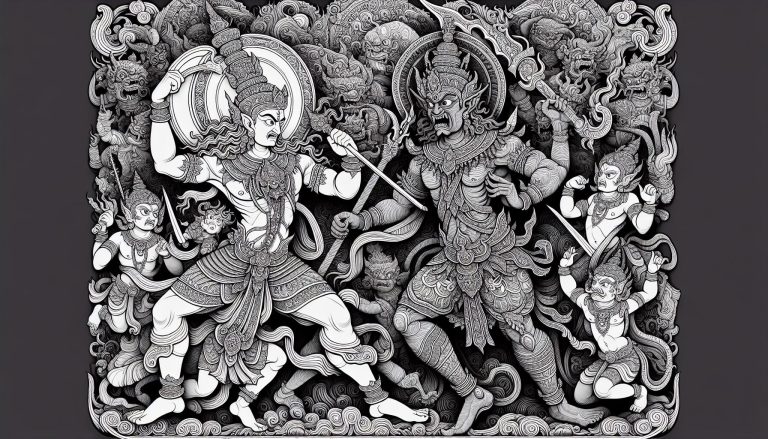
What intrigues me most is how these stories reflect deeper philosophical and moral lessons. The battles aren’t just physical confrontations; they’re metaphors for our internal conflicts and the choices we make. By delving into these mythic tales, we uncover timeless wisdom that continues to resonate in our modern lives.
Origins Of Asura-Deva Battles
The Asura-Deva battles in ancient Indian mythology reveal much about the cosmic struggle between good and evil. These conflicts reflect deeper philosophical themes and societal values.
Mythological Context
The battles between Asuras and Devas are rooted in the core beliefs of Hindu cosmology. According to mythology, Asuras, often embodying chaos and disorder, and Devas, symbolizing order and harmony, are both children of the same progenitor, Kashyapa. This familial link underscores the inherent nature of their conflict. The tension is seen as a cosmic drama playing out through various epochs or Yugas. Examples include conflicts during the Churning of the Ocean (Samudra Manthan) and the epic battles chronicled in the Mahabharata – The Great Epic and Ramayana.
Major Texts Documenting The Battles
Several ancient texts document these epic battles in detail. The Vedas, composed around 1500–500 BCE, contain early references to the struggles between these divine beings. The Puranas, specifically the Bhagavata Purana and Vishnu Purana, provide elaborate narratives on significant battles. The Mahabharata, dating approx 400 BCE–400 CE, details the grand war involving Asuras and Devas. Another key text, the Ramayana (circa 500 BCE), narrates episodes of Asura-Deva conflicts, exemplified by the battles between Rama and the demon king Ravana.
Key Players In The Battles

Exploring the key players in the Asura-Deva battles reveals a rich world of characters central to these epic tales. Each player embodies distinct traits, adding depth to the narratives.
Prominent Asuras
Several Asuras stand out in these mythological battles:
- Mahishasura – Buffalo Demon: Known for his ability to transform into a buffalo, Mahishasura posed a significant threat until Goddess Durga vanquished him.
- Hiranyakashipu: A powerful demon king, Hiranyakashipu sought immortality and clashed with Lord Vishnu in his Narasimha avatar.
- Vritra: Representing drought and obstruction, Vritra battled against the Devas, primarily Indra, who eventually killed him with a thunderbolt.
- Ravana: The ten-headed king of Lanka, Ravana, abducted Sita, leading to an epic confrontation with Lord Rama documented in the Ramayana.
Leading Devas
On the divine side, several Devas played crucial roles:
- Indra: As the king of the Devas, Indra frequently fought against prominent Asuras like Vritra to protect celestial realms.
- Vishnu: Known for his avatars, Vishnu intervened in many battles, including those against Hiranyakashipu and Ravana.
- Durga: An embodiment of Shakti, Durga’s significant battle against Mahishasura embodies her role as the destroyer of evil.
- Rama: An avatar of Vishnu, Rama’s confrontation with Ravana in the Ramayana is one of the central themes depicting the triumph of good over evil.
These players not only define the essence of Asura-Deva battles but also offer broader interpretations of morality and cosmic order.
Significant Battles In History

Significant Asura-Deva battles shape ancient Indian mythology, highlighting eternal conflicts and philosophical themes. Here are two critical battles:
The Churning Of The Ocean
The Churning of the Ocean, or “Samudra Manthan,” stands as a pivotal event in Hindu mythology. Devas and Asuras sought the Amrita, the nectar of immortality, to gain eternal life. To retrieve it, they churned the primordial ocean using Mount Mandara as the churning rod and Vasuki, the serpent, as the rope. Vishnu took the form of a turtle, Kurma, to support the mountain.
The process released several divine and deadly entities, such as the goddess Lakshmi and the lethal poison Halahala. Shiva consumed the poison to save the universe, earning him the name Neelakantha. Eventually, Vishnu, in the guise of Mohini, tricked the Asuras, ensuring only the Devas consumed the Amrita.
The Battle For Heaven
The Battle for Heaven, known as “Devasura Sangram,” marked a crucial fight for celestial supremacy. Indra, the king of Devas, led the divine forces against Bali, the powerful Asura king. This battle centered around control of the heavens, Swarga.
Even though his previous victories, Bali faced a significant challenge when Vishnu incarnated as Vamana, a dwarf Brahmin. Vamana requested three paces of land from Bali, who agreed. Vamana then expanded to cover heaven and earth, reclaiming the heavenly realms for the Devas. This strategic move restored cosmic order, illustrating dharma’s triumph over adharma.
These epic battles encapsulate the essence of the relentless struggle between good and evil, marking significant milestones in the ever-evolving narrative of Hindu cosmology.
Symbolism And Interpretations
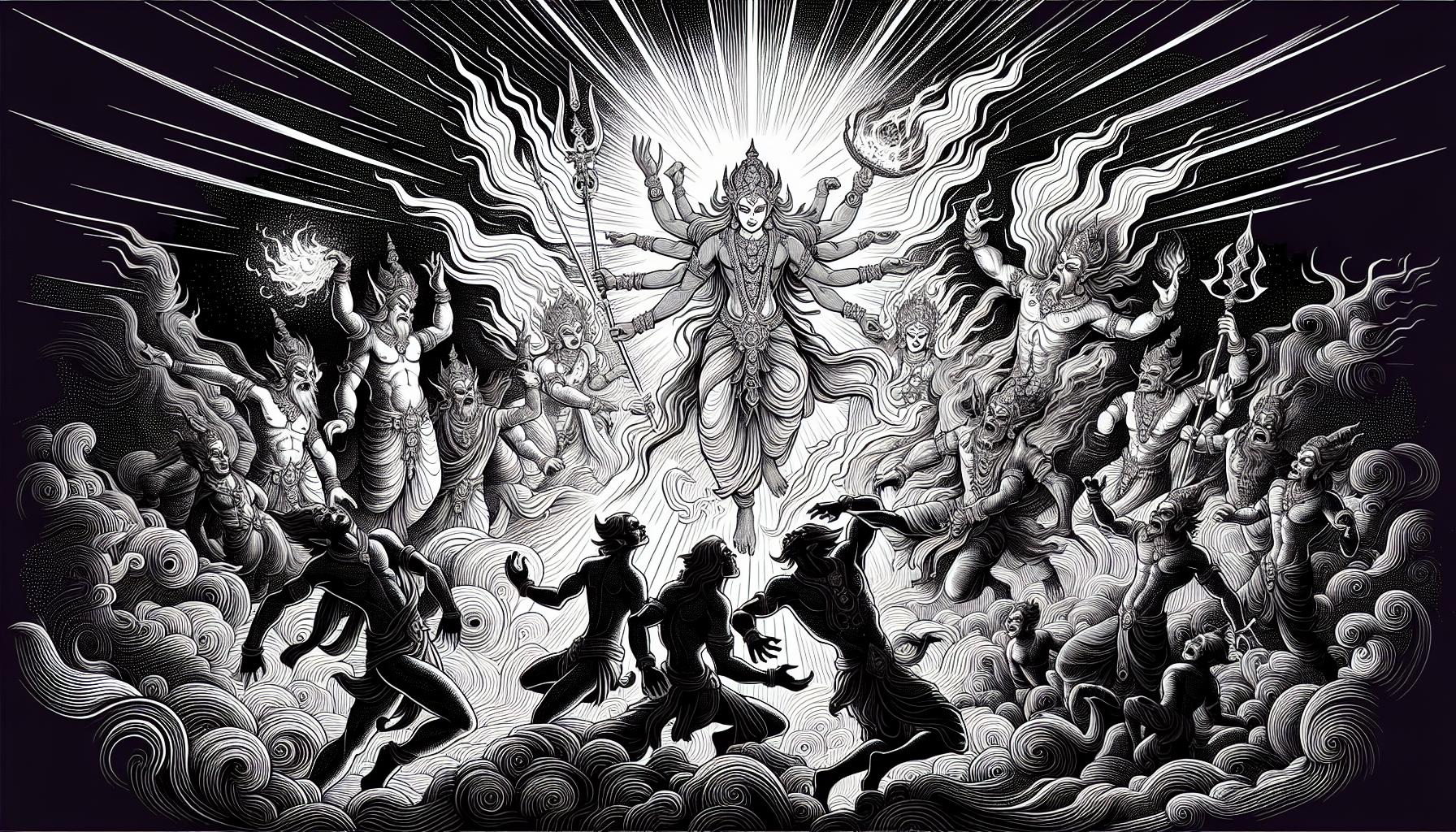
The Asura-Deva battles are rich in symbolism and interpretations, revealing deep insights into the human condition and cosmic principles.
Good Versus Evil
These mythological battles vividly depict the enduring conflict between good and evil. Good, embodied by the Devas, represents virtues like honesty, valor, and divine order. Evil, represented by the Asuras, manifests through deceit, arrogance, and chaos. The repeated victories of the Devas over the Asuras signal the triumph of dharma (righteousness) over adharma (wickedness). For instance, when Indra defeats Vritra, it symbolizes the restoration of cosmic harmony, emphasizing that good eventually prevails against evil if righteousness guides actions.
Spiritual Allegory
The Asura-Deva battles also serve as profound spiritual allegories. They illustrate the internal struggles individuals face between their higher aspirations and base desires. The Devas signify the soul’s divine qualities, while the Asuras embody the ego’s darker tendencies. The narrative of Vishnu defeating Hiranyakashipu highlights the need for divine intervention in overcoming inner turmoil. By engaging in these battles, one learns about vigilance against internal evils and striving towards enlightenment. Vishnu’s interventions, in particular, indicate that spiritual awakening can guide one through the darkest times, promoting inner peace and higher consciousness.
Cultural Impact
The battles between the Devas and Asuras embody the eternal struggle between good and evil, shaping many aspects of Indian culture. This dichotomy influences art, literature, festivals, and social structures.
Representation in Art and Literature
Asura-Deva battles have deeply influenced Indian art and literature. In epic poems like the Rigveda and Mahabharata, these battles are central themes. Artists often depict these confrontations in sculptures, paintings, and dance performances. Examples include intricate temple carvings and classical dance forms such as Bharatanatyam and Kathakali. These artistic representations continue to convey the epic scale and moral dimensions of these mythological wars.
Influence on Indian Festivals
The clash between Devas and Asuras also plays a significant role in Indian festivals. During Durga Puja, communities celebrate Goddess Durga’s victory over the demon Mahishasura with grand processions and elaborate rituals. Diwali marks the return of Lord Rama to Ayodhya after defeating the demon king Ravana. Holi commemorates the burning of the demoness Holika, symbolizing the triumph of good over evil. Each festival incorporates elements of the Asura-Deva battles, reinforcing the values and teachings associated with these mythological stories.
Conclusion
The Asura-Deva battles offer more than just thrilling tales; they provide a profound lens through which we can examine our own moral and ethical dilemmas. By understanding these ancient stories, we gain insights into the timeless struggle between chaos and order that remains relevant today. These mythological narratives continue to shape cultural expressions and societal values, reminding us of the enduring power of good over evil. As we celebrate festivals and admire artistic renditions inspired by these epic battles, we connect with a rich heritage that reinforces the importance of virtue and righteousness in our lives.
Sources & further reading
These themes are explored in greater depth across the following authoritative resources:
- Britannica, Asura
- Britannica, Naga
- Mythopedia, Hindu Mythology
- Internet Sacred Text Archive, Mahabharata
- Wendy Doniger, Hindu Myths (Penguin Classics, 1975)
External resources for further reading. Apam Napat is not affiliated with these publishers; citation does not imply endorsement.
Frequently asked questions
What do the Asura-Deva battles symbolize?
Which texts document the Asura-Deva battles?
Who killed Vritra?
Who killed Mahishasura?
Who killed Hiranyakashipu?
Based on the classical texts of Hindu mythology, see our sources.