
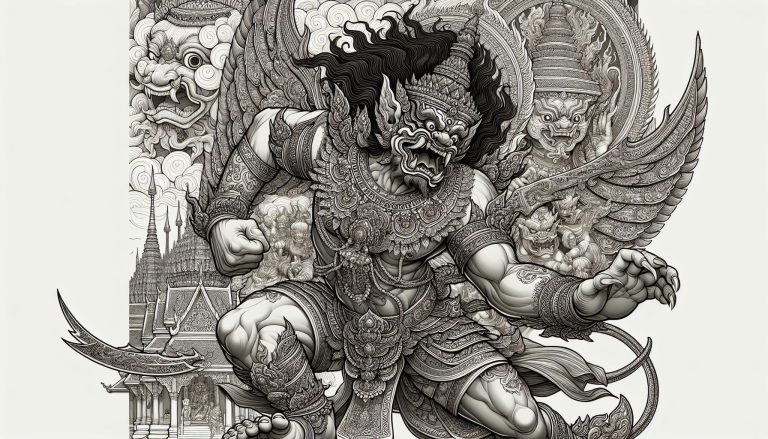
I’ve always been intrigued by how Asuras are depicted as both malevolent and enlightened. This duality challenges our understanding of good and evil, pushing us to see the gray areas in between. By delving into their stories, we uncover rich layers of cultural and spiritual significance that continue to influence modern thought.
Origins Of Asura Mythology
The mythology of Asuras finds its roots in ancient Indian texts, particularly the Vedas and the Puranas. In the Rigveda, the oldest of the Vedas, Asuras appear as powerful entities with multifaceted characteristics. Initially, they were not always depicted as malevolent; rather, their portrayal was ambiguous, embodying both chaos and wisdom.
Asura mythology was further developed in later texts like the Mahabharata – The Great Epic and the Ramayana – Epic of Hinduism. These epic narratives expanded on the conflicts between Asuras and Devas (gods), emphasizing their dual nature. The Puranas, with texts like the Bhagavata Purana, elaborated on the cosmic battles, diving deeper into the perception of Asuras as antagonists to the Devas.
In Buddhism, Asuras have a unique role. Within the Buddhist cosmology, they inhabit one of the six realms of existence. Depicted as beings driven by envy and lust for power, they contrast with the tranquility sought by Buddhists. Texts like the “Asura Cave” Sutta from the Samyutta Nikaya present them as symbolic representations of internal struggles against negative emotions.
The evolution of Asura mythology highlights cultural perceptions of good and evil. By reflecting on these ancient stories, a duality emerges that challenges simplistic binary distinctions. The intricate nature of Asuras, oscillating between chaos and enlightenment, enriches the spiritual and cultural world, impacting how societies interpret moral complexities.
Asura Characteristics

Asuras exhibit defining traits in both physical and metaphysical realms, reflecting their complex roles in mythology.
Physical Traits
Asuras possess distinctive physical traits that set them apart from Devas. Typically, Asuras are described with large, muscular frames and multiple limbs, enhancing their fearsome appearance. Their skin often appears in hues of red, blue, or black, denoting their fierce nature. Some texts describe them with fangs and fiery eyes, reinforcing their menacing aura. These attributes highlight their formidable presence in mythological battles.
Powers And Abilities
Asuras wield immense powers and abilities, reflecting their profound influence in mythological narratives. They command various forms of magic, including shape-shifting and illusion-casting, enabling them to disguise their true forms. Asuras are also skilled warriors, mastering weapons and combat techniques superior to many Devas. They possess regenerative abilities, allowing them to recover swiftly from injuries. Also, Asuras often hold profound knowledge of ancient rituals and celestial mechanics, granting them strategic advantages in their conflicts with Devas.
Asuras In Hindu Mythology
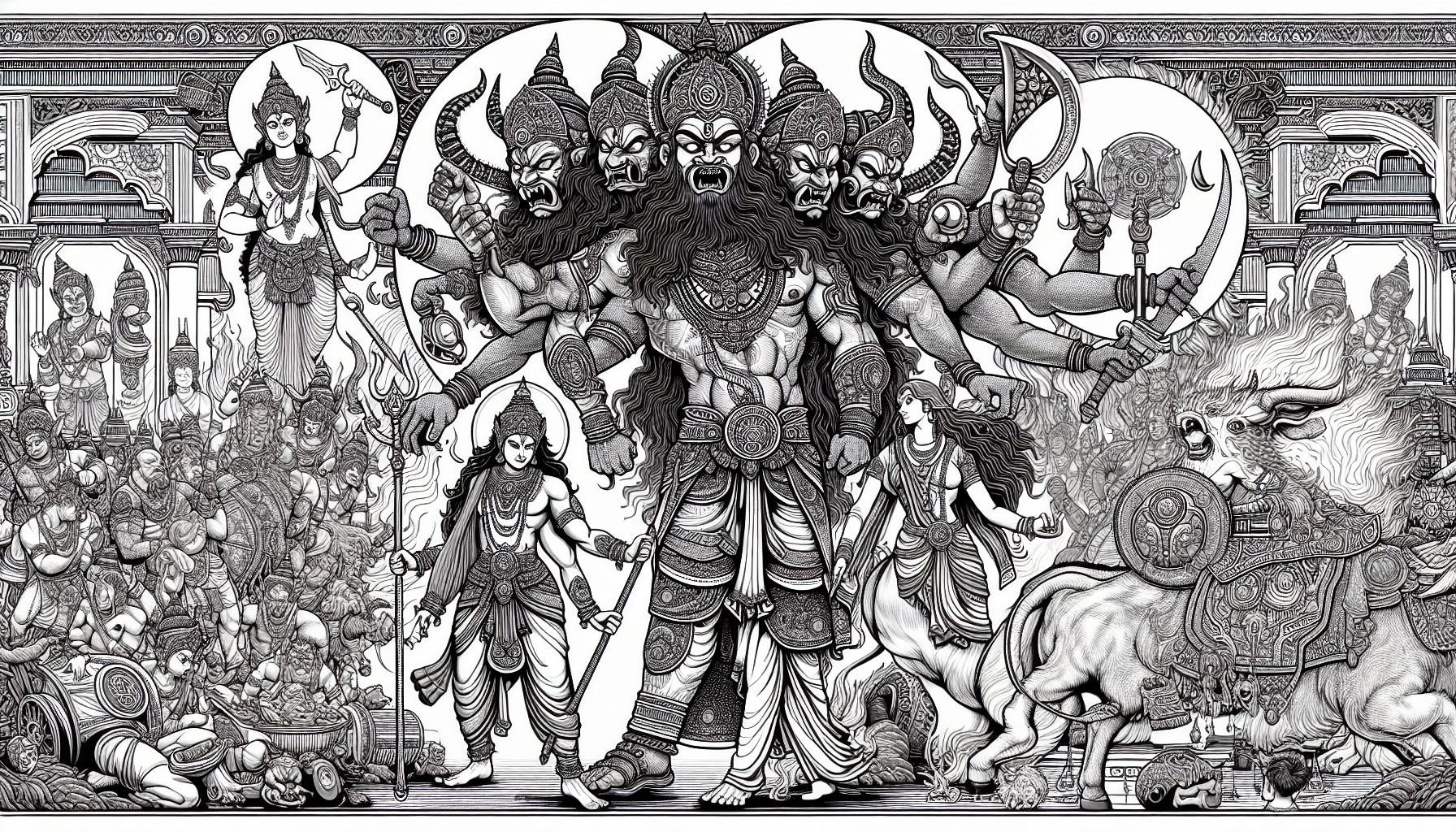
Hindu mythology presents Asuras as complex beings intertwined with cosmic events and divine narratives. Their stories illuminate their dualistic nature and impact on the cosmos.
Key Stories And Legends
The Mahabharata and Ramayana provide significant stories featuring Asuras. In the Mahabharata, the churn of the ocean (Samudra Manthan) involves Asuras and Devas working together to obtain the nectar of immortality (amrita). Conflicts arise during the distribution of amrita, showcasing Asuras’ desire for power.
In the Ramayana, Ravana, king of Lanka, embodies Asura qualities. Ravana’s abduction of Sita and subsequent battle with Lord Rama illustrate themes of dharma (righteousness) vs. adharma (unrighteousness). The devotional elements highlight their destructive traits and cunning intelligence.
Prominent Asuras
Several Asuras stand out in Hindu mythology.
- Ravana: King of Lanka, characterized by his ten heads and extraordinary strength.
- Mahishasura – Buffalo Demon: A buffalo-demon combated by Goddess Durga, symbolizing the victory of good over evil.
- Hiranyakashipu: Known for his arrogance and invulnerability to being killed in traditional ways, eventually defeated by Lord Vishnu in the form of Narasimha.
- Bali: A ruler famous for his piety and devotion, eventually subdued by Vamana, an avatar of Vishnu.
These Asuras play pivotal roles in shaping mythological narratives, highlighting their significance and diverse characteristics.
Asuras In Buddhist Mythology
In Buddhist mythology, Asuras represent beings consumed by envy and power. These entities contrast sharply with Buddhist ideals, reflecting moral and emotional dilemmas.
Differences From Hindu Asuras
Buddhist Asuras differ significantly from their Hindu counterparts, focusing more on their inner turmoil. While Hindu mythology portrays Asuras with a dual nature involving both chaos and wisdom, Buddhist Asuras inhabit one of the six realms of existence driven by constant conflict and jealousy. They lack the complexity of Hindu Asuras who often challenge Devas and engage in cosmic events. Instead, Buddhist Asuras constantly battle Devas for control, symbolizing human tendencies toward dissatisfaction and aggression.
Important Asura Figures
Notable Asura figures in Buddhist mythology include Rahu and Mara. Rahu, an embodiment of celestial phenomena, attempts to swallow the sun and moon, causing eclipses. This act symbolizes the Asuras’ endless thirst for power and their disruptive presence in the cosmos. Mara, another significant figure, personifies temptation and attempts to thwart Buddha’s path to enlightenment. Mara’s role extends beyond the physical plane, representing internal battles individuals face against spiritual progress. These figures highlight the contrasting dynamics between Asuras and Devas within Buddhist teachings.
Symbolism And Interpretation
Asuras represent complex and multifaceted symbols within Hindu and Buddhist mythology. Their roles and stories convey deeper moral and cultural meanings.
Moral Lessons
Asuras embody the struggle between good and evil. They often face off against Devas, symbolizing internal battles individuals grapple with. Rahu, a notable Asura, signifies the intense craving for power that can eclipse reason and wisdom. Mara personifies temptation and obstacles, reminding us of moral vigilance. These figures encourage self-reflection on our desires and actions.
Cultural Impact
Asuras influence literature, art, and rituals across South Asian cultures. Ancient texts like the Vedas and Puranas detail their exploits and conflicts, enriching cultural narratives. Temples often depict Asura battles, highlighting their importance in mythological lore. Festivals celebrate these mythic tales, keeping the Asura stories alive in collective cultural memory.
Conclusion
Exploring the Asuras’ mythology reveals their profound impact on South Asian culture and spirituality. Their complex narratives offer more than just tales of conflict; they investigate into human nature and the eternal struggle between good and evil. Asuras remind us of our internal battles and the moral lessons embedded in ancient texts. Their stories continue to resonate today influencing art literature and rituals keeping their legacy alive. By understanding Asuras we gain a deeper appreciation of the rich world of mythology that shapes our cultural and spiritual landscapes.
Sources & further reading
These themes are explored in greater depth across the following authoritative resources:
- Britannica, Asura
- Britannica, Naga
- Mythopedia, Hindu Mythology
- Internet Sacred Text Archive, Mahabharata
- Wendy Doniger, Hindu Myths (Penguin Classics, 1975)
External resources for further reading. Apam Napat is not affiliated with these publishers; citation does not imply endorsement.
Frequently asked questions
What are the origins of Asura mythology?
How do the Mahabharata and Ramayana describe Asuras?
What is the role of Asuras in Buddhism?
What is the Asura Cave Sutta?
Why are Asuras called dual-natured beings?
Based on the classical texts of Hindu mythology, see our sources.