
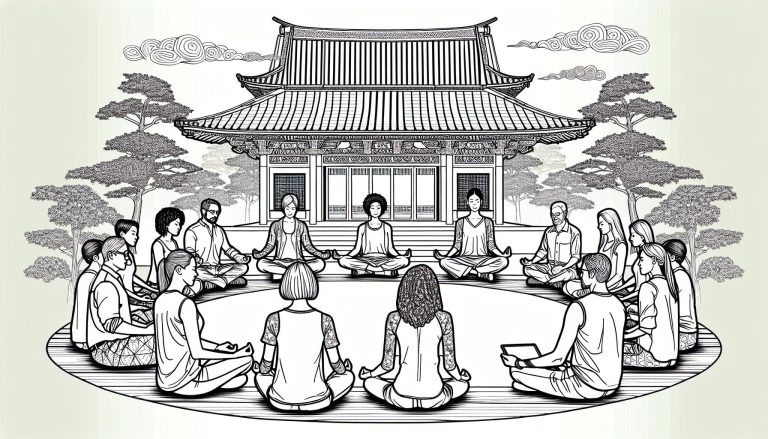
In today’s rapid world, finding such a community can be a sanctuary from daily stress. It’s not just about shared beliefs but also about mutual support and growth. When you’re surrounded by like-minded individuals, the journey toward spiritual enlightenment feels less daunting and more achievable.
Understanding Devotional Community and Sangha
The concept of devotional community and sangha in Buddhism revolves around the third jewel of the Triple Gem, which is the sangha. The sangha refers to a community of understanding and love that helps guide individuals on their path to enlightenment through the teachings of the Buddha, known as the dharma.
Origins and Development
The sangha originated from the group of disciples who renounced worldly life to follow the Buddha and learn from his teachings. After the Buddha’s death, his disciples continued to live together as a community, eventually settling in monasteries during the rainy season. This led to the development of monastic orders governed by disciplinary rules known as vinaya.
Role in Buddhism
The sangha plays a crucial role in Buddhism as it provides a supportive environment for individuals to practice and follow the teachings of the Buddha.
Historical Background

Buddhism emerged in northeastern India between the late 6th century and the early 4th century BCE. This period witnessed the rise of various sects centered around charismatic teachers.
Origins of Devotional Communities
The Buddha established the Sangha, a community of celibate monks and nuns who adhered to strict discipline. This community encompassed both monastics and laypeople. Monastics dedicated themselves entirely to spiritual practice and the teachings of the Dharma. Laypeople followed the Buddha’s teachings but lived as householders. They provided material support to monastics and, in return, received spiritual guidance. The Sangha’s interdependence ensured that teachings were shared, and support was mutual, strengthening the community’s foundation.
Evolution of the Sangha
Post the Buddha’s death, the Sangha evolved significantly. Monastic orders developed comprehensive disciplinary rules known as vinaya. These rules helped maintain order within the community and preserve the purity of practice. The Sangha expanded geographically, adapting to various cultures. This adaptation included integrating local customs while maintaining core teachings. The Sangha’s adaptability ensured its relevance and continuity as Buddhism spread, creating a diverse yet unified devotional community.
Core Beliefs and Practices

The devotional community and sangha embody essential beliefs and practices in Buddhism, guiding individual and collective spiritual growth.
Principles of Devotional Community
A central principle of the devotional community is positive peer pressure. The sangha encourages members to achieve their aspirations and avoid negative behaviors through collective support and common goals. Within this supportive structure, individuals find motivation and accountability to stay aligned with Buddhist teachings.
Emotional nurturing forms another core principle. The sangha offers emotional support through rituals and personal interactions. This nurturing environment fosters spiritual growth, helping individuals transform their inner lives and align with the Dharma.
Teachings within the Sangha
The teachings within the sangha center on the Three Treasures of Buddhism: Buddha, Dharma, and Sangha. The Buddha represents the teacher, the Dharma his teachings, and the Sangha the community that preserves and practices these teachings. This triad forms the bedrock of Buddhist practice, ensuring it remains dynamic and relevant.
The sangha is essential for conveying the full Buddhist tradition. It transforms Buddhism from a static philosophy into a living, applied spiritual practice. Through active participation in the sangha, practitioners experience the teachings firsthand and integrate them into their daily lives.
Cultural Significance
The concept of Sangha holds deep cultural significance in Buddhist communities. It preserves traditions, social practices, and rituals that shape the lives of its members.
Role in Daily Life
Sangha impacts daily life by preserving and teaching Buddhist texts and philosophies. Members meet regularly for meditation, discussions, and ceremonies. Through these activities, they support each other’s spiritual growth. The Sangha offers guidance on living ethically, promoting mindfulness, compassion, and wisdom in everyday activities. It provides a sense of belonging, reducing feelings of isolation and fostering a strong communal bond.
Festivities and Rituals
Sangha connects with various social practices, rituals, and festive events. Members celebrate key events like Vesak, marking the Buddha’s birth, enlightenment, and death. They organize ritualistic practices, including chanting, offerings, and alms giving, which help reinforce their faith and community ties. Festivities often follow the lunar calendar, bringing people together in collective observance and reflection. Ritual ceremonies like ordinations and meditation retreats further strengthen the community’s spiritual commitment and cohesion.
Modern Adaptations
The sangha has evolved to meet the needs of contemporary society. Digital platforms and interfaith engagements have reshaped how people experience and interact with these devotional communities.
Online Communities
The digital age has transformed the way people connect with the sangha. Online communities have become vital platforms where individuals can participate in discussions, meditation, and spiritual practices without geographical constraints. Websites, social media, and dedicated apps provide access to teachings, live streams, and recorded content.
For instance:
- Insight Timer offers a variety of guided meditations from experienced practitioners.
- Buddhistdoor Global provides articles, videos, and online courses to expand knowledge and practices.
- Reddit’s r/Buddhism serves as a discussion hub for sharing experiences and asking questions.
These online communities foster a sense of belonging and provide continuous support, enhancing the traditional sangha’s reach.
Interfaith Interactions
Modern sanghas actively participate in interfaith dialogues, promoting mutual understanding and respect among different religious groups. Such engagements help bridge gaps and address common societal challenges.
Examples include:
- The Parliament of the World’s Religions convenes global gatherings encouraging cooperation and social justice initiatives.
- The Interfaith Rainforest Initiative combines efforts from various faiths to address climate change and environmental conservation.
- Local interfaith councils organize events and discussions to unite different religious communities on common humanitarian goals.
These interactions enrich the sangha by incorporating diverse perspectives, fostering greater compassion, and expanding its influence in contemporary society.
Personal Experiences and Testimonials
Experiences within a devotional community and sangha deeply impact individuals’ spiritual journeys. Various testimonials highlight these influences.
Stories from Devotees
- Supportive Community: Many Buddhist practitioners describe the sangha as a lifeline. An example is from a devotee who attended weekly meditation sessions at a local monastery. The sense of community and shared purpose bolstered her practice and provided a network of like-minded individuals. She mentioned, “The sangha is my anchor; it’s given me a family that understands and supports my spiritual path.”
- Transformation through Faith: In Christianity, a churchgoer shared how her church community helped her navigate life’s challenges. She said, “I faced a difficult period, but my church community uplifted me through prayers and counseling. It strengthened my faith and gave me hope when I needed it most.”
- Digital Connection: Online platforms now play a significant role in maintaining the sangha’s influence. A member of a virtual meditation group on Insight Timer shared, “Although we’re miles apart, the online sessions keep us connected. The digital sangha has been instrumental in continuing my practice during lockdowns.”
- Buddhist Teachings on Community: Venerable Thich Nhat Hanh highlighted the importance of the sangha, stating, “The sangha is the heart of my practice. Without it, I wouldn’t have the strength needed to begin on my spiritual journey.” His teachings frequently emphasize collective practice as a means to achieve individual enlightenment.
- Christian Community Values: Pastor Rick Warren of Saddleback Church shared insights about the church’s role in fostering community. He observed, “Our faith grows stronger in fellowship. The church isn’t just a place of worship but a community where people build each other up.”
- Interfaith Engagement: Religious leaders from different backgrounds stress the value of community beyond their traditions. For instance, the Dalai Lama often speaks on interfaith harmony. He mentioned, “All major religious traditions carry the same message of love, compassion, and forgiveness. Community and understanding amongst these traditions is crucial for global peace.”
Personal stories and leader insights demonstrate the profound impacts of participating in a devotional community and sangha. Whether in physical or digital realms, these communities offer support, guidance, and a shared journey towards spiritual growth.
Conclusion
Being part of a devotional community or Sangha has enriched my spiritual journey in ways I never imagined. The blend of historical significance and modern adaptability offers a unique space for growth and connection. Whether engaging in person or online I’ve found that these communities provide invaluable support and guidance.
The teachings and shared experiences within these groups have been transformative. They offer a sense of belonging and a collective path towards enlightenment and understanding. The wisdom of leaders like Venerable Thich Nhat Hanh and Pastor Rick Warren highlights the universal importance of community.
In our increasingly digital world the Sangha continues to evolve making spiritual resources more accessible than ever. This interconnectedness fosters a deeper appreciation for diverse traditions and a unified quest for global peace. Through my involvement I’ve discovered that the journey is not just about personal growth but also about contributing to a harmonious and compassionate world.
Sources & further reading
These themes are explored in greater depth across the following authoritative resources:
- Stanford Encyclopedia of Philosophy, Hindu Philosophy
- Britannica, Moksha
- Britannica, Brahman
- Internet Sacred Text Archive, Upanishads
- Sarvepalli Radhakrishnan, Indian Philosophy (2 vols., Oxford University Press, 1923)
External resources for further reading. Apam Napat is not affiliated with these publishers; citation does not imply endorsement.
Frequently asked questions
What is the sangha in Buddhism?
How did the Buddhist sangha originate?
What is the role of laypeople in the sangha?
What are the Three Treasures of Buddhism?
How does the sangha support spiritual growth?
Based on the classical texts of Hindu mythology, see our sources.