

I’ve found that integrating Dharma into my decision-making process brings clarity and peace. Instead of getting bogged down by endless options and external pressures, I focus on what truly resonates with my inner self. This approach not only leads to more fulfilling choices but also fosters a sense of harmony and balance in my life.
Understanding Dharma
Dharma, a core concept in Eastern philosophies like Hinduism, Buddhism, and Jainism, represents one’s duty, righteousness, and moral law. It’s an intricate balance of actions, duties, and responsibilities aligned with cosmic principles. This ancient term comes from Sanskrit and means ‘to uphold’ or ‘to support.’
Dharma’s relevance spans personal, societal, and universal levels. At a personal level, it involves living following one’s true nature and values. In society, it guides individuals in fulfilling their roles harmoniously. Universally, Dharma represents the underlying order of the cosmos.
Several texts, such as the Bhagavad Gita and the Dhammapada, provide comprehensive insights into Dharma. The Bhagavad Gita discusses how fulfilling one’s duties without attachment to results upholds Dharma. The Dhammapada highlights the role of right conduct and mental discipline.
Examples of Dharma in action include fulfilling one’s duties at work, treating others with respect, and engaging in acts of kindness. An individual’s Dharma might involve a commitment to personal growth, while another’s might focus on community service.
Understanding Dharma enhances decision-making by aligning choices with a greater moral framework. It transcends mere personal gain, considering broader implications and ethical considerations. This alignment fosters decisions that promote long-term fulfillment and societal well-being.
The Role of Dharma in Decision-Making
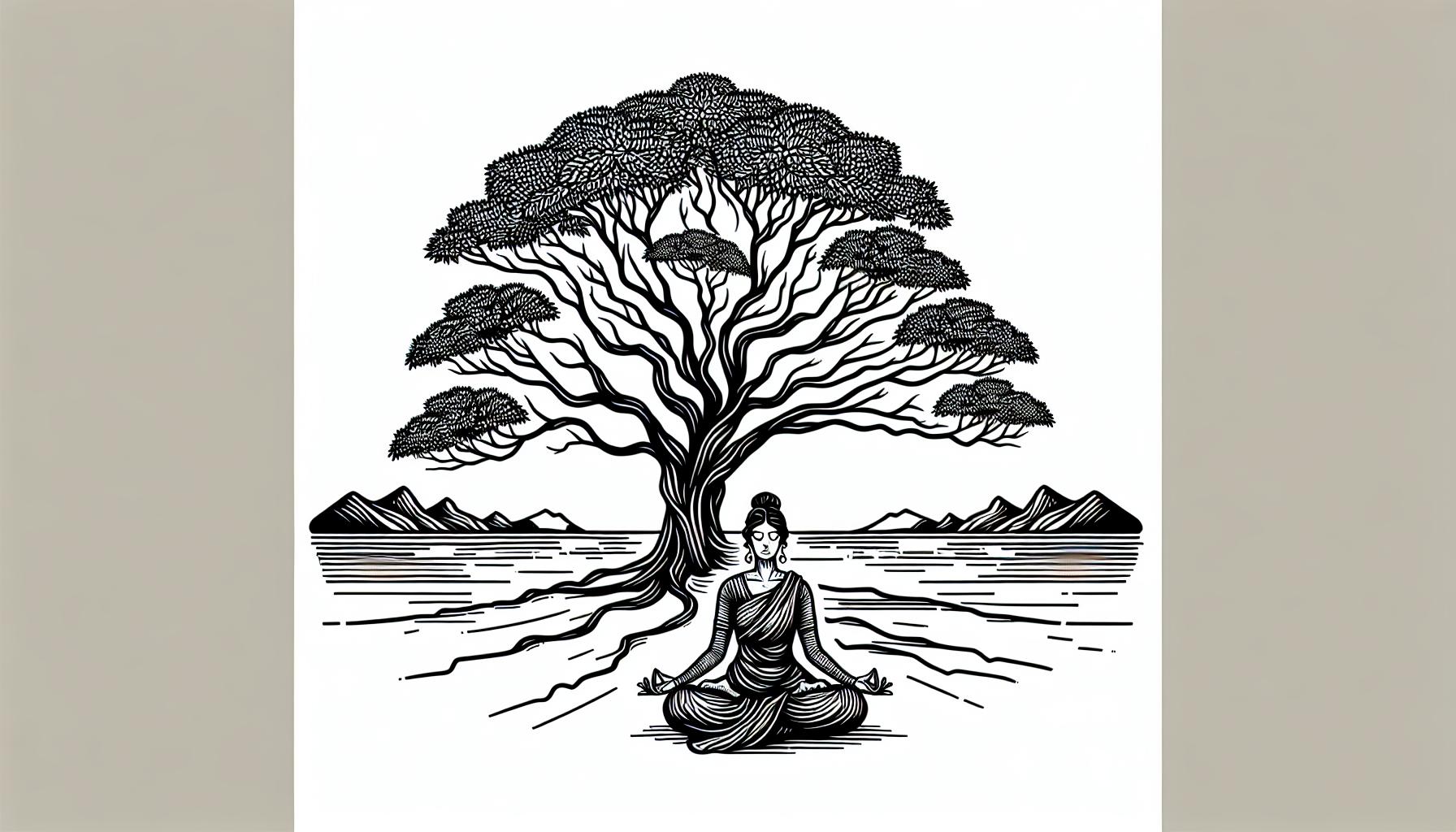
Dharma serves as a pivotal framework in the decision-making process. It integrates ethical principles and personal values to guide choices, ensuring they contribute to overall well-being and cosmic harmony.
Ethical Considerations
Dharma emphasizes ethical considerations in decision-making. Actions align with moral laws, covering duty, righteousness, and justice. For instance, the Bhagavad Gita highlights fulfilling responsibilities without personal gain, promoting selflessness. By incorporating Dharma, decisions reflect societal good and integrity, creating a balanced life guided by ethics.
Aligning with Personal Values
Incorporating Dharma ensures decisions align with personal values. These values, whether compassion, honesty, or diligence, help navigate life’s choices. For example, acts of kindness and respect to others stem from one’s moral compass. When values and Dharma are in sync, one can achieve inner peace and long-term satisfaction, enhancing both personal and community growth.
Historical Perspectives

Understanding Dharma requires looking at its origins and evolution over time. Historical perspectives shine a light on how this ancient concept has shaped decision-making across different eras.
Ancient Philosophies
Dharma’s roots trace back to ancient Eastern philosophies, notably Hinduism, Buddhism, and Jainism. In Hinduism, Dharma is a multifaceted concept encompassing duty, law, and righteousness. The Bhagavad Gita, a seminal text, elucidates the role of Dharma by highlighting Arjuna – The Peerless Archer’s struggle between familial duty and his responsibility as a warrior. Lord Krishna – An Incarnation of Vishnu advises him to act according to his Dharma without attachment to the results.
Buddhism approaches Dharma as the universal law and teachings of the Buddha. The Dhammapada outlines various aspects of right conduct, reinforcing the significance of Dharma in leading a moral life. By following these teachings, individuals align their actions with ethical principles, fostering decision-making that promotes both personal and communal well-being.
In Jainism, Dharma signifies moral virtue and duty. Jain texts emphasize Ahimsa (non-violence) and truth, guiding decisions rooted in compassion and integrity. The historical context shows that adhering to Dharma involves embracing ethical duties and principles, impacting daily choices.
Modern Interpretations
Modern interpretations of Dharma adapt these ancient principles to contemporary life’s complexities. In an interconnected world, the concept remains relevant, guiding decision-making in personal, professional, and social spheres. Applying Dharma today means aligning choices with core values, ensuring actions contribute to larger societal and cosmic harmony.
Examples of Dharma in modern contexts include corporate ethical practices, sustainable living, and community service. Businesses adopting ethical guidelines align operations with broader societal welfare. Individuals striving for a sustainable lifestyle reflect the Dharma principle of living in harmony with the environment. Community service demonstrates selflessness, echoing ancient teachings in today’s world.
By examining historical perspectives, it’s clear that Dharma’s relevance in decision-making transcends time, providing a robust framework for ethical and value-based choices.
Case Studies

Here, I explore how Dharma guides decision-making through real-world examples. These case studies illustrate the application of Dharma in different contexts, including business and personal life.
Business Scenarios
Dharma proves invaluable in business contexts, guiding ethical practices and decisions. One notable example is the implementation of Corporate Social Responsibility (CSR) initiatives. Companies like Patagonia commit to environmental sustainability, aligning their business practices with the Dharma principle of harmony with nature.
Another instance is seen in leadership styles focused on servant leadership. Companies such as Southwest Airlines emphasize employee welfare and community service. This aligns with Dharma by fostering a respectful and supportive workplace environment.
Personal Life Decisions
In personal life, Dharma shapes decisions by aligning them with moral and ethical values. A significant example comes from making career choices. Choosing a profession that aligns with one’s values, such as pursuing social work to help others, reflects Dharma.
Deciding how to handle interpersonal relationships is another area where Dharma plays a role. Maintaining honesty and integrity in relationships, as exemplified by people who prioritize transparency with friends and loved ones, showcases Dharma’s emphasis on right conduct.
Challenges and Solutions
Exploring the principles of Dharma can present several challenges in decision-making, particularly when modern life’s complexities come into play. But, integrating Dharma into practical scenarios offers meaningful and ethical solutions.
Common Dilemmas
Conflicting responsibilities often create dilemmas. For example, balancing professional obligations and personal commitments can be challenging. Ethical conflicts arise when business goals clash with corporate responsibilities. In personal relationships, maintaining integrity while achieving personal desires can be complicated. These dilemmas test one’s ability to adhere to Dharma while addressing pragmatic concerns.
Practical Advice
Prioritizing core values simplifies decision-making. Regularly reflecting on personal and professional duties helps align actions with ethical principles. Utilizing mindfulness practices from traditions like Buddhism cultivates awareness, enabling clearer judgment. Consulting texts like the Bhagavad Gita offers insights into overcoming moral conflicts. Finally, seeking guidance from mentors experienced in ethical decision-making provides invaluable support. Applying these strategies ensures that decisions made uphold Dharma, leading to balanced and ethical outcomes.
Conclusion
Embracing Dharma in decision-making isn’t just about adhering to ancient texts but about integrating timeless values into our modern lives. By prioritizing core values and reflecting on our duties we can navigate today’s complexities with confidence. Mindfulness practices and insights from revered texts like the Bhagavad Gita offer practical guidance. Seeking wisdom from experienced mentors further ensures our decisions are ethical and balanced. Through this approach we can foster a life aligned with Dharma promoting harmony and integrity in every sphere.
Sources & further reading
These themes are explored in greater depth across the following authoritative resources:
- Stanford Encyclopedia of Philosophy, Hindu Philosophy
- Britannica, Dharma
- Britannica, Karma
- Internet Sacred Text Archive, Bhagavad Gita
- A. K. Ramanujan, Speaking of Siva (Penguin Classics, 1973)
External resources for further reading. Apam Napat is not affiliated with these publishers; citation does not imply endorsement.
Frequently asked questions
What is dharma in decision-making?
How does the Bhagavad Gita guide decision-making?
How can dharma align decisions with personal values?
What are modern applications of dharma in decisions?
Based on the classical texts of Hindu mythology, see our sources.