
From intricately crafted idols to elaborate pandals, the creativity on display is nothing short of breathtaking. Families and friends gather to partake in rituals, share sumptuous feasts, and enjoy cultural performances. It’s not just a religious observance but a communal celebration that brings people together, transcending boundaries and fostering a sense of unity.
Historical Significance
Durga Puja, a major Hindu festival, has deep historical roots. It originated in the Indian subcontinent, mainly in Bengal and Assam. The celebration honors the goddess Durga’s victory over the demon king Mahishasura – Buffalo Demon, symbolizing good’s triumph over evil. According to legend, the gods Brahma – The Creator, Vishnu – The Protector, and Shiva – The Destroyer created Durga to defeat Mahishasura when he threatened to conquer the world.
The festival’s prominence grew after Islamicate armies conquered parts of the Indian subcontinent. This period marked a reassertion of Hindu culture and identity. The community began publicly celebrating Durga as a warrior goddess, emphasizing her importance. Historically, Durga Puja became a significant social event, reflecting resilience and unity within the Hindu community.
Key Rituals and Traditions
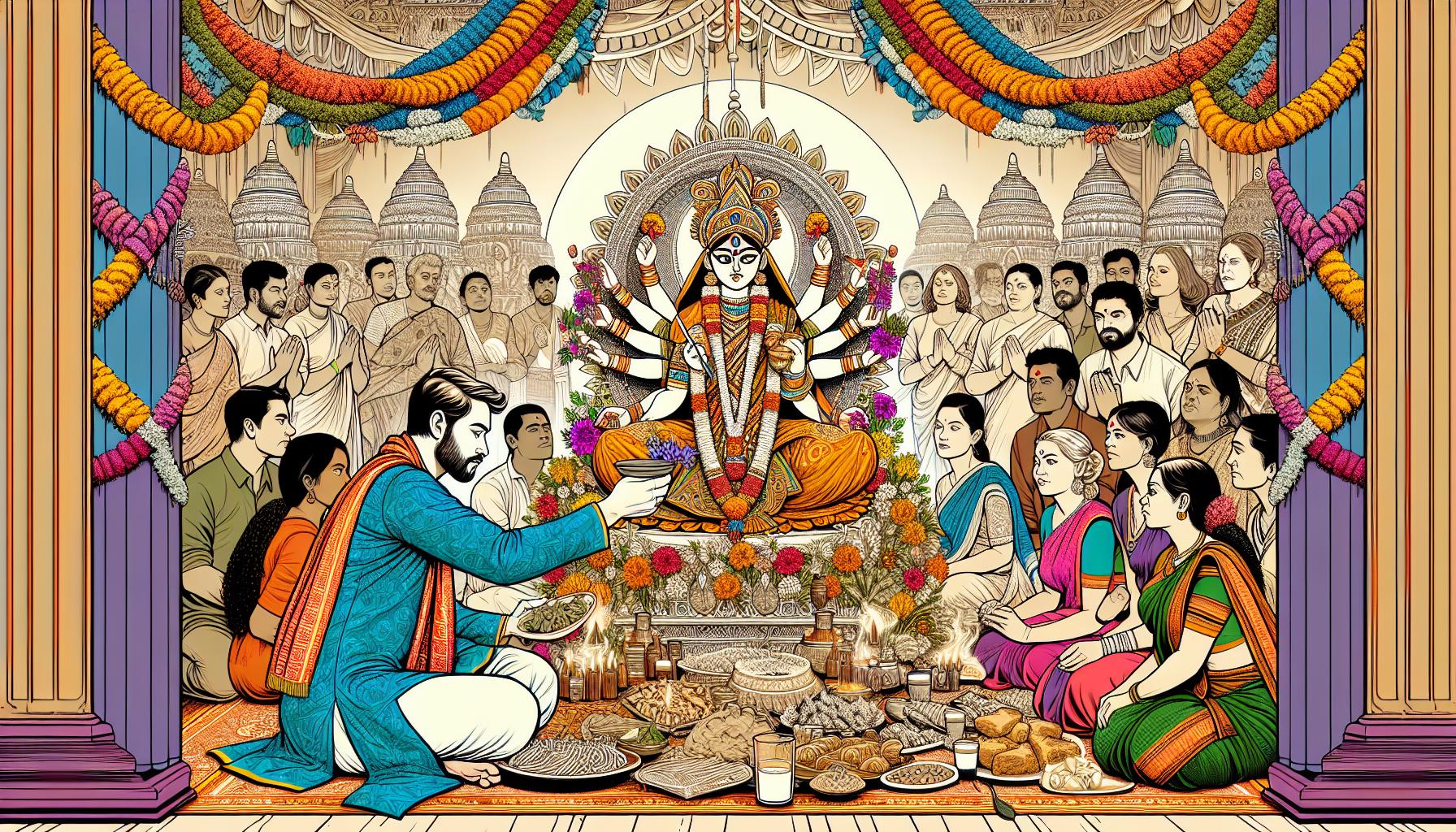
Durga Puja’s essence lies in its vibrant rituals and time-honored traditions. The festival’s key components include the following aspects:
Puja and Homage
Durga Puja begins with Mahalaya. This marks Goddess Durga’s arrival from her mythological home in Kailash. The puja involves intricate rituals featuring mantras, shlokas, and chants. The worship commences with a reading from the sixth-century Mārkaṇḍeya Purāṇa’s Devī Mahātmya. Over three days, devotees worship the goddess in her forms as Durga, Lakshmi, and Sarasvati. Offerings to the goddess often include flowers, fruit, and sweets. These rituals symbolize devotion and respect for her divine power.
Cultural Performances
The festival isn’t only about worship; it features rich cultural performances. These include traditional dances, music, and theatrical presentations. Performances vary from classical dances to modern adaptations, reflecting regional trends. The cultural aspect is especially prominent towards the festival’s end, embodying joy and unity. Events include community-wide activities, often culminating in colorful processions. These performances honor Devi Durga while enriching communal ties.
Community Feasts
Community feasts play a significant role during Durga Puja. Locals prepare and share meals that range from traditional Bengali dishes to regional specialties. Feasts often feature rice, fish, lentils, and an array of sweets. The preparation of these meals fosters communal participation and cooperation. Community feasts enhance the sense of belonging and collective celebration. This time-honored tradition strengthens social bonds and celebrates the spirit of togetherness.
Regional Variations

Durga Puja celebrations vary significantly across different regions in India, adding unique cultural elements to the festival. Below, I’ll explore the distinct practices in West Bengal, Maharashtra, and Karnataka.
West Bengal
In West Bengal, Durga Puja stands as the most important festival for Bengalis. This festival, lasting ten days, celebrates Goddess Durga’s victory over the demon Mahishasura, with the last five days being the most notable. Elaborate pandals, reflecting social and political themes, form a significant part of the celebrations. Rituals incorporate Vedic, Puranic, and Tantric elements, showcasing the cultural richness. I’ll see family gatherings, feasting, and vibrant cultural events, including music and dance performances, throughout the festivities.
Maharashtra
In Maharashtra, the festival highlights both devotion and community spirit. Though not as grand as in West Bengal, locals create smaller pandals and worship idols of Goddess Durga. Maharashtra adds its own flavor with traditional dances like Garba and Dandiya, performed during Navratri, which coincides with the Durga Puja period. I’ll notice a mix of rituals, including fasting and devotional singing, emphasizing spiritual dedication. Community centers and local clubs often organize cultural programs and feasts, adding a communal touch to the celebrations.
Karnataka
Karnataka features a different approach to Durga Puja, intertwining it with the state’s prominent Dussehra celebrations. Mysore, in particular, is renowned for its grand Dussehra processions, featuring a regal parade with decorated elephants and vibrant cultural displays. While not centered on Durga as in the other states, Goddess Chamundeshwari, an incarnation of Durga, is the focal point. I’ll find that traditional music and dance performances, along with elaborate rituals, form an essential part of the festivities. The cultural amalgamation seen here reflects Karnataka’s rich heritage and devotion.
Preparation and Planning

Preparations for Durga Puja start well in advance. Months before the festival, efforts go into creating a memorable and spiritually enriching experience.
Decoration and Themes
Elaborate and captivating decorations define Durga Puja. Artisans meticulously hand-paint clay sculptures of Goddess Durga, combining clay with straw and other materials, starting in the summer. Pandals, temporary structures where the goddess resides during the festival, showcase innovative themes— from social issues to abstract concepts. These themes often take months of planning and execution. Local committees design these pandals to reflect contemporary concerns, resulting in a diverse display of creativity and societal commentary.
Gathering and Invitations
Durga Puja isn’t just a festival; it’s a social event fostering community spirit. Families and communities begin planning gatherings weeks ahead. Invitations extend to extended family, friends, and even strangers to join in the celebrations. This inclusiveness adds to the festival’s communal vibe, making it a time of reunions and shared joy. Formal invitations are sent out, and communities often set up schedules for events ranging from traditional pujas to cultural performances.
Special Preparations by Artists
Artists play a pivotal role in Durga Puja preparations. Months before the festival, sculptors (kumartulis) start their work. They collect clay from sacred riverbanks, incorporating prayers and rituals into each step. The clay is molded into magnificent idols of Durga, illustrating her divine form in intricate detail. Painters and decorators then add colors and ornaments, bringing the idols to life. The end result is a stunning piece of art revered by devotees. The artistry involved reflects cultural heritage and contributes significantly to the festival’s grandeur.
Role of Women
Celebrating the Divine Feminine
Durga Puja honors the goddess Durga and her various forms. The festival highlights the power and strength of women, symbolizing their ability to overcome evil and maintain balance in the world. Women play central roles in rituals, ceremonies, and organizing events throughout the ten days of celebrations.
Kanya Puja
On the eighth or ninth day of Navratri, Kanya Puja is performed. Nine young girls are dressed as Durga’s nine aspects and receive ritual foot washing and offerings like food and clothing. This ritual underscores the purity and sanctity of young girls, celebrating their embodiment of the divine feminine.
Conclusion
Durga Puja is more than just a festival; it’s a vibrant celebration of devotion, artistry, and community spirit. The meticulous preparations, from crafting clay sculptures to organizing grand events, reflect the deep cultural significance of this occasion. Women play a pivotal role, symbolizing strength and purity, making the festival a powerful homage to the divine feminine. Each region brings its unique flavor to the celebrations, showcasing the rich diversity within the Hindu community. Experiencing Durga Puja offers a profound connection to tradition, faith, and the collective joy of coming together to honor goddess Durga.
Sources & further reading
These themes are explored in greater depth across the following authoritative resources:
- Encyclopaedia Britannica, Hindu Mythology
- Internet Sacred Text Archive, Hinduism
- Mythopedia, Hindu Mythology
- Harvard Pluralism Project, Hindu Tradition
- Wendy Doniger, The Hindus: An Alternative History (Penguin, 2009), ISBN 978-0143116691
External resources for further reading. Apam Napat is not affiliated with these publishers; citation does not imply endorsement.
Based on the classical texts of Hindu mythology, see our sources.