
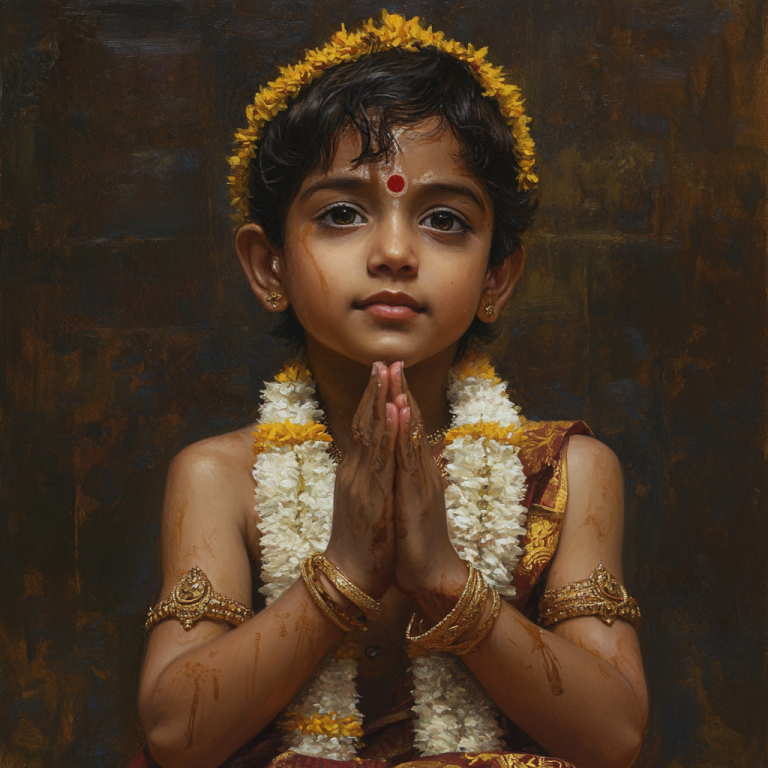
The Adityas – Sons of Aditi and Kashyapa – Father of the Devas and Asuras
The Adityas, prominent deities in Hindu mythology, are the celestial sons of Aditi, the mother of the gods, and Kashyapa, a revered sage. They represent cosmic principles, uphold dharma, and play vital roles in the maintenance of universal order. The Rig Veda (R.V. 2.27) identifies eight Adityas: Mitra, Aryaman – Hospitality, Bhaga, Varuna – The Waters, Daksha, Amsha, and Martanda – An Aditya, with Varuna being regarded as their chief.
Although the traditional number of Adityas is eight, some interpretations expand their count to twelve in later texts, corresponding to the twelve solar months, representing the cyclic nature of time and seasons. This later development aligns them with solar deities, as they are often associated with Surya (the Sun).
The Eight Adityas
Each of the Adityas embodies specific qualities and functions, representing various aspects of natural law and cosmic order.
| Aditya | Attribute/Role |
|---|---|
| Mitra | The deity of friendship, harmony, and contracts, maintaining societal and cosmic balance. |
| Aryaman | Associated with nobility, hospitality, and chivalry, governing social etiquette and righteous conduct. |
| Bhaga | The giver of wealth, prosperity, and fortune, embodying the blessings of abundance. |
| Varuna | The god of cosmic order and moral law, presiding over the waters and enforcing justice. |
| Daksha | Symbolizing strength, dexterity, and ritual skill, often connected to the performance of yajnas. |
| Amsha | The deity of shares or portions, symbolizing the distribution of cosmic resources, is further detailed in various profiles of Amsha and in extended interpretations of Amsha’s role in sustaining the material and spiritual order. |
| Martanda | Initially associated with the Sun, representing immortality and renewal after death. |
| Indra (optional) | Considered an Aditya in some traditions, ruling over rain, thunder, and war. |
Aditi’s Role as the Mother of the Adityas
Aditi, whose name means “boundless” or “infinite,” symbolizes the eternal and infinite nature of existence. She is regarded as the mother of the Devas and is often invoked in the Vedas as a protector and nurturer. Her sons, the Adityas, embody her qualities of upholding cosmic law and protecting dharma.
| Aditi’s Connection | Role |
|---|---|
| Cosmic Mother | Represents infinity and universal nurturing, ensuring balance in the cosmos through her sons. |
| Protector of the Devas | As the mother of celestial beings, she ensures their success in the eternal struggle against the Asuras. |
Martanda and the Story of Rejection
The Rig Veda narrates that Aditi initially gave birth to eight sons, but she rejected Martanda, the eighth son, due to his perceived imperfections. Martanda was associated with the setting sun, representing the inevitable decline or death in the cosmic cycle. Later scriptures connect him directly to Martanda’s solar deity aspect, highlighting his transformation from rejection to resurrection and cosmic significance.
| Theme | Significance |
|---|---|
| Rejection of Martanda | Symbolizes the transient nature of life and the cyclical process of death and rebirth. |
| Later Reinstatement | Reflects the enduring importance of the Sun in sustaining life and its symbolic association with hope. |
Varuna: The Chief of the Adityas
Among the Adityas, Varuna holds a prominent position as the lord of cosmic order (Rta)… His noose (Pasha), an emblem of spiritual accountability, reflects the subtle force through which Varuna maintains justice.
- Symbolism of Varuna:
Varuna’s role emphasizes the importance of truth, justice, and moral integrity in maintaining balance in the universe. He wields a noose (Pasha) to bind those who transgress the laws of dharma.
Indra as an Aditya
Although not traditionally listed among the Adityas in the Rig Veda, Indra is sometimes included in their ranks in later texts. As the king of the Devas, Indra’s addition underscores his critical role in protecting the cosmic order and leading the Devas in their battles against the Asuras. His association with rain and thunder complements the Adityas’ role in sustaining life and order.
| Indra’s Connection | Significance |
|---|---|
| Rain and Fertility | Ensures the nourishment of life through rainfall and the destruction of droughts. |
| Cosmic Protector | Leads the celestial army in defending dharma against adharma. |
Connections to Other Entities and Stories
The Adityas’ lineage and functions connect them to numerous other figures and events in Hindu mythology:
| Entity/Story | Connection to the Adityas |
|---|---|
| Kashyapa | Their father, who fathered many celestial and terrestrial beings, including the Nagas and Asuras. |
| Surya (the Sun) | Often associated with Martanda and regarded as the chief luminary among the Adityas in later traditions. |
| Asuras | The Adityas frequently oppose their half-brothers, the Asuras, in the eternal battle between dharma and adharma. |
| Diti | Aditi’s sister, whose sons, the Daityas, are the natural adversaries of the Adityas. |
Symbolism of the Adityas
| Theme | Symbolism |
|---|---|
| Cosmic Order |
The Adityas collectively represent the maintenance of universal law and harmony. Their legacy is preserved across Vedic hymns and deeper symbolic analyses found in this Aditya entity compilation, where their solar and moral aspects are emphasized as essential to cosmic function. |
| Cycle of Time | Their association with the Sun and the months underscores the cyclical nature of existence. |
| Dharma and Justice | As enforcers of cosmic law, they embody the principles of truth, morality, and righteousness. |
Legacy of the Adityas
The Adityas remain integral to Hindu cosmology and mythology, representing the forces that sustain and protect the universe. Their qualities-friendship (Mitra), nobility (Aryaman), abundance (Bhaga), justice (Varuna), and vitality (Martanda)-reflect the essential aspects of a well-functioning cosmos. Through their stories and roles, they continue to inspire devotion and uphold the timeless principles of dharma.
Sources & further reading
These themes are explored in greater depth across the following authoritative resources:
- Internet Sacred Text Archive, Rig Veda (Griffith translation)
- Internet Sacred Text Archive, Upanishads
- Britannica, Veda
- Britannica, Upanishad
- Patrick Olivelle, The Early Upanishads (Oxford University Press, 1998)
External resources for further reading. Apam Napat is not affiliated with these publishers; citation does not imply endorsement.
Frequently asked questions
Who are the Adityas in Hindu mythology?
Who are the eight Adityas named in the Rig Veda?
Who is the mother of the Adityas?
Why did Aditi reject her son Martanda?
Who is the chief of the Adityas?
Based on the classical texts of Hindu mythology, see our sources.