
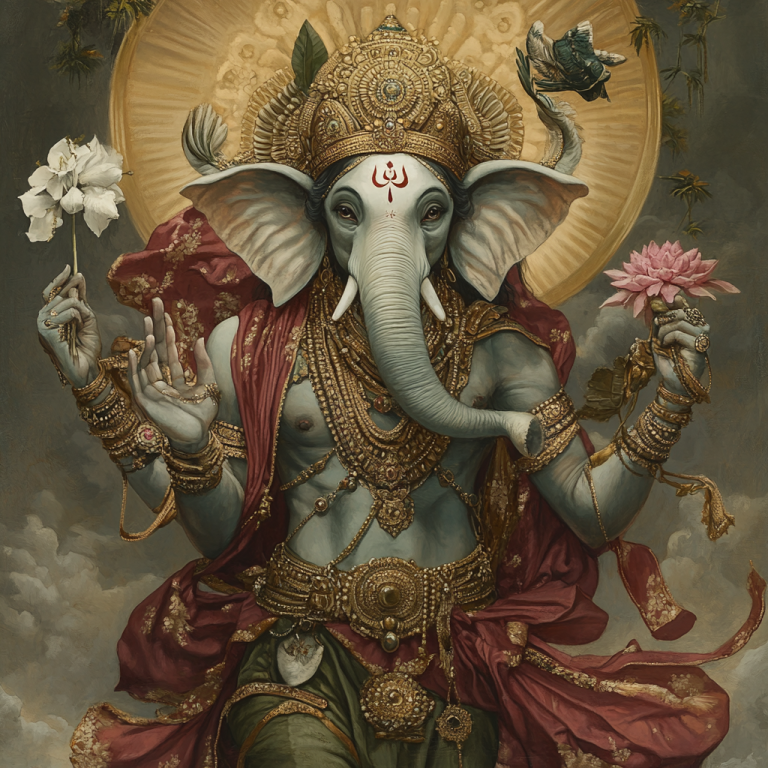
The Story and Legacy of Skanda
Skanda, also known as Kartikeya, Murugan, Subrahmanya, Shanmuka, and Guha, is the son of Shiva and Parvati – The Consort of Shiva and one of the most revered deities in Hindu mythology. His story is deeply intertwined with cosmic battles, divine intervention, and his role as the commander of the celestial armies.
Skanda’s Birth and Its Divine Purpose
Skanda’s birth was necessitated by a crisis that threatened the Devas. The Asura Taraka had performed severe penance and obtained a boon that only a seven-year-old child born to Shiva could slay him. Emboldened by this boon, Taraka overpowered the Devas and established his dominion over the heavens.
However, Shiva had renounced the world and become a recluse following the death of his first wife, Sati. The Devas, realizing that only a child of Shiva could restore cosmic order, sought the help of Kama, the god of love. Kama, with his consort Rati, shot his love-infused arrow at Shiva to awaken his desire. Though Shiva initially burned Kama to ashes with his third eye in anger, his heart was stirred by Parvati, the reincarnation of Sati, leading to their eventual union. From this union, Skanda was born, fulfilling a divine prophecy and setting the stage for the destruction of the Asura Taraka.
Alternate Accounts of Skanda’s Birth
There are variations in the story of Skanda’s birth across different texts and traditions:
- Birth Through Agni and the Krittikas: In some accounts, Skanda is considered the son of Agni and the Krittikas (the six stars of the Pleiades constellation). Agni, overcome with desire for Swaha, carried Shiva’s divine seed, which was deposited in the river Ganga. The seed was nurtured by the Krittikas, giving Skanda his name Kartikeya.
- Birth Through Agni and Swaha: In another version, Swaha, in the guise of the wives of the Saptarishis, carried Shiva’s seed to the reeds, where Skanda was born.
Skanda’s Battle Against Taraka and Surapadma
Once Skanda reached the age of seven, he assumed the role of the commander-in-chief of the Deva army. Armed with a divine spear gifted by his mother, Parvati, and riding his majestic peacock, Paravani, Skanda led the celestial forces into battle.
- Battle with Taraka: Skanda’s first adversary was Taraka – Asura Killed by Skanda, the fearsome Asura who had terrorized the heavens and could only be slain by a child of Shiva.
- Battle with Surapadma: After slaying Taraka, Skanda confronted Surapadma, another mighty Asura. Surapadma was ultimately defeated and transformed into a peacock and a rooster, both of which became Skanda’s symbols-his vehicle and banner, respectively.
These victories not only restored peace to the heavens but also cemented Skanda’s role as the protector of dharma and the destroyer of evil.
Skanda’s Family and Iconography
| Aspect | Details |
|---|---|
| Vehicle | Peacock, symbolizing the destruction of ego and pride. |
| Weapon | Spear (Vel), gifted by Parvati, symbolizing knowledge, power, and destruction of evil. |
| Wives | Valli (a tribal princess) and Deivanai (daughter of Indra, the king of the Devas), symbolizing Skanda’s connection to both the heavens and the earth. |
| Iconography | Skanda is often depicted with six faces (Shanmuka), symbolizing omniscience and his nurturing under the Krittikas. |
| Other Names | Kartikeya, Murugan (popular in Tamil Nadu), Subrahmanya, Shanmuka, Guha. |
Connections to Other Entities and Stories
| Entity/Character | Role and Story | Connection to Skanda |
|---|---|---|
| Shiva and Parvati | Parents of Skanda, whose union was orchestrated by the Devas to fulfill the prophecy of Taraka’s defeat. | Skanda is born of their divine energy, symbolizing the culmination of their union. |
| Kama (God of Love) | Awakened Shiva’s desire for Parvati, ultimately leading to Skanda’s birth. | Kama’s sacrifice (being burned by Shiva’s third eye) was crucial in the divine plan. |
| Krittikas | Nurtured Skanda as their own child, giving him the name Kartikeya. | Their role highlights Skanda’s connection to the stars and his six-faced iconography. |
| Valli and Deivanai | Skanda’s consorts, representing his connection to both earthly and heavenly realms. | Their marriages are celebrated in various South Indian traditions and festivals. |
| Taraka and Surapadma | Asuras who terrorized the heavens and were defeated by Skanda. | Their defeat symbolizes Skanda’s role as the destroyer of evil and protector of dharma. |
| Ganapati (Ganesha) | Skanda’s elder brother and another son of Shiva and Parvati. | Their sibling relationship is celebrated in many traditions, including their friendly competition for divine favor. |
Broader Themes and Symbolism
- Restoration of Cosmic Order
Skanda’s birth and victories symbolize the triumph of good over evil and the restoration of balance in the cosmos. - Union of Divine Energies
The combined energies of Shiva and Parvati, nurtured by the Krittikas, highlight the collaborative nature of divine intervention. - Duality of Roles
Skanda, as a warrior, is the destroyer of evil but also the nurturer of wisdom and protector of devotees, embodying both fierce and compassionate aspects. - Cultural Reverence
Skanda is especially revered in South India, where he is worshiped as Murugan, a deity of Tamil devotion. Temples like Palani and Thiruchendur celebrate his divine exploits and connection to the Tamil culture.
Comparative Analysis: Skanda and Other Deities
| Aspect | Skanda | Comparable Figures in Hindu Mythology |
|---|---|---|
| Role as Warrior | Commander of the Deva army, slayer of Taraka and Surapadma. | Durga, who similarly defeats Mahishasura – Buffalo Demon to restore balance in the universe. |
| Connection to Knowledge | The spear (Vel) symbolizes wisdom and the power of divine knowledge. | Saraswati – The Goddess of Learning and Wisdom, the goddess of knowledge, who also represents the transformative power of wisdom. |
| Celestial Connection | Nurtured by the Krittikas and associated with the Pleiades constellation. | Chandra – The Moon (Moon), another deity linked to celestial entities and cosmic cycles. |
Legacy of Skanda
Skanda’s story resonates with universal themes of heroism, divine intervention, and the protection of righteousness. As the son of Shiva and Parvati, his role in slaying Taraka and Surapadma reflects his divine purpose. His multifaceted nature, as both a warrior and a compassionate deity, continues to inspire devotion across India, particularly in Tamil Nadu. Many of these aspects are richly detailed in the Skanda Purana, which chronicles his deeds and divine origins.
Through his many names and forms, Skanda’s legacy endures as a protector, teacher, and destroyer of evil, embodying the eternal fight for dharma in Hindu mythology.
Sources & further reading
These themes are explored in greater depth across the following authoritative resources:
- Britannica, Asura
- Britannica, Naga
- Mythopedia, Hindu Mythology
- Internet Sacred Text Archive, Mahabharata
- Wendy Doniger, Hindu Myths (Penguin Classics, 1975)
External resources for further reading. Apam Napat is not affiliated with these publishers; citation does not imply endorsement.
Frequently asked questions
Who is Skanda in Hindu mythology?
Why was Skanda born?
How was Skanda born?
Who did Skanda kill?
Based on the classical texts of Hindu mythology, see our sources.