
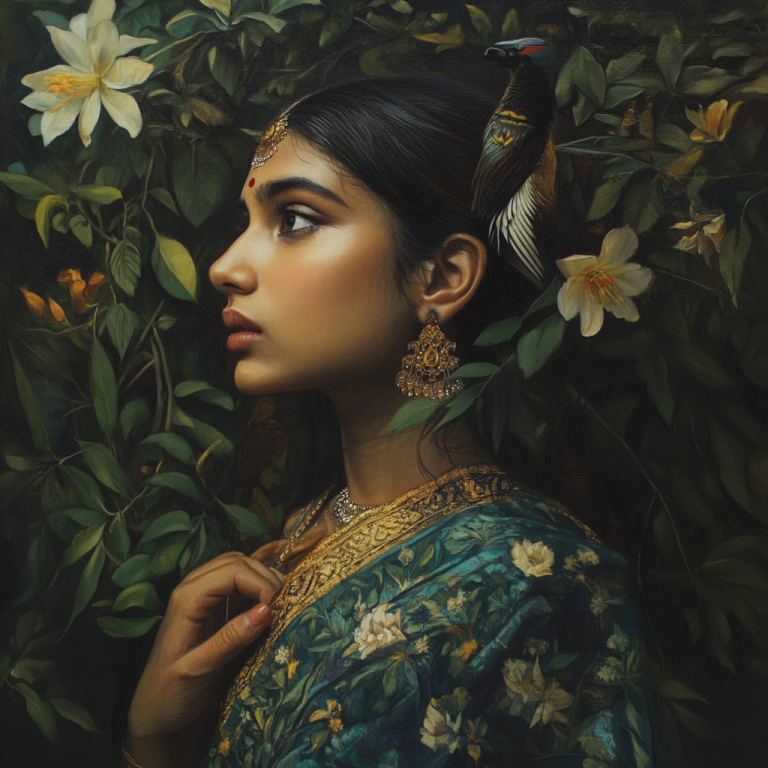
Vajranaga – The Asura Warrior and Father of Taraka
Vajranaga, a mighty Asura, was born to Diti and Kashyapa – Father of the Devas and Asuras, making him a direct descendant of one of the most powerful lineages in Hindu mythology. His life, from his birth to his eventual transformation into an ascetic and his role as the father of Taraka, exemplifies the complex interplay of divine boons, curses, and karmic retribution that underpin many mythological narratives.
The Birth of Vajranaga
The story of Vajranaga begins with Diti, the mother of the Asuras. Distressed by the continuous slaughter of her sons by Indra, the king of the Devas and ally of the Maruts, Diti prayed for a son who could shift the cosmic balance in favor of the Asuras. Distressed by the continuous slaughter of her sons by Indra, the king of the Devas, Diti sought a boon from her husband Kashyapa. She desired a son who would be powerful enough to defeat Indra and avenge the deaths of her children. Kashyapa granted her wish, but her attempt to fulfill the associated penance was thwarted by Indra, resulting in the premature birth of the Maruts, who became companions of Indra instead of his enemies.
Undeterred by her initial failure, Diti once again turned to Kashyapa and prayed fervently for a son who could fulfill her desire. After performing a penance for ten thousand years, she gave birth to Vajranaga, a son whose body was as strong as Vajra, the thunderbolt weapon wielded by Indra.
Vajranaga’s Assault on the Heavens
When Vajranaga reached adulthood, he inherited his mother’s desire for vengeance. Armed with immense strength and unwavering resolve, he launched a ferocious assault on Svarga (the heavens), defeating the Devas and capturing Indra himself. He dragged Indra by his hair and presented him before Diti, intending to kill him as an offering to his mother.
However, the intervention of Lord Brahma and Kashyapa changed the course of events. They persuaded Vajranaga to spare Indra’s life, arguing:
“A man who has been humiliated is as good as dead. By sparing his life, you have already achieved the ultimate victory.”
Moved by their words and out of respect for his father and grandfather, Vajranaga released Indra. In recognition of his magnanimity, Brahma and Kashyapa granted Vajranaga a boon, transforming him into a great ascetic.
| Event | Significance |
|---|---|
| Capture of Indra | Showcased Vajranaga’s might and determination to avenge the Asuras. |
| Brahma’s Intervention | Highlighted the theme of restraint and the value of forgiveness in Hindu mythology. |
| Granting of Boons | Transformed Vajranaga’s life, steering him toward asceticism and higher spiritual goals. |
Marriage to Varangi and Indra’s Revenge
Vajranaga married Varangi, a devoted and virtuous woman. Their life together was harmonious until Vajranaga decided to retreat to the forest to perform a penance for a thousand years. During his absence, Indra, unable to forget the humiliation he had suffered, saw an opportunity to exact revenge.
Indra, using his ability to assume different forms, subjected Varangi to relentless torment:
- Monkey: Uprooted all the trees in her garden.
- Sheep: Devoured all the grass in her hermitage.
- Snake: Attempted to bite her to death.
- Storm Clouds: Unleashed torrential rains to destroy her hermitage.
Varangi, despite her suffering, remained steadfast in her penance and did not retaliate. Her resilience and devotion drew the admiration of her husband when he returned.
| Form Taken by Indra | Act of Torment |
|---|---|
| Monkey | Destroyed the garden. |
| Sheep | Devoured the grass. |
| Snake | Tried to kill Varangi. |
| Storm Clouds | Flooded her hermitage. |
The Birth of Taraka
Upon returning and learning of Varangi’s plight, Vajranaga was enraged. Determined to avenge the injustice, he prayed to Lord Brahma for a son who could crush the Devas and torment Indra as a retribution for their suffering. Brahma granted his wish, declaring:
“You shall have a son named Taraka, who will be invincible to the Devas and a source of great terror for them.”
Varangi bore the fetus in her womb for a thousand years, during which time her resolve and suffering fueled the strength of her unborn child.
When Taraka was finally born, he inherited his father’s might and his mother’s resilience. Taraka would later become one of the most fearsome Asura entities, known for obtaining boons that made him nearly invincible to the gods.
His exploits and eventual downfall at the hands of Skanda are captured in the legend of Taraka and further detailed in the tale of Shiva’s slaying of Taraka, a defining moment in the cosmic battle between dharma and adharma.
| Aspect of Taraka’s Birth | Significance |
|---|---|
| Thousand-Year Gestation | Symbolized immense strength and determination imbued into Taraka by his parents. |
| Role as an Asura | Fulfilled Vajranaga’s desire for a successor who could avenge his family’s honor. |
Connections to Other Entities and Stories
| Entity/Story | Connection to Vajranaga and Taraka |
|---|---|
| Diti | Mother of Vajranaga, whose prayers and penance led to his birth. |
| Kashyapa | Father of Vajranaga, a progenitor of both the Devas and Asuras. |
| Indra | Humiliated by Vajranaga, sought revenge through the torment of Varangi. |
| Brahma | Intervened in Vajranaga’s life and later granted the boon for Taraka’s birth. |
| Skanda (Karthikeya) | The divine warrior destined to slay Taraka the Asura, fulfilling the prophecy set in motion by Vajranaga’s prayer and Varangi’s penance. |
Themes and Symbolism in Vajranaga’s Story
| Theme | Symbolism |
|---|---|
| Revenge and Forgiveness | Vajranaga’s sparing of Indra highlights the importance of restraint and wisdom. |
| Devotion and Penitence | Varangi’s unwavering penance symbolizes resilience and the rewards of steadfast devotion. |
| Karma and Retribution | The birth of Taraka reflects the cyclical nature of karma, where actions lead to inevitable consequences. |
Legacy of Vajranaga
Vajranaga’s story bridges the themes of divine justice, familial loyalty, and the struggle between the Devas and Asuras. His life and choices shaped the course of events in Hindu mythology, setting the stage for the birth of Taraka and his eventual defeat by Skanda, the son of Shiva and Parvati – The Consort of Shiva. Vajranaga remains a symbol of strength tempered by wisdom, illustrating that even great power must align with dharma to achieve lasting legacy.
Sources & further reading
These themes are explored in greater depth across the following authoritative resources:
- Britannica, Asura
- Britannica, Naga
- Mythopedia, Hindu Mythology
- Internet Sacred Text Archive, Mahabharata
- Wendy Doniger, Hindu Myths (Penguin Classics, 1975)
External resources for further reading. Apam Napat is not affiliated with these publishers; citation does not imply endorsement.
Frequently asked questions
Who was Vajranaga in Hindu mythology?
Who were Vajranaga's parents?
Who was Vajranaga's son?
What did Vajranaga do to Indra?
Based on the classical texts of Hindu mythology, see our sources.