
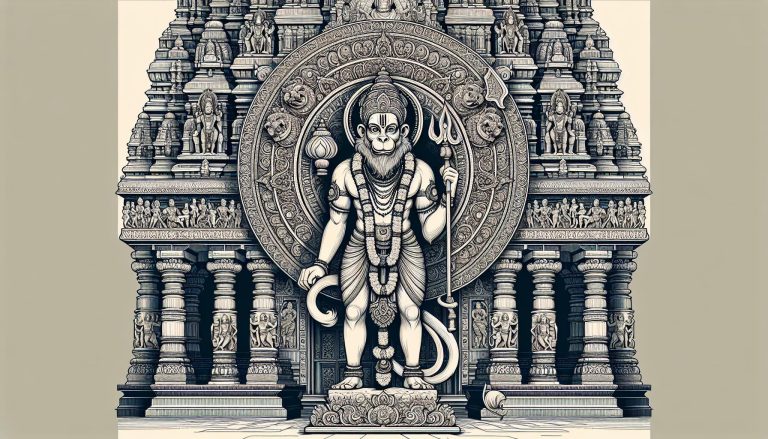
From temple carvings to modern-day festivals, Hanuman’s presence is ubiquitous. His unwavering loyalty to Lord Rama and his incredible feats of strength and wisdom symbolize the virtues that many aspire to. By exploring Hanuman’s historical and cultural impact, we can gain a deeper understanding of how mythology shapes and reflects the values of a civilization.
Mythological Background of Hanuman
Hanuman’s mythological background comes from the Indian epic Ramayana, written by Valmiki – Composer of Ramayana. According to the epic, Hanuman is the son of Anjana and Vayu, the wind god. His birth is considered divine, characterized by immense strength and a monkey-like appearance.
Hanuman plays a crucial role in the Ramayana. He helps Lord Rama rescue his wife, Sita, from the demon king Ravana. Hanuman’s acts of bravery, like flying across the ocean and setting Lanka on fire, are pivotal moments in the epic.
The Ramayana describes Hanuman’s unwavering devotion to Lord Rama. This devotion makes him a symbol of loyalty and selfless service. Hanuman’s story teaches values like courage, faith, and dedication.
Hanuman’s mythological background extends beyond the Ramayana. He appears in other texts like the Mahabharata – The Great Epic and various Puranas. These texts reinforce his role as a divine protector and a figure of immense power.
Historical Texts and References

Hanuman’s presence in Indian history is deeply entrenched in various ancient texts and religious epics. His depiction reveals much about cultural and spiritual narratives in Hinduism.
Hanuman in Ancient Scriptures
Hanuman’s origins trace back to pre-Vedic religion and the Rig Veda. He’s connected to the cult of yakshas, or earth-spirits. His story features heavily in the Ramayana, believed to be composed by the 3rd century BCE. This epic, penned by Valmiki, chronicles Prince Rama’s quest to rescue his wife Sita, with Hanuman playing a crucial role. Additionally, the Mahabharata introduces him as a half-brother of Bhima, showcasing his connections to other myths. The Skanda Purana presents him as the son of Shiva and Vishnu’s avatar Mohini, reinforcing his divine lineage.
Hanuman in Religious Epics
The Ramayana remains the most significant text detailing Hanuman’s exploits. Known for his unwavering devotion to Lord Rama, Hanuman’s heroic deeds, such as flying across the ocean and burning Lanka, highlight his strength and dedication. Beyond the Ramayana, his presence in the Mahabharata and other Puranas further cements his role as a divine protector. These narratives not only tell tales of his bravery but also embed values of loyalty and selfless service that continue to inspire.
Archaeological Evidence

Hanuman’s connection to Indian history finds validation in various archaeological sources. Temple inscriptions and ancient sculptures reveal significant details.
Temple Inscriptions
Temple inscriptions and manuscripts discovered across Indonesian and Malay islands prominently feature Hanuman. These inscriptions often depict stories from the Ramayana, showcasing religious and cultural practices of ancient India. The presence of Hanuman in these texts indicates his wide-reaching influence beyond Indian subcontinent.
Ancient Sculptures and Artifacts
The earliest known sculptures of Hanuman date back to the Gupta Empire around 500 CE. Initially, artists did not depict him as a standalone figure. However, he eventually evolved into a prominent character, often shown with one hand raised, one foot suppressing a demon, and an erect tail. These sculptures, found in temple ruins, underscore his significance in Hindu temples and his growing prominence in religious art.
Iconography
Hanuman’s iconography is derived from Valmiki’s Ramayana. His depiction in art consistently reflects his heroic attributes, symbolizing strength and devotion. The constant visual representation of key characteristics such as his mighty strength and unwavering devotion provides rich insights into the religious and cultural symbolism associated with Hanuman in Indian history.
Hanuman’s Influence on Indian Culture
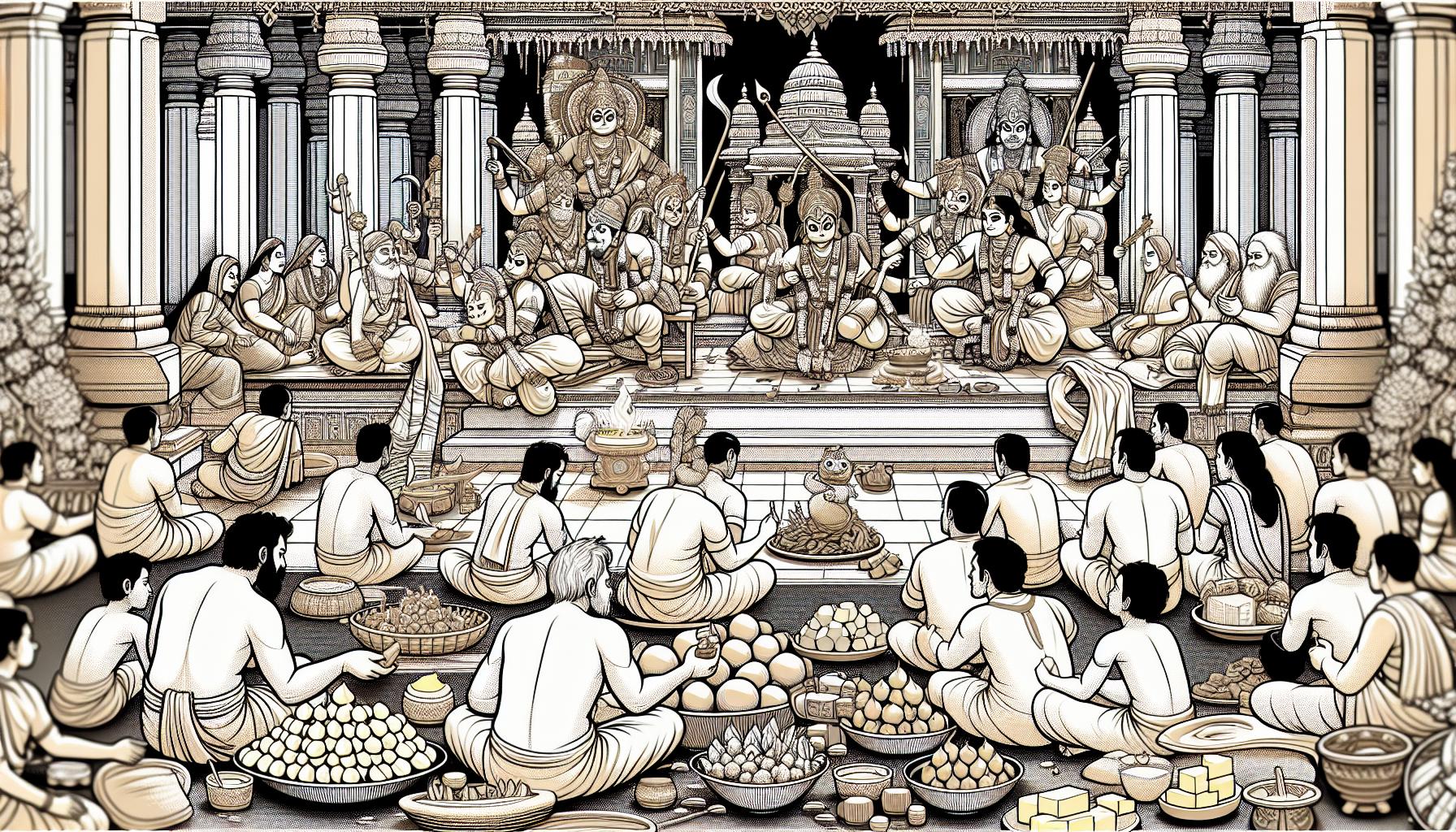
Hanuman’s influence permeates various aspects of Indian culture, with significant manifestations in festivals, celebrations, and traditional stories.
Festivals and Celebrations
Hanuman Jayanti, celebrated annually, marks Hanuman’s birth and demonstrates his importance in Indian culture. Devotees observe rituals, recite Hanuman Chalisa, and relive Hanuman’s legendary deeds.
Temples, particularly those dedicated to Hanuman, witness large gatherings during these celebrations. In Andhra Pradesh, Karnataka, and Tamil Nadu, devotees offer butter and fruits, signifying Hanuman’s fondness for simplicity and humility.
Traditional folk performances often portray episodes from the Ramayana, integrating Hanuman’s heroic acts. Ritualistic reenactments of the epic can be seen in Ramlila performances across North India, where Hanuman’s feats elicit admiration and inspire the audience.
Hanuman in Folk Tales and Traditions
Hanuman’s stories, retold through centuries, are embedded in Indian folk traditions. Villages often narrate tales of Hanuman’s bravery and devotion to Lord Rama, teaching moral values and cultural ethos.
Folktales, such as the story of Hanuman bringing the Sanjeevani herb, emphasize themes of loyalty and intelligence. These stories, shared through generations, reinforce Hanuman’s cultural significance.
Hanuman masks and puppets in performance arts like Yakshagana and Tholu Bommalata in South India highlight his physical strength and nobility. These artistic representations contribute to his legendary status and ongoing cultural impact.
Hanuman’s enduring presence in literature, art, and daily life reflects the deep-rooted connection to Indian culture, ensuring his legacy continues to inspire and guide future generations.
The Role of Hanuman in Modern India
Hanuman continues to influence various aspects of modern India, reflecting both cultural depth and contemporary relevance.
Political Symbolism
Political parties often use Hanuman’s image to gain support, invoking his virtues of loyalty and strength. For example, during the 2019 parliamentary elections, Hanuman’s figure became prominent in political rhetoric. His association with unwavering devotion and righteousness resonates with many, making him an appealing symbol in political campaigns.
Popular Culture Representations
Hanuman features prominently in Indian cinema, television, and literature. Movies like “Bajrangbali” (1976) and animated series like “The Adventures of Hanuman” showcase his heroic exploits. In 2005, the animated movie “Hanuman” gained widespread popularity, highlighting his relevance to children and adults alike. Modern literature also frequently references Hanuman, reinforcing his timeless appeal and moral lessons.
Conclusion
Hanuman’s connection to Indian history is both profound and multifaceted. His enduring legacy in literature art and daily life underscores a deep-rooted cultural significance. From ancient scriptures to modern media Hanuman’s virtues of loyalty strength and bravery continue to inspire. His presence in political symbols and popular culture reinforces his timeless appeal. As we celebrate Hanuman’s impact on Indian history we recognize his role in shaping moral values and cultural identity for generations to come.
Sources & further reading
These themes are explored in greater depth across the following authoritative resources:
- Encyclopaedia Britannica, Hindu Mythology
- Internet Sacred Text Archive, Hinduism
- Mythopedia, Hindu Mythology
- Harvard Pluralism Project, Hindu Tradition
- Wendy Doniger, The Hindus: An Alternative History (Penguin, 2009), ISBN 978-0143116691
External resources for further reading. Apam Napat is not affiliated with these publishers; citation does not imply endorsement.
Based on the classical texts of Hindu mythology, see our sources.