
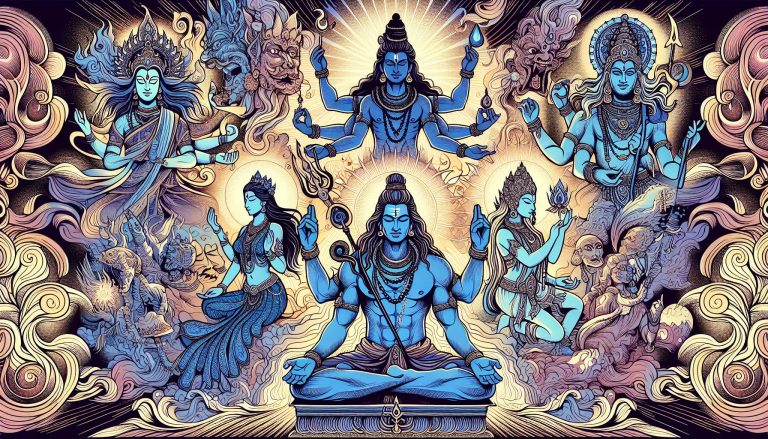
Interpreting these myths allegorically can transform how we understand them. For instance, the epic battles in the Mahabharata – The Great Epic aren’t just about physical warfare; they symbolize the eternal struggle between good and evil within us. By exploring these allegories, we can uncover timeless wisdom that remains relevant in our modern lives.
Understanding Allegory in Hindu Myths
Allegorical interpretations of Hindu myths involve finding deeper meanings and symbolic connections within the narratives. This approach posits a one-to-one correspondence between mythical elements and the ideas they represent. By examining these stories, one can uncover layers of meaning that reflect philosophical and theological concepts.
For instance, the concept of līlā often appears in Hindu mythology. Traditionally translated as “play” or “sport,” līlā embodies much more than simple recreation. Scholars like David R. Kinsley have studied this term deeply, revealing its complex nature that combines elements of divine play, creation, and the cyclical process of the universe.
In many cases, characters and events in Hindu myths serve as metaphors for broader ideas. For example, the battle between Rama and Ravana in the Ramayana – Epic of Hinduism can be seen as a struggle between dharma (righteousness) and adharma (unrighteousness). By interpreting such myths allegorically, one grasps the underlying messages about moral and ethical dilemmas applicable to everyday life.
These allegorical interpretations aren’t limited to Hinduism alone. The story of the nymph Daphne being pursued by Phoebus Apollo in Greek mythology, where Daphne represents dawn and Apollo the morning sun, also demonstrates how myths convey natural phenomena and human emotions through symbolic narratives.
Understanding these allegories enriches the appreciation of Hindu myths. It transforms seemingly simple tales into profound reflections on life, existence, and the cosmos. By delving into the symbolic meanings, one can uncover timeless wisdom that continues to influence contemporary thought.
Major Hindu Myths and Their Allegorical Meanings
Hindu myths, rich in symbolism, offer profound insights through their allegorical interpretations. Major epics like the Mahabharata, the Ramayana, and the Bhagavad Gita encapsulate essential life lessons and spiritual wisdom.
The Mahabharata
The Mahabharata is an epic story of conflict between the Kauravas and the Pandavas. This narrative is laden with allegorical meanings that reflect various facets of human life and moral struggles.
- Dharma and Adharma: The central war between the Pandavas and the Kauravas is often seen as a manifestation of the universal struggle between good (dharma) and evil (adharma). The Pandavas embody righteousness, while the Kauravas symbolize unrighteousness.
- Inner Battles: Characters represent different aspects of human nature. Arjuna’s hesitation to fight signifies internal ethical dilemmas, and his dialogue with Krishna represents the quest for self-realization and righteous action.
- Moral Complexity: The epic explores the nuanced nature of dharma. Bhishma – The Grand Old Man of The Kurus, Drona, and Karna highlight that individuals embodying virtues can still act unrighteously under specific circumstances, showcasing the complexity of moral decisions.
The Ramayana
The Ramayana narrates the journey of Rama to rescue Sita from the demon king Ravana. This tale is dense with allegorical interpretations that teach timeless virtues.
- Virtue and Vice: Rama symbolizes dharma and ideal virtues, including duty and integrity. Conversely, Ravana represents adharma, embodying ego and malevolence even though his brilliance and capabilities.
- Inner Demons: The characters reflect internal battles. Hanuman’s unwavering devotion signifies the strength of faith and dedication, while Sita’s purity and endurance underscore the resilience of virtue against adversity.
- Roles and Responsibilities: The interactions in the epic emphasize the duties of different roles in society. Rama’s commitment to his father’s promise and Sita’s loyalty epitomize the significance of adhering to one’s responsibilities.
The Bhagavad Gita
The Bhagavad Gita, a conversation between Arjuna and Krishna during the Mahabharata, serves as a spiritual and philosophical guide.
- Self-Realization: The dialogue focuses on understanding the self and achieving self-realization. Krishna teaches Arjuna about the eternal soul, beyond the physical body and life-death cycle.
- Karma Yoga: The Gita introduces the concept of Karma Yoga (the yoga of action). It urges individuals to perform their duties without attachment to the results, emphasizing selfless action.
- Detachment: Krishna advises Arjuna on maintaining detachment while engaging in worldly duties. This teaches the balance between fulfilling obligations and remaining unattached to the fruits of action, promoting equanimity.
These allegorical interpretations reveal deeper wisdom embedded in these Hindu epics, fostering a richer understanding of morality, duty, and spirituality.
Allegories in Hindu Cosmology
Hindu cosmology offers profound allegories that illustrate the universe’s origins, transformation, and eventual dissolution. These narratives provide symbolic insights into existence and spiritual truths.
Creation Myths
Creation myths in Hindu cosmology provide allegorical frameworks that explain the universe’s origins. The Rigveda’s Hiranyagarbha Sukta describes the universe emerging from a golden egg, symbolizing potential and differentiation. Some texts explain that Purusha (cosmic being) and Prakriti (nature) created this embryo, with Brahma later emerging to propagate life. The Puranas offer various creation theories, often depicting Brahma as the creator, with Mount Meru acting as the universe’s axis. These allegories reflect the interconnectedness of divine and cosmic elements.
End of the World Myths
Hindu end of the world myths convey deep allegorical meanings about cosmic cycles. Maha Pralaya, or great dissolution, marks the universe’s end, symbolizing the cyclic nature of creation and destruction. According to Hindu texts, Shiva, the destroyer, dances the Tandava, leading to universal destruction. This act represents metaphysical concepts of time, transformation, and the inevitability of change. These allegories underscore the impermanence of the material world and the continuity of the cosmic cycle.
Symbolism and Metaphors in Hindu Deities
Hindu mythology brims with rich symbolism, offering profound lessons through its deities. Each god and goddess embodies different aspects of life, making their stories deeply allegorical.
Vishnu’s Incarnations
Vishnu’s ten incarnations, known as the Dashavatara, each symbolize unique struggles and virtues.
- Matsya (fish) highlights the need for preservation and survival, often during chaos.
- Kurma (tortoise) illustrates transformation and adaptation, showcasing resilience.
- Varaha (boar) signifies strength and courage, particularly in overcoming daunting challenges.
- Narasimha (half-man, half-lion) focuses on protection and annihilation of evil, defending the innocent.
- Vamana (dwarf) represents humility and the essential value of self-restraint.
Shiva’s Manifestations
Shiva, known as the destroyer, possesses multiple forms that convey deep metaphors.
- Nataraja (Lord of Dance): Symbolizes the cyclic nature of creation and destruction. The cosmic dance represents life’s rhythmic flow and the maintenance of cosmic balance.
- Ardhanarishvara (half-shiva, half-parvati): Embodies the duality and unity of male and female principles, signifying equilibrium and harmony.
- Rudra (wrathful form): Illustrates the destructive power necessary for renewal and transformation. It’s a metaphor for purging impurities and fostering growth.
Goddess Durga and Shakti
Goddess Durga, an embodiment of Shakti, symbolizes female strength and divine power.
- Durga: Reflects the triumph of good over evil. With multiple arms wielding various weapons, she signifies the omnipotence needed to combat darkness.
- Kali: Represents time and change, often illustrating the destruction of the ego. Her fierce form serves as a potent reminder of life’s transient nature.
- Parvati: Personifies devotion, motherhood, and nurturing qualities. Her multiple forms, including Annapurna and Meenakshi, highlight different facets of womanhood and divine love.
This rich symbolism within Hindu deities provides timeless lessons, adding depth to their mythological narratives.
Modern Interpretations and Relevance
Hindu myths continue to influence modern society, offering relevance through various interpretations. These myths provide profound insights into human psychology and social structures.
Psychological Perspectives
Hindu myths help understand human psychology and the human condition. They reveal complexities of human nature, emotions, and the struggle between good and evil. By examining myths like the battle between Rama and Ravana in the Ramayana, I see reflections of internal conflicts people face every day. This understanding aids in developing intellectual tools to explore our mythic self-understandings and cultural values.
Sociocultural Reflections
Hindu myths embody cultural attitudes, values, and behaviors of the societies where they originated. In today’s world, these stories serve as a lens to view and reclaim cultural identities. Modern retellings of myths, such as in literature and films, allow me and others to connect with, reclaim, and redefine cultural narratives. They interact with contemporary society, adding layers of meaning and relevance to traditional tales.
Conclusion
Exploring Hindu myths through an allegorical lens offers profound insights into the human condition and societal values. By decoding the symbolism in texts like the Mahabharata and Ramayana, we uncover timeless lessons on morality and duty. The rich world of Hindu cosmology and the divine narratives of deities like Vishnu and Shiva highlight the cyclical nature of existence and the virtues we strive for.
Goddesses such as Durga and Kali illustrate the multifaceted strength and power of the feminine divine. These myths not only shape cultural identities but also resonate deeply with modern societal structures and human psychology. Contemporary retellings in literature and film breathe new life into these ancient stories, allowing us to connect with our heritage while redefining its relevance. Through this exploration, we gain a deeper understanding of the eternal struggle between good and evil and the complexities of human nature.
Sources & further reading
These themes are explored in greater depth across the following authoritative resources:
- Internet Sacred Text Archive, Rig Veda (Griffith translation)
- Internet Sacred Text Archive, Upanishads
- Britannica, Veda
- Britannica, Upanishad
- Patrick Olivelle, The Early Upanishads (Oxford University Press, 1998)
External resources for further reading. Apam Napat is not affiliated with these publishers; citation does not imply endorsement.
Frequently asked questions
What does lila mean in Hindu mythology?
How do allegorical interpretations of Hindu myths work?
What does the Mahabharata symbolize allegorically?
Who studied lila in Hindu allegorical thought?
Based on the classical texts of Hindu mythology, see our sources.