
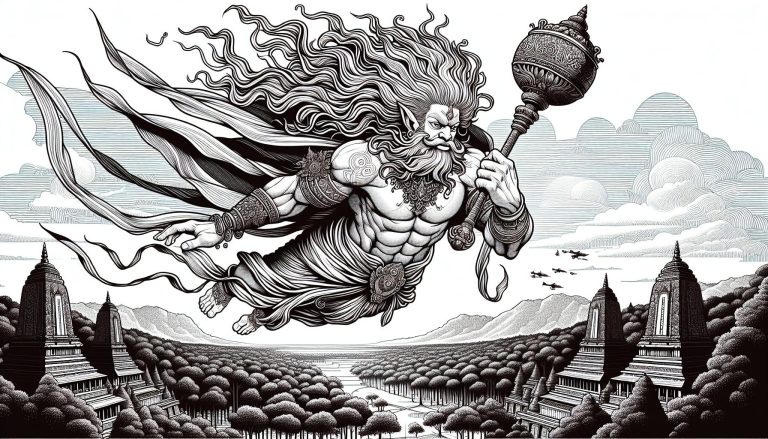
As I delve into Hanuman’s role in the Ramayana, I can’t help but marvel at his multifaceted personality. He’s not just a warrior but also a wise counselor, a loyal friend, and a symbol of selfless devotion. Through his actions and choices, Hanuman teaches us valuable lessons about courage, loyalty, and the power of faith. Let’s explore how this extraordinary character shapes the narrative and leaves an indelible mark on this timeless tale.
Overview Of Hanuman In Ramayana
Hanuman, a pivotal figure in the Ramayana, stands out due to his diverse roles and extraordinary abilities. As a devoted follower of Lord Rama, Hanuman’s journey showcases his unmatched loyalty and courage. His actions significantly influence the epic’s progression, illustrating themes of devotion, strength, and intelligence.
In the narrative, Hanuman’s capabilities complement his quest to aid Rama. Gifted with supernatural powers, he performs incredible feats. For example, he leaps across the ocean to reach Lanka and confront demons, underscoring his physical prowess and undying spirit. Furthermore, his ability to change size and shape, provided by the wind god Vayu, adds to his tactical advantage.
Hanuman’s presence also highlights his strategic thinking. Tasked with finding Sita, he operates as both a messenger and a spy. His initiative to scout Lanka, gather intelligence, and convey crucial information to Rama exhibits his astuteness. Additionally, his diplomatic finesse is evident when he interacts with Sita and other key characters, enhancing the narrative’s depth.
There’s a deep emotional layer to Hanuman’s character. His unwavering faith in Lord Rama and his mission emphasizes the significance of devotion. This bond between Rama and Hanuman stands as a powerful testament to their mutual respect and affection, enriching the epic’s fabric.
Throughout the Ramayana, Hanuman’s deeds shape the story’s outcome. Whether it’s his confrontation with Ravana’s forces or his compassionate assistance to allies, Hanuman’s influence is profound. His legend not only impacts the immediate plot of Ramayana but also leaves a lasting impression on subsequent retellings and interpretations.
Hanuman’s Origins And Early Life

Hanuman is the son of Anjana, a half-monkey, and Vayu, the wind god. According to legend, Anjana prayed to the gods for a child, and Vayu, pleased by her devotion, sent a spoonful of heavenly pudding called payasam to her. As a result, Hanuman was born. Initially, he appeared as a monkey-like child but later was considered a god because of Vayu’s intervention.
As a young child, Hanuman mistook the rising sun for a ripe fruit and tried to grab it. This act led Indra – The King of Heaven, the king of gods, to strike him with a thunderbolt, disfiguring his chin and earning him the name Hanuman, which means “broken jaw.” Hanuman also faced a curse from powerful sages, who made him forget his magical powers until someone reminded him.
Key Episodes In Ramayana Featuring Hanuman
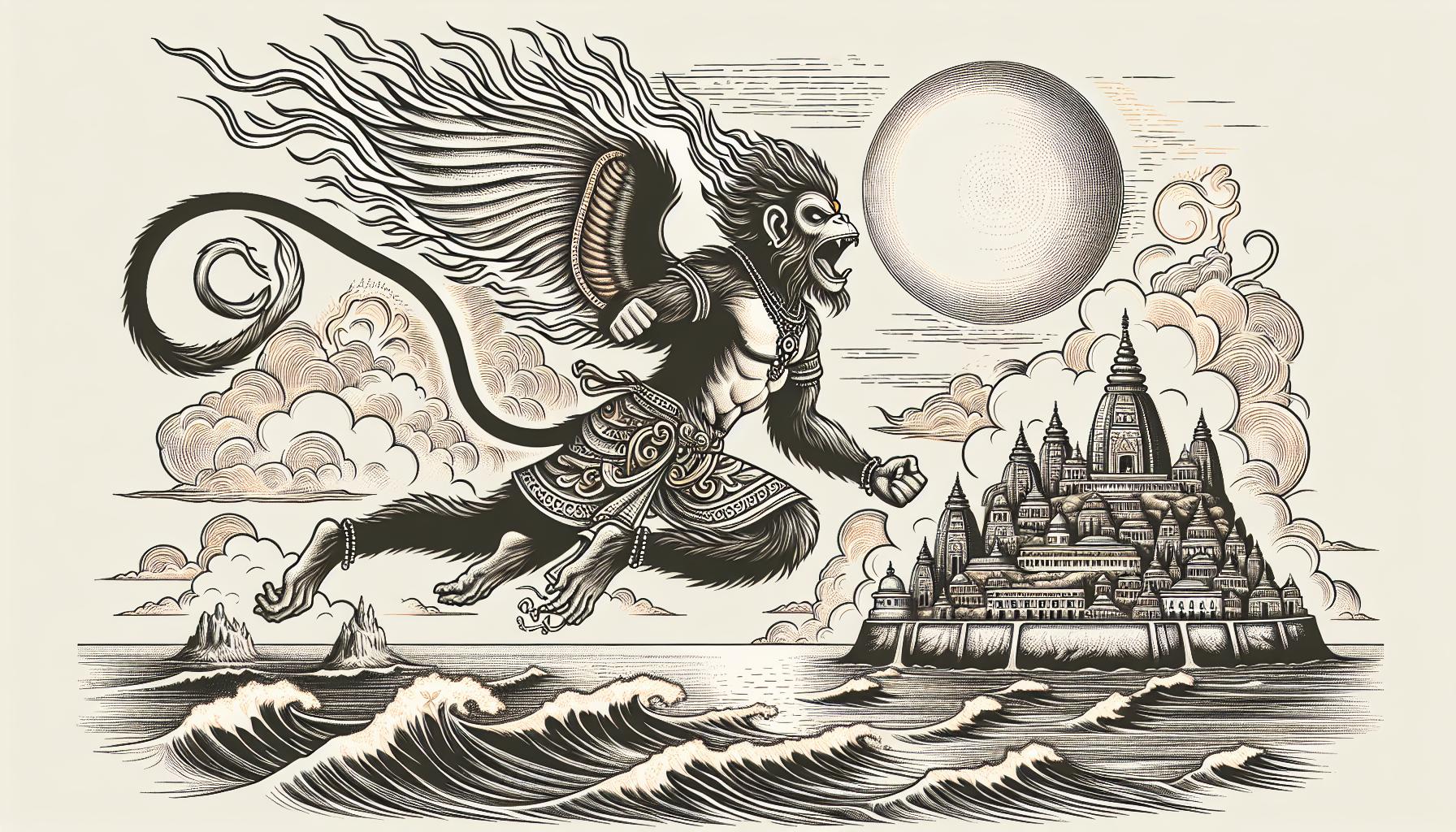
Hanuman, the monkey god and devoted ally of Lord Rama, plays a crucial role in several key episodes of the Ramayana. He contributes significantly to Lord Rama’s quest to rescue Sita and defeat the demon king Ravana.
Meeting With Lord Rama
Hanuman first meets Rama during the final year of Rama’s 14-year exile. This pivotal encounter sets the stage for Hanuman’s involvement in Rama’s mission. When I met Rama, my loyalty and dedication to his cause were immediate, marking the beginning of a powerful alliance.
The Search For Sita
Hanuman is tasked by Sugriva, the monkey king, with finding Sita. He journeys to the southern tip of India, where he faces the ocean and the island of Lanka. Using my divine powers, I transformed into the size of a mountain and flew across the channel to Lanka. Upon arriving, I found Sita in a grove, guarded by demon warriors. After speaking with her about my mission, I offered to rescue her, but she insisted that Rama should be the one to save her.
The Burning Of Lanka
One of Hanuman’s most iconic actions is the burning of Lanka. After discovering Sita’s location, I was captured by Ravana’s forces. I used my strength and cunning to escape, setting fire to the city as a demonstration of my power and as a warning to Ravana. This act of defiance and strategy showcased my unwavering devotion to Rama and Sita.
Hanuman’s Devotion And Virtues
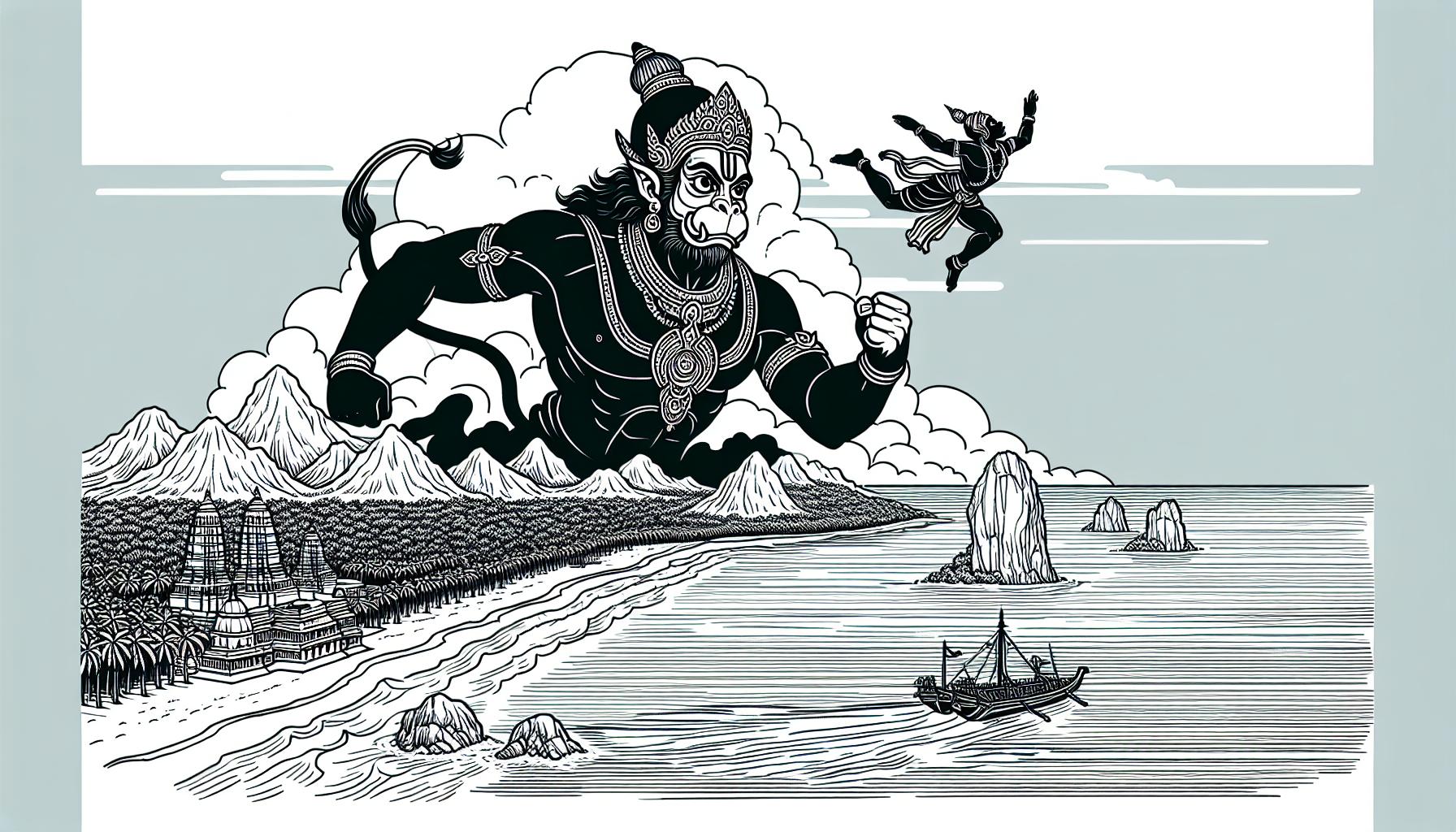
Hanuman’s role in the Ramayana showcases a profound commitment to Lord Rama, underpinned by his remarkable virtues. His strength, valor, and unwavering devotion remain central to his character.
Strength And Valor
Hanuman’s superhuman strength ensures he’s a formidable warrior in Lord Rama’s cause. With incredible feats such as leaping across the ocean to Lanka, his valor becomes legendary. He displays unmatched bravery, whether burning Lanka or battling Ravana’s forces. Hanuman’s ability to maintain composure and courage under pressure highlights his superior emotional intelligence.
Unwavering Devotion
Hanuman’s devotion to Rama remains steadfast and profound. His loyalty never wavers, always prioritizing Rama’s mission over his own safety. This devotion reflects his selflessness and dedication. Hanuman’s spiritual growth also shines through his service, embodying virtues of humility and wisdom. His actions always aim at the greater good, demonstrating a commitment that inspires reverence and admiration in the epic’s narrative.
Cultural Significance Of Hanuman In Ramayana
Hanuman’s cultural significance extends well beyond the Ramayana. He’s not only a pivotal character in the epic but also a revered deity symbolizing strength and devotion. Millions of Hindus worship Hanuman as the ideal devotee (bhakta) of Rama, embodying a perfect blend of shakti (strength) and bhakti (devotion). His life inspires many, particularly wrestlers and martial artists in India, who see him as a paragon of physical and spiritual excellence.
Hanuman’s influence permeates various aspects of Indian culture. Artists often depict him as a powerful warrior with supernatural abilities, his image gracing temples, literature, and art. Festivities and religious ceremonies frequently include prayers and hymns dedicated to him, emphasizing his role as a protector and a source of courage and perseverance.
Hanuman’s character also teaches profound moral lessons. His unwavering loyalty to Rama, his bravery in the face of overwhelming odds, and his humble service-minded attitude set a standard of ethical conduct and spiritual devotion. In educational contexts, stories of Hanuman help instill values such as selflessness, courage, and faith in young minds.
Devotional Practices
Numerous devotional practices center around Hanuman. Followers chant the Hanuman Chalisa, a 40-verse hymn praising his virtues and recounting his deeds. Many visit Hanuman temples, especially on Tuesdays and Saturdays, seeking his blessings for strength and protection. His larger-than-life persona and his role as a divine protector make him an enduring figure of worship and moral instruction in Hindu culture.
Conclusion
Hanuman’s role in the Ramayana is a testament to his unparalleled devotion and strength. His unwavering loyalty to Lord Rama and his heroic feats make him a central figure in the epic. Beyond the Ramayana, Hanuman’s cultural significance continues to inspire millions. His image as a symbol of courage and perseverance is deeply embedded in Indian culture.
Hanuman teaches us timeless lessons of bravery, humility, and ethical conduct. His story isn’t just a mythological tale; it’s a guide for living a life of devotion and righteousness. Devotional practices like chanting the Hanuman Chalisa and visiting temples keep his legacy alive, offering strength and protection to devotees.
Sources & further reading
These themes are explored in greater depth across the following authoritative resources:
- Encyclopaedia Britannica, Hindu Mythology
- Internet Sacred Text Archive, Hinduism
- Mythopedia, Hindu Mythology
- Harvard Pluralism Project, Hindu Tradition
- Wendy Doniger, The Hindus: An Alternative History (Penguin, 2009), ISBN 978-0143116691
External resources for further reading. Apam Napat is not affiliated with these publishers; citation does not imply endorsement.
Based on the classical texts of Hindu mythology, see our sources.