
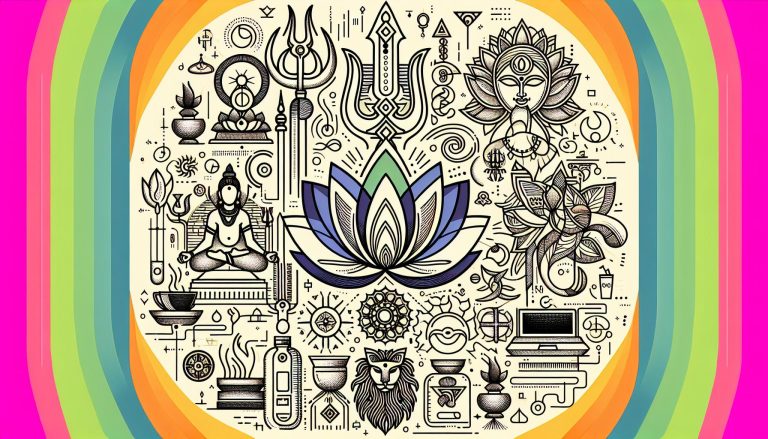
I’ve always found these symbols fascinating, not just for their visual appeal but for the stories and lessons they encapsulate. Understanding these symbols can provide profound insights into the values and beliefs that have shaped Hindu culture for millennia. Join me as we explore the intricate world of Hindu deity symbols and uncover the wisdom they hold.
Overview Of Hindu Deity Symbols
Hindu deity symbols embody complex meanings and teachings. Each deity has distinct symbols that convey their attributes and stories. These symbols aren’t mere decorations; they hold profound significance.
Common Symbols
Trident (Trishula)
Shiva’s main symbol is the trident. It represents creation, preservation, and destruction. The prongs signify these cosmic functions.
Lotus Flower
Lakshmi, Saraswati – The Goddess of Learning and Wisdom, and Brahma – The Creator are often shown with a lotus flower. This flower stands for purity and spiritual enlightenment.
Conch Shell (Shankha)
Vishnu is frequently depicted with a conch shell. The sound it produces signifies cosmic creation.
Animal Symbols
Garuda
Vishnu’s mount, Garuda, symbolizes strength and vigilance. This eagle-like creature appears in many Vishnu depictions.
Bull (Nandi)
Nandi, the bull, accompanies Shiva. It denotes strength, truth, and righteousness.
Weapon Symbols
Sudarshana – Ancestor of Rama Chakra
Vishnu holds this spinning disk weapon. It’s a symbol of time and righteousness.
Bow and Arrow
Rama and Krishna – An Incarnation of Vishnu, avatars of Vishnu, often wield bows and arrows. These weapons represent focus and the removal of obstacles.
Hand Gestures (Mudras)
Abhaya Mudra
Seen in many deities, the Abhaya Mudra represents protection, peace, and dispelling fear.
Varada Mudra
A gesture of offering, granting, and compassion; often shown with Ganesha and Lakshmi.
Effects of Symbols
Hindu deity symbols influence art, architecture, and rituals. Temples feature intricate carvings of these symbols. Festivals and ceremonies often involve symbolic representations like clay lamps (diyas) and rangoli designs. Understanding these symbols offers insights into Hindu beliefs and traditions.
Common Hindu Deity Symbols
Hindu deity symbols carry deep spiritual and cultural significance. They offer insights into Hindu beliefs and traditions, often represented in art, architecture, and rituals.
Om
The Om symbol, also called Aum, is central in Hinduism. It represents the sound of the universe and begins many prayers and mantras. This sacred symbol conveys divine presence and cosmic unity.
Swastika
The Swastika symbolizes “good fortune” or “being joyful” in Sanskrit. It signifies luck and prosperity, linked to deities like Brahma, Vishnu, and Lakshmi. This symbol, marked by its distinctive design, is found in homes and temples to invoke positive energy.
Trishula
The Trishula, Shiva’s trident, symbolizes creation, preservation, and destruction. It represents Shiva’s control over universal forces, illustrating his power. The Trishula frequently appears in Shiva’s iconography, highlighting its importance.
Lotus
The Lotus symbolizes purity and enlightenment. Deities like Lakshmi and Saraswati often hold it, signifying their virtues and divine attributes. This flower’s ability to bloom in muddy waters without getting stained is a metaphor for spiritual emergence and purity.
Symbols Of Major Hindu Deities
Hindu deities are associated with symbols that hold profound meanings, transcending physical reality to embody spiritual principles. These symbols often appear in art, architecture, and ritual contexts.
Vishnu
Vishnu, the preserver and protector of the universe, carries symbols that signify his divine duties. The Sudarshana Chakra, his discus, represents the mind and the cosmic order he maintains. His conch shell, the Panchajanya, signifies the primordial sound of creation or ‘Om.’ Vishnu’s mace, the Kaumodaki, symbolizes strength and his ability to destroy evil. Meanwhile, the lotus he holds epitomizes divine purity and spiritual awakening. Vishnu’s mount, Garuda, an eagle, signifies vigilance and swift action against the forces of darkness.
Shiva
Shiva, known as “The Destroyer,” holds an essential place in Hinduism. Key symbols associated with him offer insights into his multifaceted nature.
Trident
Shiva’s trident, or Trishula, symbolizes creation, preservation, and destruction. Each prong represents one of these cosmic functions. The trident signifies that Shiva balances these universal forces. In many depictions, Shiva holds the trident, showing his role in maintaining cosmic order. The trident also symbolizes the removal of earthly troubles and illusion, freeing individuals to achieve higher spiritual goals.
Lingam
The Lingam represents Shiva’s formless nature and generative power. It signifies the womb from which life emerges, symbolizing both the origin and the entirety of the universe. Commonly found in temples and shrines, the Lingam serves as an object of devotion. It’s often accompanied by a Yoni, symbolizing Shakti, the divine feminine energy. Together, the Lingam and Yoni represent the union of the male and female principles, underscoring the interconnectedness of all existence.
Lakshmi
Lakshmi, the Hindu goddess of wealth and prosperity, holds significant reverence in Hindu culture. She is often depicted with various symbols that reflect her divine attributes and blessings.
Lotus Flower
The lotus flower in Lakshmi’s imagery signifies purity and spiritual enlightenment. Rooted in muddy waters, the lotus rises above the surface, symbolizing the journey from material existence to spiritual awakening. In many depictions, Lakshmi stands or sits on a fully bloomed lotus, representing her transcendence over obstacles and the realization of spiritual beauty. The flower’s unblemished bloom indicates divine perfection and detachment from the material world’s impurities.
Gold Coins
Lakshmi is frequently shown with gold coins flowing from her hands. These coins symbolize material and spiritual wealth. In iconography, the continuous flow of coins represents unending prosperity and abundance, directly linked to her role as the bestower of fortune and success. This imagery emphasizes the idea that true wealth encompasses not just material riches, but also spiritual richness and well-being. The gold coins serve as a reminder of the goddess’s ability to grant plentiful wealth, provided it’s received and used with righteousness and wisdom.
Saraswati
The goddess Saraswati, revered in Hinduism, symbolizes knowledge, music, and arts. Her associated symbols embody her divine attributes, enriching cultural and spiritual understanding.
Veena
Saraswati’s veena, a traditional string instrument, epitomizes artistic expression and harmony. The veena signifies the music of the cosmos, demonstrating that true artistry requires profound knowledge. Symbols of the veena in Hindu iconography illustrate the creation of sound and the cosmic order, integral to spiritual and cultural ceremonies.
Peacock
The peacock, often depicted alongside Saraswati, represents beauty and grace. Its vibrant feathers signify the colorful aspects of creativity and the importance of embracing life’s beauty. Peacocks in Hindu symbolism also denote wisdom and patience, reinforcing Saraswati’s divine qualities and her role in guiding seekers towards enlightenment.
Symbolic Meanings And Interpretations
Symbols associated with Hindu deities hold deep spiritual meanings. Each symbol conveys complex theological and philosophical ideas, making them essential for understanding Hindu spirituality.
Protection And Power
Many deity symbols represent protection and power. Durga’s lion symbolizes strength and bravery. Kali’s garland of skulls signifies destruction of ego and ignorance. Hanuman’s mace represents his immense strength and power, embodying divine protection for devotees. Vishnu’s Sudarshana Chakra signifies cosmic order and the power to eliminate evil.
Purity And Enlightenment
Symbols in Hinduism also convey purity and enlightenment. The lotus flower, linked with Lakshmi and Saraswati, represents purity and spiritual awakening. Shiva’s third eye signifies higher consciousness and inner vision. The conch shell blown in temples denotes the sound of Om, the primal sound leading to spiritual enlightenment.
Wealth And Prosperity
Symbols of wealth and prosperity are integral to Hindu deities. Lakshmi’s gold coins symbolize material and spiritual wealth, highlighting that true prosperity includes both dimensions. Ganesha’s elephant head signifies wisdom and success, ensuring blessings for new ventures. Kubera – The Wealthiest Yaksha’s mongoose represents wealth accumulation and protection from financial misfortune.
Each symbol, whether representing protective power, purity, enlightenment, or prosperity, enriches the spiritual and cultural world of Hinduism.
Contemporary Usage And Significance
Hindu deity symbols carry significant meaning in modern times, influencing various aspects of daily life and spirituality. Many people use these symbols in everyday items to invoke their divine qualities. For instance, households often place idols and symbols of deities like Ganesha and Lakshmi at entrances to invoke prosperity and protection.
Incorporating symbols, devotees wear pendants, rings, and bracelets featuring emblems like Om or Shiva’s trident. These serve not only as expressions of faith but also as protective talismans. Plus to personal jewelry, many people display symbols in business settings. Entrepreneurs use images of Lakshmi during Diwali for wealth and success, or place Saraswati symbols in educational institutions for wisdom.
Artists and designers integrate Hindu symbols into contemporary art and fashion. For example, traditional motifs like the lotus flower or the peacock feather appear in modern clothing, home décor, and tattoos, blending ancient symbols with current trends.
Several festivals highlight the relevance of deity symbols today. During Ganesh Chaturthi, individuals participate in crafting and immersing clay idols of Ganesha, symbolizing cycles of creation and dissolution. Navratri involves worshiping different forms of Goddess Durga, each associated with distinct symbols like the lion or trident. These celebrations are integral in preserving and promoting the continuous relevance of Hindu symbols.
So, Hindu deity symbols maintain a significant role in contemporary life, transcending their ancient origins to shape the spiritual, cultural, and material domains of modern society.
Conclusion
Hindu deity symbols continue to hold a significant place in both ancient and modern contexts. Their meanings transcend time influencing various aspects of life from spirituality to everyday culture. Whether displayed in homes worn as jewelry or integrated into art and business these symbols serve as a testament to their enduring power and relevance. They offer a unique blend of tradition and contemporary significance enriching our lives in multifaceted ways. As we engage with these symbols we connect with a rich cultural heritage that continues to inspire and protect us.
Sources & further reading
These themes are explored in greater depth across the following authoritative resources:
- Britannica, Hindu Temple Architecture
- Met Museum, Hinduism in the Arts
- Britannica, Iconography
- Stella Kramrisch, The Hindu Temple (Motilal Banarsidass, 1946)
- Heinrich Zimmer, Myths and Symbols in Indian Art and Civilization (Princeton University Press, 1946)
External resources for further reading. Apam Napat is not affiliated with these publishers; citation does not imply endorsement.
Frequently asked questions
What does the Trishula symbolize?
What does the lotus flower mean in Hindu symbolism?
What does the conch shell represent?
What is the Sudarshana Chakra?
What does the Abhaya Mudra represent?
Based on the classical texts of Hindu mythology, see our sources.