
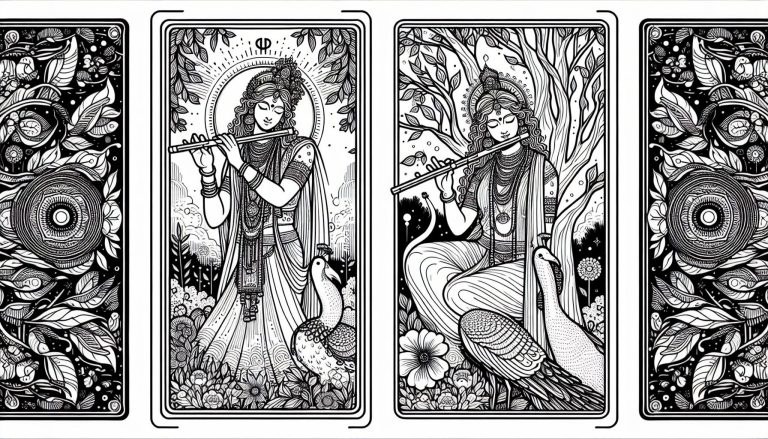
When I first delved into Hindu mythology tarot, I was captivated by how the gods and goddesses from age-old epics like the Mahabharata – The Great Epic and Ramayana – Epic of Hinduism could bring clarity to my life’s questions. Each card doesn’t just tell a story; it connects you to timeless truths and cosmic energies, helping you navigate your journey with a deeper sense of purpose.
Understanding Hindu Mythology Tarot
Hindu mythology tarot merges the rich symbolism of tarot with intricate Hindu myths. This unique blend provides an enriched perspective for spiritual guidance. By integrating the archetypal imagery of tarot with the profound narratives of deities from Hindu mythology, readers can gain deeper insights into their spiritual journey.
Origins
The idea of merging tarot with Hindu mythology arose from the desire to deepen the understanding of both systems. Hindu myths, filled with symbolic stories and characters, seamlessly align with the archetypal nature of tarot cards. This fusion allows for a profound exploration of spiritual themes and human experiences.
The Sacred India Tarot
“The Sacred India Tarot,” created by Rohit Arya, stands as a prominent example of this fusion. This deck combines Indian spirituality and mythology with the structure of traditional tarot. In the major arcana, you’ll find depictions of revered Indian deities. Meanwhile, the minor suits reflect various facets of Indian life and culture, offering a comprehensive spiritual and cultural perspective.
The Origins Of Hindu Mythology Tarot
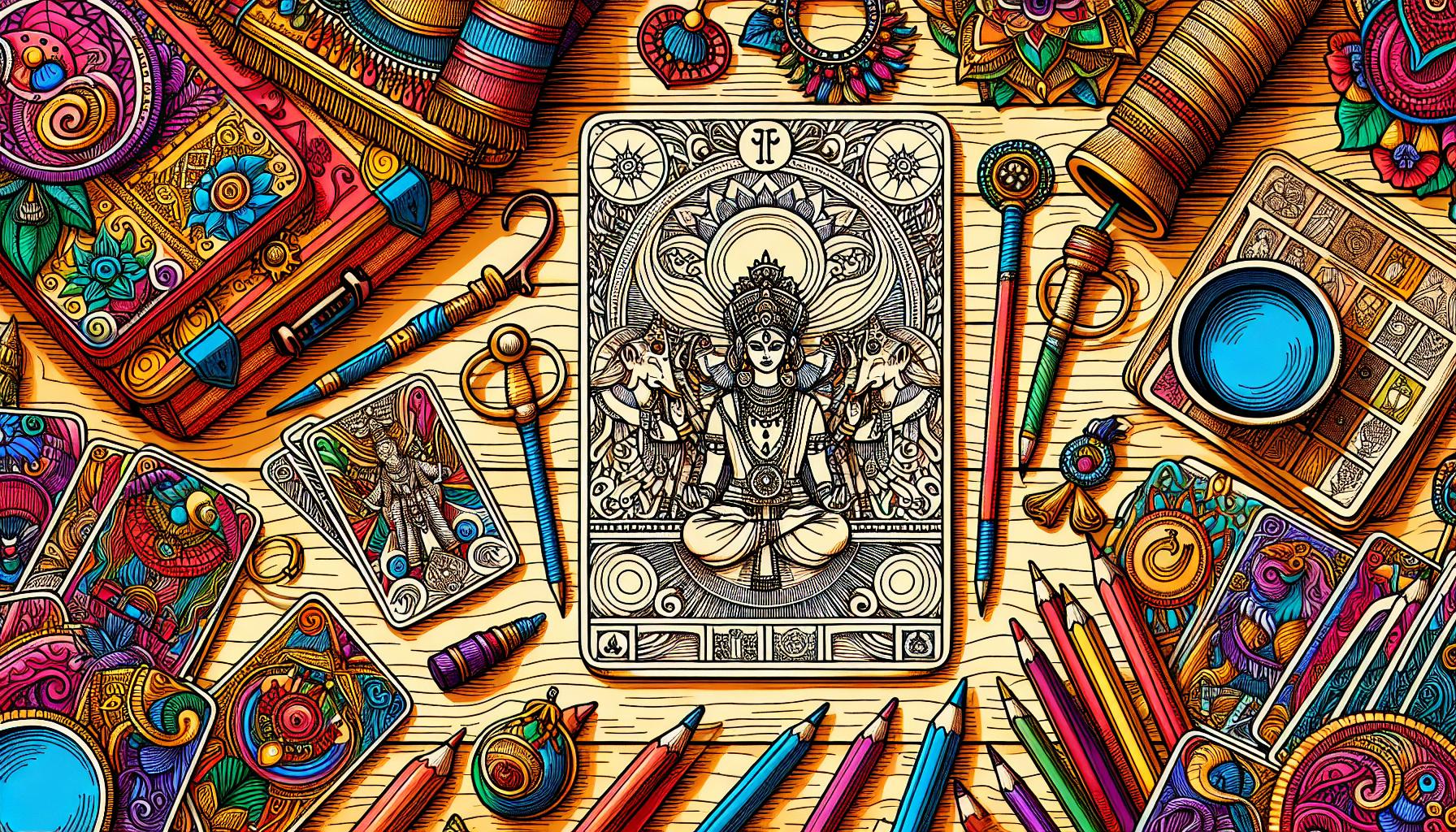
The Hindu Mythology Tarot, known as the Sacred India Tarot, combines tarot principles with India’s rich mythology and spirituality.
Historical Background
Rohit Arya, a Mumbai-based tarot enthusiast and scholar, teamed up with British illustrator Jane Adams to create this unique deck. They started the project in 2000, and it took over a decade to complete. Arya’s deep understanding of both tarot and Indian mythology aimed to merge these traditions in a meaningful way.
Evolution Over Time
The deck follows the traditional Rider-Waite-Smith structure but incorporates Indian deities and symbolism throughout. The Major Arcana cards feature archetypal Indian gods and goddesses, representing esoteric knowledge and the querent’s destiny. The Minor Arcana suits—Cups, Swords, Batons, and Coins—mirror traditional tarot decks, with added Indian cultural elements.
Key Elements Of Hindu Mythology Tarot
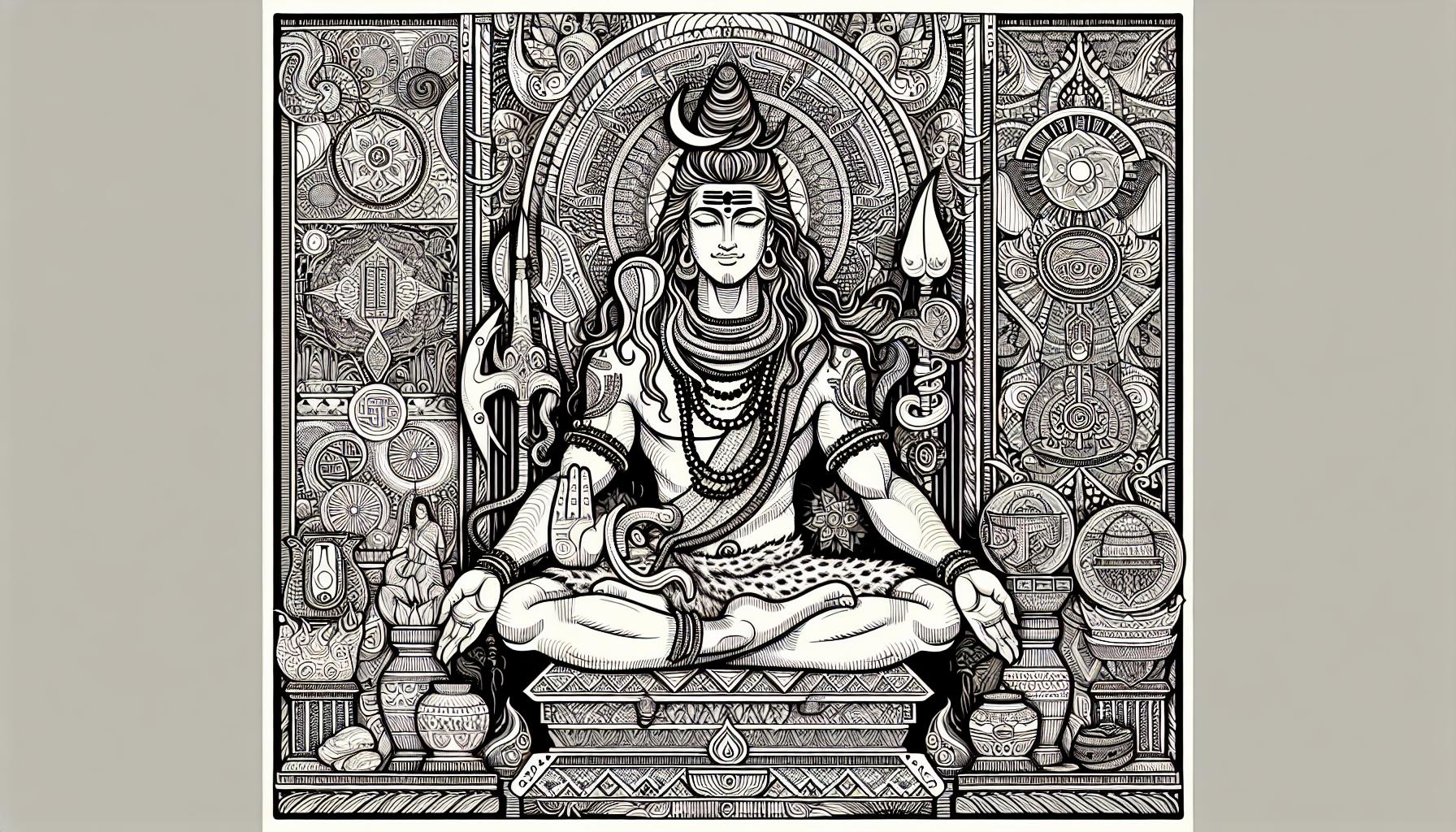
The Hindu mythology tarot, also known as the Sacred India Tarot, uniquely blends Indian mythology with tarot. Here, I’ll investigate into its key components.
Major Arcana
The Sacred India Tarot deck features archetypal Indian gods and goddesses in the Major Arcana cards. Each card depicts a deity, providing detailed descriptions, mantras, and karma types. For example, the card of Shiva reflects transformation and destruction, guiding the querent through change. This synthesis combines mystical and meditational elements from both Hindu mythology and traditional tarot practices, making the deck a powerful tool for readings and meditation.
Minor Arcana
The Minor Arcana suits in the Sacred India Tarot draw from Indian epics and notable mythological tales. They include themes from the Ramayana and Mahabharata, as well as stories of the Buddha and Shiva-Parvati – The Consort of Shiva. Each suit represents distinct narrative arcs that resonate with the spiritual and cultural heritage of India. For instance, the suit themed around the Mahabharata might depict figures like Arjuna – The Peerless Archer, symbolizing duty and morality. These cards enrich the reading experience by intertwining epic narratives with tarot symbology.
The Symbolism And Imagery
Hindu mythology tarot decks, like the Sacred India Tarot, incorporate deep Indian spiritual traditions. They provide a rich visual and symbolic experience for tarot readers.
Deities Represented
The major arcana in the Sacred India Tarot feature prominent Indian deities. For instance, Radha and Krishna – An Incarnation of Vishnu symbolize eternal love. Other deities such as Shiva, Parvati, and Ganesha appear, each associated with unique symbols and meanings. These deities enrich the cards with layers of significance, connecting users to Hindu myths and spirituality. This makes the deck not only a divination tool but also an educational resource on Hindu mythology.
Common Symbols
Each card in the Sacred India Tarot includes specific imagery, creating rich symbolic layers. The image of the “Tree of Life” can be seen in the background, representing the sacred Banyan or Peepal Tree. This tree is a vital symbol in Indian culture, representing immortality and connection to the divine. Beyond the tree, minor suits depict various aspects of Indian society, such as costumes, environments, and cultural artifacts. Together, these symbols bring a uniquely Indian lens to the traditional tarot reading experience.
How To Use Hindu Mythology Tarot
Understanding how to use Hindu mythology tarot decks enriches the reading experience by blending spiritual insight with cultural heritage. This section outlines the interpretation techniques and popular spreads specific to Hindu mythology tarot.
Interpretation Techniques
- Storytelling: Hindu mythology tarot decks are designed to tell stories. Each card serves as a chapter in a larger narrative drawn from Hindu myths and legends. Weaving the cards together creates a cohesive story that reveals deeper insights into the querent’s situation.
- Symbolism: Rich symbolism is a hallmark of Hindu mythology. The cards use intricate illustrations reflecting India’s cultural and spiritual heritage. For instance, a card depicting Krishna playing the flute might symbolize joy and divine love, an essential piece of the querent’s reading.
- Three-Card Spread: Useful for beginners and quick insights, this spread includes past, present, and future cards. For example, drawing the card of Saraswati – The Goddess of Learning and Wisdom (symbolizing wisdom) in the past position might suggest that past knowledge influences the present situation.
- Celtic Cross Spread: One of the most popular spreads, it provides a comprehensive look at the querent’s life. Each position in this ten-card spread holds specific meaning, such as obstacles, influences, and potential outcomes. Using Hindu mythology tarot, a card like Ganesha (remover of obstacles) in the obstacle position provides a unique perspective.
- Chakra Spread: This spread aligns with the seven chakras, offering insight into the querent’s physical, emotional, and spiritual state. Each card drawn relates to a specific chakra and its associated aspects. For instance, drawing a card featuring Kali at the root chakra position can indicate significant transformational energy at the foundational level of the querent’s life.
By mastering these techniques and spreads, readings using Hindu mythology tarot decks can provide profound and culturally rich insights for the querent.
Personal Experiences And Case Studies
Personal stories and research validate the intriguing intersection of Hindu mythology and tarot. This section unpacks how these experiences enhance understanding and application.
User Reviews
My personal account of a tarot reading in India stands out. The tarot deck’s alignment with Hindu mythology struck a chord. The reading encouraged me to build confidence in my life decisions, drawing wisdom from past, present, and future scenarios. Another user, a Jewitch, shared insights from using tarot cards. Her spiritual journey involved developing intuition through meditation and other practices, creating a profound connection with the cards.
Real-Life Applications
A qualitative study of noetic experiences, including tarot, revealed rich themes of engagement and knowing. This study aimed to support those with these experiences. One significant finding showed that tarot cards with Hindu mythology elements invoked deep personal connections and understanding among users. This fusion helped practitioners comprehend and articulate their inner experiences, making tarot not just a divinatory tool but a bridge to personal growth.
Conclusion
Exploring Hindu mythology tarot through the Sacred India Tarot deck has been an enlightening journey. By integrating the rich world of Hindu deities and symbolism into the Rider-Waite-Smith structure, this deck offers a unique blend of divination and cultural education. Techniques like storytelling and symbolism interpretation enhance the reading experience, making it both profound and insightful.
Personal experiences and user reviews underscore the transformative potential of these readings. Whether you’re seeking spiritual growth or practical guidance, Hindu mythology tarot can be a powerful tool. Embrace the wisdom of the gods and let their stories illuminate your path.
Sources & further reading
These themes are explored in greater depth across the following authoritative resources:
- Stanford Encyclopedia of Philosophy, Hindu Philosophy
- Mythopedia, Hindu Mythology
- Britannica, Hindu Mythology
- Sheldon Pollock, The Language of the Gods in the World of Men (University of California Press, 2006)
- A. K. Ramanujan, The Collected Essays (Oxford University Press, 1999)
External resources for further reading. Apam Napat is not affiliated with these publishers; citation does not imply endorsement.
Frequently asked questions
What is Hindu mythology tarot?
Why does Hindu mythology pair well with tarot?
What is the Sacred India Tarot?
How can Hindu mythology tarot guide modern life?
Based on the classical texts of Hindu mythology, see our sources.