

As I delved deeper into this intriguing idea, I realized that Maya isn’t just about deception; it’s about recognizing the limitations of our senses and intellect. This profound concept encourages us to look beyond the apparent and seek a deeper, more meaningful existence. Exploring Maya has profoundly changed how I view life, urging me to question the nature of reality itself.
Understanding Hindu Philosophy
Hindu philosophy encompasses a vast range of thoughts and practices that aim to understand the nature of existence and the self. Central to this philosophy is the concept of Brahman – The Supreme Truth, the ultimate reality or cosmic spirit. Brahman is understood as both immanent and transcendent, permeating all aspects of the universe while existing beyond it.
In Hindu thought, the self (Atman – The Soul) is considered identical to Brahman. This non-dualistic perspective suggests that individual souls and the cosmic spirit are not separate entities but manifestations of the same reality. This understanding is pivotal in many Hindu teachings, encouraging individuals to look within to find true enlightenment.
Dharmic principles play a crucial role in guiding personal and societal behavior. Dharma refers to duties, rights, and laws that govern both cosmic order and human conduct. Adherence to dharma leads to harmony, while deviation results in chaos and suffering. It serves as a moral compass, aligning human actions with universal laws.
Karma, another significant concept, refers to the actions performed by individuals and the consequences of those actions. Karma operates on the principle of cause and effect, meaning good actions produce positive outcomes while bad actions lead to negative consequences. This concept encourages ethical living and accountability.
Samsara represents the cycle of birth, death, and rebirth. It is driven by karma and is seen as a continuous process until liberation (Moksha) is achieved. Moksha is the ultimate goal, signifying liberation from the cycle of Samsara and unity with Brahman.
Meditation and yoga are practices commonly employed to achieve higher states of consciousness. These disciplines help to quiet the mind, focus energy, and eventually experience the deeper truths of existence. They are not merely physical exercises but spiritual practices rooted in ancient wisdom.
By exploring these concepts, Hindu philosophy offers a pathway to understanding the complexities of life and the universe. Each element interconnects, forming a comprehensive worldview that emphasizes knowledge, ethical living, and spiritual growth.
The Concept of Maya
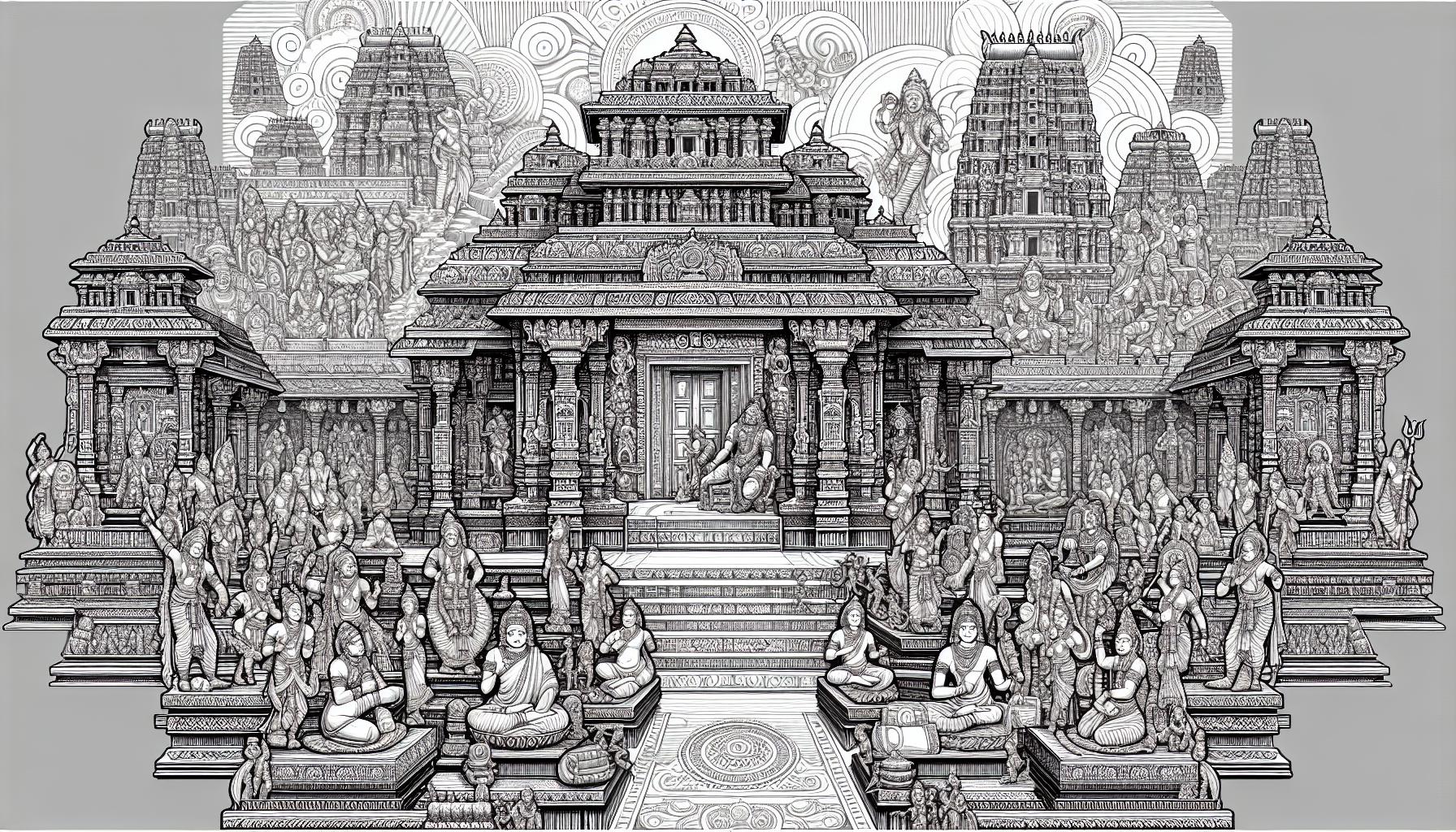
Maya plays a crucial role in Hindu philosophy, presenting reality as an illusion and masking the true nature of existence. It challenges individuals to seek deeper understanding beyond observable phenomena.
Origins and Historical Context
The concept of Maya originates in ancient Hindu scriptures, the Vedas, and Upanishads. In the Rigveda, Maya initially refers to divine magical power. Later, the Upanishads develop Maya into a philosophical concept, presenting it as the force creating illusions. Shankara, an 8th-century philosopher, further elaborates on Maya in Advaita Vedanta, reinforcing its significance in understanding non-dualism.
Key Teachings and Interpretations
Maya obscures the perception of Brahman, the ultimate reality, leading to misconceptions about the self and the universe. In Advaita Vedanta, Maya causes individuals to misidentify the self (Atman) with the physical body and mind, creating a sense of separateness. This illusion maintains the cycle of Samsara and influences Karma. Understanding Maya involves recognizing the difference between the transient world (Prakriti) and the eternal self, facilitating the path to Moksha.
Maya in Different Schools of Hindu Thought
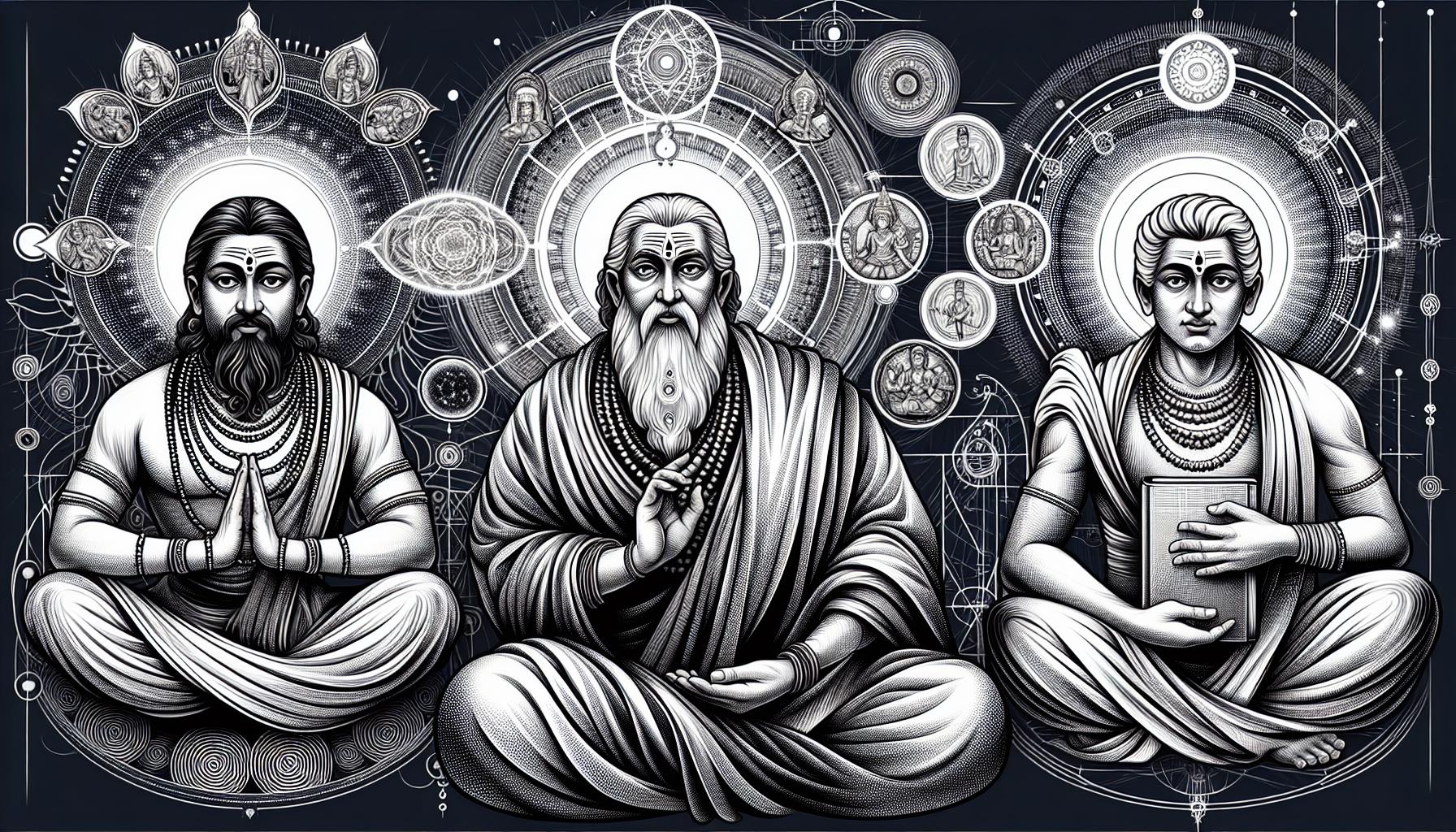
The concept of Maya varies significantly across different schools of Hindu philosophy, each offering unique interpretations and implications for understanding reality.
Advaita Vedanta
In Advaita Vedanta, Shankara describes Maya as the force that conceals Brahman, the ultimate reality, from our perception. In this non-dualistic school, Maya creates the illusion of duality, making us see the world as separate from Brahman. This illusion leads to ignorance (avidya), which can be dispelled through knowledge (jnana) and self-realization. By unraveling Maya, individuals can comprehend their true nature and achieve Moksha, liberation from the cycle of birth and death.
Vishishtadvaita Vedanta
Ramanuja’s Vishishtadvaita Vedanta, or qualified non-dualism, also addresses Maya but in a different light. Here, Maya is not merely an illusion but a real, albeit dependent, entity. The universe and individual souls are considered real but are seen as attributes (qualities) of Brahman. Maya under Ramanuja’s view denotes the creative power of Brahman, integrating all existence with the divine. This school emphasizes devotion (bhakti) as the path to overcoming the limitations imposed by Maya and realizing one’s connection to Brahman.
Dvaita Vedanta
Madhva’s Dvaita Vedanta presents a dualistic interpretation where Maya is a real and distinct force that separates the soul from God. In this philosophy, the world and souls are eternally different from Brahman. Maya functions as a real and potent energy that creates distinctions and multiplicity. Liberation involves recognizing this duality and devoting oneself to Vishnu – The Protector, the supreme deity, to overcome the influence of Maya and attain spiritual freedom.
These interpretations of Maya across various schools underscore the rich world of Hindu thought, offering diverse pathways to understanding and transcending the illusions that confound human perception.
Maya in Hindu Scriptures
Hindu scriptures address Maya extensively, portraying it differently across various texts to highlight its role in human perception and spiritual pursuits.
Upanishads
The Upanishads, central to Hindu philosophy, explore Maya as an illusion masking the true nature of reality. In texts like the Mandukya Upanishad, Maya manifests as ignorance that veils the Paramatman (supreme self). This ignorance creates duality, leading individuals to perceive the temporal world as real. The Chandogya Upanishad elaborates on Maya through the illustration of clay and pots, conveying that just as different pots are shaped from the same clay, all forms in the universe emanate from the singular Brahman. Maya, hence, induces erroneous identification with the physical self rather than recognizing the underlying oneness with Brahman.
Bhagavad Gita
In the Bhagavad Gita, Maya is depicted as Krishna – An Incarnation of Vishnu’s divine energy, influencing human understanding and behavior. Krishna explains to Arjuna – The Peerless Archer that Maya’s three Gunas (qualities)—Sattva (goodness), Rajas (passion), and Tamas (ignorance)—bind the soul to the material world. These Gunas operate within Maya’s framework, dictating life’s experiences and conditioning the mind. In Chapter 7, Verse 14, Krishna states, “This divine energy of Mine, consisting of the three modes of material nature, is difficult to overcome. But those who have surrendered unto Me can easily cross beyond it.” This emphasizes devotion to Krishna as a means to transcend Maya and achieve liberation (Moksha).
Real-World Implications of Maya
The concept of Maya has profound implications on how one perceives reality and engages in daily life and spiritual practices.
Perception and Illusion
Maya influences perception, leading individuals to misidentify the transient world as permanent. It’s common for people to become attached to material possessions (houses, cars) and relationships (friends, family), mistaking them for sources of lasting happiness. Maya’s illusions obscure the eternal self, making discernment essential for spiritual progress. In Hindu philosophy, understanding that the empirical world is an illusion (Maya) helps in seeking the ultimate truth (Brahman).
Impact on Daily Life and Spiritual Practices
In daily life, Maya’s influence can lead to a constant pursuit of sensory pleasures and worldly achievements (career success, wealth accumulation). This creates a cycle of desire and disappointment, perpetuating Samsara. Adopting spiritual practices (meditation, prayer), rooted in recognizing Maya’s illusions, guides individuals towards inner peace and fulfillment. Practices like yoga and Vedantic study encourage detachment from the material world, fostering a realization of one’s true self. By seeing through Maya, one can focus on achieving Moksha, transcending the cycle of birth and death.
Conclusion
Understanding Maya in Hindu philosophy offers profound insights into the nature of reality and our existence. It challenges us to look beyond superficial appearances and recognize the deeper truths masked by illusion. By acknowledging Maya’s influence on our perceptions and actions we can begin to detach from material entanglements and focus on spiritual growth. Embracing practices like meditation and Vedantic study helps us see through these illusions guiding us towards inner peace and eventually Moksha. Maya isn’t just a concept but a transformative force that shapes our journey towards self-realization and higher consciousness.
Sources & further reading
These themes are explored in greater depth across the following authoritative resources:
- Stanford Encyclopedia of Philosophy, Hindu Philosophy
- Britannica, Dharma
- Britannica, Karma
- Internet Sacred Text Archive, Bhagavad Gita
- A. K. Ramanujan, Speaking of Siva (Penguin Classics, 1973)
External resources for further reading. Apam Napat is not affiliated with these publishers; citation does not imply endorsement.
Frequently asked questions
What is Maya in Hindu philosophy?
How is Brahman related to Maya?
What is Atman in Hindu philosophy?
How does Maya relate to karma and samsara?
How did Shankara interpret Maya?
Based on the classical texts of Hindu mythology, see our sources.