
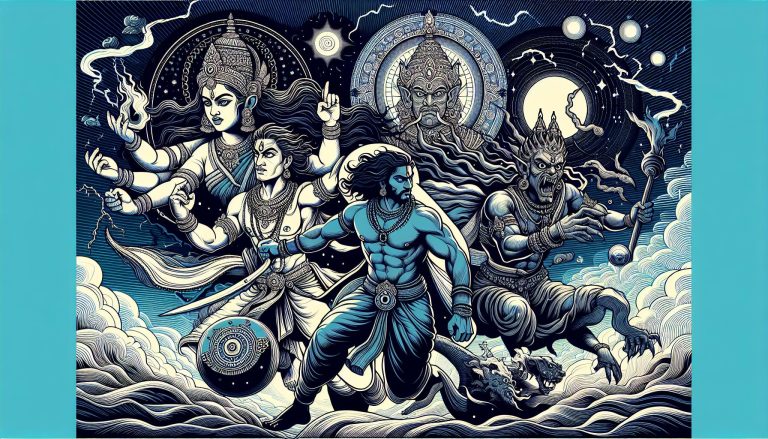
As I investigate into these timeless characters, I’ll explore how they embody universal themes and values, resonating across generations and borders. Understanding these archetypes helps us appreciate the intricate world of Hindu myth and its enduring impact on literature, art, and philosophy.
Understanding Hindu Myth Archetypes
Hindu myth archetypes refer to recurring patterns in Hindu mythology that symbolize universal human experiences and psychological concepts. These archetypes personify as gods, goddesses, and mythological figures, each embodying distinct traits.
The Earth Mother
The Earth Mother archetype, represented by goddesses like Prithvi and Bhumi, symbolizes nurturing, fertility, and creation. This archetype connects deeply to the natural world and the cycles of life and death. Examples of this include how Prithvi is often depicted as a generous provider, embodying the Earth’s capacity to sustain life.
The Hero
The Hero archetype exemplifies courage, strength, and the eternal struggle between good and evil. Figures like Rama and Krishna perfectly represent this archetype. For instance, Rama’s epic journey in the Ramayana – Epic of Hinduism showcases various challenges and triumphs that define the hero’s path.
The Trickster
The Trickster archetype, characterized by gods such as Krishna and Narada, showcases cunning, wit, and mischief. These figures often disrupt the status quo, bringing about profound changes through cleverness and subversion. For example, Krishna’s playful pranks in his younger years depict the unpredictable nature of the Trickster.
Hindu myth archetypes not only offer rich narratives but also reveal deeper psychological and cultural insights. These archetypes serve as powerful symbols that continue to influence various aspects of life, from moral lessons to artistic expressions.
Major Archetypes in Hindu Mythology
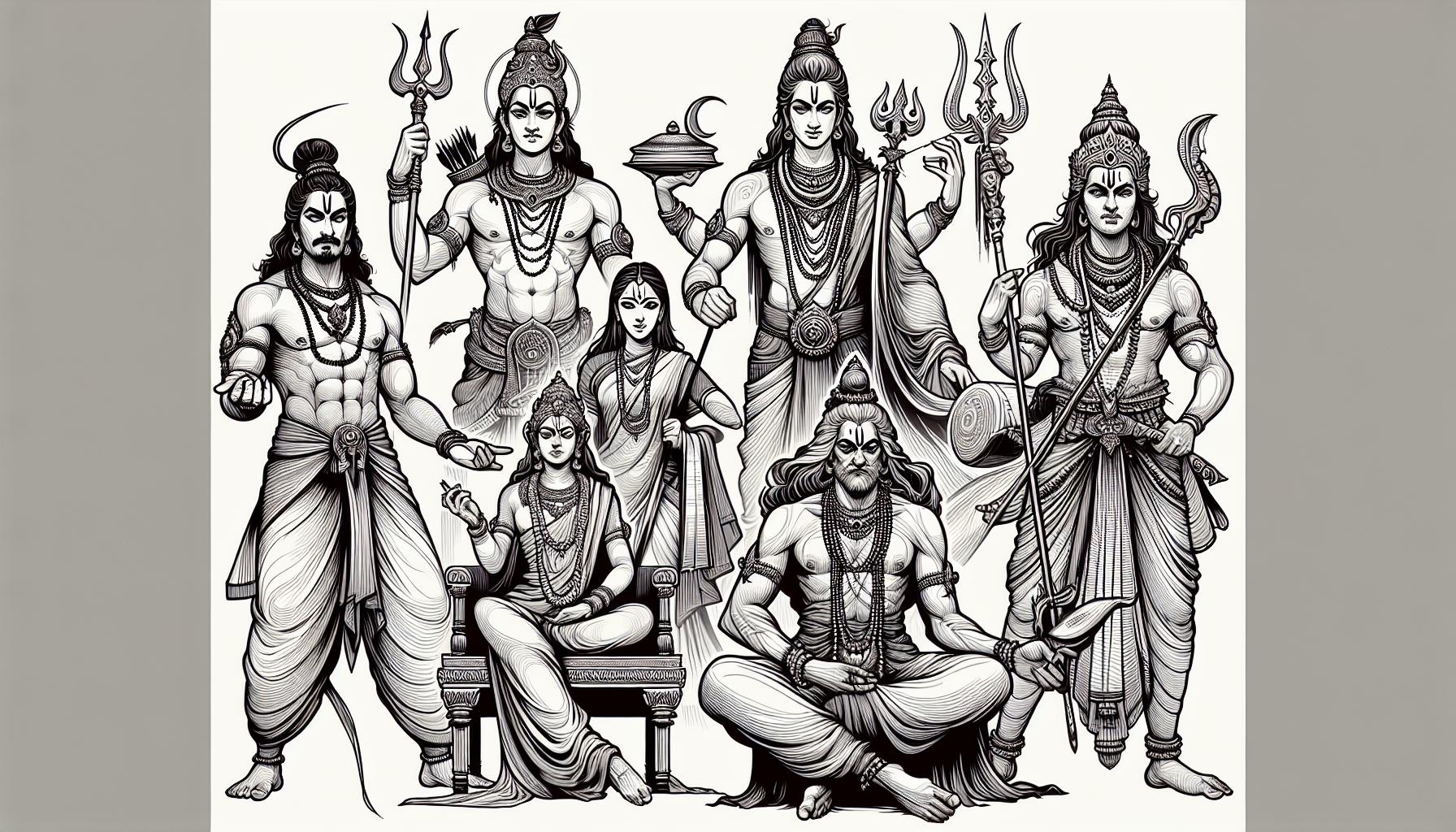
Hindu mythology features several major archetypes that offer deep insights into human psychology and cultural values, reflected through various gods and mythological figures.
The Hero
The Hero embodies courage, moral integrity, and the struggle between good and evil. Heroes such as Rama and Krishna illustrate this archetype. Rama, in the Ramayana, exemplifies virtuous living and adherence to dharma. Krishna, known for his wisdom and valor, overcomes challenges in the Mahabharata – The Great Epic, guiding Arjuna during the Kurukshetra War.
The Divine Couple
The Divine Couple represents the union of male and female principles, balance, and cosmic harmony. Shiva and Parvati, along with Vishnu and Lakshmi, are prominent examples. Shiva, the destroyer, complements Parvati’s nurturing aspect, symbolizing transformation and renewal. Vishnu and Lakshmi reflect sustenance and prosperity, ensuring the stability of the cosmos through their union.
The Wise Sage
The Wise Sage epitomizes knowledge, spirituality, and enlightenment. Figures like Vishwamitra – The King Who Became a Great Sage and Vyasa serve as prime examples. Vishwamitra, initially a king, attains sagehood through intense penance, symbolizing self-discipline and perseverance. Vyasa, the author of the Mahabharata, embodies wisdom and the dissemination of sacred knowledge.
The Demon King
The Demon King represents power, ambition, and opposition to divine order. Ravana and Hiranyakashipu are quintessential Demon Kings. Ravana, from the Ramayana, showcases intelligence and strength but eventually succumbs to his hubris and ego. Hiranyakashipu, known for his intense hatred of Vishnu, demonstrates the futility of defying divine principles.
Symbolism in Hindu Archetypes
Hindu archetypes use a range of symbolic representations to express complex philosophical and moral concepts. Each symbol holds deep cultural and spiritual significance.
Symbolic Representations
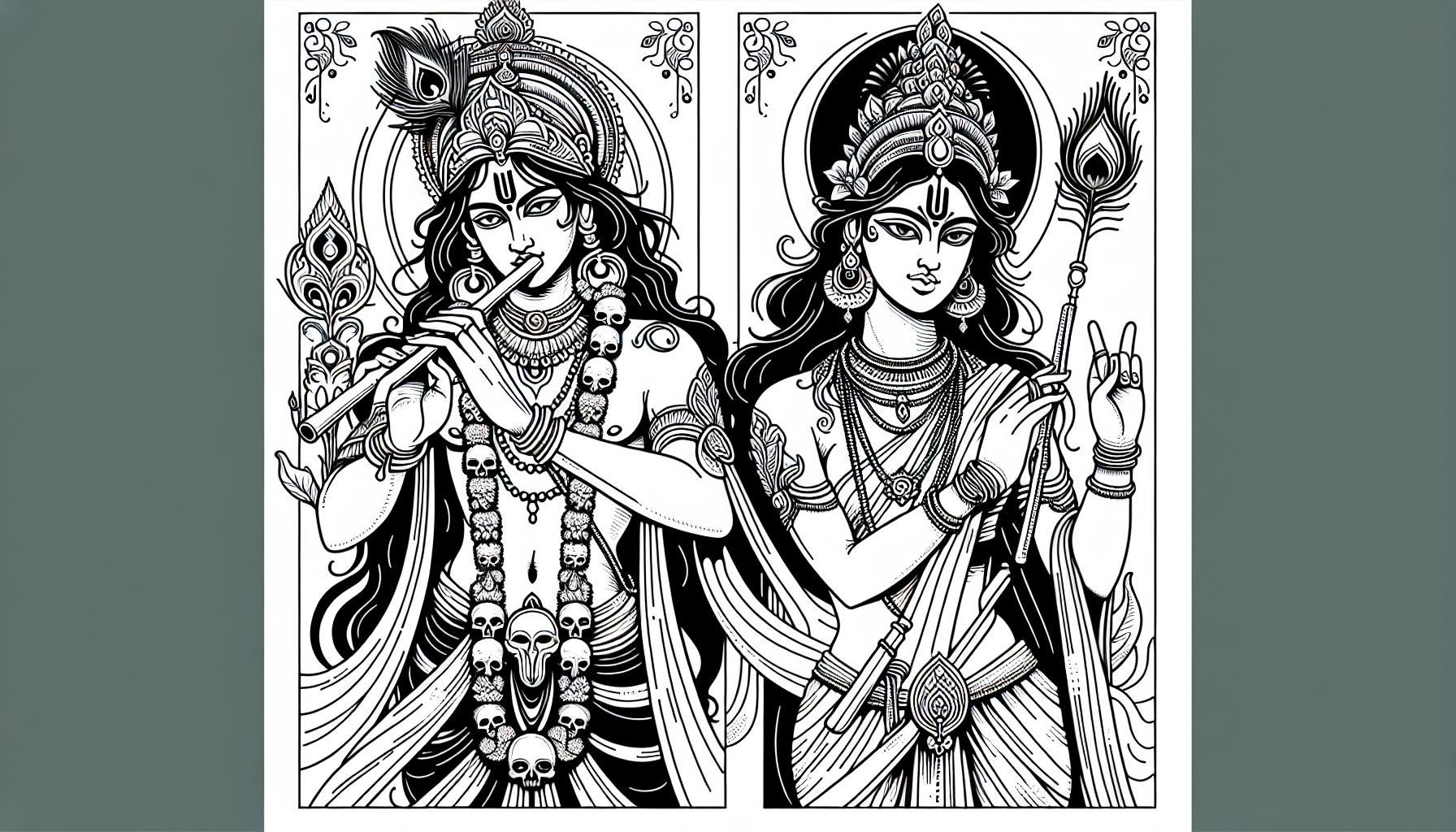
Hindu myth archetypes often employ symbols to convey attributes and values. The goddess Kāli, a divine figure, symbolizes the destruction of evil forces and represents the interconnected qualities of satva (purity), rajas (passion), and tamas (darkness).
Lord Krishna is associated with numerous symbols reflecting his diverse attributes. His name means “black” or “dark blue,” symbolizing the infinite and the unknown aspects of the universe. Krishna’s 108 names each capture different facets of his identity, from Govinda (protector of cows) to Madhusudana (slayer of the demon Madhu), highlighting his multifaceted role in Hindu mythology.
Cultural Significance
Symbols in Hindu archetypes carry profound cultural importance. Kāli’s depiction with a garland of skulls and a sword represents not just destruction but also protection and the cycle of creation and dissolution, illustrating the impermanence of life and the transformative power of divine energy.
Krishna’s flute signifies divine music that attracts and unifies all beings, epitomizing his role as a divine lover and a cosmic force. His peacock feather symbolizes beauty and cosmic alignment, aligning with his playful and enchanting nature.
By understanding these symbols, one gains insight into the deeper moral, philosophical, and spiritual teachings embedded in Hindu mythology.
Archetypes in Popular Hindu Myths
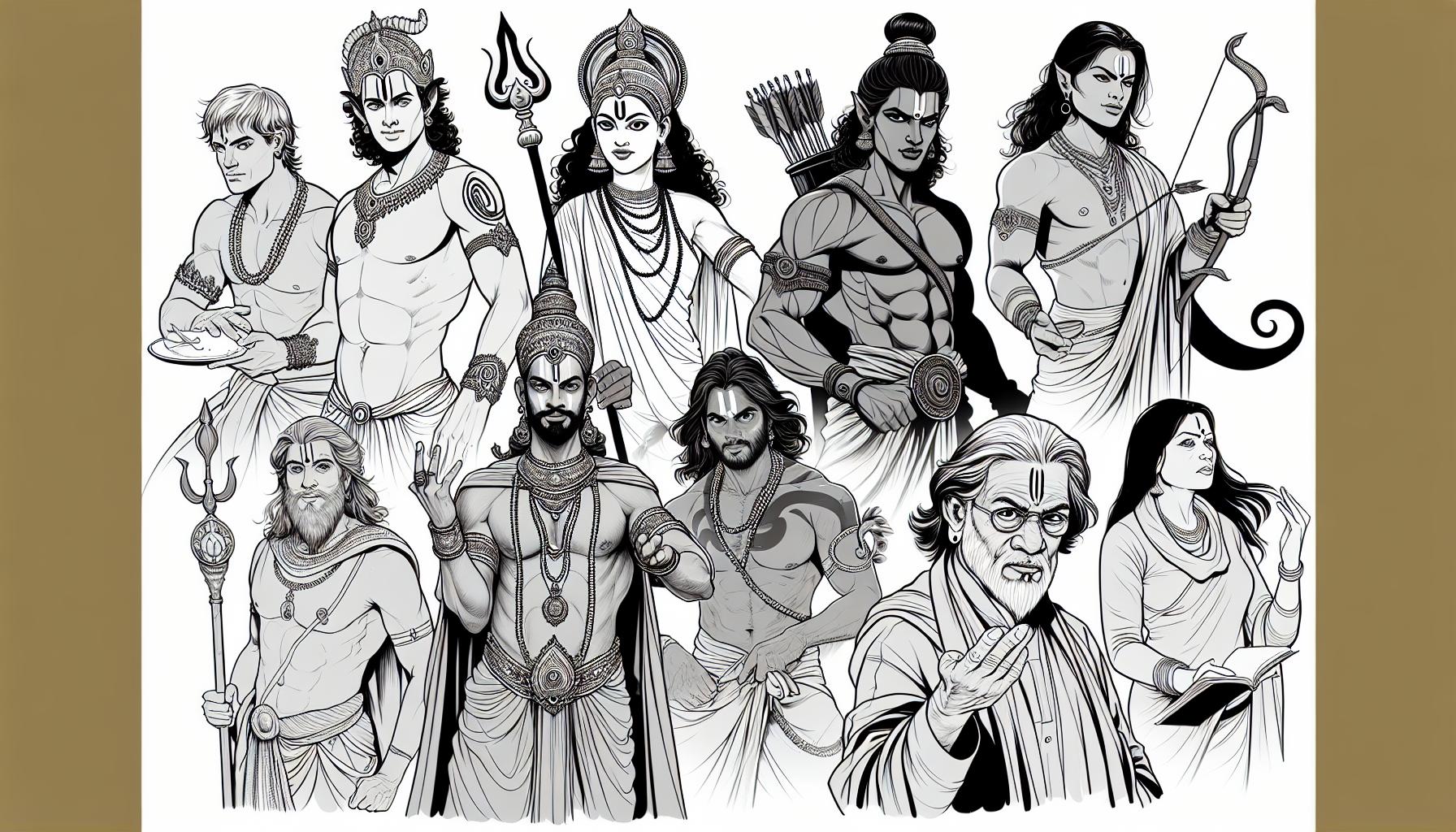
Hindu mythology features archetypes that encapsulate universal human experiences and philosophical concepts. Let’s explore how these archetypes unfold in the celebrated epics, Ramayana and Mahabharata.
Ramayana
The Ramayana presents archetypes that embody valor, righteousness, and devotion. One of the prominent archetypes is the Hero, personified by Rama. He represents the ideal man who adheres to dharma, overcoming challenges and defeating evil. Sita, another significant archetype, epitomizes the Earth Mother, portraying purity, nurturing, and unwavering commitment. Hanuman exemplifies the Loyal Servant, showcasing immense strength, devotion, and service to Rama. His actions reflect the virtues of loyalty and selfless service. Ravana, with his complex character, embodies the Demon King archetype. Even though his immense knowledge and power, his arrogance and lack of dharma lead to his downfall.
Mahabharata
The Mahabharata delves into a diverse array of archetypes illustrating a broad spectrum of human emotions and moral dilemmas. Krishna, embodying the Wise Sage, offers guidance through his teachings in the Bhagavad Gita. His advice transcends the battlefield, providing timeless wisdom on duty and righteousness. Arjuna represents the Reluctant Hero, confronting internal and external battles and evolving through his spiritual journey. Draupadi, embodying the Divine Queen, endures immense trials, symbolizing resilience and the quest for justice. The Kauravas, particularly Duryodhana, exemplify the Archetype of the Adversary, showcasing pride and ambition that culminates in their eventual ruin. Bhishma – The Grand Old Man of The Kurus symbolizes the Noble Guardian, torn between loyalty and righteousness, his life reflecting the struggles of duty and moral ethics.
Influence on Modern Culture
Hindu myth archetypes significantly impact modern culture, providing rich narratives and moral frameworks in various forms of entertainment. These archetypes shape contemporary literature, art, movies, and television, reflecting universal themes and human experiences.
Literature and Art
Hindu myth archetypes appear prominently in contemporary literature and art. Authors like Salman Rushdie and Amish Tripathi draw from these ancient stories to create compelling novels. For instance, Rushdie’s “Midnight’s Children” intertwines historical events with mythological elements, while Tripathi’s “Shiva Trilogy” reimagines the life of the god Shiva as a relatable hero.
Visual art also integrates these archetypes. Modern artists like M. F. Husain and Raja Ravi Varma depict gods, goddesses, and mythological scenes, infusing traditional archetypes with innovative styles. Husain’s works often portray Ganesha, the Elephant God, connected with wisdom and remover of obstacles, in contemporary settings.
Movies and Television
Movies and television series often draw inspiration from Hindu myth archetypes. Indian cinema frequently reinterprets tales from the Ramayana and Mahabharata. For example, films like “Baahubali,” directed by S. S. Rajamouli, borrow themes of heroism and justice, reflecting the Hero archetype.
Television series, such as “Mahabharat” and “Devon Ke Dev…Mahadev,” have captivated millions, interpreting ancient myths for modern viewers. These shows translate complex characters like Krishna, Arjuna, and Shiva into relatable figures, blending spiritual lessons with entertainment.
The influence of these archetypes extends beyond India, with works like “The Matrix” series drawing on philosophical concepts from Hindu mythology.
By infusing these archetypes into modern storytelling mediums, creators offer timeless narratives and moral questions to audiences worldwide.
Conclusion
Exploring Hindu myth archetypes reveals their profound impact on both ancient and modern storytelling. These timeless figures, from heroes to tricksters, continue to resonate with audiences, shaping our understanding of human nature and cultural values. Their influence is evident in literature, art, and media, bridging the gap between past and present. By recognizing and appreciating these archetypes, we gain deeper insights into the rich world of Hindu mythology and its enduring relevance in today’s world.
Frequently asked questions
What are Hindu myth archetypes?
Who represents the Hero archetype in Hindu mythology?
What does the Divine Couple archetype represent?
Who embodies the Trickster archetype in Hindu mythology?
Sources & further reading
These themes are explored in greater depth across the following authoritative resources:
- Stanford Encyclopedia of Philosophy, Hindu Philosophy
- Mythopedia, Hindu Mythology
- Britannica, Hindu Mythology
- Sheldon Pollock, The Language of the Gods in the World of Men (University of California Press, 2006)
- A. K. Ramanujan, The Collected Essays (Oxford University Press, 1999)
External resources for further reading. Apam Napat is not affiliated with these publishers; citation does not imply endorsement.
Based on the classical texts of Hindu mythology, see our sources.