
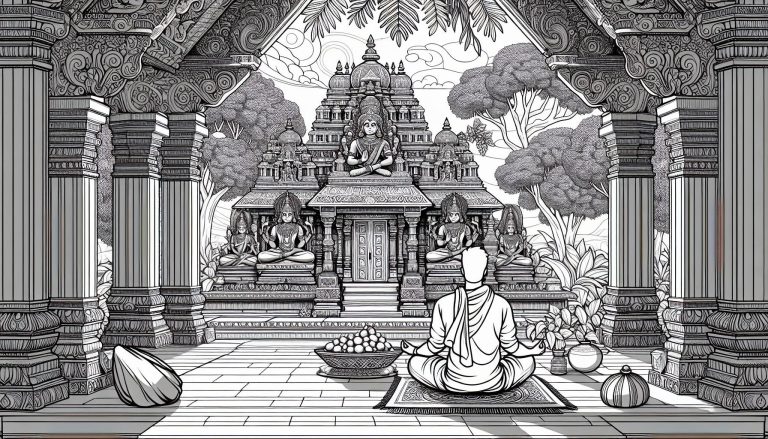
Hindu rituals, from daily prayers to elaborate ceremonies, serve as pathways to moksha. These rituals aren’t mere traditions; they hold deep significance and are meticulously designed to purify the mind and soul. By delving into these practices, we can uncover how they help individuals transcend worldly attachments and move closer to achieving moksha.
Understanding Moksha
Exploring Moksha reveals its profound significance within Hinduism. Moksha, the liberation of the soul from life’s cycles, holds a central place in the spiritual journey of many devotees.
Definition Of Moksha
Moksha stems from the Sanskrit word “muc,” meaning “to free.” It represents the soul’s release from the endless cycle of life, death, and rebirth, transcending human existence. In Hindu beliefs, achieving moksha means reaching a state of perfection, self-realization, and freedom from worldly attachments.
Significance In Hinduism
Moksha stands as Hinduism’s ultimate goal. The belief is that the soul, immortal by nature, reincarnates into new physical forms after death. The process of rebirth hinges on an individual’s karma, the sum of their good and bad deeds. Hence, moksha’s significance lies in escaping this cycle and reuniting with the Supreme Being, fulfilling the soul’s destiny.
- Jnana Yoga: Emphasizes knowledge and wisdom, encouraging self-inquiry and awareness of one’s true nature.
- Bhakti Yoga: Involves devotion and love for a personal deity, fostering a deep emotional connection and surrender.
- Karma Yoga: Focuses on selfless action and duty, performed without attachment to results, promoting purity of mind and soul.
- Raja Yoga: Centers on meditation and mental discipline, aiming to control the mind and senses to achieve spiritual awakening.
Major Hindu Rituals

Hindu rituals aim to infuse spirituality into daily life and foster devotion and religiosity. These practices help devotees receive blessings and attain spiritual growth.
Rituals For Everyday Life
Daily rituals form the foundation of a Hindu’s spiritual practice. Essential everyday rituals include:
- Puja: Involves worshipping a deity through mantras and offering gifts like flowers or food, often at home altars.
- Meditation: Purifies the mind, filling consciousness with spiritual energy.
- Japa: Reciting God’s name silently or audibly to cleanse the mind and create spiritual vibrations.
- Satsang: Devotional gatherings where followers pay reverence to God.
Rituals For Special Occasions
Special occasions call for grander rituals, performed either at temples or natural sites:
- Yagna: Fire sacrifices aimed at divine blessings, often conducted during festivals.
- Vivaha Samskara: Hindu wedding rites, which sanctify the union and bless the couple’s new life.
- Antyesti: Funeral rites ensuring the soul’s peaceful journey to the afterlife.
Role Of Meditation And Yoga
Meditation and yoga play a crucial role in Hindu rituals. They guide devotees towards spiritual betterment:
- Meditation: Helps focus the mind and achieve inner peace.
- Yoga: Combines physical postures and mental discipline to attain spiritual well-being.
These practices are integral in the pursuit of Moksha, purifying the soul and helping transcend worldly attachments.
Connection Between Rituals And Moksha
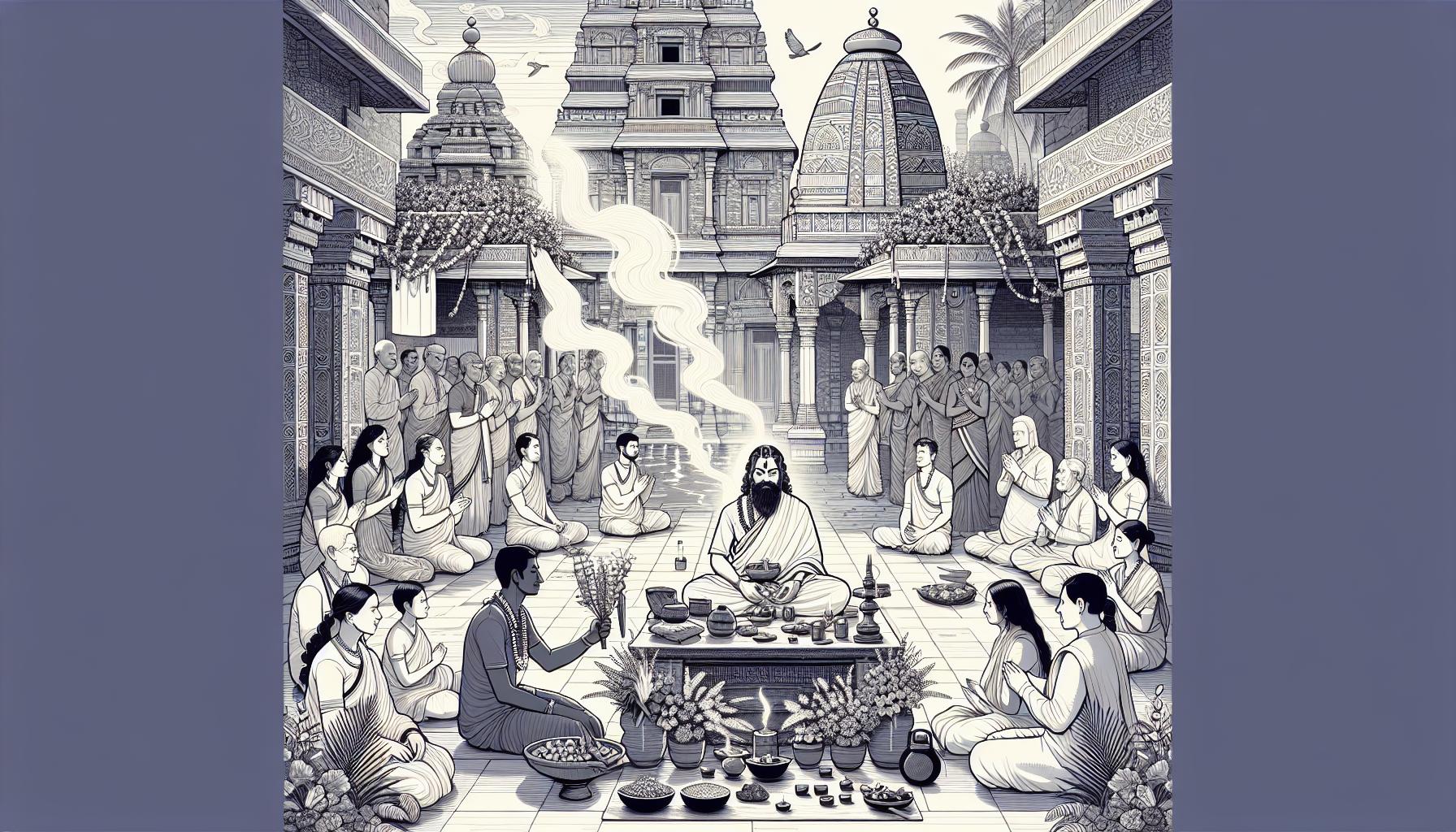
Hinduism emphasizes the importance of rituals in achieving moksha, the ultimate liberation from the cycle of birth and rebirth. Rituals support this spiritual journey by maintaining personal and universal equilibrium.
Purification Rituals
Purification rituals purify the individual, preparing them for spiritual growth. For example, the Vedic sacrifice is a highly structured ritual. It involves Brahmin priests following strict rules for purification, constructing the altar, and performing the ritual. The goal of these rituals is to satisfy the gods and maintain dharma, ensuring spiritual readiness.
Devotional Practices
Devotional practices, such as daily prayer and devotions, are central to many Hindus. These practices create a personal connection with the divine and reinforce spiritual discipline. Daily rituals, such as offering food and flowers to deities, chanting mantras, and reading sacred texts, reinforce devotion and promote spiritual progress.
Ascetic Practices
Ascetic practices involve self-discipline and renunciation of worldly pleasures. Practices include fasting, vows of silence, and living in isolation or simplicity. Ascetics focus on spiritual goals, reducing material attachments and desires. This self-denial brings spiritual clarity and paves the way toward moksha.
By engaging in these rituals and practices, Hindus aim to purify their minds and souls, guiding them closer to achieving moksha.
Stories Of Moksha In Hindu Scriptures
Hindu scriptures provide numerous insights into moksha. These texts describe stories and teachings that elucidate the process and significance of attaining liberation.
Examples From The Vedas
The Vedas, the oldest Hindu scriptures, lay the groundwork for understanding moksha. While they don’t explicitly mention the term, they elaborate on key concepts:
- Cycle of Rebirth: The Vedas discuss samsara and emphasize the need to break free from this cycle through self-realization and discipline.
- Karma and Dharma: They highlight the importance of karma (actions) and dharma (righteousness) in achieving equilibrium, which is necessary for spiritual growth.
Examples From The Upanishads
The Upanishads, integral parts of the Vedas, investigate deeper into moksha:
- Atman – The Soul and Brahman – The Supreme Truth: They describe moksha as realizing the union of the individual self (atman) with the universal self (Brahman). This epiphany leads to ultimate liberation.
- Teachings of Yajnavalkya: In the Brihadaranyaka Upanishad, sage Yajnavalkya discusses the nature of atman and Brahman, emphasizing that true knowledge leads to moksha.
- Paths to Liberation: It outlines various paths like Jnana Yoga (knowledge), Bhakti Yoga (devotion), and Karma Yoga (right actions) as ways to achieve moksha.
- Krishna – An Incarnation of Vishnu’s Teachings: Lord Krishna advises Arjuna – The Peerless Archer on the battlefield, explaining that understanding one’s true self and performing one’s duties without attachment lead to liberation.
Modern Interpretations Of Moksha And Hindu Rituals
Moksha, the ultimate spiritual goal in Hinduism, signifies liberation from the cycle of birth and rebirth. Over time, the interpretation and associated rituals have evolved to align with contemporary understandings and practices.
Changes In Rituals Over Time
Historically, achieving moksha required adherence to various rituals. In the Vedic period, rituals dedicated to deities like Agni were essential. But, by the Upanishadic period, there was a shift towards knowledge and personal development. During this time, the emphasis moved from external rituals to internal practices such as meditation and yogic practices, reflecting a deeper understanding of spiritual growth.
Contemporary Practices
Today, Hindu rituals continue to adapt to modern contexts. Practices once heavily reliant on elaborate ceremonies have simplified, focusing more on personal spiritual growth. Contemporary rituals often incorporate daily prayers, meditation, and readings from sacred texts. Many individuals blend traditional rituals with modern practices, emphasizing the importance of inner transformation over external rites.
Conclusion
Understanding Moksha and Hindu rituals offers profound insights into the spiritual framework of Hinduism. These rituals, whether ancient or modern, serve as pathways to spiritual enlightenment and personal growth. By integrating practices like meditation, daily prayers, and readings from sacred texts, we can navigate our spiritual journey with greater clarity and purpose. Embracing both traditional and contemporary approaches allows us to stay connected to our roots while evolving in our spiritual quest. Eventually, the pursuit of Moksha encourages us to seek inner peace and unity with the divine, guiding us toward a more meaningful existence.
Sources & further reading
These themes are explored in greater depth across the following authoritative resources:
- Stanford Encyclopedia of Philosophy, Hindu Philosophy
- Britannica, Moksha
- Britannica, Brahman
- Internet Sacred Text Archive, Upanishads
- Sarvepalli Radhakrishnan, Indian Philosophy (2 vols., Oxford University Press, 1923)
External resources for further reading. Apam Napat is not affiliated with these publishers; citation does not imply endorsement.
Frequently asked questions
What is moksha in Hindu thought?
How do Hindu rituals lead to moksha?
Are Hindu rituals only traditional customs?
What types of rituals support the pursuit of moksha?
Based on the classical texts of Hindu mythology, see our sources.