
Exploring Brahman reveals a rich world of ideas about existence, consciousness, and the nature of reality. Hindus believe that Brahman is both immanent and transcendent, existing within every part of the universe while also extending beyond it. This dual nature makes it a unique and profound concept that influences various aspects of Hindu worship, rituals, and daily life.
Overview Of Brahman In Hinduism
Brahman stands as the highest universal principle, embodying the Ultimate Reality of the universe. It’s a single binding unity behind the diversity in everything that exists. Brahman is eternal and unchanging, regarded as the supreme, universal spirit that pervades the entire cosmos.
In Hindu philosophy, Brahman is the foundational reality, the source, and cause of all existence. It’s perceived as the non-physical, efficient, formal, and final cause of the universe. Though unchanging, Brahman is seen as the cause of all changes within the world. This paradoxical nature emphasizes its complex and profound influence on both the material and spiritual realms.
Brahman is often linked with the concept of Atman – The Soul, the personal self or soul. In non-dualistic schools like Advaita Vedanta, Brahman and Atman are considered identical. This unity suggests a spiritual oneness, implying that the essence of the individual self is not separate from the ultimate cosmic spirit. This belief reflects the profound interconnectedness and unity in all existence, foundational to Hindu philosophy.
Recognizing Brahman as the Ultimate Reality shapes Hindu worship, rituals, and daily life. It underscores the pursuit of spiritual knowledge and the realization of the self’s true nature. The understanding of Brahman adds depth to the Hindu world view and offers insight into the profound spiritual goals within the religion.
Vedic Origins Of Brahman
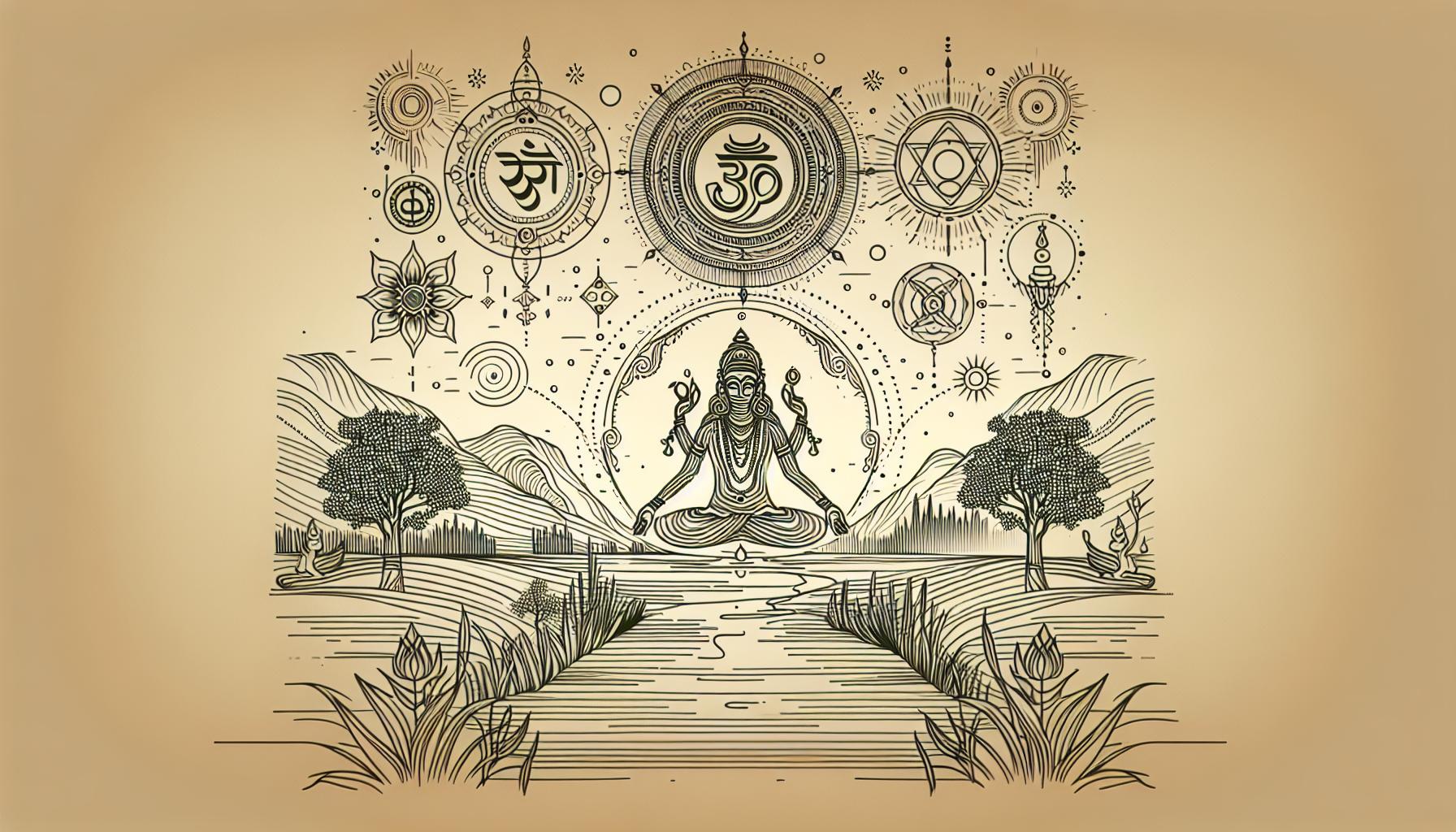
Brahmanism, the precursor to Hinduism, emerged in ancient India, focusing on metaphysical ideas. This section explores how ancient texts and scriptures reflect Hindu beliefs about Brahman.
Ancient Texts And Scriptures
The Vedas are foundational to Hindu beliefs about Brahman. They consist of four main collections: Rigveda, Samaveda, Yajurveda, and Atharvaveda. Within these texts, Brahman is described as the ultimate reality. The Upanishads, part of the Vedas, elaborate on this concept, emphasizing its formlessness and infiniteness. The Brahma – The Creator Sutras offer philosophical interpretations, while the Bhagavad Gita presents practical implications in a dialogue format.
Key Concepts And Terminology
Brahman: Represents the ultimate reality, formless and infinite.
Atman: The personal soul or self, often considered identical to Brahman in Advaita Vedanta.
Maya: The illusion that separates Atman from realizing its oneness with Brahman.
Moksha: Liberation from the cycle of rebirth, achieved by realizing the identity of Atman and Brahman.
Philosophical Interpretations
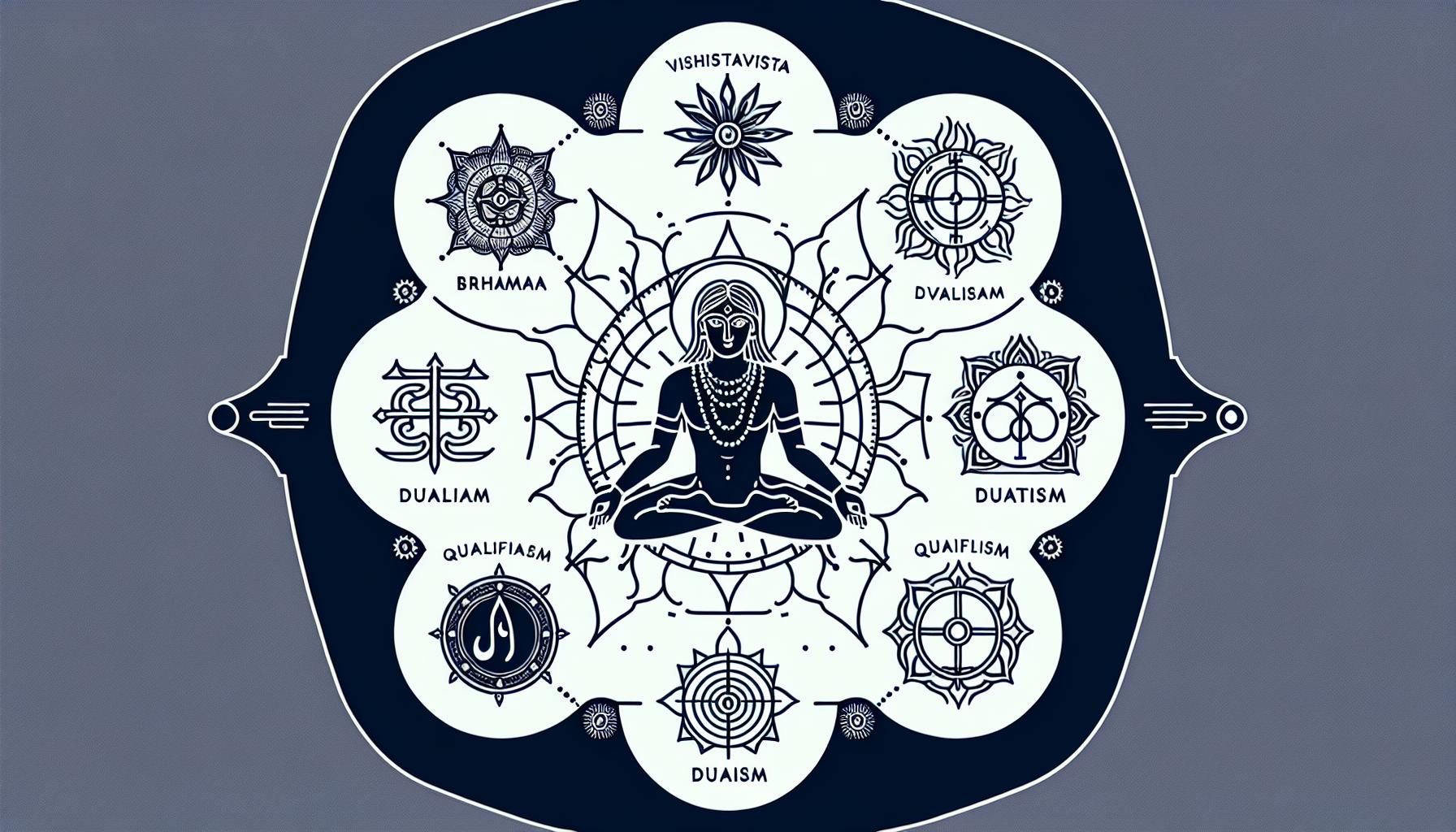
Hindu beliefs about Brahman encompass a range of philosophical interpretations, primarily within the Vedanta tradition. Let’s explore the key perspectives.
Advaita Vedanta
Advaita Vedanta, developed by Adi Shankaracharya, advocates non-dualism. Brahman, the ultimate reality, is identified with the self (Atman). The material world is an illusion (Maya). Key Elements:
- Non-Dualism: Brahman and Atman are identical, with no real distinction. This school stresses self-realization (jnana) to experience this unity.
- Ultimate Reality: Brahman is the sole reality; the universe is illusory. Individually realizing one’s identity with Brahman is essential for liberation.
- Canonical Texts: Upanishads, Brahma Sutras, and Bhagavad Gita are central to Advaita Vedanta.
Vishishtadvaita
Vishishtadvaita, introduced by Ramanuja, presents qualified non-dualism. Brahman remains the ultimate reality, but Atman and the universe are qualitatively distinct yet dependent on Brahman. Key Aspects:
- Qualified Non-Dualism: Brahman and Atman are distinct yet inseparable. Atman retains individuality but exists as part of Brahman.
- Real Universe: Unlike Advaita, Vishishtadvaita views the universe as real but contingent on Brahman.
- Dependency: The material world and individual souls rely on Brahman for existence.
Dvaita
Dvaita, proposed by Madhvacharya, asserts dualism. Brahman (Vishnu – The Protector) and individual souls are eternally distinct entities. Critical Points:
- Dualism: Brahman and Atman are fundamentally different and never merge.
- Distinct Entities: Souls are separate from Brahman and remain so eternally.
- Worship: Emphasizes devotion and worship of Vishnu as a path to liberation.
Use these interpretations to better understand the diverse beliefs about Brahman in Hindu philosophy.
Brahman In Daily Life And Practice
Hindu beliefs about Brahman profoundly influence daily life and spiritual practices. This ultimate reality manifests through various aspects of existence and guides adherents in their journey towards liberation.
Ultimate Reality
Brahman, regarded as the ultimate reality, is the unchanging essence of the cosmos. Hindus perceive Brahman as all-pervading and eternal, which forms the core of their worldview.
Oneness of Existence
All beings, from the tiniest life forms to humans, are seen as manifestations of Brahman. This belief fosters a sense of unity and interconnectedness in daily interactions, affirming the divinity present in all.
Dharma and Duty
Dharma, or duty, is integral to understanding Brahman. Hindus strive to fulfill their duties, aiming for a better rebirth or ultimate liberation (moksha). By adhering to dharma, they align themselves with the cosmic order and the teachings of Brahman.
Rituals And Worship
Rituals play a significant role in expressing devotion to Brahman. Daily offerings, prayers, and ceremonies remind Hindus of their connection to the divine. Temples often serve as centers for these activities, bringing communities together for collective worship.
Meditation And Spiritual Practices
Meditation is a key practice for realizing Brahman. Through regular meditation, individuals aim to experience oneness with the ultimate reality. Techniques like yoga and chanting are also employed to cultivate a deeper spiritual awareness.
These practices and beliefs weave Brahman into the fabric of Hindus’ everyday lives, guiding them on their spiritual journey and fostering a connection with the divine.
Comparative Perspectives
Monism Vs. Dualism
Hindu beliefs about Brahman present varying perspectives, primarily centered around monism and dualism. Monism, particularly in the Advaita Vedanta school, posits that Brahman is the ultimate reality and that Atman, the individual self, is one with Brahman. In contrast, dualism, as advocated by Dvaita Vedanta, asserts that Brahman and Atman are distinct entities.
Ancient texts like the Upanishads support the monistic view, describing Brahman as the ultimate reality and Atman as the inmost soul. They emphasize that realizing the oneness of Brahman and Atman leads to Moksha, or liberation. Dualistic traditions, but, maintain a distinct separation between the creator and the created, arguing that while Atman and Brahman are connected, they are not the same.
Brahman And Atman
In Hindu philosophy, Brahman is seen as the cosmic spirit and ultimate reality. This perspective aligns closely with the teachings of Advaita Vedanta, where the individual soul (Atman) is considered identical to Brahman. This unity highlights the importance of realizing one’s true nature to achieve liberation from the cycle of birth and rebirth.
The Upanishads articulate this profound connection between Brahman and Atman, illustrating how the discovery of this oneness is crucial to spiritual enlightenment. Dvaita Vedanta, on the other hand, upholds the individuality of Atman while recognizing its dependence on Brahman. This dualistic approach underscores the relationship between the finite and the infinite, viewing liberation as the soul’s harmonious existence with, rather than its absorption into, the divine.
Conclusion
Understanding Hindu beliefs about Brahman offers profound insights into the nature of existence and spiritual liberation. The various interpretations within the Vedanta tradition enrich our comprehension of this ultimate reality. By exploring these perspectives, we gain a deeper appreciation for the interconnectedness of all life.
Daily practices and rituals rooted in these beliefs guide individuals toward realizing their unity with Brahman. Whether through meditation, worship, or adherence to dharma, these spiritual practices are essential in the journey toward moksha.
Eventually, the study of Brahman in Hindu philosophy underscores the importance of seeking oneness with the cosmic spirit. This pursuit of unity and understanding is central to spiritual growth and liberation.
Sources & further reading
These themes are explored in greater depth across the following authoritative resources:
- Stanford Encyclopedia of Philosophy, Hindu Philosophy
- Britannica, Moksha
- Britannica, Brahman
- Internet Sacred Text Archive, Upanishads
- Sarvepalli Radhakrishnan, Indian Philosophy (2 vols., Oxford University Press, 1923)
External resources for further reading. Apam Napat is not affiliated with these publishers; citation does not imply endorsement.
Frequently asked questions
What is Brahman in Hinduism?
Is Brahman the same as a god?
Is Brahman immanent or transcendent?
How is Brahman related to Atman?
Based on the classical texts of Hindu mythology, see our sources.