

From the majestic depictions of gods and goddesses to symbolic creatures and mythical tales, these elements transform everyday items into pieces of art that connect us with India’s vibrant heritage. As I investigate deeper into the world of Indian crafts, I uncover the profound ways in which mythology continues to inspire and shape this timeless tradition.
An Overview Of Mythological Motifs In Indian Crafts
Mythological motifs hold a prominent place in Indian crafts, intertwining art with spiritual narratives. Craftsmen often depict figures from ancient scriptures and epic tales, embedding deeper meanings into their work. For example, the deity Ganesha, symbolizing wisdom and prosperity, frequently appears in pottery, textiles, and wood carvings.
Indian crafts leverage a wide array of mythological symbols. The lotus, representing purity and divine creation, features across various forms, including paintings and embroidery. Similarly, the peacock, associated with the goddess Saraswati – The Goddess of Learning and Wisdom, finds its place in detailed metalwork and jewelry.
Other common mythological motifs include the serpent, symbolizing protection and fertility, often seen in metal sculptures and temple decorations. The motif of the tree of life, denoting interconnectedness and eternal life, appears prominently in traditional Madhubani paintings.
Consider these motifs not only aesthetically pleasing but also carriers of cultural identity. Artisans use these symbols to convey stories, beliefs, and values, ensuring that each craft piece resonates with India’s rich mythological heritage.
Historical Significance

Indian crafts have deep historical significance, reflecting the mythological and cultural ethos of different time periods.
Ancient India
Crafts from ancient India prominently feature mythological motifs. Artisans depicted deities like Vishnu, Shiva, and Durga in intricate carvings on temple walls and pillars. Vedic texts mention crafts such as textiles and pottery, often embellished with symbols like the swastika, representing auspiciousness, and the lotus, denoting purity. These symbols are prevalent in the Indus Valley Civilization’s artifacts, showcasing their long-standing significance.
Medieval India
In medieval India, the influence of mythology on crafts became more pronounced. Temples commissioned elaborate sculptures and frescoes portraying epic tales from the Ramayana – Epic of Hinduism and Mahabharata – The Great Epic. Craftsmen created detailed tapestries and metalwork, incorporating figures of gods, goddesses, and mythical creatures like Garuda and Naga. The Mughal era introduced Persian motifs blended with Hindu mythology, resulting in a distinct Indo-Islamic art form.
Modern Interpretations
Modern Indian crafts continue to draw inspiration from mythology, though with contemporary twists. Artisans incorporate traditional motifs in new mediums, such as digital art and fashion design. For instance, block-printed fabrics often feature mythological themes but with modern aesthetics. Potters and jewelers blend ancient symbols like the tree of life and the serpent in innovative designs, making them relevant to today’s market while preserving their historical and cultural essence.
Common Mythological Themes
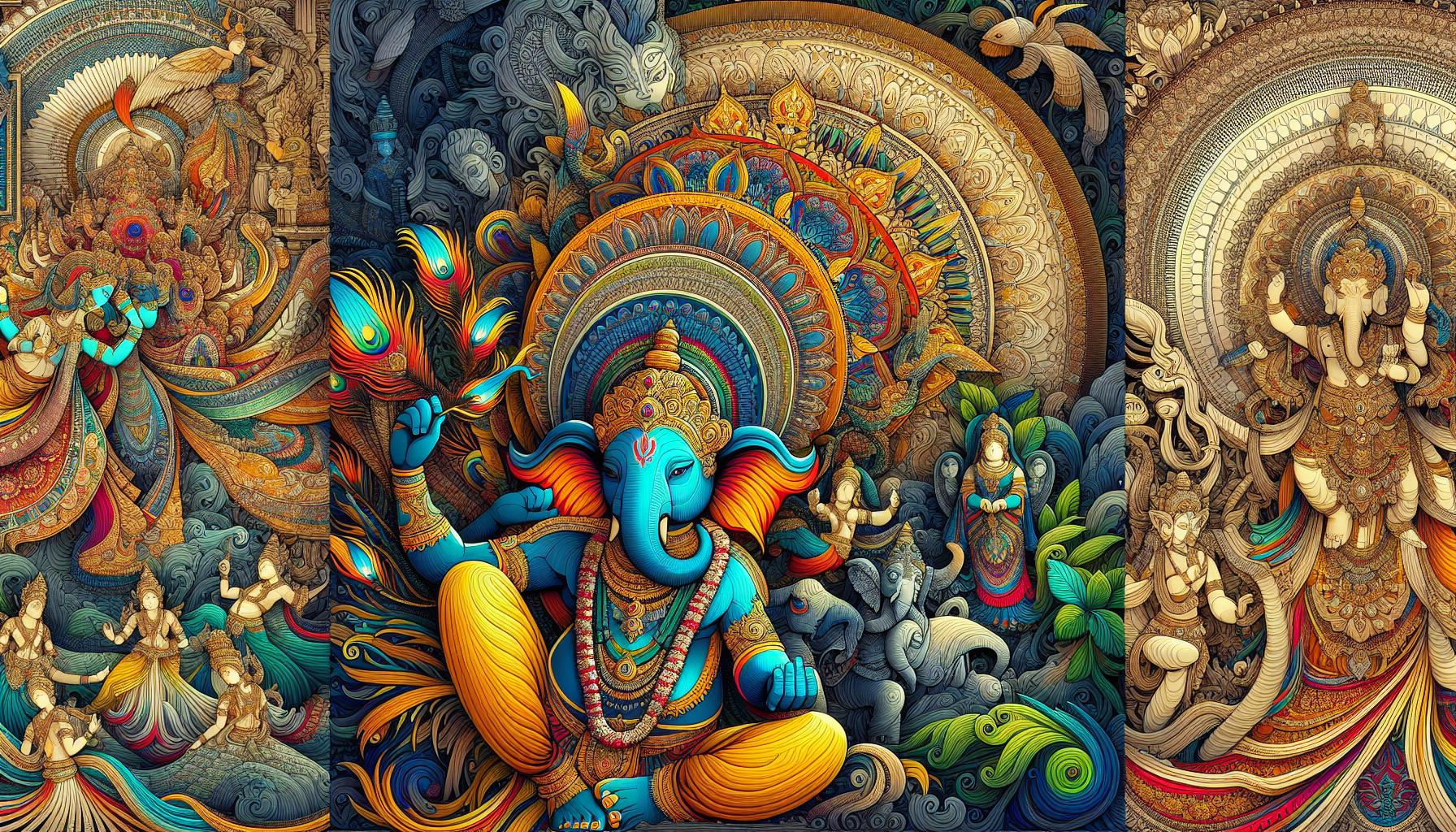
Indian crafts often portray a rich world of mythological themes. These motifs span across various mediums, infusing artistic creations with cultural and spiritual significance. Here are some prevalent themes.
Gods And Goddesses
Artisans frequently incorporate gods and goddesses into their work. The deity Ganesha is a common figure, symbolizing wisdom and prosperity. Paintings, sculptures, and textiles often feature Goddess Lakshmi, symbolizing wealth and purity. Shiva, known as the destroyer and transformer, appears in wood carvings and stone sculptures, emphasizing his powerful presence.
Epics And Legends
Indian crafts also depict scenes from epic tales. The Ramayana and Mahabharata, two paramount epics, offer numerous narrative motifs. Craftsmen carve or paint the valorous deeds of Lord Rama and the pivotal battle scenes of the Mahabharata. These stories provide a vast array of characters and events, lending themselves to intricate artistic representations.
Animals And Nature Spirits
Various animals hold mythological significance. The peacock, linked to Goddess Saraswati, often symbolizes beauty and wisdom in textiles and pottery. The lion, associated with Goddess Durga, stands for strength and bravery in sculptures. Nature spirits, such as yakshas and apsaras, appear in frescoes and carvings, embodying elements of nature and spirituality.
These common mythological themes enhance the cultural depth of Indian crafts, connecting ancient beliefs with artistic expression.
Regional Variations
Indian crafts exhibit a variety of mythological motifs influenced by regional cultures and traditions. Each region adds its unique flavor to these motifs, enriching the craft forms.
North India
Crafts in North India often reflect mythological themes from Hindu epics. Artists commonly depict scenes from the Ramayana and Mahabharata in Pahari miniatures, a significant painting style in Himachal Pradesh and Jammu and Kashmir. These regions also feature intricate wood carvings and temple sculptures showcasing deities like Vishnu and Shiva.
South India
Southern India is renowned for temple architecture and bronze sculptures. Craftsmen from Tamil Nadu, Karnataka, and Kerala carve deities such as Vishnu, Lakshmi, and Durga with detailed precision. The Tanjore painting style, originating in Tamil Nadu, blends rich colors and gold leaf to depict mythological scenes, primarily focused on Hindu gods and goddesses.
East India
Eastern India, particularly West Bengal and Odisha, is known for Pattachitra paintings and terracotta art. Pattachitra, a traditional scroll painting from Odisha, illustrates stories of deities like Jagannath and scenes from the Mahabharata. Bengal’s Durga Puja festivities inspire artisans to create elaborate clay sculptures of Goddess Durga and her retinue.
West India
Western Indian crafts often display Rajasthani and Gujarati influences. Rajasthani miniature paintings capture courtly scenes and mythological narratives involving Krishna – An Incarnation of Vishnu, particularly the Raslila. Gujarat excels in textile arts like Patola, embedding motifs of celestial beings and mythological creatures using vivid colors and intricate designs.
Regional variations in Indian crafts ensure a rich world of mythological motifs, reflecting the diverse heritage of the country.
Techniques And Materials
Indian crafts blend diverse techniques and materials, showcasing intricate mythological motifs.
Textiles
Artisans use a variety of techniques to decorate textiles with mythological motifs. Block printing, for example, involves stamping fabric with carved wooden blocks depicting gods like Krishna and Rama. Embroidery techniques, like zardozi, incorporate gold and silver threads to depict scenes from the Mahabharata and Ramayana. Handloom weaving, prevalent in regions like Varanasi and Kanchipuram, often features intricate patterns inspired by deities and celestial beings.
Pottery And Ceramics
Potters often incorporate mythological themes into their works. Terracotta figurines of deities like Ganesha and Lakshmi are common in rural India. Glazed pottery from regions like Jaipur includes depictions of mythological scenes and symbols like the lotus, symbolizing purity and divinity. Techniques like wheel throwing and hand molding are used to create detailed and vibrant pottery pieces.
Metalwork And Jewelry
Metalwork and jewelry crafts often feature rich mythological motifs. Techniques such as filigree and repoussé are used to create intricate patterns in gold, silver, and other metals. Common motifs include the sun and moon, representing celestial deities, and various animal forms symbolizing different gods and goddesses. Temple jewelry from South India often depicts figures of Krishna, Vishnu, and other deities, worn during religious ceremonies.
Wood And Stone Carving
Wood and stone carvings reflect India’s deep mythological heritage. Craftsmen use chiseling and inlay techniques to create detailed representations of deities like Shiva and Parvati – The Consort of Shiva. Temple architecture in South India showcases grand sculptures of mythological figures, while in North India, wood carvings often depict scenes from Hindu epics. Sandstone and marble are commonly used materials, offering durability and intricate detailing.
Indian crafts, through these techniques and materials, continue to honor and preserve the rich world of mythological narratives.
Influence On Contemporary Crafts
Modern artisans often draw inspiration from ancient mythology, blending traditional motifs with contemporary designs. This fusion maintains cultural continuity while appealing to present-day aesthetics. Artisans adapt classical patterns, such as the lotus and peacock, and incorporate them into new mediums like digital prints and modern textiles.
Numerous designers re-interpret mythological stories through wearable art. For instance, sarees and kurtas frequently feature intricately woven depictions of epic tales. This not only preserves cultural narratives but also introduces these stories to younger generations in familiar and accessible forms.
In home decor, mythological elements merge seamlessly with modern interior design. Wooden furniture often includes carvings of deities and mythological scenes, creating a blend of tradition and contemporary style. Terra cotta lamps and metalwork with mythological designs also find a place in modern homes, adding cultural richness to everyday life.
Some contemporary artisans even use mythology to address social themes. They infuse their work with mythological allegories to comment on modern issues like environmental conservation and societal values. By doing so, they create pieces that are both culturally relevant and thought-provoking.
Cultural festivals and exhibitions frequently showcase these contemporary crafts, providing artists with platforms to display their creations. These events highlight how mythological motifs continue to inspire current generations, bridging the gap between ancient traditions and modern craftsmanship.
Conclusion
Indian crafts, deeply rooted in mythology, offer a fascinating glimpse into the country’s cultural heritage. As artisans blend ancient symbols with modern aesthetics, these crafts remain relevant and captivating. By reinterpreting mythological motifs, contemporary artists create pieces that resonate with today’s audiences while honoring traditional narratives.
The continued popularity of these crafts at cultural festivals and exhibitions showcases their timeless appeal. It’s clear that Indian mythology will keep inspiring and evolving within the area of crafts, ensuring that this rich legacy endures for generations to come.
Sources & further reading
These themes are explored in greater depth across the following authoritative resources:
- Britannica, Asura
- Britannica, Naga
- Mythopedia, Hindu Mythology
- Internet Sacred Text Archive, Mahabharata
- Wendy Doniger, Hindu Myths (Penguin Classics, 1975)
External resources for further reading. Apam Napat is not affiliated with these publishers; citation does not imply endorsement.
Frequently asked questions
What are mythological motifs in Indian crafts?
What does the lotus motif symbolize in Indian crafts?
Why is Ganesha frequently depicted in Indian crafts?
What does the serpent motif represent in Indian crafts?
What does the tree of life motif mean in Madhubani paintings?
Based on the classical texts of Hindu mythology, see our sources.